 Italy for me From Italy with love


Monti is a district in the historic center of Rome, holding the top spot among the city’s 22 administrative divisions known as rioni, derived from the Latin word regio (regions).
The area of Monti, designated as “R.I”, is more than just a zone outlined on a map. It represents a unique historical and cultural heritage of Rome, complete with its own traditions, legends, and masterpieces.
Page Contents
Territory
Originally, the Monti rione encompassed the Esquiline (Esquilino), Viminal (Viminale) hills, and parts of the Quirinal (Quirinale) and Caelian (Celio) hills. In 1874, Esquilino was partially separated.
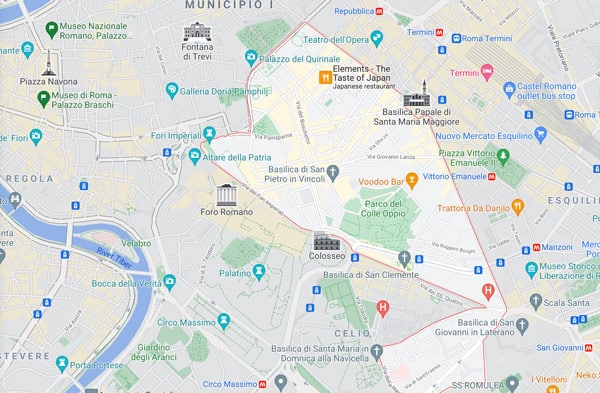
On the southern side, along a section of the Aurelian Walls (Mura aureliane), Monti borders the Appio-Latino quarter (Q.IX Appio Latino); to the north, it neighbors Trevi (R. II Trevi) and Castro Pretorio (R. XVIII Castro Pretorio); to the east, Esquilino (R. XV); and to the west, Celio (R. XIX) and Campitelli (R. X Campitelli).
History
During the ancient Roman period, the Monti rione was the most densely populated area in Rome. Patricians lived on the elevated areas, while plebeians settled in the marshy lowlands.
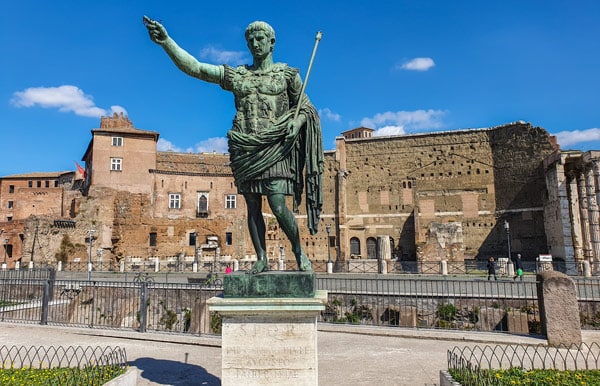
The slopes of the Quirinal and Viminal hills, inhabited by the lower classes, became known as Suburra — a place notorious for vice and crime. Frequent fires plagued this impoverished neighborhood, prompting the construction of the Suburra Wall (Muro della Suburra) during the reign of Emperor Octavian Augustus. This wall separated the poor residential quarter from the monumental areas of the city with temples and the Imperial Forums. The wall, standing 108 feet (33 meters) tall from the ancient floor level and built from boulders without mortar, has stood for over 2,000 years and still serves as an architectural backdrop to the Forum of Augustus (Forum Augusti).
In the Middle Ages, after most of Rome’s aqueducts were destroyed, Monti was left without a water supply and gradually became depopulated. By the 19th century, it remained sparsely inhabited, with much of the area occupied by gardens and vineyards.
Monti’s revival began in the 1600s with the construction of Via Alessandrina near the Imperial Forums in the southern part of the district. The neighborhood’s appearance changed significantly during the first 40 years of the Kingdom of Italy and further evolved following the aftermath of World War II. Despite various reconstructions and new road developments, Monti has retained its unique blend of Ancient Rome, Medieval, Renaissance, and Enlightenment charm.
Identity and Privileges
The residents of Monti — known as monticiani — take great pride in their neighborhood’s rich history and still consider themselves today to be “more Roman” than other citizens. Since the Middle Ages, they have identified with the imperial grandeur of Rome and even spoke a distinct dialect known as “montiano,” which set them apart from other city dwellers.
It is well known that in the past, any violation of the local code of honor (sgarri) could easily spark bloody clashes between groups from neighboring districts.
Thanks to its priceless cultural and historical heritage, Monti has always stood out within the vast structure of Rome and enjoyed special privileges not granted to other rioni. For example, its elected caporione — the “district leader” — was part of the city’s administration and held special authority.
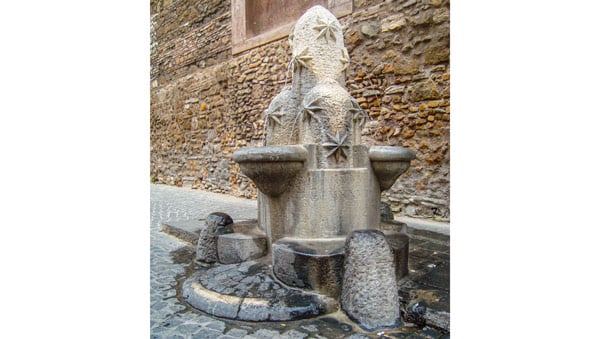
The distinct identity of Rione Monti was maintained well into the 20th century. In 1927, the governor of Rome commissioned architect Pietro Lombardi to design a series of fountains that would reflect the characteristic elements of the rione. This led to the creation of the Fontana dei Monti on Via di San Vito, featuring four stylized hilltops representing Monti and Esquilino.
Landmarks
Monti, as the largest and oldest rione located in the heart of Rome, is renowned for its landmarks, which include archaeological monuments from the imperial era as well as architectural masterpieces from the Middle Ages and the Renaissance. Although many of Monti’s streets were rebuilt at the end of the 19th century, they have preserved their greatest treasures — ancient ruins, churches, basilicas, towers, and magnificent palaces.
Archaeological Sites
Interest in archaeology and ancient ruins was revived in Italy with the advent of the Renaissance and has endured ever since. Architectural monuments from past eras have not only been uncovered through excavations or spared from destruction, but have also been granted the status of priceless heritage and national treasures.
Colosseum
The Colosseum, also known as the Flavian Amphitheater, sits at the junction of the rioni Monti, Celio, and Campitelli and stands as the pride and symbol of Rome. 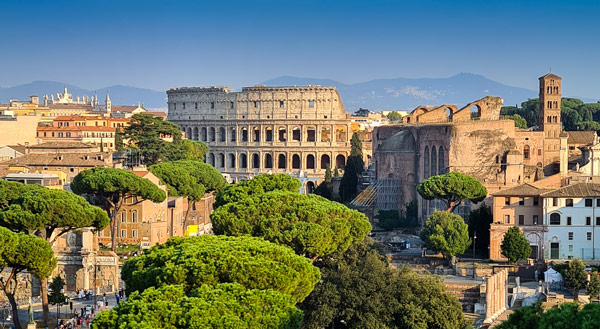
It was constructed in just eight years (from 72 to 80 AD) during the reigns of Vespasian and Titus. The Colosseum is the most monumental structure of the Ancient World to have survived to the present day. Its outer elliptical perimeter measures 1,720 feet (524 meters), which once allowed it to accommodate around 50,000 spectators.
Spectacles were an integral part of Roman life for people of all social classes, and the venue designed to host them was meant to astonish and inspire with its incredible size, architectural beauty, and engineering achievements. An interesting fact: former gladiators, actors, and gravediggers were prohibited from entering the Colosseum.
You may find this helpful: how to buy Colosseum tickets without waiting in line.
Imperial Forums
On the western side of Monti stretches an extensive complex of ancient Roman structures built between 46 BC and 113 AD, including the Forums of Trajan (Foro di Traiano), Caesar (Foro di Cesare), Augustus (Foro di Augusto), and Nerva (Foro di Nerva).
Trajan’s complex is the most impressive, featuring a grand square, covered markets, two libraries, and Rome’s largest basilica — the Basilica Ulpia — of which several columns and a marble floor remain.
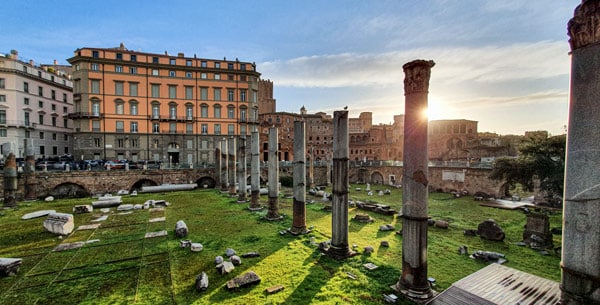
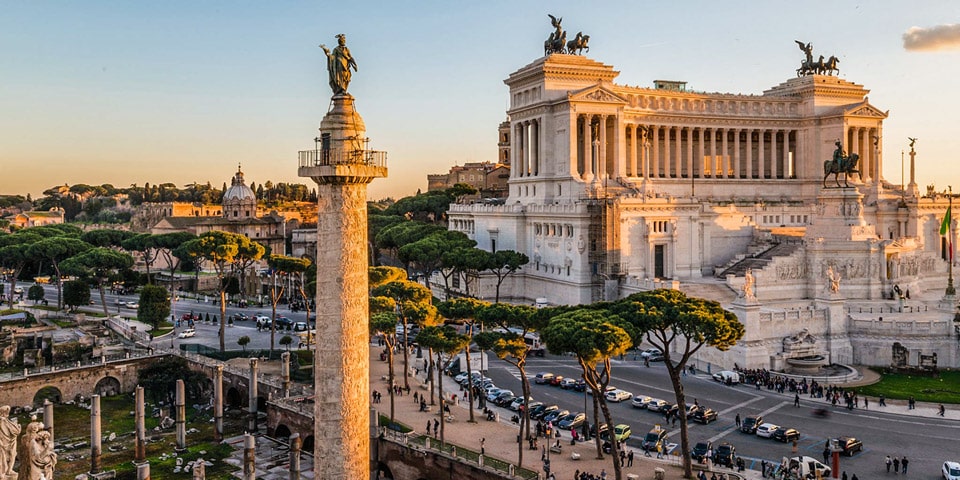
The only well-preserved monument in this forum is Trajan’s Column (Colonna Traiana), which stands 131 feet (40 meters) tall and is crowned with a statue of Saint Peter (originally it held a statue of Trajan).
One cannot miss the ancient stone-paved road that crosses Trajan’s Markets. Built in the 2nd century, it has been known ever since as Via Biberatica. Interestingly, in the Middle Ages, the name of the Monti district was associated with this road and was long preserved as Regio Montium et Biberatica.
Within Trajan’s Markets is the fascinating Museum of the Imperial Forums (Museo dei Fori Imperiali), featuring a rich collection of ancient artifacts. Highly recommended for a visit.
Golden House of Nero
In the center of Monti, you can see the ruins of the most opulent building of Ancient Rome, known as the Golden House of Nero (Domus Aurea). This luxurious imperial complex was built after the Great Fire of 64 AD, which destroyed much of the city. Its grounds covered about 20% of Rome within the Servian Wall (Murus Servii Tullii).
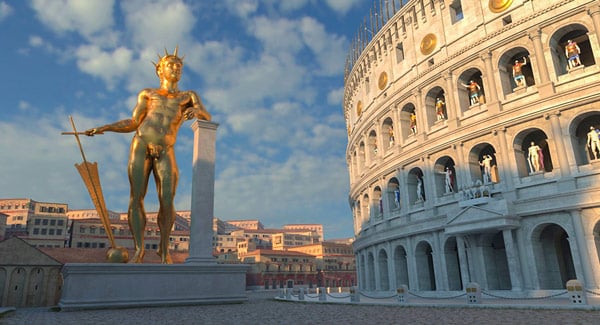
A true marvel at the time was the giant artificial lake on the site where the Colosseum now stands, along with a bronze statue of Nero that reached a height of 98 feet (30 meters). The abundance and lavish decoration of the palace’s rooms, including pure gold embellishments, became legendary and contributed to the public’s hatred of the emperor, whose reign was marked by tyranny and despotism.
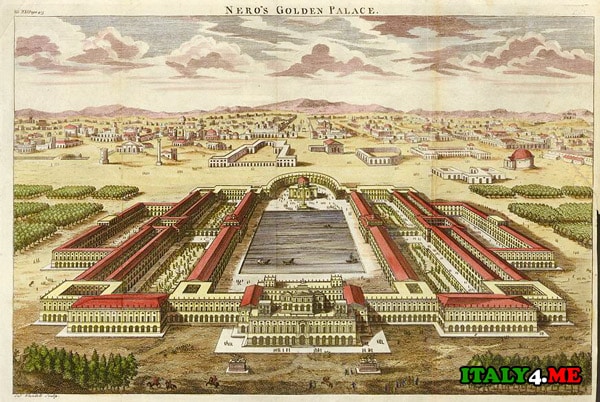
Immediately after Nero’s death, his properties were virtually wiped from the face of the earth, and public baths were built in their place — in 80 AD, the Baths of Titus (Terme di Tito), followed later in 104 AD by the luxurious Baths of Trajan (Terme di Traiano). The surviving ruins give a sense of the scale of early imperial Roman architecture.
I recommend reading more about baths and aqueducts in Ancient Rome.
Medieval Towers
During the Middle Ages, Rome’s architectural landscape was adorned with hundreds of towers built by noble families between 900 and 1300 AD. The majority of these were located in the rione Monti. In 1257, around a hundred tall structures were destroyed as the Roman senator Brancaleone degli Andalò settled scores with families supporting the pope in his conflict with the emperor.
Today, about 50 towers remain in the Eternal City, four of which can be seen in Monti.
I also recommend reading about the medieval towers of Bologna.
Rising above Trajan’s Markets is one of the tallest and most impressive — the Torre delle Milizie, or Tower of the Militia, built in the mid-13th century.
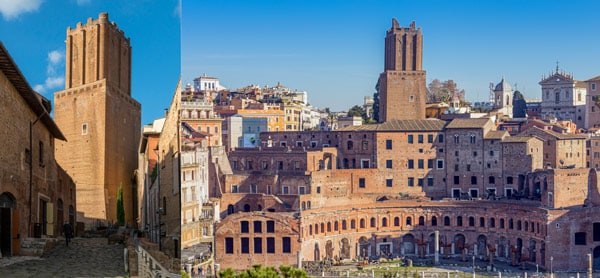
The earthquake of 1368 destroyed its top and gave the structure a noticeable lean. According to legend, it was from the site of this tower that a gloating Nero watched as Rome burned during the great fire of 64 AD.
In the southern part of the Imperial Forums stands the medieval Torre dei Conti. 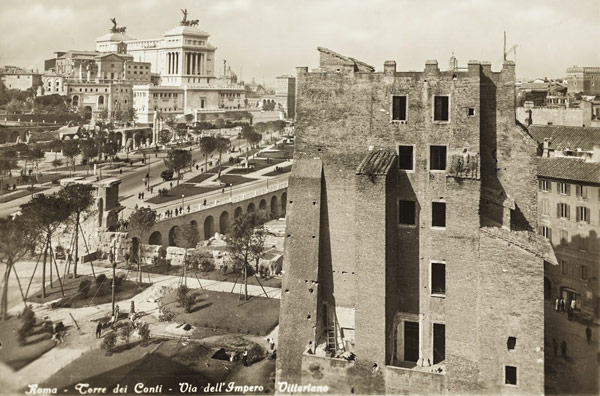
It was built on the site of an ancient Roman temple and once stood 164 to 197 feet (50 to 60 meters) tall. Several earthquakes damaged the tower, which had once impressed with its size and beauty — even Petrarch mentioned it.
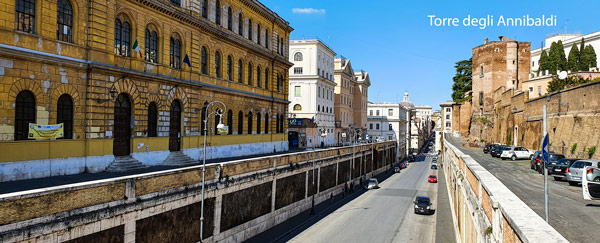
Two other towers from the 12th and 13th centuries can be seen at the entrance to the summit of the Esquiline Hill, where the Torre dei Capocci (Torri dei Capocci) stands like a sentinel, and on Via del Fagutale, where you’ll find the Torre degli Annibaldi.
Religious Sites
Among Rome’s many architectural landmarks are its numerous religious sites. Monti alone is home to 37 surviving religious buildings, not counting more than a dozen that have vanished or been desecrated. Among its basilicas, churches, and chapels, several deserve special attention.
Basilica of San Giovanni in Laterano
On the Caelian Hill rises the oldest and most important basilica not only in Rome but in the entire Western world — the Basilica of San Giovanni in Laterano. 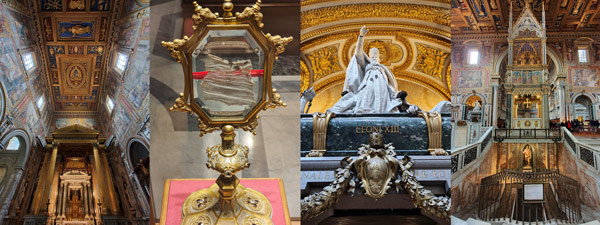
The history of this papal archbasilica dates back to the early Christian period. By the 4th century, on land originally owned by the Lateran family, the basilica was already known for its grandeur and significance. For nearly 1,000 years, every pope was crowned here.
The most treasured religious artifacts and relics, gathered over several centuries, can be seen in the Museum of San Giovanni in Laterano (Museo di san Giovanni in Laterano), located within the basilica.
Holy Stairs
The Holy Stairs (Scala Santa), housed in the Sancta Sanctorum (Holy of Holies) chapel north of the basilica’s eastern façade, holds a special reverence among the faithful.
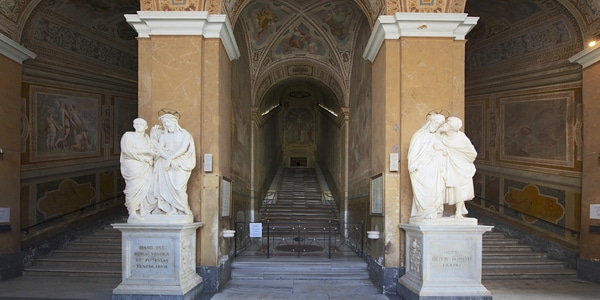
According to legend, this marble staircase, brought from Jerusalem by Emperor Constantine’s mother, was ascended by Jesus Christ himself in the palace of Pontius Pilate.
The image above the chapel’s altar is believed to possess miraculous powers. Tradition holds that it was created by a supernatural being and has protected the city from plagues and other calamities.
Basilica of Santa Maria Maggiore
The second of the four major papal basilicas, the Basilica of Santa Maria Maggiore, is located on the Esquiline Hill and dates back to the 4th century. 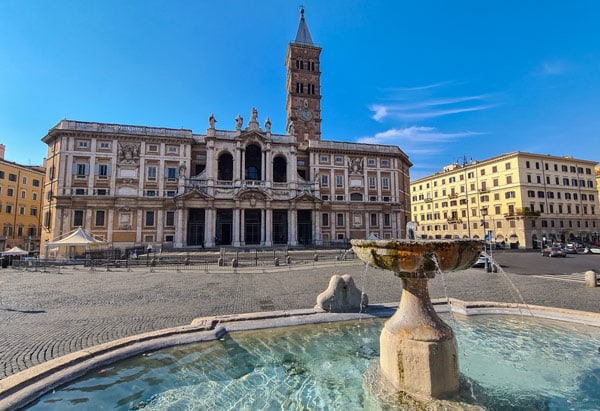
Throughout its history, it has been part of the Eternal City’s pilgrimage route along with six other major basilicas. Despite numerous renovations, this sacred building remains the only one in Rome to have preserved its primitive early Christian structure.
Basilica of San Pietro in Vincoli
Often, behind a simple basilica façade lie true masterpieces and rare relics. Such is the case with the Basilica of San Pietro in Vincoli, built in 442 AD. It houses, in a crystal reliquary, the chains that, according to legend, bound Saint Peter before his execution. Equally captivating is the tomb of Julius II, where visitors can admire a magnificent work by Michelangelo — the famous seated statue of Moses.
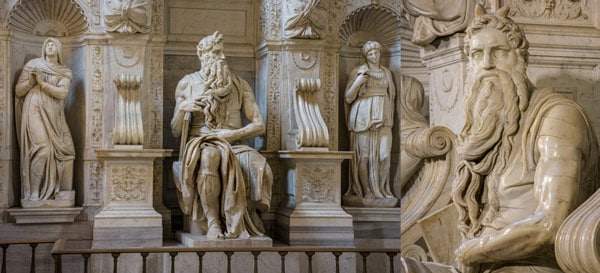
It was originally intended for theVatican, but along with six other works by the master and his students, it now resides in this basilica.
Churches of Sant’Andrea al Quirinale and San Carlo alle Quattro Fontane
Art enthusiasts have the opportunity to compare two masterpieces of 17th-century architecture located in the Monti district — the churches of Sant’Andrea al Quirinale and San Carlo alle Quattro Fontane. The first was designed by Giovanni Lorenzo Bernini, while the second was the work of Francesco Borromini. 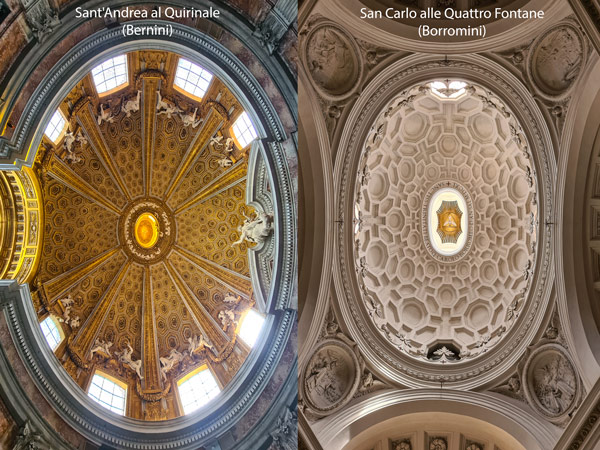
These small and original churches became a creative rivalry between two genius masters in their ongoing competition.
Civil Architecture
The resurgence of Monti’s popularity led to the construction of magnificent civil architecture.
Lateran Palace
The most famous and one of the oldest palazzi in Monti is the Lateran Palace (Palazzo del Laterano), which served as the residence of the Roman popes from the first half of the 4th century until the 14th century, before the papacy moved to the Apostolic Palace in the Vatican. 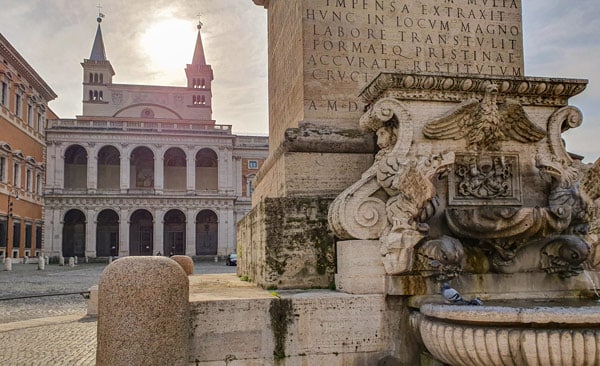
After a fire and a period of abandonment, a new building was erected in 1586 based on a design by architect Domenico Fontana. In the square in front of the palace stands an Egyptian obelisk (15th century BC) over 98 feet (30 meters) tall, considered the largest in the world.
At the Lateran Palace, you can visit the Vatican Historical Museum (Museo Storico Vaticano) and the Museum of Carriages (Museo delle Carrozze).
Palazzo Pallavicini Rospigliosi
Standing on the ruins of ancient baths is another palace in the Monti district — the Palazzo Pallavicini Rospigliosi. 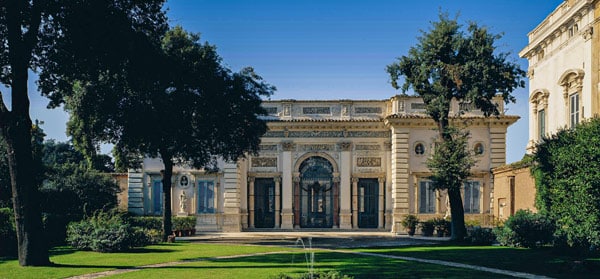
In the basement of the palace’s main building, where the Casino dell’Aurora is located, visitors can see remnants of the Baths of Constantine. This elegant Renaissance structure was built between 1605 and 1619 at the request of Cardinal Scipione Borghese. Today, it is known by the name of its last owners, who still retain ownership of half the property.
The palace houses a small museum featuring more than 500 works by outstanding artists such as Caravaggio, Guido Reni, Annibale Carracci, Nicolas Poussin, Lorenzo Lotto, and other renowned painters of the 15th to 18th centuries.
Palace of Exhibitions
The grand and imposing Palace of Exhibitions (Palazzo delle Esposizioni) on Via Nazionale, built in 1883 to a design by Pio Piacentini, was originally intended to host cultural events and art exhibitions.
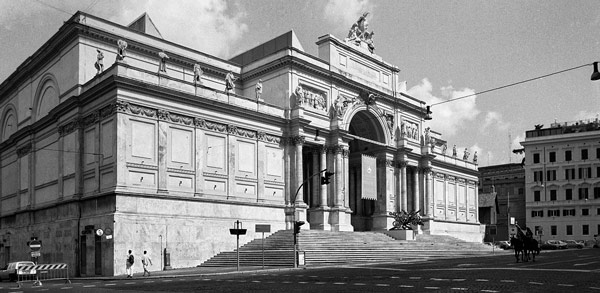
Today, this building is one of Europe’s most prestigious exhibition centers, offering 48,400 square feet (4,500 square meters) of space. It also includes retail areas, cinema halls, and a restaurant — all equipped with the most advanced construction technologies.
Strolling through Monti, along its ancient and modern streets, becomes a captivating journey into Rome’s past. Magnificent palaces, squares, fountains, famous basilicas, and small historic churches tucked into alleyways create the unique character that draws millions of tourists from around the world to Rome.