 Italy for me From Italy with love


An open-air museum of the Middle Ages—that’s how the tiny town of San Gimignano (San Gimignano) is often described. Nestled in central Italy in the province of Siena (Provincia di Siena), the town was inscribed on the UNESCO World Heritage list in 1990.
It seems that the destructive power of time has spared this enchanting corner of Tuscany. Around two million visitors from all over the world come each year to soak in its scenic landscapes and centuries-old spirit, stroll along its ancient streets and piazzas, admire remarkable architectural landmarks, and savor the refined taste of local wine.
Page Contents
History
San Gimignano owes its unique character to a long and fascinating history. Originally a small village founded in the 3rd century BC by the Etruscans—as confirmed by numerous archaeological studies—the site later became home to the Romans after the fall of the ancient civilization. The Romans built a small fortress here, naming it *Castello della Selva*, which translates to “castle in the forest.” Following the fall of the Roman Empire, the settlement continued to exist. By the 10th century AD, it had grown into a town and was renamed San Gimignano, in honor of Saint Geminianus of Modena.
During the early Middle Ages, San Gimignano became a vital administrative and trade hub linking Rome with Northern Europe. Over the centuries, the city flourished. Local residents were heavily involved in commerce—trading wine, olive oil, and saffron—and many also profited through moneylending.
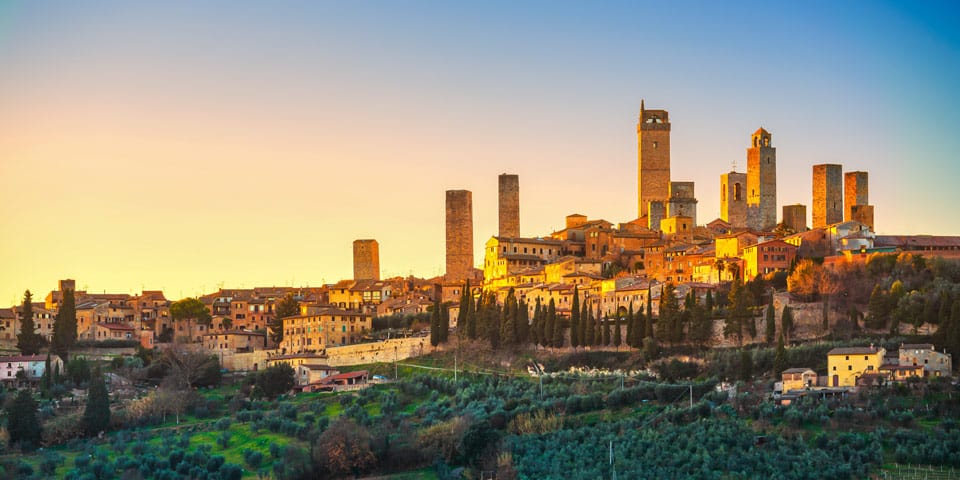
Wealthy citizens founded powerful family clans and built the tall medieval towers that have become the symbol of San Gimignano—monuments to their power and prosperity. By the 14th century, more than 70 such towers dotted the skyline. Today, only 14 remain.
Despite ongoing feuds between noble families, political instability, conflict with Florence, and the city’s eventual annexation by the Florentine Republic in 1352, the Middle Ages were a golden era for San Gimignano. Economic decline followed the waves of plague that devastated the region—most notably in 1348, when over half the population perished, and again in the 15th and 17th centuries.
The once-thriving city fell into decline, becoming a quiet backwater. It wasn’t until the 19th century that San Gimignano, perched on a nearly 1,000-foot (300-meter) hill above the Elsa River valley, regained prominence. Its charm and authenticity began attracting travelers, transforming it into one of Italy’s most beloved tourist destinations.
Every June, the town’s fewer than 7,000 residents host a series of medieval-themed events for visitors, including jousting tournaments (Giostra dei Bastoni, meaning “battles with sticks”), harvest festivals (Ferie delle Messi), historical parades, street performances, fireworks, theatrical and opera productions, and colorful shows.
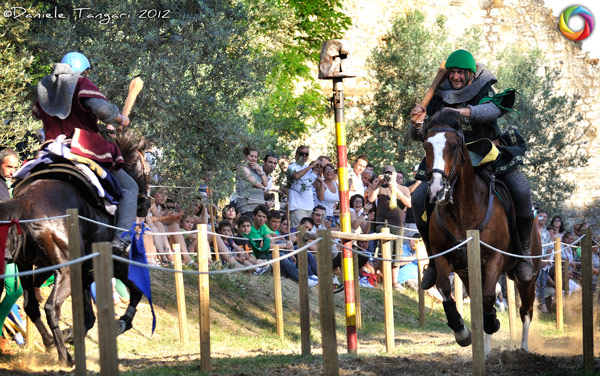
The 2019 festival takes place on June 15–16. For the latest schedule and updates, visit www.cavalieridisantafina.it
Souvenir shops offer handmade ceramics crafted by local artisans, as well as traditional sweets. All across town, wine boutiques (enotecas) showcase Vernaccia di San Gimignano, the region’s most celebrated white wine and a true pride of Tuscany.
Attractions
San Gimignano’s top attractions include:
- San Gimignano Cathedral
- Chapel of Santa Fina
- Cathedral Square (Piazza del Duomo)
- Well Square (Piazza della Cisterna)
- Museum of Torture
- Wine Museum
- Church of San Pietro
- Church of Saint Augustine
The historic center of San Gimignano is enclosed by defensive walls built in the second half of the 13th century, stretching just over 1.2 miles (2 km). Most visitors enter through the main gate, Porta San Giovanni. Since the town’s main sights are located close together, they can easily be explored on foot within a day or two.
San Gimignano Cathedral
The main cathedral in the town – Collegiata di Santa Maria Assunta, commonly known simply as il Duomo – is a prime example of austere Romanesque architecture. Construction began around 1056, and the church was consecrated a century later. Between the 13th and 15th centuries, it was renovated and expanded into the form we see today.
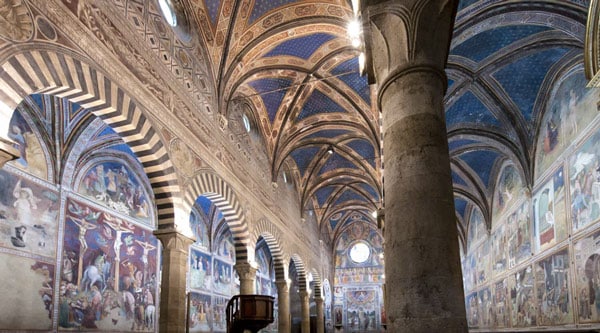
The understated façade sharply contrasts with the richly decorated interior, which features masterpieces of sculpture and painting. The walls and vaults are adorned with a beautifully preserved cycle of frescoes created by renowned masters of the Sienese School:
- Duccio di Buoninsegna
- Bartolo di Fredi
- Jacopo della Quercia
The geometric patterns of the frescoes blend harmoniously with religious narratives from the Old and New Testaments, along with scenes from the lives of saints. The dominant artistic style is marked by bold contrasts and vivid color palettes.
Chapel of Santa Fina
The Chapel of Santa Fina (Cappella di Santa Fina), part of the cathedral complex, is widely considered its greatest treasure. Built in 1468, the chapel was designed and decorated by brothers Giuliano and Benedetto da Maiano, with every detail reflecting the refined aesthetic of the Early Renaissance.
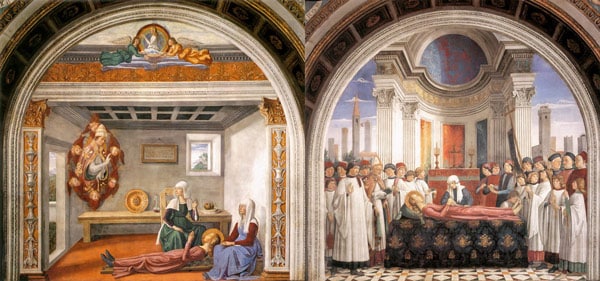
The interior is graced with stunning frescoes by the Florentine painter Domenico Ghirlandaio, completed in the 1470s. The artwork depicts scenes from the life of Saint Seraphina (Fina), a local girl revered for her holiness and miraculous healings. After her death, she was canonized and became the patron saint of San Gimignano.
- Official website: www.duomosangimignano.it
- Opening hours: Monday–Friday: 10:30 AM to 6:30 PM; Saturday: 10:30 AM to 5:30 PM; Sunday: 12:30 PM to 5:30 PM
- Admission: €5
Cathedral Square: Its Palaces and Towers
Paved with cobblestones, the trapezoidal Piazza del Duomo is one of San Gimignano’s main attractions. In medieval times, it served as the hub of the city’s political and religious life.
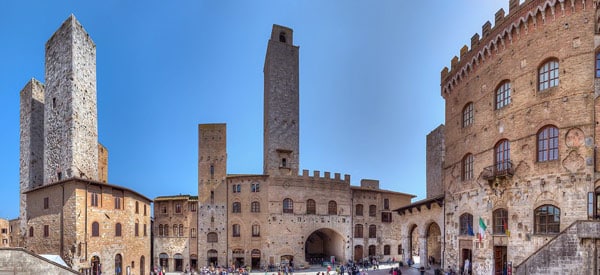
This culturally and historically significant square has remained virtually unchanged since the early 13th century. In addition to the main cathedral, it is home to monumental buildings once occupied by local authorities and wealthy citizens:
- Palazzo Vecchio del Podestà – the old palace of the town magistrate, crowned by Torre Rognosa, the second tallest tower in San Gimignano at 167 feet (51 m). Also known as the Clock Tower (Torre dell’Orologio).
- Palazzo del Popolo, also called Palazzo Comunale or the New Podestà’s Palace (Palazzo Nuovo del Podestà), features the Torre Grossa – the city’s tallest tower, standing at 177 feet (54 m). This “medieval skyscraper” is open to the public and offers stunning panoramic views of San Gimignano and the surrounding countryside. Since 1852, the palace has housed the Museo Civico, with four exhibition halls featuring priceless works by Florentine and Sienese painters from the 13th to the 16th centuries.
- The Salvucci Towers (Torri dei Salvucci) – a pair of 157-foot-tall (48 m) twin towers built by the powerful Salvucci family as symbols of their influence. One of the towers remains a private residence and is now an exclusive 10-story vacation rental. A 3-person stay costs around €350 per night and is often booked months in advance by visitors eager to experience life inside a medieval tower.
Well Square
Small and triangular in shape, Piazza della Cisterna—known as Well Square—is today the liveliest and most visited spot in San Gimignano.
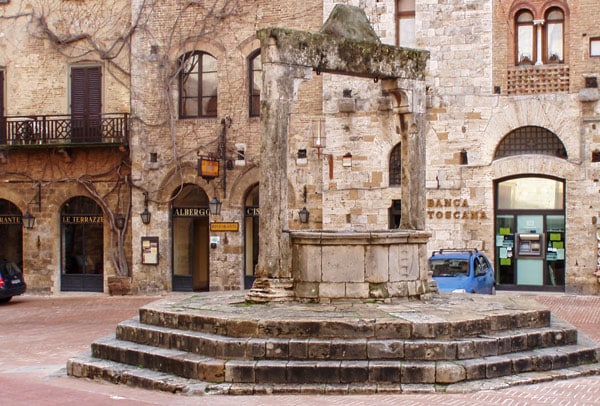
Even more bustling during the Middle Ages, the square once hosted a busy market, tournaments, and public celebrations.
Today, the weathered and moss-covered medieval well still adds character to the square. Tourists often stop at its steps to rest or take photos. The architectural ensemble, which dates back to the 13th century, remains virtually untouched—every building has retained its original medieval appearance.
Like many historic places, the square is steeped in legends. One of the most famous is that of the Torre del Diavolo (“Devil’s Tower”), which rises above the piazza. Made of pale limestone, this tower is part of the Palazzo de’ Cortesi complex. Legend has it that its wealthy owner returned from a long journey only to find the tower inexplicably taller—convinced that dark forces had intervened.
Museum of Torture and Execution
The ominously named Devil’s Tower is home to the Museo della Tortura (Museum of Torture).
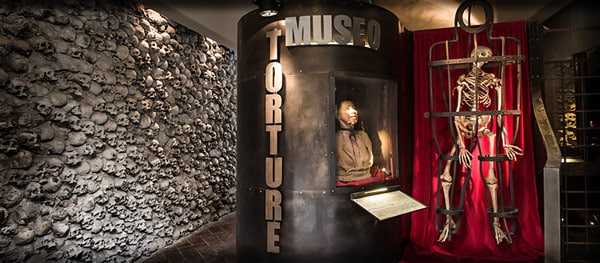
A warning at the entrance advises that the exhibition may be disturbing to children, women, and sensitive individuals. Inside is a chilling collection of medieval torture devices and execution instruments used by inquisitors. Life-size wax figures vividly depict graphic scenes of pain and punishment, bringing the grim history of medieval justice to life.
- Official website: www.torturemuseum.it
- Opening hours: Daily from 10:00 AM to 7:00 PM
- Admission: Adults – €10, Children – €7
A similar exhibition, the Medieval Criminology Museum (Museo di Criminologia Medievale), is located in a neighboring building. It features artifacts gathered from across Europe that illustrate brutal methods of capital punishment used centuries ago.
Vernaccia di San Gimignano and the Wine Museum
The local white wine Vernaccia di San Gimignano is renowned worldwide. Believed to be Italy’s oldest wine, it has been produced since the 13th century and was even mentioned in Dante Alighieri’s Divine Comedy.
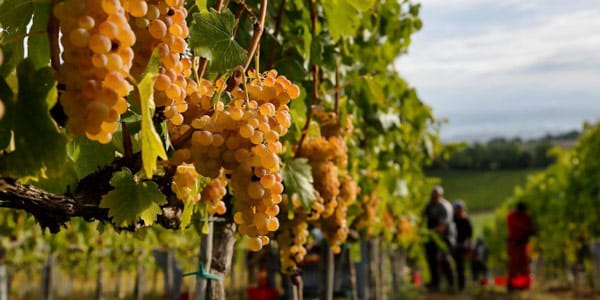
In 1966, Vernaccia was awarded the prestigious DOC label (Denominazione di Origine Controllata). Twenty-seven years later, following rigorous quality inspections, producers earned the DOCG designation (Denominazione di Origine Controllata e Garantita), Italy’s highest standard of certification.
Read more: Italian product quality classifications
Vernaccia has played a vital role in shaping the town’s identity. So influential has the wine been throughout San Gimignano’s history that a dedicated museum was created in its honor. Set atop a scenic hill, inside the historic Villa della Rocca di Montestaffoli, the Vernaccia Wine Museum (Il Museo del Vino della Vernaccia di San Gimignano) invites visitors to explore the region’s winemaking heritage and enjoy tastings on a panoramic terrace overlooking the Tuscan countryside.
- Official website: www.sangimignanomuseovernaccia.com
- Address: Via della Rocca, 1, 53037 San Gimignano SI
- Opening hours: Daily from 11:30 AM to 7:30 PM
Church of San Pietro
Built in the Romanesque style, the small single-nave Church of San Pietro in Forliano (Chiesa di San Pietro in Forliano) is located in the northern part of the city, near the fortress wall, on Piazza Sant’Agostino—a quiet yet atmospheric corner of San Gimignano.
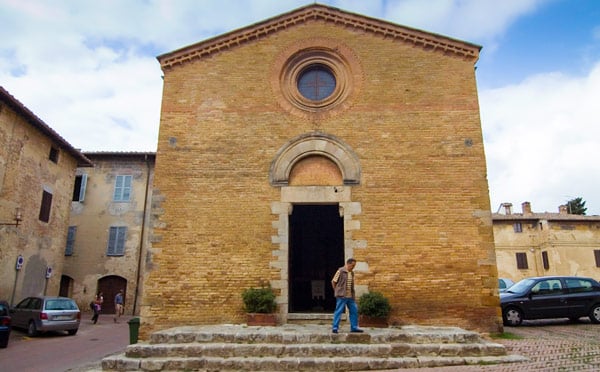
The church was first mentioned in the 1260s. Its facade is notable for its simplicity and lack of decoration. Inside, the walls are adorned with intriguing religious frescoes attributed to Memmo di Filippuccio, a prominent artist of the Sienese School. Memmo worked extensively in San Gimignano and held the official title of “city painter,” a post created by the local authorities in 1271.
Church of Sant’Agostino
The Church of Sant’Agostino (Chiesa di Sant’Agostino) stands on the square of the same name, surrounded by modest residential buildings. Built in the second half of the 13th century, the church reflects both late Romanesque and Gothic influences, and it continues to serve as an active place of worship.
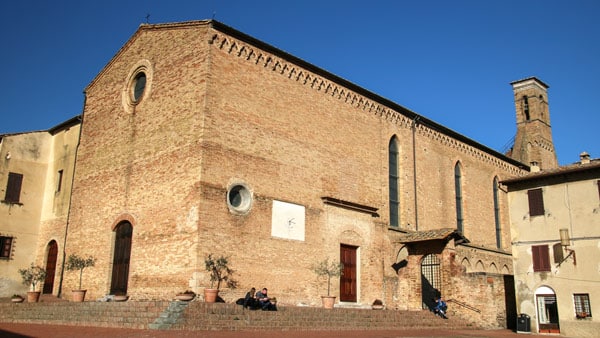
While its exterior may appear modest and unadorned, the interior is a treasure trove of art. The church is richly decorated with frescoes created by some of Italy’s greatest painters.
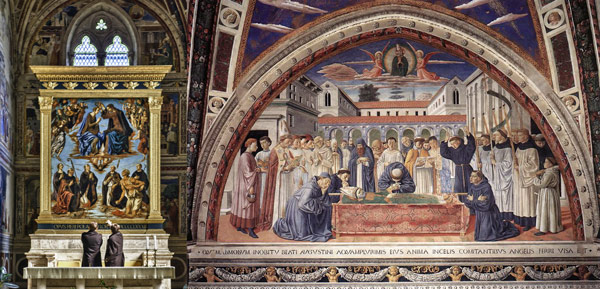
Among them:
- Pier Francesco Fiorentino
- Benozzo Gozzoli
- Bartolo di Fredi
The church also features remarkable sculptures by masters such as Benedetto da Maiano and Tino di Camaino, adding to its artistic significance.
How to Get There
While traveling through Tuscany, San Gimignano is easily accessible whether you’re coming from Pisa, Siena, or Florence. The most convenient way is by rental car, with daily rates starting around €40. If you’re feeling adventurous and want to experience Italian regional transport, scheduled buses are also an option.
From Siena
The journey from Siena to San Gimignano takes at least 1 hour.
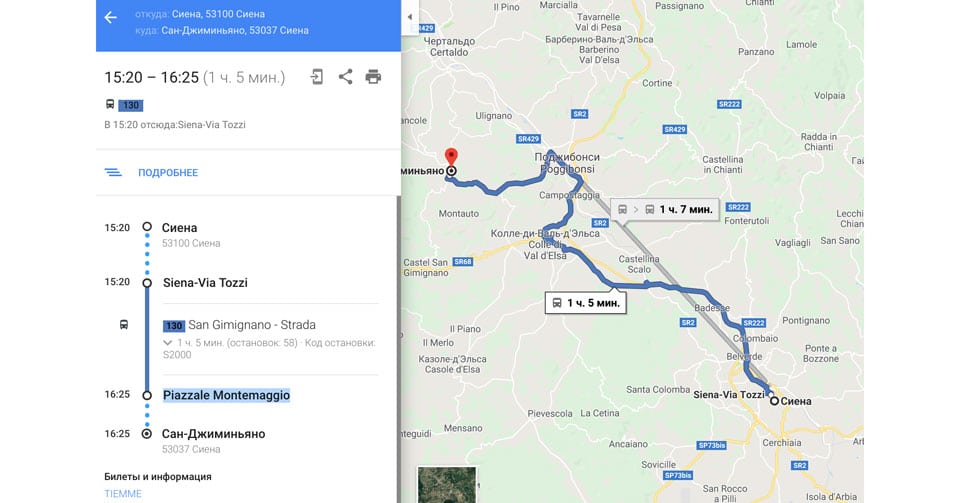
The N130 bus, operated by www.tiemmespa.it, runs several times daily from Via Tozzi near the statue of Garibaldi (Statua di Garibaldi). The route includes 71 stops, arriving at Piazzale Montemaggio in San Gimignano. Tickets cost €6.20.
From Florence
San Gimignano lies about 25 miles (40 km) from Florence. Traveling by public transport takes around 1.5–2 hours, with a required transfer in Poggibonsi. You can take a regional train from Florence’s Santa Maria Novella station to Poggibonsi–S.Gimignano station, then transfer to a local bus.
From Pisa
The distance from Pisa to San Gimignano is approximately 50 miles (80 km). The journey involves both train and bus travel with a transfer in the town of Poggibonsi.
Where to Stay
To truly soak in the spirit of San Gimignano and the surrounding Tuscan countryside, spending at least one night here is highly recommended. Staying in a hotel within the historic center is ideal if you’re traveling by public transport. We suggest checking out Leon Bianco and Locanda La Mandragola.
For those arriving by car, we highly recommend staying at B&B Countryhouse Villa Baciolo. Just browse the photos and reviews on Booking – this is the definition of a little Tuscan paradise.
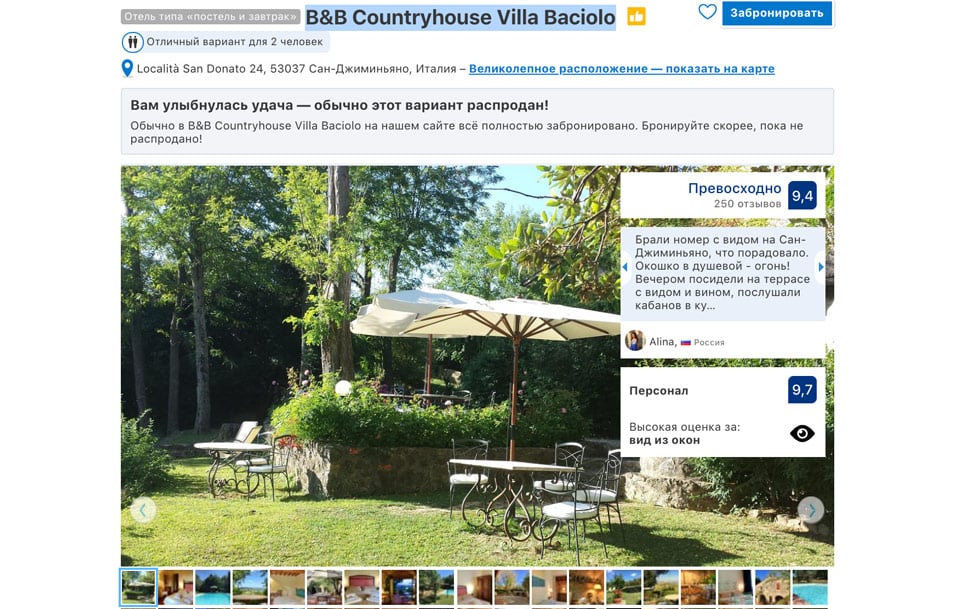
A double room starts at around €105 per night. Guests enjoy free parking, a swimming pool, and delicious breakfast.
We recommend booking this dreamy spot at least three months in advance – availability fills up quickly. For example, we barely secured a spot in April for a June visit. Nearby, you’ll also find charming towns like Santa Lucia (10 minutes away) and Volterra (about 14 miles / 23 km).
You can also explore more farm stay options. Here’s a video tour of a villa we stayed at one summer:
Feel free to share your experiences and photos in the comments. If you need any advice related to this article, I’m here to help.