 Italy for me From Italy with love


A postcard-perfect Rome reveals itself during a stroll through the city center. But locals who’ve spent their lives in Trastevere see the Eternal City quite differently.
Located on the right bank of the Tiber River, this district retains the charm of old Rome—winding cobblestone lanes, cozy trattorias, and everyday Romans going about their lives.
Page Contents
History
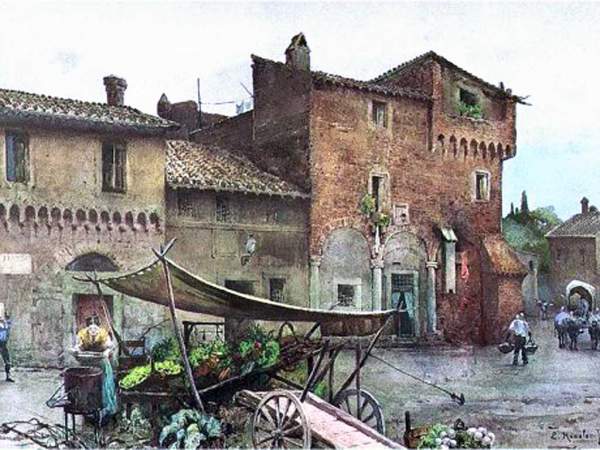
The land we now call Trastevere was first settled by the ancient Etruscans. Later, migrants from Syria moved in, followed by the Romans. Emperor Octavian Augustus named the hill on the western bank of the Tiber as Janiculum (Mons Janiculus). Eventually, this area was absorbed into Rome as a distinct district called Transtiberina—meaning “Beyond the Tiber.”
Trastevere’s status evolved over time. By the 3rd century AD, it had become a residential hub for Rome’s middle class and was enclosed within the city walls, transforming from suburb to city district.
Throughout the Middle Ages, Trastevere was rebuilt many times, developing into a maze-like network of narrow streets. Low-rise buildings sprang up along the cobbled paths known as *sanpietrini*. Today, terracotta façades draped in dark green ivy have become iconic features of this historic Roman quarter.
We also recommend reading tips on renting apartments in Trastevere.
Attractions
Trastevere’s long and layered history is reflected in its architecture, places of worship from multiple faiths, and cultural diversity, all of which lend the area its unmistakable character.
San Crisogono Basilica
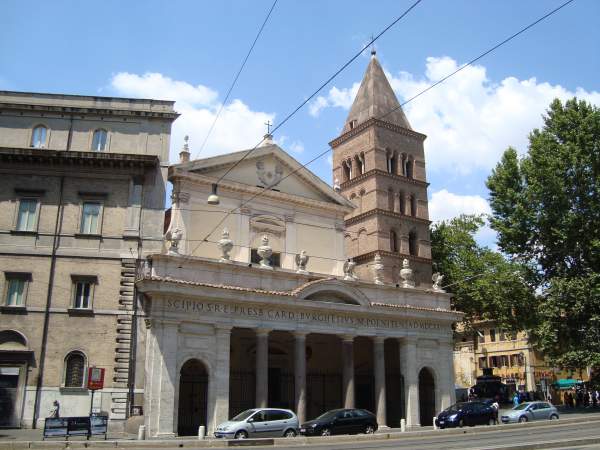
A walk through Trastevere must include the neighborhood’s signature landmarks. Begin on Viale di Trastevere and you’ll immediately spot the Basilica of San Crisogono, dedicated to early Christian martyr Chrysogonus of Aquileia.
The original church, built in the 5th century AD, no longer exists. It was entirely rebuilt in the 12th century under the patronage of Cardinal Giovanni da Crema. Much of the decorative detail from that period still survives today. The Cosmatesque mosaic floor complements Baroque elements added in the 16th century.
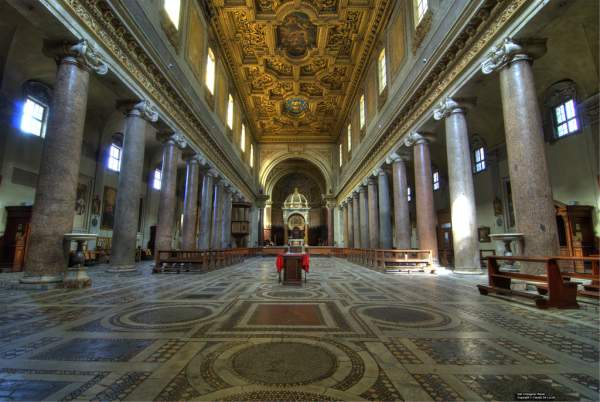
The basilica’s refined interior is crowned by a golden apse designed from sketches by Gian Lorenzo Bernini. The relics of Saint Chrysogonus are enshrined in this area. Fresco fragments from the 12th century are still visible, along with a full cycle illustrating the life of the martyred saint. The coffered ceiling features a dramatic black-and-gold motif with a central copy of *Saint Chrysogonus in Glory* by Guercino.
Address: Trastevere, Piazza Sonnino, 44.
Santa Maria in Trastevere (Chiesa di Santa Maria in Trastevere)
One of the most cherished churches among Romans is the early Christian basilica that graces the heart of the Trastevere district. Santa Maria in Trastevere dates back to the 3rd century AD and is widely considered to be the oldest church in Rome. The church is dedicated to Saint Mary, and the current version was restored in the 12th century by Pope Innocent II.
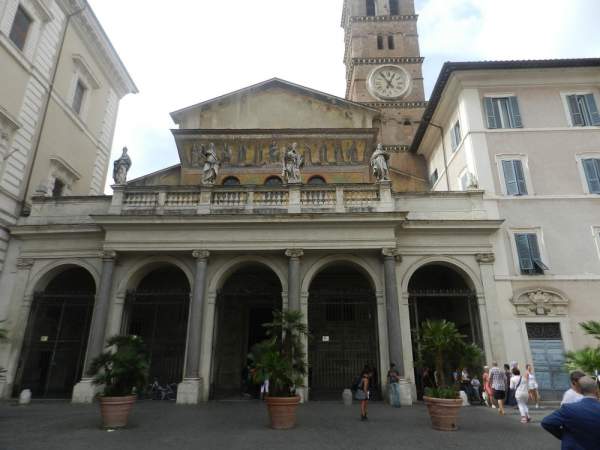
Tall columns and arched vaults evoke the elegance of Romanesque architecture, while the church’s overall design also reflects deep classical influences. The bell tower, which rises above the church, was built in the 12th century and has a more distinctly medieval appearance.
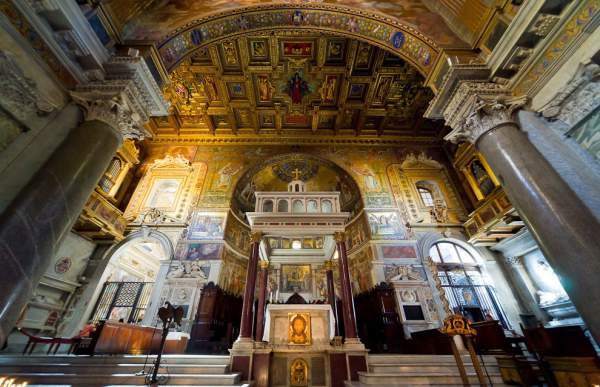
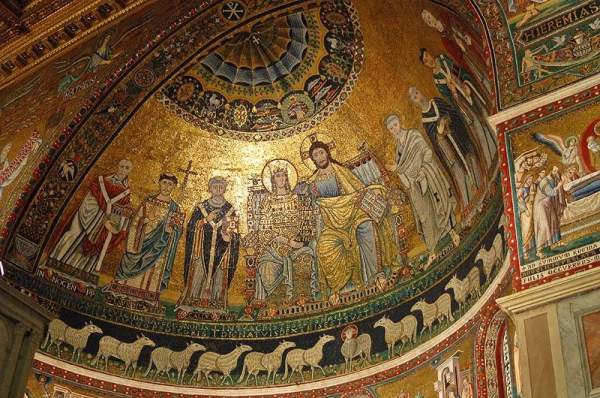
Inside, the basilica impresses with its harmonious blend of ancient and medieval styles. The central nave is flanked by soaring Ionic columns, but the highlight is the radiant mosaic in the apse, crafted in 1140. Set against a shimmering gold background, the mosaic depicts Mary breastfeeding the infant Jesus. This central image is complemented by scenes from the life of the Virgin, created by the famed Roman artist Pietro Cavallini.
The church’s richly coffered ceiling also deserves special mention. Added in the 16th century, the gilded wooden panels shaped like crosses and stars were the work of master artist Domenichino. The ceiling is so exquisite it would not look out of place in a papal palace.
On the map, the church is located at: Piazza di Santa Maria in Trastevere.
Santa Cecilia in Trastevere (Basilica di Santa Cecilia in Trastevere)
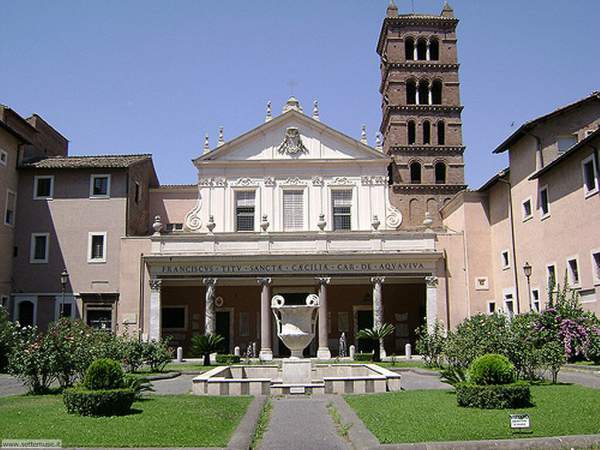
In the 5th century AD, a basilica was built in Trastevere dedicated to Cecilia of Rome (Cecilia a Roma). Legend has it that the church stands on the very spot where Saint Cecilia’s home once stood. She is the patron saint of church music. The original Romanesque structure was significantly altered in the 9th century, and underwent a full reconstruction seven centuries later.
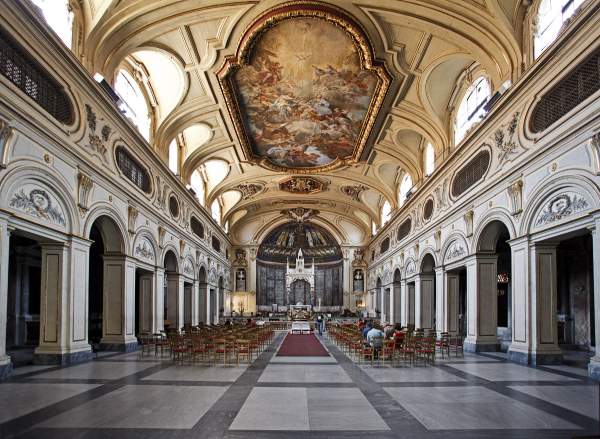
Thanks to Baroque architect Ferdinando Fuga, the church was enhanced with a peaceful courtyard and a fountain. Its elegant façade is adorned with classical columns, and above the entrance is the family crest of Cardinal Francesco Acquaviva d’Aragona, who played a key role in the church’s restoration.
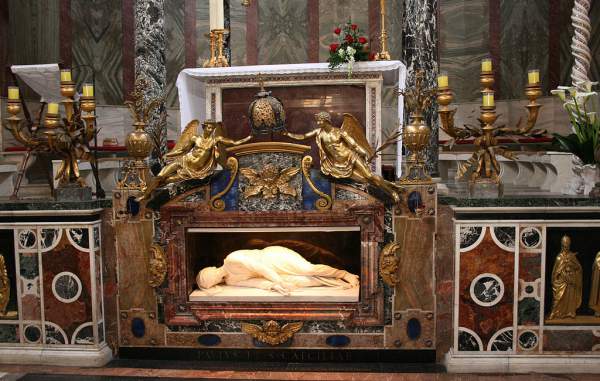
Among the church’s relics are Pietro Cavallini’s *Last Judgment*, a delicate canopy over the presbytery by Arnolfo di Cambio, and the relics of Saint Cecilia herself. In front of the altar stands the powerful white marble sculpture *Martyrdom of Saint Cecilia* by Stefano Maderno, masterfully capturing the tragic image of the saint with her head turned as if in eternal repose. The ceiling vault is adorned with Sebastiano Conca’s fresco *The Coronation of Saint Cecilia*.
Visit Santa Cecilia in Trastevere at: Piazza Santa Cecilia, 22.
Official website: www.benedettinesantacecilia.it
Museum of Rome in Trastevere (Museo di Roma in Trastevere)
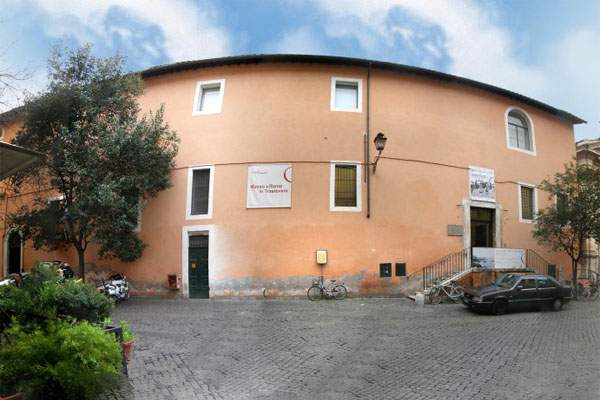
This two-story orange building in Piazza Sant’Egidio blends perfectly into the architecture of Trastevere, except for one detail—it houses the Museum of Rome in Trastevere. The medieval building belonged to the Carmelite monks until the 17th century. After the order lost control, it was transferred to the city.
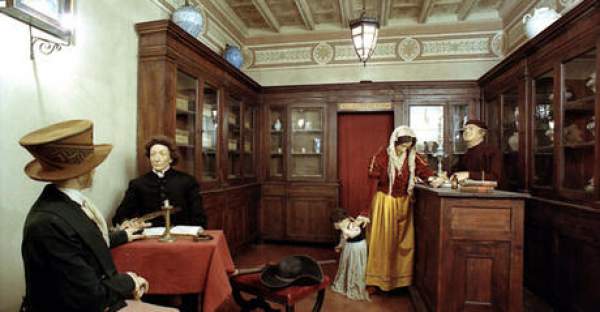
A century later, after major restoration, the museum opened to showcase the life of ordinary Romans in the 18th and 19th centuries—a difficult time for Italy as it transitioned from papal rule toward national unification. Visitors can experience this era vividly through the life-sized exhibits called *Le Scene Romane*, which use mannequins in period attire to portray daily life and typical social scenes of the time.
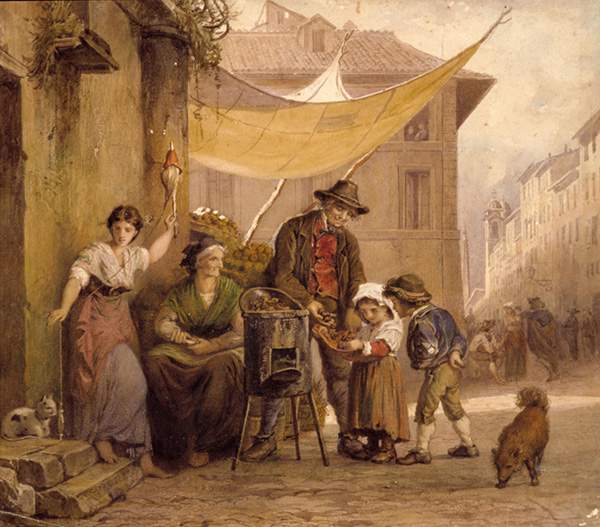
The creators of the museum were heavily inspired by the watercolor works of Ettore Roesler Franz, who documented life in Rome’s poorer neighborhoods during the 19th century. His paintings capture everyday scenes of wine carriers, washerwomen, and street performers. Visitors will find these scenes brought to life inside the museum. In addition to Franz’s works, the museum features sculptures, engravings, paintings, and photographs.
Address: Piazza Sant’Egidio 1/b
Official website: www.museodiromaintrastevere.it
Walking Through Trastevere
One of Trastevere’s greatest charms lies in its cozy restaurants, rustic trattorias, lively pizzerias, souvenir shops, and street musicians. There’s something truly delightful about stumbling upon a curious little treasure during a leisurely walk through the neighborhood. Small piazzas with fountains often turn into impromptu stages for street performers and resting spots for passersby. Discovering this authentic corner of Rome is a true adventure for anyone visiting the Eternal City.
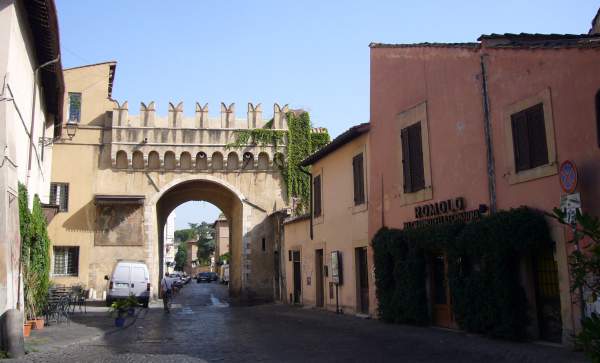
Within Trastevere stands the triumphal arch known as Porta Settimiana, or the Septimian Gate. This historic arch marks the edge of Rome’s ancient boundary wall. Nearby, visitors can explore the Corsini Gallery (Galleria Corsini), which houses works by Italian, European, and Flemish masters, or visit the prestigious National Academy of the Lincei (Accademia dei Lincei).
Botanical Garden
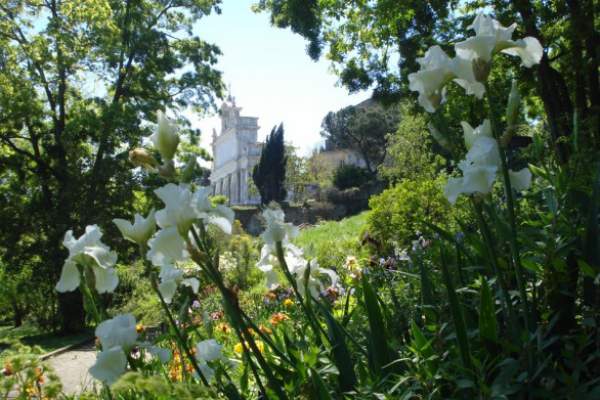
For a break from the city bustle, head to the Botanical Garden (Orto Botanico), located on the grounds of the historic Villa Corsini. In the 17th century, the villa was home to Queen Christina of Sweden (Cristina di Svezia). In 1883, the estate became property of the unified Italian state. Today, the expansive 30-acre (12-hectare) garden is open to the public. Strolling up Janiculum Hill while enjoying the peaceful scenery and fragrant herbs is a luxury every Trastevere visitor can experience.
Garden address: Via di Villa Corsini, Largo Cristina di Svezia
Official website: ortobotanico.web.uniroma1.it
Legends
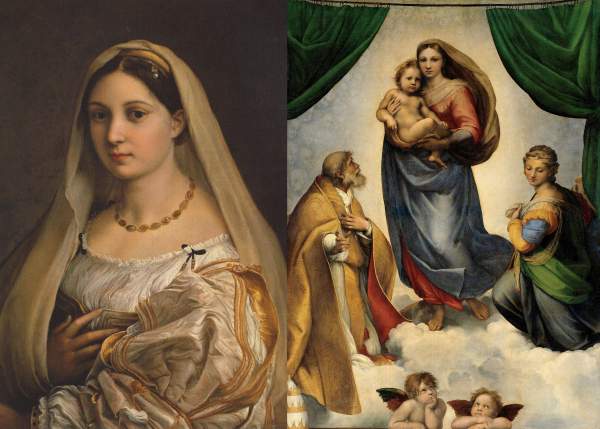
Romans, with their love for romance, are naturally drawn to beautiful legends and mysterious stories. One such tale is linked to the great Renaissance artist Raffaello Santi (Raphael). Many of his works feature a recurring female figure—said to be inspired by a young woman he saw while working on the interior of Villa Farnesina in Trastevere.
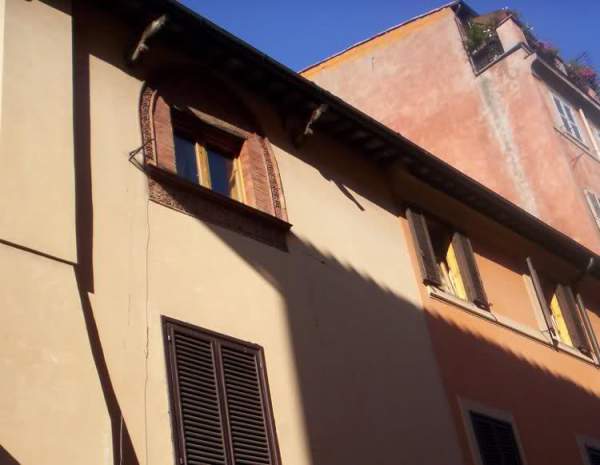
Captivated by her beauty, Raphael immortalized the lovely Margherita Luti, the baker’s daughter, in his masterpieces. The house on Via di Santa Dorotea where she once lived still bears a small commemorative plaque. While no one can say for certain how the story unfolded, walking through these same Trastevere streets lets you feel the romance and charm that once inspired Italy’s greatest artists.
Nightlife
Don’t miss the chance to experience Trastevere in the evening. Its many restaurants serve up tantalizing dishes—lamb, veal, pasta, bean and vegetable-based creations, offal delicacies, pizza, fish, seafood, decadent desserts, and artisan gelato. The enticing aromas and colorful presentations alone are enough to draw you in.
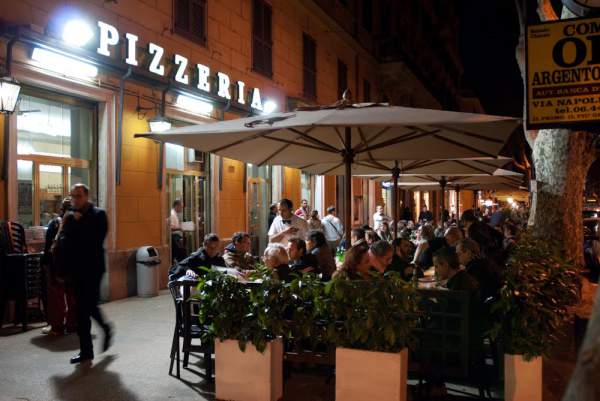
Visitors especially enjoy the restaurants and bars around Piazza Santa Maria. At night, Trastevere lights up with glowing signs, lanterns, and soft music spilling from the windows. The neighborhood offers a wonderful blend of exquisite cuisine, an extensive wine selection, and lively entertainment.
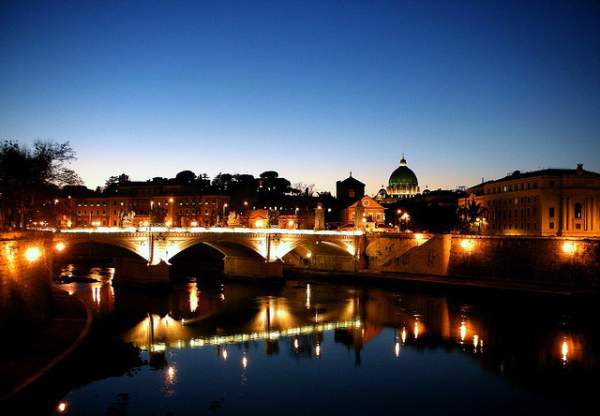
After a memorable meal, take a peaceful stroll and enjoy the enchanting view of Rome at night, with starlight reflected in the Tiber River.
How to Get There
You can reach Trastevere by taking the bus line “H,” which departs directly from the main Termini train station, or by tram No. 8, departing from Piazza Venezia. Once you cross the Tiber River, get off at the Belli stop.
If you’d prefer to walk to Trastevere, here are a couple of scenic routes:
- From the direction of the Circus Maximus, stop by the Mouth of Truth (Bocca della Verità), then follow the path to the Fabricius Bridge (Ponte Fabricio), which crosses the Tiber and leads to Tiber Island (Isola Tiberina). This small patch of land lies adjacent to Trastevere and is definitely worth a visit. A short walk around the island will bring you to your destination.
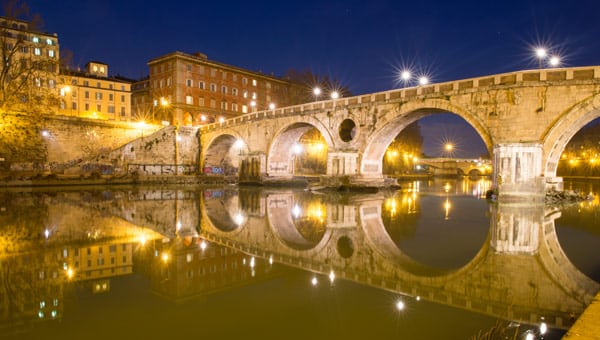
- If your evening begins at a restaurant on Campo de’ Fiori, head toward Ponte Sisto. Once you cross the bridge, you’ll arrive at Piazza Trilussa—a classic meeting point for locals before heading into the bars and nightlife of Trastevere.
Trastevere Train Station (Stazione di Roma Trastevere)
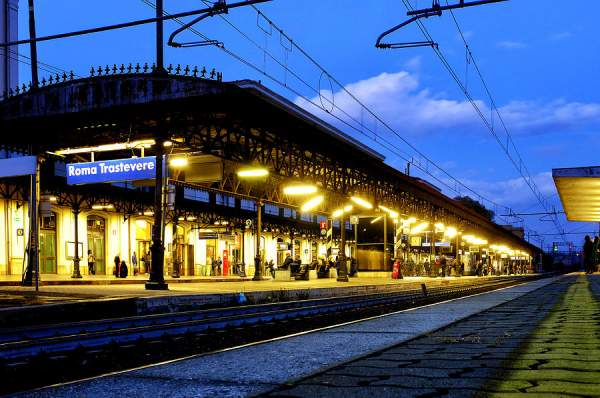
Roma Trastevere is a major railway station that links the capital with neighboring towns. It lies about 1.2 miles (2 km) from the historic heart of Trastevere. Nearby, the famous Porta Portese flea market operates every Sunday. Popular destinations served from this station include Rome–Viterbo, Rome–Pisa, and Rome–Fiumicino. The latter is especially convenient for air travelers, as Fiumicino is home to the city’s international airport. Travel time to the airport is about 30 minutes, with tickets costing €8.
The station is located on Piazza Flavio Biondo. Tram line 8 runs along Viale di Trastevere directly to this square.
Nearby bus stops include:
- Orti Di Cesare: Bus 780 from Piazza Venezia and 170 from Termini
- Gianicolense–Trastevere: Bus H from Termini, and No. 3 from Piramide Metro Station