 Italy for me From Italy with love


The name of the historic Navigli district translates from Italian as “canals,” which comes as no surprise: for centuries, landlocked Milan was a bustling port city, and its appearance closely resembled that of Venice.
In the early 12th century, as economic development surged, the need arose to establish a network of waterways. These canals crossed the heart of Lombardy’s capital, connecting it with the Ticino, Adda, and Po rivers. This network provided access to Lake Maggiore and Lake Como, and opened a water route to the Adriatic Sea.
Page Contents
Historical Background
The first of these canals, the Naviglio Grande, was constructed in 1178 and stretched over 31 miles (more than 50 kilometers). It was used to transport the gleaming white marble that would later become the iconic Duomo di Milano cathedral.
According to historians, the system of artificial canals was based on the drawings of none other than Leonardo da Vinci. By 1888, the city boasted around 124 canals stretching a total of 93 miles (150 kilometers).
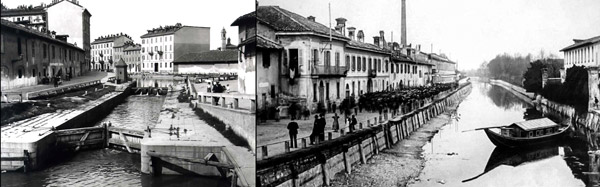
Over time, priorities shifted as road transport became increasingly dominant. Another major issue arose: untreated waste dumped into the canals led to the spread of deadly diseases, including the plague. Milan endured repeated outbreaks. In the 19th century, officials decided to fill in most of the canals and build underground water and sewage systems. The labor-intensive project spanned several decades and concluded in 1979. Only three artificial canals connected to the basin of the old Darsena river port survive to this day:
- The Martesana Canal (Naviglio Martesana), in the northeast of the city;
- The Naviglio Grande;
- The Naviglio Pavese.
The latter two are located in the southwest, near Porta Ticinese, and form the heart of the cozy and unforgettable Navigli district. In 1930, both the Grande and Pavese canals were restored, cleaned, and deepened, although today their water levels are significantly lower.
Modern-Day Charm
Today, Navigli is considered the most scenic and romantic area in Milan. The atmosphere bursts with creativity and freedom, and nightlife here is electric. On weekends, it’s a magnet for locals—especially young people and those in the creative scene.
For tourists, the best time to visit is summer, when special tour boats glide along the canals, offering a unique perspective of Milan.
With its vibrant nightlife and dining options, Navigli reminds me of my favorite Trastevere in Rome. If you’re looking to experience the soul of Milan and enjoy a great meal, this is the place to be.
What to See
Visitors to the Navigli district will find plenty of fascinating attractions and memorable sights. Among the most popular highlights are:
- Vicolo dei Lavandai (Washerwomen’s Alley);
- San Cristoforo Church (Chiesa di San Cristoforo sul Naviglio);
- The Darsena Dock;
- Basilica of Sant’Eustorgio (Basilica di Sant’Eustorgio);
- The Saturday Flea Market (Mercato del Sabato) and the Antique Market (Mercatone dell’Antiquariato).
Vicolo dei Lavandai
Vicolo dei Lavandai is a charming little spot that has preserved the nostalgic spirit of a bygone era.
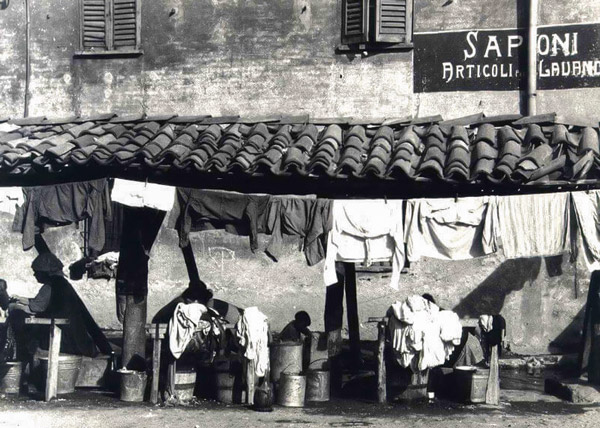
This is where, up until the mid-20th century, locals would wash their laundry in stone troughs beneath tiled-roof shelters, nestled among quaint houses with traditional wooden shutters. Interestingly, women were not allowed to do this physically demanding work. The historic appearance of the laundries remains unchanged. A building that once housed a pharmacy selling soap is now home to a themed restaurant. At No. 6 Vicolo dei Lavandai, visitors can see a prototype of the first washing machine—an enormous centrifuge dating back to 1900.
San Cristoforo Church
San Cristoforo sul Naviglio is a remarkable architectural site, with parts of the structure dating back to the 7th century.
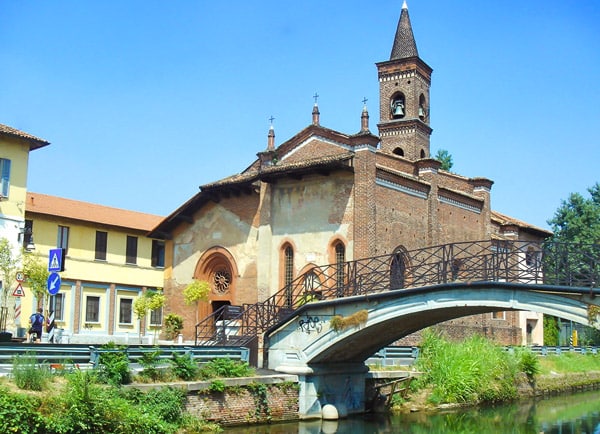
The church underwent numerous reconstructions through the mid-14th century and ultimately took on the form of a classic Gothic church, built in accordance with the Lombard school’s architectural principles. The façade is adorned with richly detailed terracotta decorations and inlays of brilliant white marble. Inside, you’ll find statues of the church’s patron saint and a series of stunning frescoes dating from the 14th to 16th centuries.
The Darsena Dock
The Darsena waterfront, once a bustling commercial port playing a key strategic role for Lombardy, is now a favorite gathering place for both Milan locals and visitors alike.
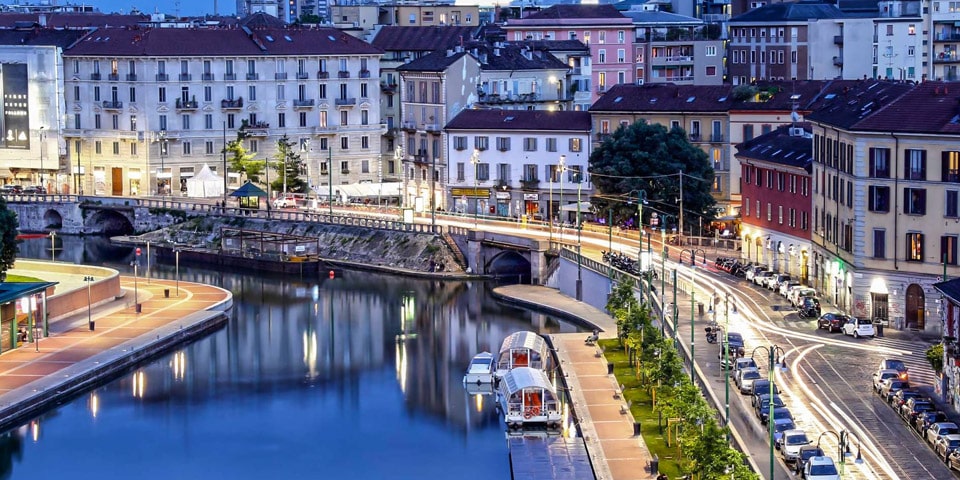
In 2015, the entire area underwent a major redevelopment that transformed both the basin and the surrounding promenade. Today, it’s a beautiful spot for leisurely strolls, enjoying scenic views, and soaking in the authentic Italian ambiance.
Basilica of Sant’Eustorgio
The Basilica of Sant’Eustorgio, named after Milan’s Bishop Eustorgius, was founded as early as the 4th century and is considered the oldest church in the city.
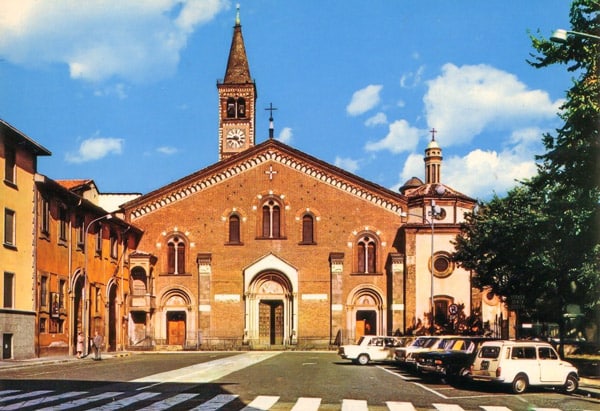
Legend has it that until the 12th century, the relics of the Three Wise Men were kept here, a fact symbolized by the star that crowns the 262-foot (80-meter) bell tower. The church has not remained unchanged over the centuries, undergoing several reconstructions. Its current Romanesque appearance dates back to the 11th century. Later additions included chapels on the right side of the building. The present-day façade is the result of 19th-century renovations.
Antique Market
For lovers of vintage treasures, the sprawling antique market along the Naviglio Grande is a must-visit. It takes place every last Sunday of the month.
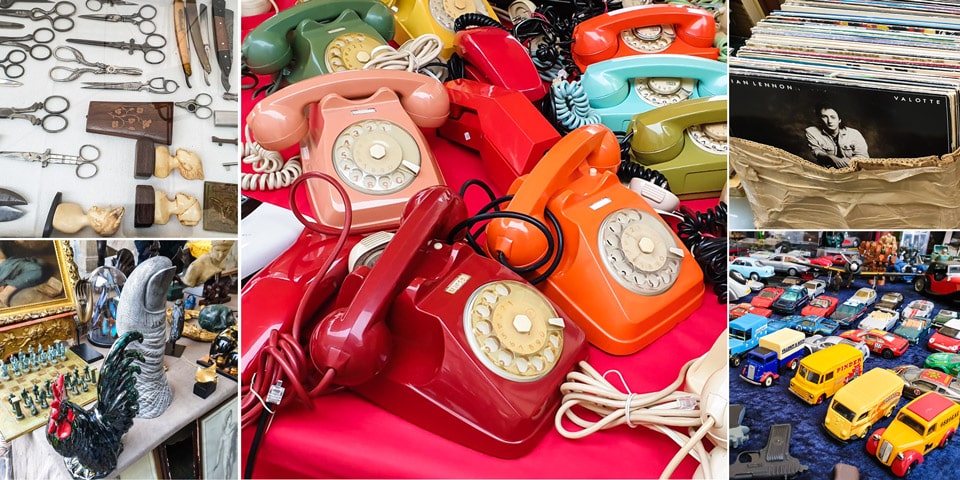
Stalls stretch nearly 1.2 miles (2 kilometers), offering items from various eras—antique jewelry, furniture, paintings, books, coins, figurines, dishware, clothing, designer shoes, and other vintage finds. Collectors, designers, and fashionistas from around the world come here to hunt for unique pieces. A lively flea market also takes place every Saturday. This is the perfect spot to pick up special souvenirs that capture the charm of hospitable Italy.
How to Get There
Finding the Navigli district in Milan is easy, as it’s located right in the historic center. You can get there by tram:
- Line 2 (stop: Porta Genova);
- Line 3 (stop: Ticinese 24 Maggio);
- Line 9 (stop: Gorizia Vigevano).
An alternative option is the metro. Take the green line to Porta Genova station, then exit onto Via Casale, which will lead you directly to the Naviglio Grande. Keep in mind that Navigli is a pedestrian-only area, and private vehicles are not allowed.