 Italy for me From Italy with love


While strolling through Rome, you’ll come across columns and ancient Egyptian obelisks scattered throughout the city. Most of these columns were erected in honor of various emperors. These majestic stone monuments bear witness to the triumphs of generals and rulers of Ancient Rome. The most famous columns immortalized the glory of Marcus Aurelius, Trajan, and other distinguished figures.
Page Contents
History of Their Origin
The emergence of commemorative columns is closely tied to the Roman concept of the Triumph (*Latin: triumphus*), meaning “celebration.”
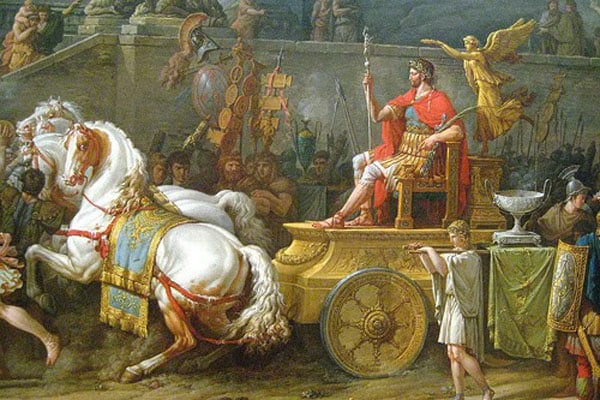
The triumphant return of a victorious commander to Rome was a prestigious reward in itself. The general was granted the right to enter the capital in a gilded chariot, surrounded by cheering crowds. In addition to immediate honors, the victor’s name was immortalized for future generations through the construction of obelisks, arches, and columns. Only noblemen of high rank within the empire could aspire to earn the title of *triumphator*.
You can see all the ancient Roman columns during our exclusive guided tours in Rome.
What Did the Columns Look Like?
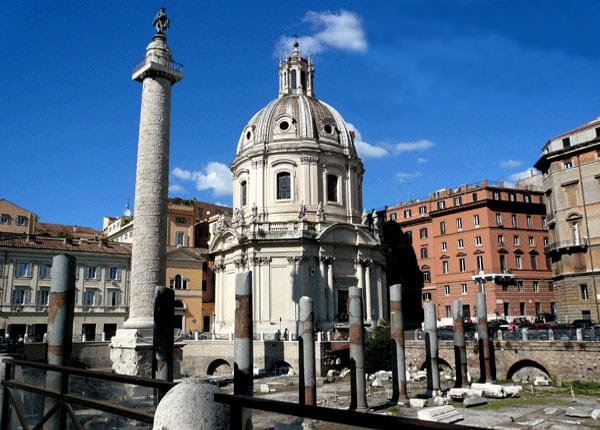
The column of an ancient victor followed a standard design: a stone-carved cylinder placed atop a pedestal, crowned with a statue of the military commander. Typically, the column was covered with intricate carvings depicting large-scale historic battles, heroic deeds of the victor, and achievements of his army. Some columns were assembled from multiple segments and were hollow inside. These structures often housed an internal staircase, allowing visitors to climb to the top of the monument.
Trajan’s Column (Colonna Traiana)
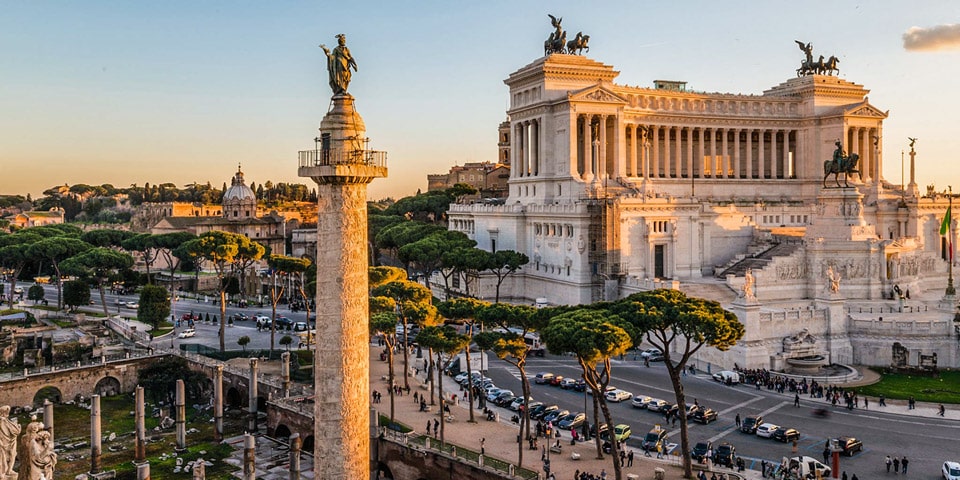
It is believed that the tradition of erecting triumphal columns in Ancient Rome began during the reign of Emperor Trajan (Latin: Marcus Ulpius Nerva Traianus). The Roman ruler led a prolonged military campaign against the Dacian tribes (Latin: Daci). He not only defeated these skilled warriors but also annexed their lands as a new province of the Roman Empire.
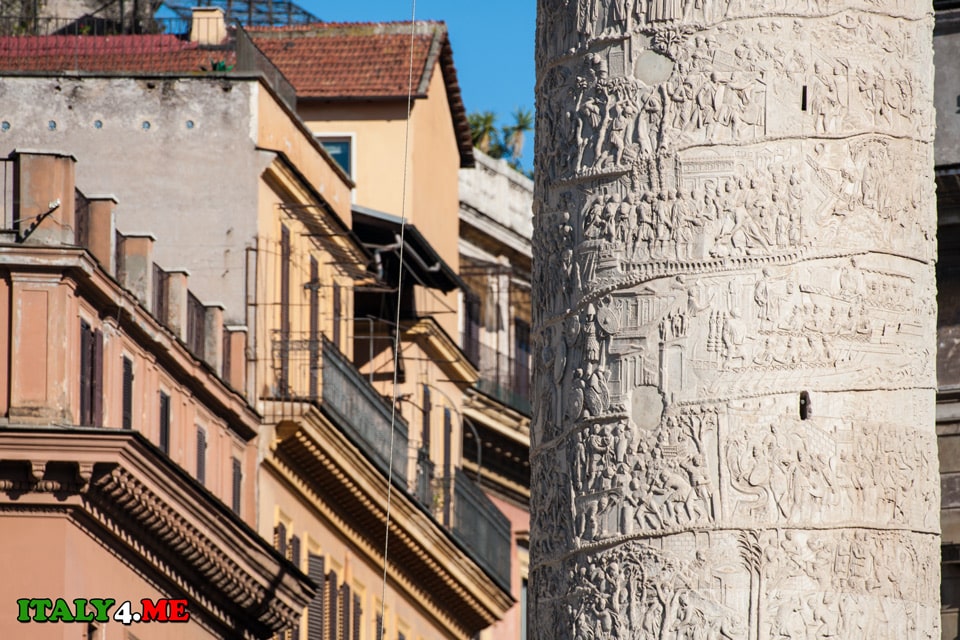
In 113 AD, under Trajan’s orders, the artist and architect Apollodorus of Damascus (Latin: Apollodorus Damascenus) began work on a monumental stone column. This commemorative obelisk was made from Carrara marble, weighing approximately 40 tons. The total height of the memorial is 125 feet (38 meters), composed of 20 hollow segments. The surface of the column features battle scenes depicting the war between the Dacians and the Romans.
In 113 AD, the top of the column was crowned with a triumphant eagle, which was soon replaced by a statue of the emperor himself. In the late 16th century, Pope Sixtus V (Latin: Sixtus V) ordered the memorial to be topped with a statue of the Apostle Peter.
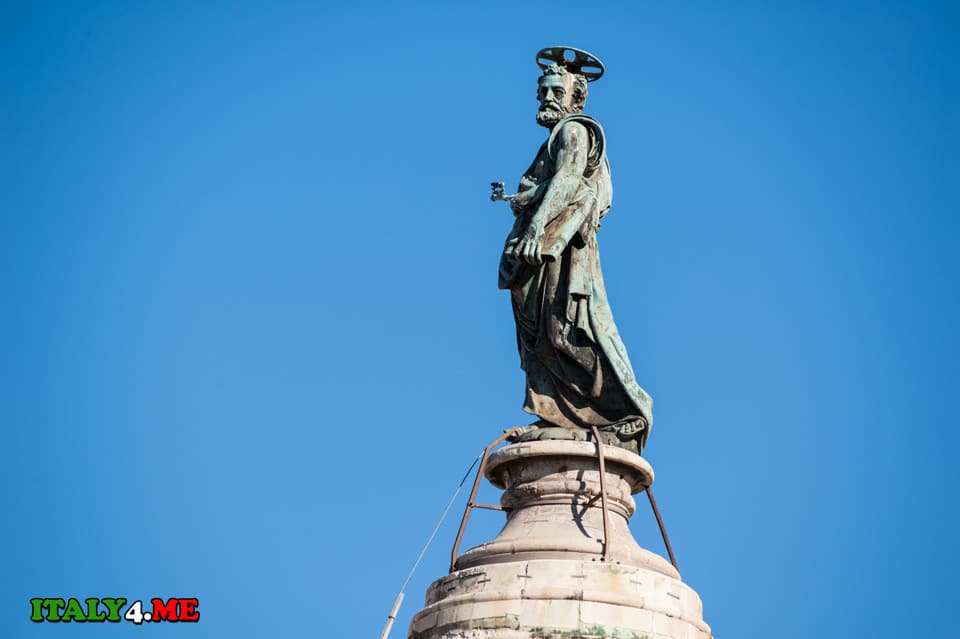
Modern scholars highlight the immense historical value of the reliefs carved into the column. Thanks to the painstaking detail, one can clearly see the attire, weaponry, and combat tactics used in ancient times. For the average visitor, it’s simply a marvel of craftsmanship worth admiring. The monument also bears an inscription, testifying that the Senate and the Roman people honored the great deeds of Emperor Trajan.
- Address: Trajan’s Forum (Latin: Forum Traiani), Via dei Fori Imperiali
Column of Antoninus Pius (Colonna di Antonino Pio)
The Column of Antoninus once stood proudly in the Campus Martius (Latin: Campus Martius). It was erected in A.D. 161 by the successors of Emperor Antoninus Pius. The monument honored the deceased emperor and his wife. Originally, the red granite column stood on a massive pedestal adorned with carvings and was topped with a statue of Antoninus Pius.
After the fall of the Roman Empire, the column was abandoned for centuries. The base of the memorial gradually sank underground, and part of the 49-foot (15-meter) shaft was irretrievably lost. In the 17th century, thanks to the efforts of Carlo Fontana, the column was unearthed. The pedestal was well preserved, later restored, and saved for posterity. However, the surviving portion of the granite column was eventually repurposed to face the obelisk now standing in Piazza Montecitorio (Palazzo Montecitorio).
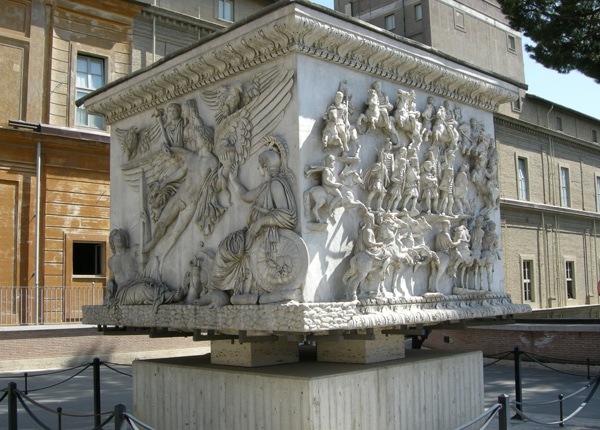
Today, visitors can admire the Antoninus Pius memorial while touring the Vatican Museums (Musei Vaticani). Only the preserved pedestal base is on display, featuring a relief of the emperor ascending into the heavens. Among other carvings, you’ll find symbolic depictions of Rome and the Campus Martius.
Recommended tour of the Vatican Museums
Column of Marcus Aurelius (Colonna di Marco Aurelio)
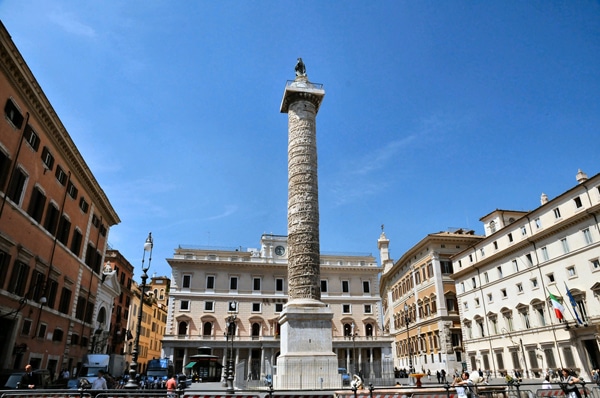
The Column of Marcus Aurelius was constructed in A.D. 193 in honor of Emperor Marcus Aurelius (Latin: Marcus Aurelius Antoninus). His reign was overshadowed by threats from Germanic and Sarmatian tribes. The years between A.D. 166 and 180 are remembered as the Marcomannic Wars. The emperor and his adopted son Commodus (Latin: Lucius Aelius Aurelius Commodus) succeeded in subduing the warring tribes and restoring order to the empire’s eastern frontiers.
Marcus Aurelius, however, did not live to witness the triumph dedicated to him, as he died in A.D. 180. The memorial, inspired by the Column of Trajan, featured a 33-foot (10-meter) base and a 98-foot (30-meter) shaft. The column was assembled from 28 blocks of Carrara marble, intricately carved with scenes of battles between the Romans, Germans, and Sarmatians. Originally crowned with a statue of Marcus Aurelius, it was replaced in the 16th century by a statue of the Apostle Paul.
The Column of Marcus Aurelius stands today in Piazza Colonna, a square named after it. For a time after its restoration in the 16th and 17th centuries, the column was mistakenly attributed to Antoninus Pius.
Column of Phocas (Colonna di Foca)
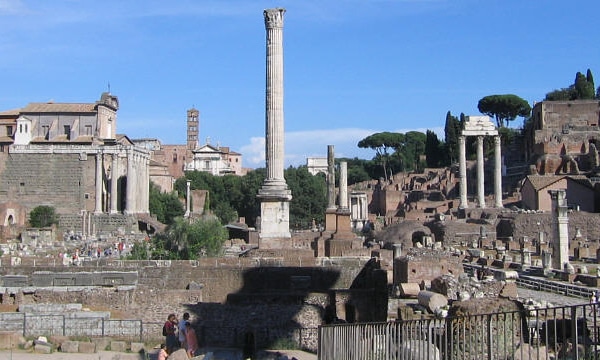
The Column of Phocas marks the final monument erected in the construction of the Roman Forum (Latin: Forum Romanum). In A.D. 608, a white marble column, standing 44.6 feet (13.6 meters) tall, was erected near the Rostra (the speaker’s platform) and dedicated to the Byzantine Emperor Phocas (Greek: Φωκᾶς).
At a time when Christianity was still unified—before the split between Eastern Orthodoxy and Roman Catholicism—the alliance between Byzantium and Rome remained strong. It is believed that a gilded statue of Phocas stood atop the column, commissioned by Pope Boniface IV (Bonifatius IV). Remarkably, after the emperor’s overthrow, all references to his glory were systematically erased, and the column at the Forum suffered the same fate.
- Address: Via dei Fori Imperiali
Column of the Immaculate Conception (Colonna dell’Immacolata)
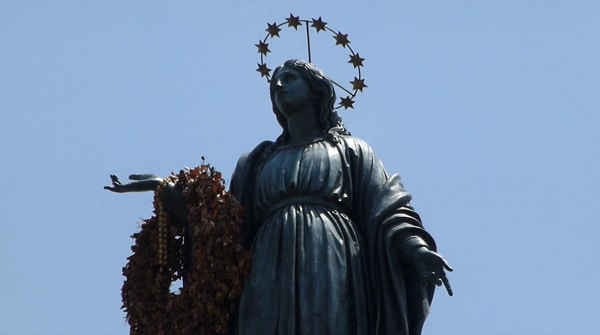
This monument is one of the key landmarks in Piazza di Spagna (Spanish Square). At one end of the square sits the Spanish Embassy, and at the opposite end, in 1854, the column dedicated to the Immaculate Conception of the Virgin Mary was erected. Adjacent to the monument is the Palazzo di Propaganda Fide (Palace of the Propagation of the Faith), designed by Gian Lorenzo Bernini and constructed by Francesco Borromini.
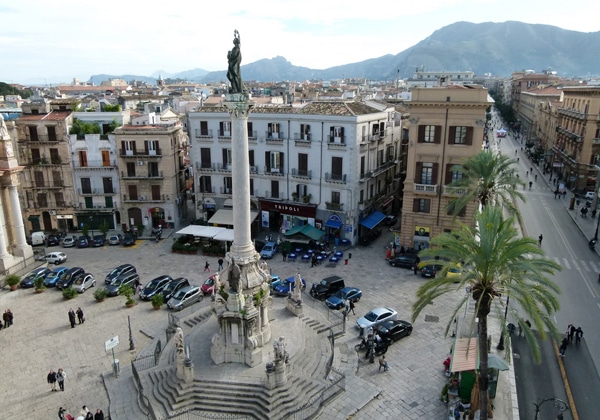
The column’s design was the work of Luigi Poletti, while the statue of the Immaculate Virgin Mary was sculpted by Giuseppe Obici. The project was commissioned by Ferdinand II, King of the Two Sicilies. Through this gesture, the monarch aimed to strengthen ties between Naples and the Roman Pontificate.
Since December 1953, the Popes have laid a bouquet of flowers at the base of the column each year as a sign of reverence for the Immaculate Conception.
At the foot of the 39-foot (12-meter) marble column sit four Biblical prophets: Moses, Isaiah, King David, and the seer Ezekiel.
- Address: Piazza di Spagna