 Italy for me From Italy with love


Earthquakes remain a distant and little-understood phenomenon for most people, yet they are undeniably terrifying. I believe there isn’t a single person in our country who didn’t feel compassion for the Italian families affected by the recent natural disaster in Amatrice and Accumoli.
Tragedies bring with them loss, destruction, and of course, fear—these are the constant companions of any catastrophe. The prospect of another disaster causes concern not only among locals but also among tourists, who remove Italy from their list of potential vacation destinations.
We invite you to take a closer look at this issue and understand whether earthquakes in Italy and in Rome are truly as frightening as the media portray them.
Page Contents
Why Earthquakes Occur in Italy
To understand why earthquakes occur in Italy, we need to examine the tectonic plates of the Earth.
The Earth’s crust is divided into several major tectonic plates. Earthquakes occur as a result of energy being released in the Earth’s crust due to tectonic shifts.
The southern part of the Italian peninsula lies near the boundary where the Eurasian and African plates meet and press against each other, creating seismic stress. Major volcanoes like Etna, Stromboli, and Vesuvius are located very close to this zone.
In addition, Italy has a number of smaller fault lines along the Apennine mountain range (Appennini). This range is gradually stretching at a rate of about 0.12 inches (3 mm) per year. This slow extension causes energy to build up in the Earth’s crust, which is then released during earthquakes.
Minor underground tremors in the mountain valleys occur almost daily. However, they are so slight that they go unnoticed.
Even though Italy is considered one of the most seismically active regions in Europe, it’s worth noting that many major countries around the world—such as Japan, the United States, the United Kingdom, India, New Zealand, Australia, and others—are also prone to earthquakes.
Vulnerable Regions
The regions of Italy most susceptible to earthquakes were legally designated in 2003 to reduce the impact of natural disasters through construction regulations and the strategic placement of earthquake-resistant structures.
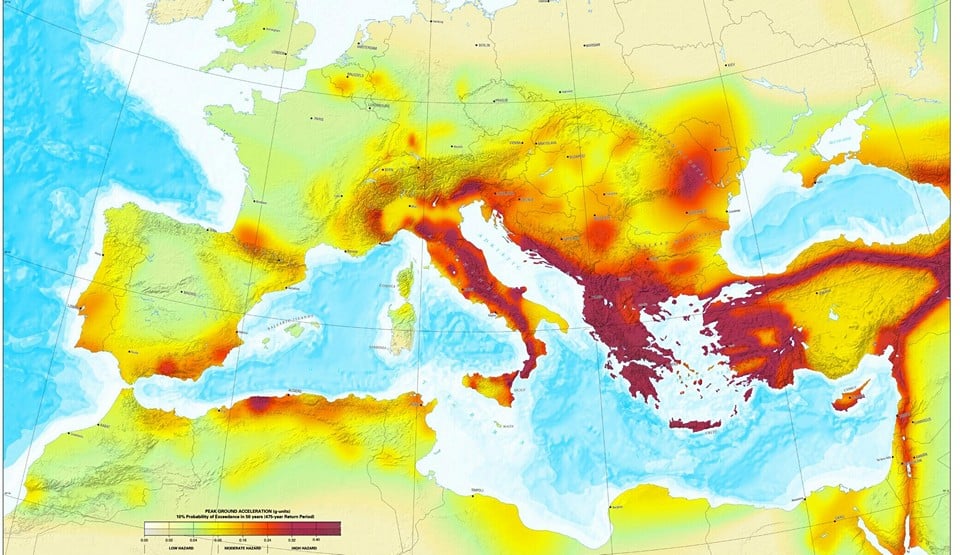
According to this legal measure, the Italian territory is divided into four zones based on the likelihood of seismic events:
- Zone 1 – the most hazardous areas where strong earthquakes are likely to occur. Regions: Calabria, the eastern part of Campania, the western part of Abruzzo, and the southern part of Umbria (these are areas located along the Apennine range), the eastern coast of Sicily, and Friuli-Venezia Giulia.
- Zone 2 – areas that may be partially affected by strong earthquakes. Regions: most of Sicily (excluding the central western coast), Basilicata, Molise, Marche, western Abruzzo, southeastern Emilia-Romagna and Lombardy, western Piedmont, and the western coast of Tuscany.
- Zone 3 – areas where minor tremors are possible. Regions: western Liguria, southwestern Piedmont, almost all of Emilia-Romagna, the central part of Veneto, northern Apulia (Puglia), Lazio, including Rome.
- Zone 4 – the least hazardous areas with a low probability of seismic activity. Regions: southern Apulia (the “heel” of the Italian boot on the map), Sardinia, Valle d’Aosta, most of Piedmont, western and northern Lombardy, Trentino-Alto Adige.
History of Earthquakes
Over the past 2,000 years, around 400 major earthquakes have been recorded in the area of modern-day Italy, claiming the lives of several thousand people.
One of the most devastating natural disasters in Italy occurred in 1783 and is known as the “Calabrian earthquake.” Tremors with magnitudes exceeding 5.9 lasted for nearly two months. The estimated death toll reached about 80,000.
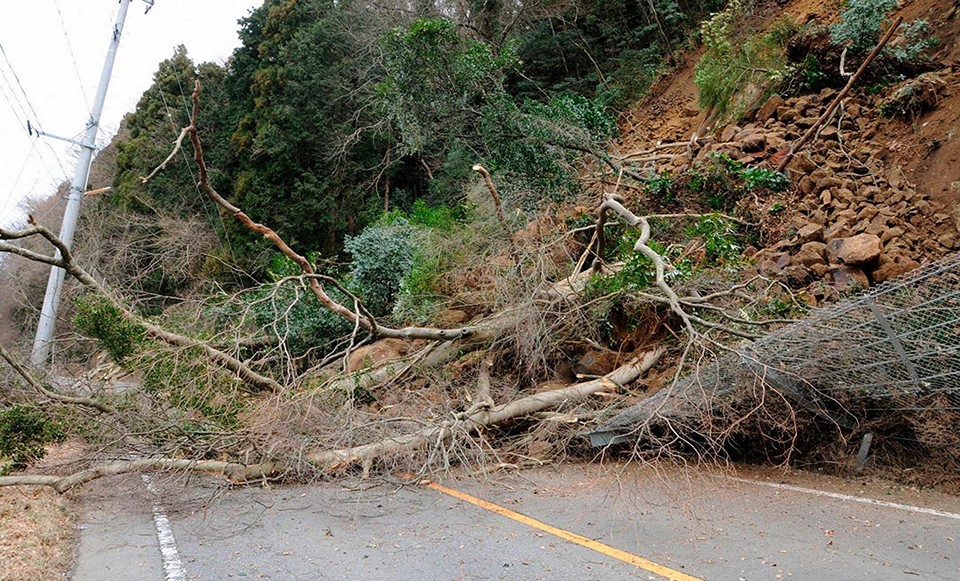
In the first hour of the February 5, 1783 earthquake, the magnitude reached 8. In just one minute, about 100 villages in the Calabria region were reduced to rubble. In some areas, fissures more than a kilometer long opened in the ground. Eyewitnesses claimed that “two mountains moved toward each other until they merged into one, cutting off the river’s course.” This resulted in the formation of new lakes, which were artificially drained 30 years later.
Several hundred people in the town of Scilla, having survived the first tremors, fled to the beach for safety. Many drowned when subsequent shocks triggered a tsunami. Thousands more were killed by water in the cities of Reggio di Calabria and Messina. The suffering continued throughout the rest of winter across southern Italy and Sicily. Furthermore, the final tremors, which struck on March 28, claimed several thousand more lives.
The 1783 Calabrian earthquake is rightly considered one of the most destructive disasters in Western European history.
Over the past century, Italy has also experienced several deadly quakes:
- 1908 – Sicily and Calabria (magnitude 7.1). The cities of Messina and Reggio di Calabria were almost completely destroyed. The death toll reached 200,000.
- January 1915 – Abruzzo. A powerful earthquake leveled the city of Avezzano, killing 30,000 people. Many died from the bitter cold after being left homeless.
- July 1930 – Campania. A 6.6-magnitude tremor claimed about 2,000 lives. Many were spared because they were working in the wheat fields rather than indoors.
- May 1976 – Friuli. A 6.5-magnitude quake in northeastern Italy killed around 1,000 people, injured 2,400, and left 157,000 homeless.
- November 1980 – Campania. Centered in Eboli, a 6.9-magnitude earthquake killed 3,000 people and left around 200,000 homeless. The Leaning Tower of Pisa vibrated for 22 minutes after the tremors stopped.
- April 2009 – Abruzzo. A 6.3-magnitude quake left thousands homeless and killed around 300 people. Tremors were felt even in Rome, 100 km (62 miles) from the epicenter. Members of the National Commission for the Forecast and Prevention of Major Risks were found guilty of manslaughter for failing to issue a timely warning.
- May 2012 – Emilia-Romagna. A 6.0-magnitude earthquake in northern Italy killed 24 people, injured hundreds, and left 15,000 homeless.
Echoes of Earthquakes in Rome
Although Rome is considered a seismically safe area and has never been the epicenter of an earthquake, its history does record tragic echoes of seismic events that caused significant damage.
For example, historians believe that the well-known Domus on Via Valentini (Domus di palazzo Valentini) was once abandoned due to severe damage caused by strong tremors in the 5th century.
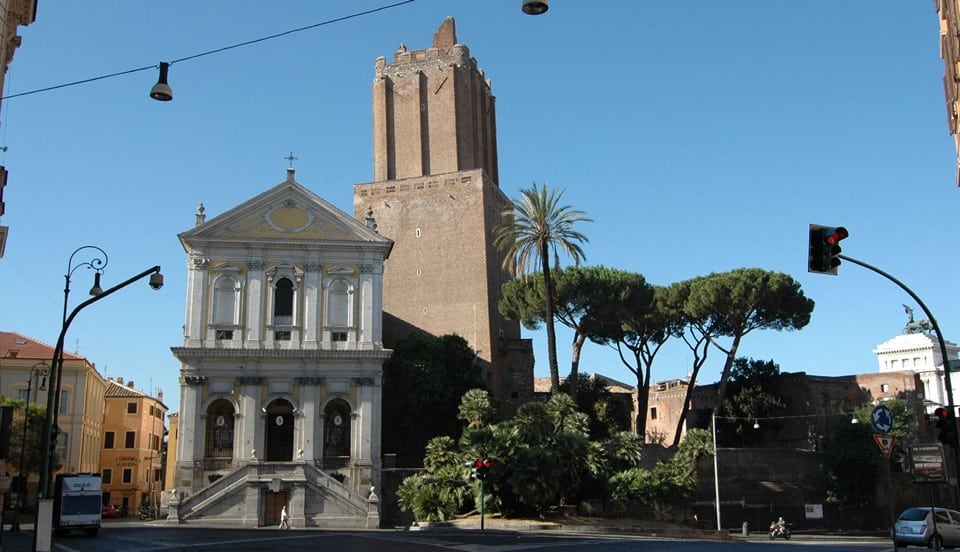
The devastating 1349 earthquake in the Friuli region, with a magnitude of 6.9, caused significant destruction in Italy’s capital. The famous Torre delle Milizie, located behind Trajan’s Market (Mercati di Traiano), lost two floors and developed a slight lean.
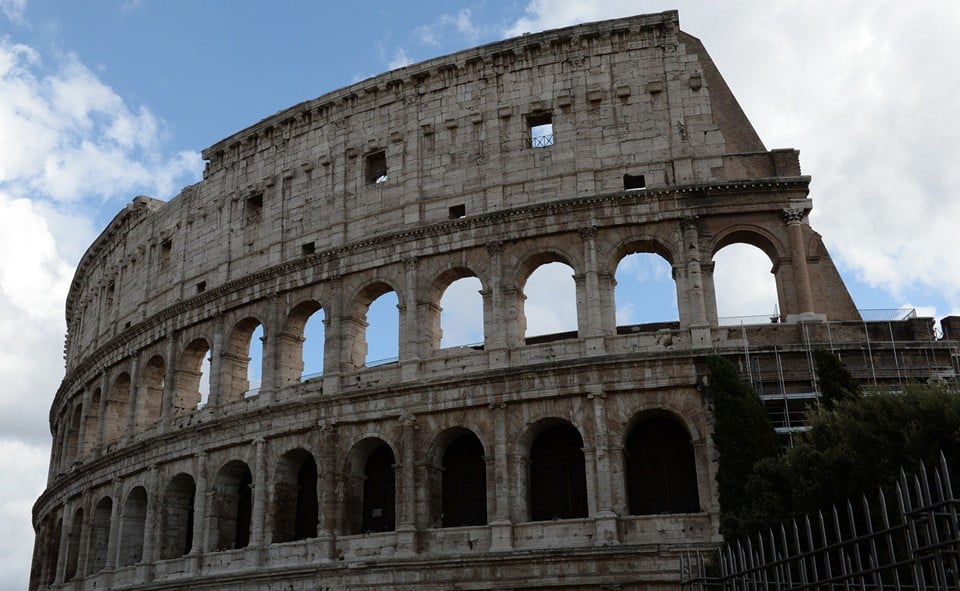
Seismologists confirm that this was one of the most powerful disasters to damage part of the Colosseum (Colosseo) and harm the Basilica of Saint Paul (basilica di San Paolo). In fact, the basilica suffered damage during every significant earthquake due to its vulnerable location near the Tiber River. Francesco Petrarch witnessed the dreadful aftermath during his visit to Rome in 1350. He described abandoned buildings, ruined churches, and massive cracks in many structures. “Everything is sorrowful,” he wrote, “it evokes a chilling horror!”
Perhaps the most destructive earthquake to reach the city in terms of scale was the 1703 disaster, which struck central Italy. Several towns, including Norcia, were wiped off the map. Churches, palaces, and monuments were destroyed. The Colosseum was damaged again. People slept in the streets for weeks due to ongoing tremors.
But nature did not leave the city in peace. Two centuries later, terrifying destruction and death returned. On January 13, 1915, at 7:55 a.m., the city began to shake and people fled to the streets in panic. Even the Swiss Guards and Vatican prelates abandoned their posts and rushed out in terror. Two buildings collapsed entirely, and Capitoline Hill (Campidoglio) was seriously damaged. Cracks appeared in the walls of hundreds of buildings, and the Column of Antoninus (colonna Antonina) shifted on its pedestal. Today, the column’s base stands at the entrance to the Pinacoteca in the Vatican Museums, where we invite you to join an individual guided tour.
Echoes of some earthquakes still reach Rome today, though they cause no serious damage.
2016: Aftermath and Affected Areas
2016 brought yet another tragic rampage of nature. The media was flooded with images of collapsed buildings and bloodied bodies, instilling fear in people around the world. But is it really that terrifying?
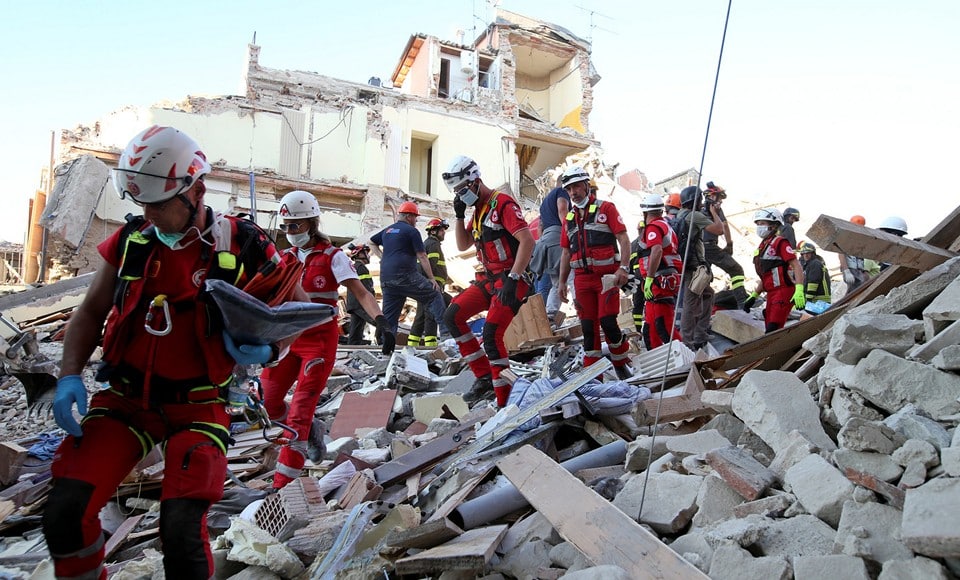
If we closely examine the pattern of casualties throughout Italy’s seismic history, we can clearly see a consistent decrease in the number of fatalities. Let’s take a look at what the Republic faced this time.
August 24
A powerful earthquake with a magnitude of 6.2 struck central Italy early in the morning on August 24. The tremors were caused by tectonic movements in the Tyrrhenian Basin, a seismically active zone in the Mediterranean Sea.
The epicenter was located about 10 km (6.2 miles) southeast of the historic tourist town of Norcia. The quake killed 297 people: 234 in Amatrice, 11 in Accumoli, and 49 in Arquata del Tronto. Around 365 injured were taken to hospitals, while others with less severe wounds were treated on site. Thanks to swift action, 238 people were rescued from the rubble.
The mayor of Amatrice stated that “half of the town is practically gone.” Economic losses were estimated between 1 and 11 billion dollars.
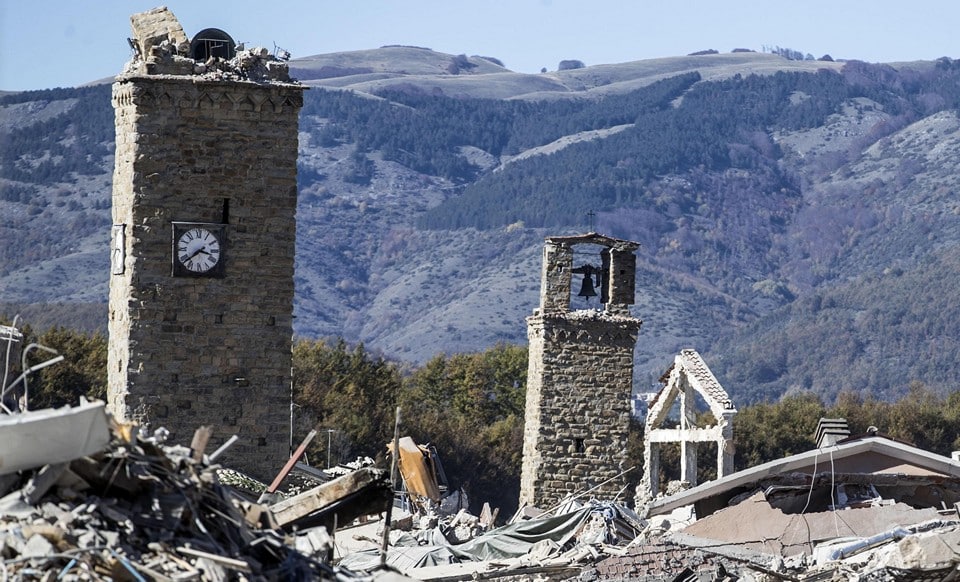
Many medieval buildings were reduced to ruins. In Amatrice, the façade and rose window of the Church of Sant’Agostino were destroyed. The museum dedicated to the painter Niccolò Filotesio (a pupil of Raphael) collapsed. The tremors were felt all the way to Rome (about 112 km or 70 miles southwest of the epicenter). Cracks appeared in Rome’s Baths of Caracalla (Terme di Caracalla).
October 26 and 30
Just as Italy began to recover from the summer catastrophe, it was hit by another wave of seismic activity. A series of strong earthquakes struck the country between the regions of Marche and Umbria from October 26 to 30, 2016:
- Magnitude 5.5, 8 km southeast of Sellano (October 26 at 8:11 PM MSK). Tremors were faintly felt in Rome, though half of my Roman friends didn’t notice them. Several houses collapsed in Marche. Power outages and telephone disruptions were reported.
- Magnitude 6.1, 3 km west of Visso (October 26 at 10:18 PM MSK). The impact was less than expected. One man died of a heart attack caused by the earthquake.
- Magnitude 6.6, 6 km north of Spoleto (October 30 at 6:40 AM MSK). The village of Arquata del Tronto was destroyed. More than 40 towns were partially demolished. Around 100,000 people lost their homes. The Basilica of Saint Benedict in Norcia was damaged. Two women died of heart attacks during the quake.
The October catastrophe caused no fatalities thanks to timely evacuations before the tremors struck.
2017: Earthquake on the Island of Ischia
On Monday, August 21 at 8:57 PM local time, a 4.0-magnitude earthquake struck the Italian island of Ischia. The epicenter was located in the sea, 3 km (1.9 miles) north of the island at a depth of 5 km (3.1 miles). Seismologists reported that the earthquake had a volcanic origin, as the island was formed about 150,000 years ago following underwater volcanic eruptions.
As a result of the disaster, 2 women died and 39 people were injured. The town of Casamicciola was hit hardest. About 2,000 people were left homeless and were quickly accommodated in hotels.
Good news that spread across the world was the rescue of three brothers from under the rubble of a collapsed building. The youngest, seven-month-old Pasquale, was found during the night with only minor scratches. Eight-year-old Mattias was found by morning, and 11-year-old Ciro spent about 14 hours trapped beneath the debris. Their mother, five months pregnant, miraculously escaped through a bathroom window.
It’s worth noting that most of the destruction resulted from the poor condition of buildings and the failure to follow earthquake-resistant construction guidelines. The legality of some of the newer structures is questionable, though Italian authorities continue to make major efforts to minimize damage from such natural disasters.
It’s important to point out that this was not the first time the island experienced tremors. According to the “Catalogo parametrico dei terremoti italiani 2015,” Ischia has experienced 12 earthquakes in the past. The most recent occurred on November 23, 1980. The most devastating, however, struck on July 28, 1883. That quake killed more than 2,200 people out of a population of 4,000. Still, most tremors on the island have not exceeded magnitude 4 and were limited in scope.
Therefore, the scale of the August 21 disaster can be considered minor. In fact, residents of the southern part of the island didn’t feel any tremors at all.
Conclusions and Advice
No scientist in the world can provide a long-term forecast for the occurrence of natural disasters. It’s impossible to say with certainty whether another earthquake will strike in a year or in twenty. Seismologists state that Italy may face serious seismic events every 10–15 years.
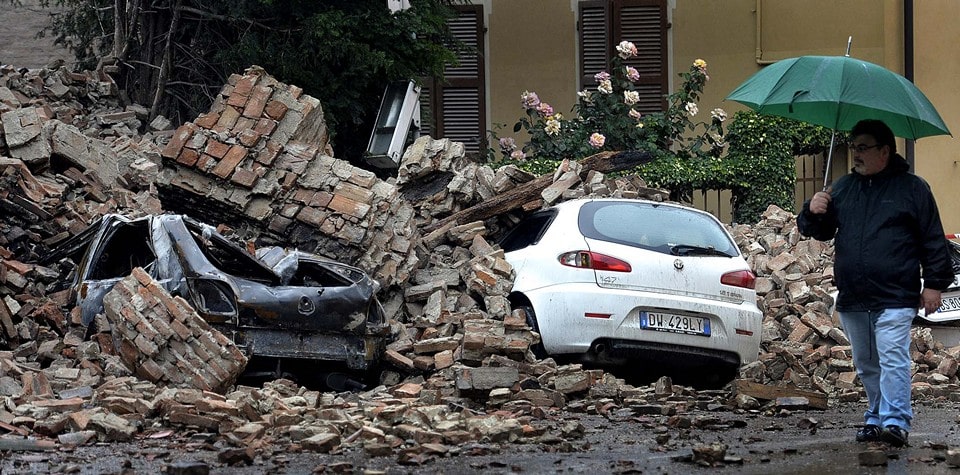
While earthquakes cannot be prevented, casualties and destruction can be avoided through the construction of earthquake-resistant buildings. Today, Italy is paying close attention to disaster prevention policies. It’s clear that buildings in small villages and historical structures cannot be fully protected from the forces of nature, but new developments in major cities are being built with regional vulnerability in mind.
Yes, Italy is not completely safe… But neither is any other country on our planet. We don’t know when or where nature will decide to display its power—unleashing storms, snowfalls, quakes, tornados, or even meteor strikes. But one thing is certain: we shouldn’t live in fear.
Refusing to travel to Italy because of potential earthquakes is like refusing to eat for fear of food poisoning, not becoming a mother for fear of losing your figure, or avoiding love because you’re afraid of being left—while suffering from loneliness. Especially since everything is calm in Rome and other major cities, and we usually learn about disasters from friends or relatives who call in worry after seeing dramatic news reports.
The only fear we should truly have is that of living a life without purpose. So rejoice, love, travel—and remember: “It’s not those who fall into trouble who are lost, but those who lose their spirit.” We’re waiting for you in the Eternal City.