 Italy for me From Italy with love


Are you fascinated by ancient architecture and history? Then you’ll definitely enjoy this selection of renowned Roman monuments of classical architecture. We’ve picked ten of the most important landmarks of the Eternal City—sights you simply must visit.
Page Contents
Roman Forum
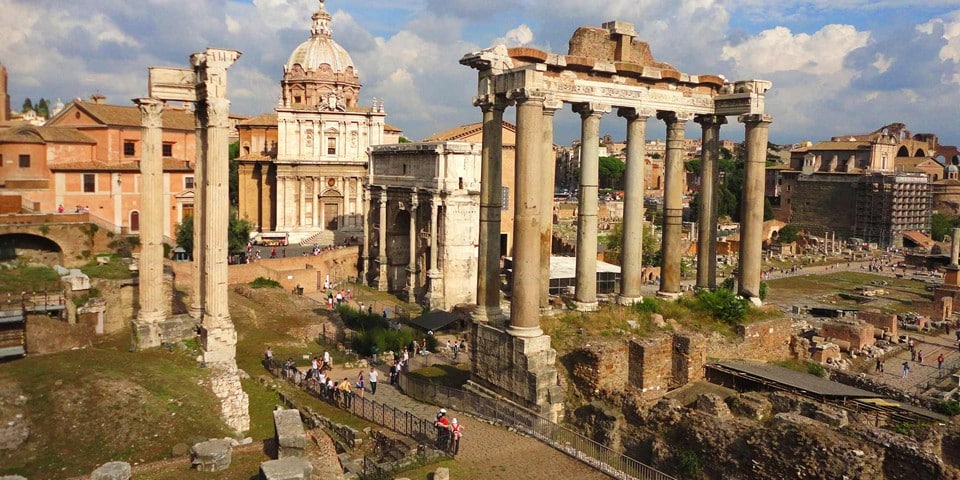
The Roman Forum (Forum Romanum), in the modern sense of the word, originated right here in the 8th century BCE, in the center of Ancient Rome. This space was the heart of public life in the empire: legal assemblies (comitia) took place here, laws were enacted, religious rites performed, and trade was carried out. To “be seen” at the Forum was the main ambition of every aspiring Roman politician or orator.
After the fall of the Roman Empire, the Forum lost its significance. During the Middle Ages, it was used as a source of building materials and even served as pastureland.
- When to visit: after 1:00 PM.
Pantheon
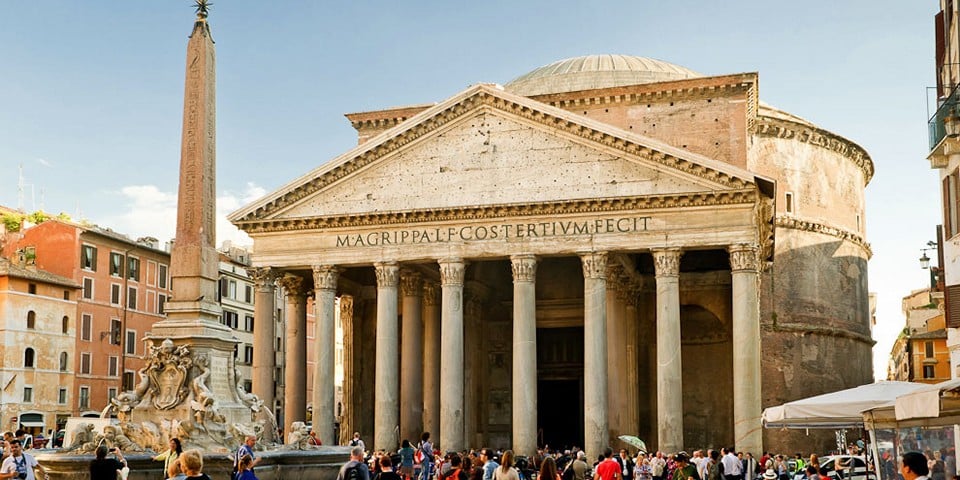
Literally translated, the Pantheon means the temple of all gods. It was built in 126 AD by Emperor Hadrian on the site of an earlier Pantheon constructed by Marcus Vipsanius Agrippa. Hadrian preserved the original founder’s name on the temple walls, along with records of later restorations done under Septimius Severus and Caracalla. The Pantheon remains the largest surviving domed structure of antiquity.
- When to visit: during an early morning private tour of Rome.
Imperial Forums
One Forum was not enough for the Romans. Over a span of 150 years, an incredible architectural complex emerged—later known as the Imperial Forums. Some of the forum structures now lie buried beneath the Via dei Fori Imperiali.
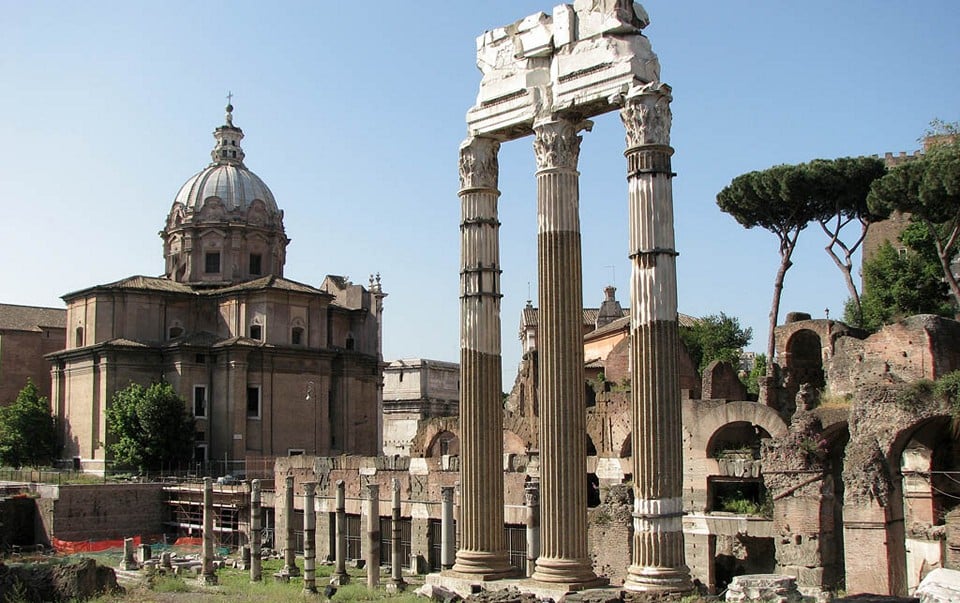
The Forum of Caesar (Forum Caesari), built in 46 BCE, is now a rectangular plaza featuring a temple dedicated to Venus—the goddess especially revered by the Julian family as their ancestral protector.
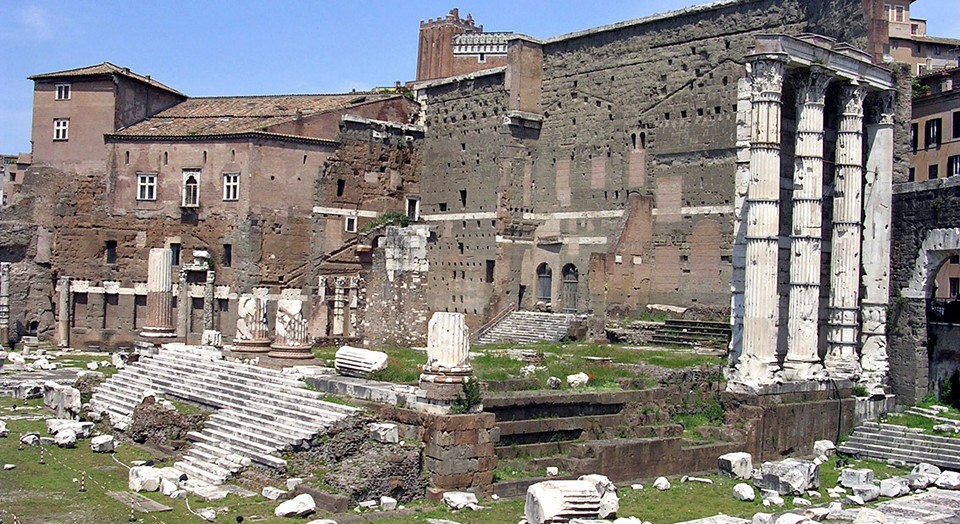
The main attraction of the Forum of Augustus (Foro di Augusto), built in 2 AD, was the Temple of Mars Ultor, symbolizing vengeance against Caesar’s assassins. Today, only a few steps and three 15-meter (49-foot) columns remain.
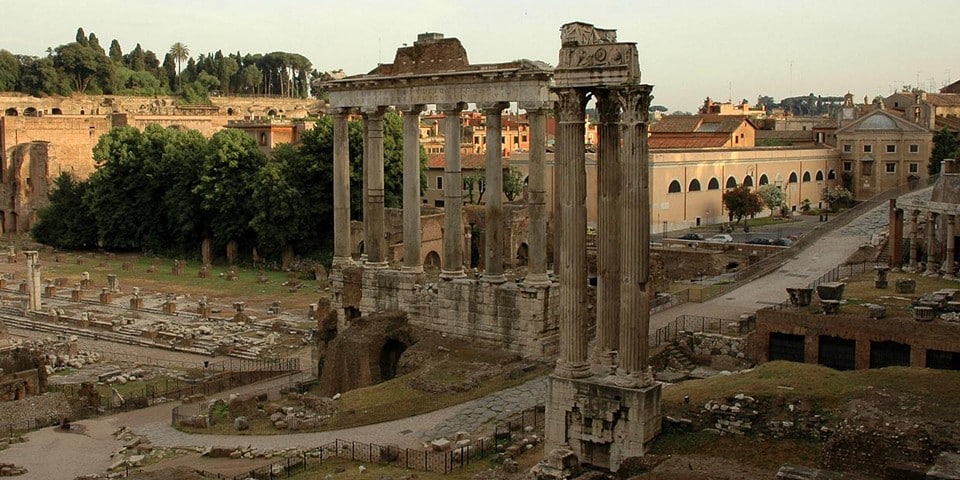
The Temple of Peace (Templum Pacis) in the Forum of Vespasian (Forum Vespasiani) was built in 75 AD to celebrate victory over the Jews. Inside the temple were stored valuable war trophies, and one wall of the forum was decorated with a relief map of Rome.
The central feature of the Forum of Nerva (Forum Nervae), built in 98 AD and also known as the Transitory Forum, was the Temple of Minerva. In 1606, it was replaced by the Fontana dell’Acqua Paola, by order of Pope Paul V.
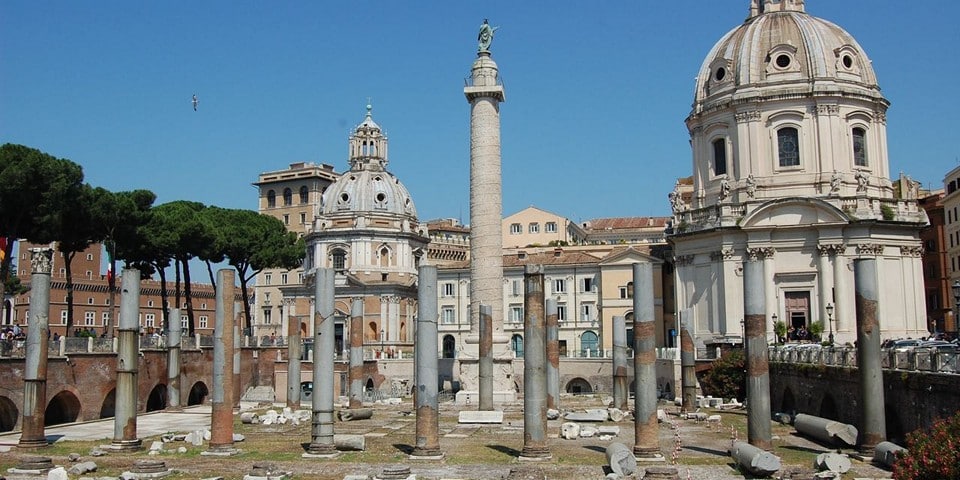
Forum of Trajan (Forum Traiani) is the largest of the Imperial Forums, built in the early 2nd century. It’s adorned with the famous Trajan’s Column, erected to commemorate victory over the Dacians. The Trajan Markets are well preserved and often serve as a venue for various cultural events today.
- When: anytime. From April 13 to November 12, special interactive night tours of the Forums of Augustus and Caesar are held. Check schedules and prices on the official website.
Be sure to read the biography of Emperor Trajan (Marcus Ulpius Nerva Traianus).
Colosseum
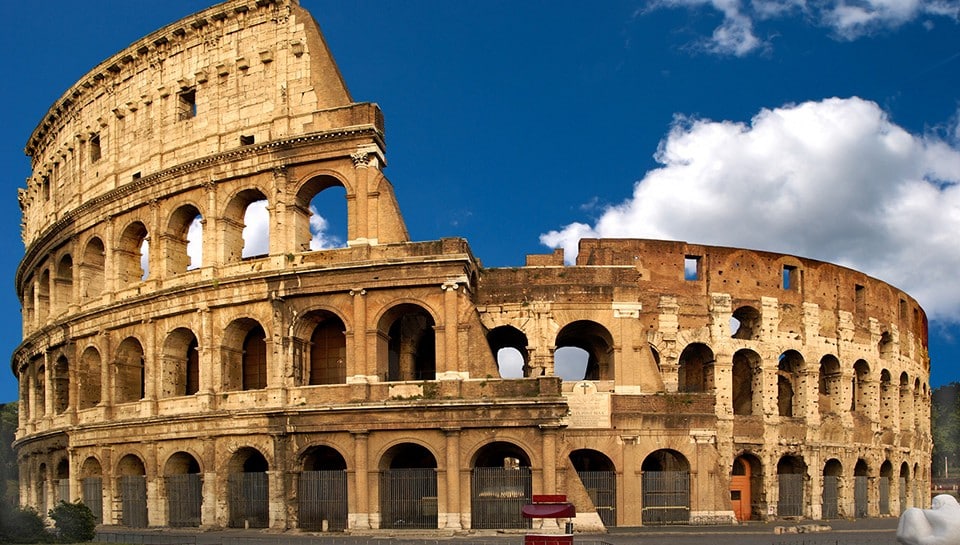
Another name for the Colosseum (Latin *Colosseus* – “gigantic”; Italian *Colosseo*) is the Flavian Amphitheater. One of the largest structures of antiquity (built between 72–80 AD), it could hold up to 50,000 spectators and remains Italy’s most iconic landmark. It was constructed by Emperor Vespasian of the Flavian dynasty to mark the end of Rome’s civil war. The construction took eight years, and the celebrations for its completion lasted 100 days.
- When and how to visit: during the exclusive “Secrets of the Gladiators” tour.
Palatine Hill
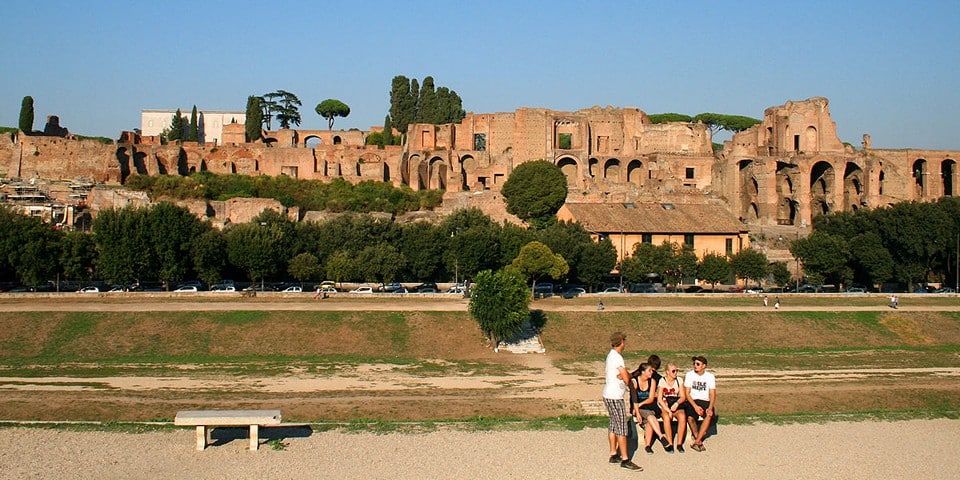
The largest of Rome’s famous Seven Hills, Palatine Hill (*Palatium*) is where the history of Rome began. According to legend, Romulus and Remus were nursed by a she-wolf here. After killing his brother, Romulus founded the city. Over time, the Palatine became the heart of Rome’s elite. During the Republic, patricians settled here, and later emperors, beginning with Augustus, chose it as their residence.
The Golden House of Nero (*Domus Aurea*) and the grand palace complex of the Flavian dynasty once adorned this prestigious hill. However, the barbarian invasions reduced it to a desolate ruin. The revival of this legendary site began only in the 17th century.
- When and how to visit: during a dedicated daytime tour of Ancient Rome.
Baths of Caracalla
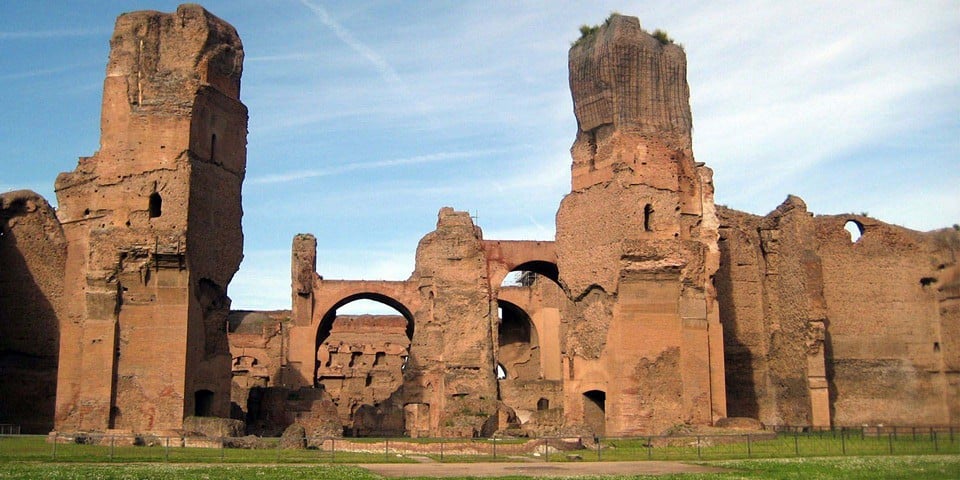
The Baths of Caracalla (*Terme di Caracalla*) span more than 11 hectares (27 acres) and were a magnificent gift from the emperor to the Roman people in 217 AD. The complex featured public and private bathing facilities, athletic areas, and a library that was impressive for its time. Even the lower classes had access to the baths for free. Today, the site of the ancient baths houses the Rome Opera.
- When and how to visit: with professional guide and archaeologist.
Baths of Diocletian
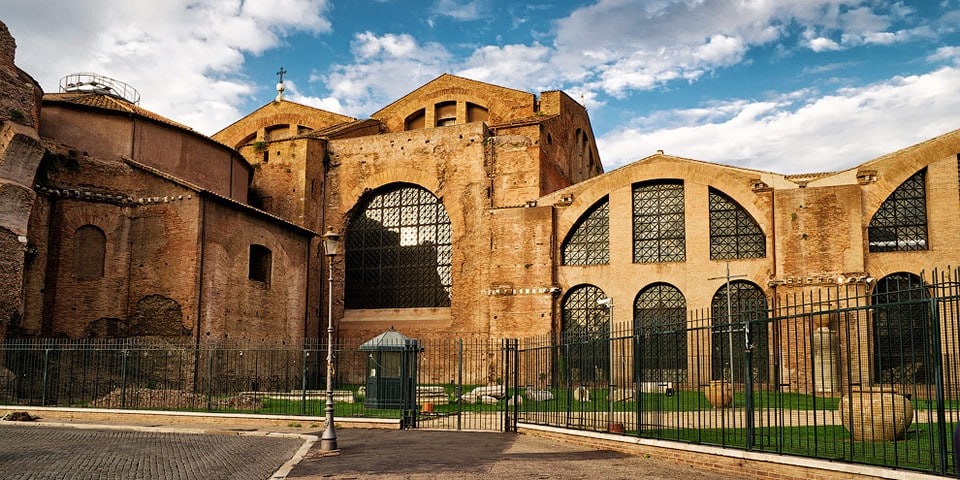
Emperor Diocletian set out to surpass Caracalla—and he succeeded. The Baths of Diocletian (*Termas de Diocleciano*), built in 305 AD, were even larger, designed to accommodate up to 3,000 people. The heating system in the bath halls was engineered so that part of the water remained cold—an ancient version of the contrast shower. The complex was altered in the Middle Ages and has remained fairly well preserved. Today, it forms part of the gardens in Piazza della Repubblica.
- How to visit: entry is €7 (about $7.60), which also includes admission to the nearby National Roman Museum, close to Termini Station.
Column of Marcus Aurelius
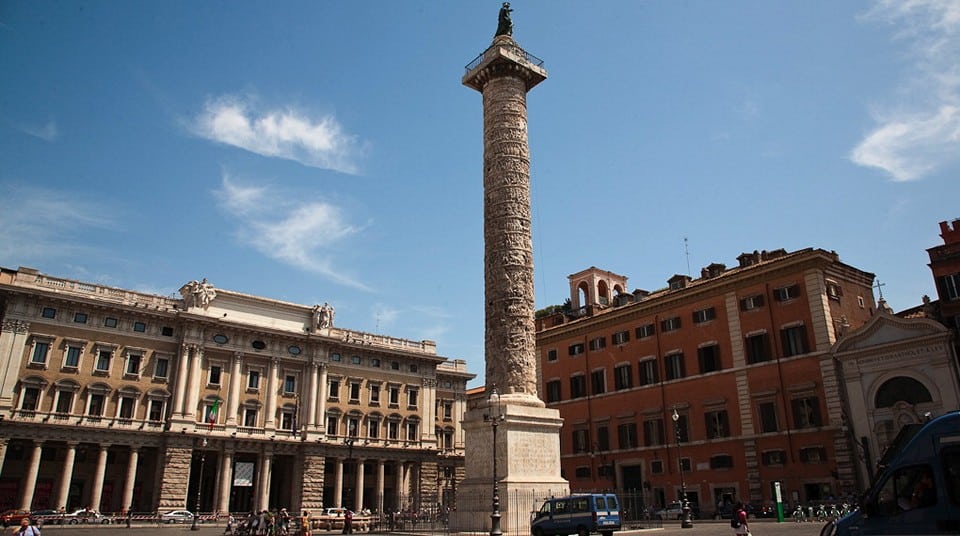
The tallest column in Rome, the Colonna di Marco Aurelio, rises to a height of 42 meters (138 feet). It was erected in honor of Emperor Marcus Aurelius’s victory over the rebellious Germanic and Sarmatian tribes during the Marcomannic Wars. Originally topped with a bronze statue of Marcus Aurelius, the column was crowned with a statue of the Apostle Paul in 1588. Inside the column is a spiral staircase of 200 steps that leads to an excellent viewing platform at the top.
Highly recommended reading: Rome’s museums and galleries—a must-see for every visitor.
Largo di Torre Argentina
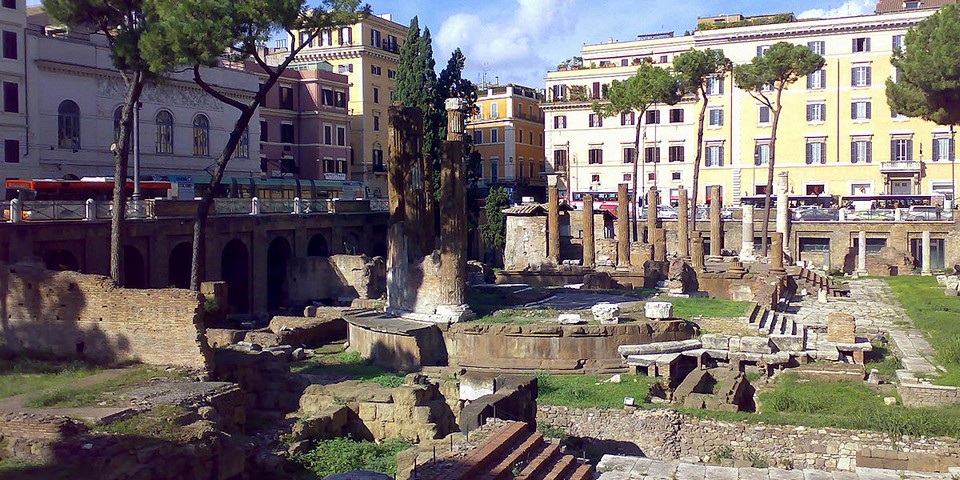
The square known as Largo di Torre Argentina gets its name from a tower built here in 1503. Excavations began in 1926, uncovering the remains of four temples and the Curia of Pompey, where the Senate met in the final days of the Roman Republic. It was here that Julius Caesar was assassinated by republican conspirators.
Today, this legendary site has been claimed by some of my favorite locals—Rome’s beloved cats, who now enjoy a protected sanctuary here.
- This square is part of the route on our Rome at Sunrise tour.
Theater of Marcellus
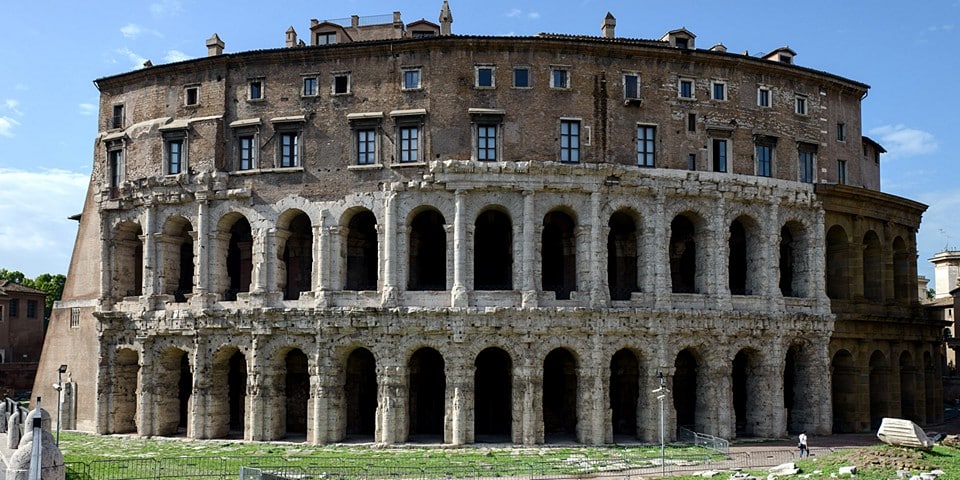
The largest of the ancient Roman theaters is the Theater of Marcellus (*Teatro di Marcello*). Its construction was initiated by Julius Caesar in 13 BCE and completed under Augustus, who dedicated the structure to his late nephew, Marcellus.
The hall, adorned with columns of all architectural orders, could seat up to 20,000 spectators. Seating on the upper levels was reserved for women, foreigners, and slaves, reflecting the strict social hierarchy of Roman society. Of this monumental structure, only the exterior façade has survived. In the 16th century, it was transformed into the Palazzo Orsini by the Peruzzi family.
I’m sure that after all this, Ancient Rome now feels just a bit more accessible—and definitely more captivating.