 Italy for me From Italy with love


Strict yet solemn, Palazzo Massimo alle Terme stands proudly in the very heart of Rome. Once a luxurious mansion belonging to the family of Pope Sixtus V, this building has, over recent decades, transformed into one of the main branches of the National Roman Museum (Museo Nazionale Romano). Inside the palace, you’ll find an impressive collection of classical art.
Page Contents
History
Felice Peretti di Montalto, better known in Italian history as Pope Sixtus V, held the papacy for several years at the end of the 16th century. A man of humble beginnings from an Italo-Serbian family, he rose through the ranks of the Catholic Church—from a poor altar boy to a top-ranking cleric and skilled diplomat. During his papacy, he achieved much for Italy and launched an ambitious reconstruction plan across Rome. Among the new buildings that appeared in the city was the family residence known as Villa Peretti.
In 1888, the historic villa was demolished during the massive construction works of the railway system and the nearby Termini Station (Stazione Termini). The current palace was rebuilt in the 19th century, funded by the noble Massimo family. The architectural project was led by Camillo Pistrucci, a hereditary sculptor, who created a fine example of Neo-Renaissance style.
Until 1960, the palace housed the Jesuit Order’s college. Later, it passed into the ownership of the city of Rome. Following a thorough renovation completed in 1998, Palazzo Massimo reopened as the Museum of Rome’s Archaeological Heritage. Today, it hosts a rich collection of ancient sculptures, frescoes, and an impressive assortment of jewelry and coins.
Exhibits
From the basement to the rooftop, Palazzo Massimo is filled with stunning works of art. Each floor is dedicated to a specific theme: Paintings and Mosaics, Greek Art, Statues, Coins and Jewelry, Frescoes, and Interiors of Wealthy Romans.
First Floor
The first floor of the palazzo houses an extensive collection of ancient Greek and Roman artworks discovered during excavations. This section’s exhibits showcase the evolution of craftsmanship in Ancient Greece, along with Roman sculptors’ dedication to emulating the high standards set during the classical period.
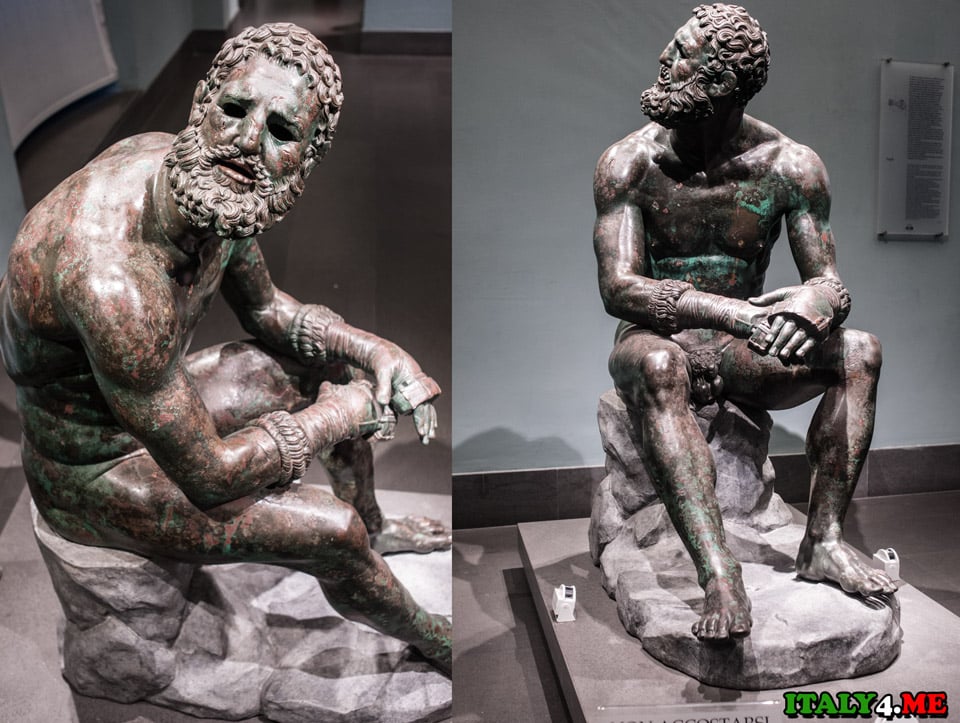
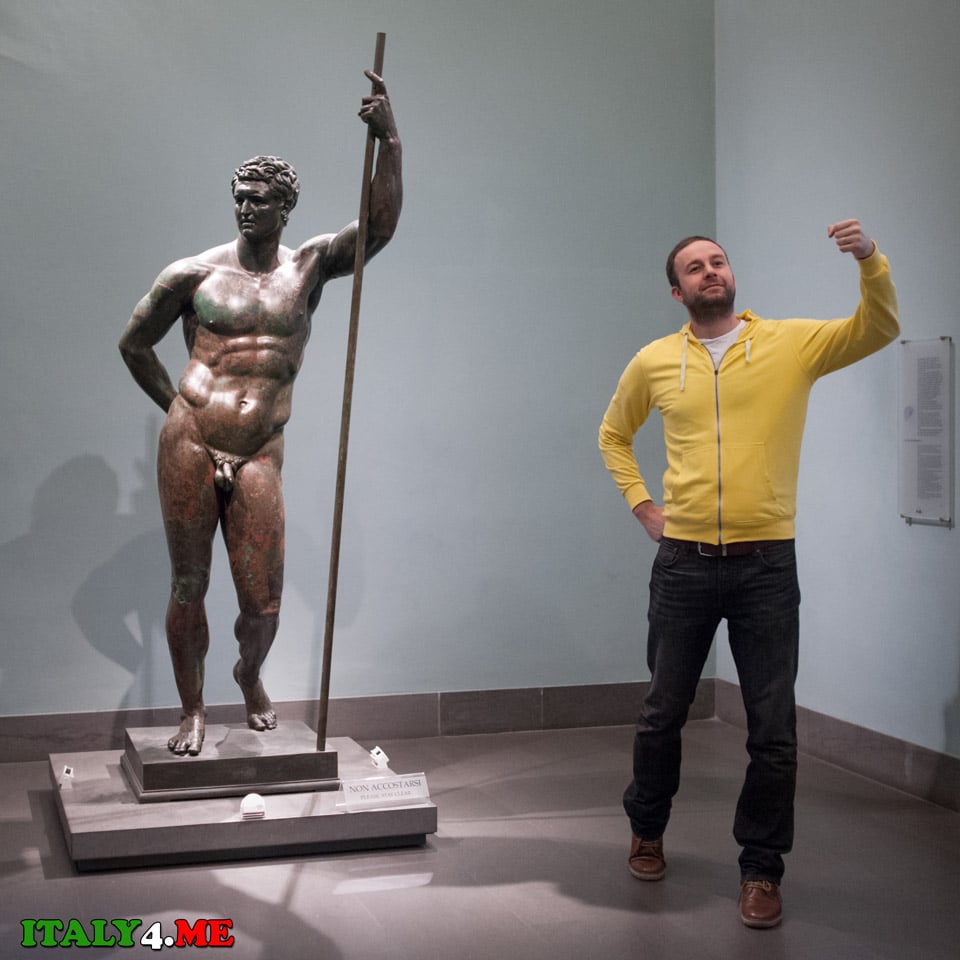
The ancient sculptures impress with their realism. The figure of the “Resting Boxer” (il Pugile in riposo) is defined by tightly knotted muscles, and his posture and facial expression reveal deep exhaustion. The bronze statue of the “Hellenistic Prince” (il Principe ellenistico) appears frozen mid-step, capturing a powerful moment in motion.
Dying Niobid (Niobide morente)
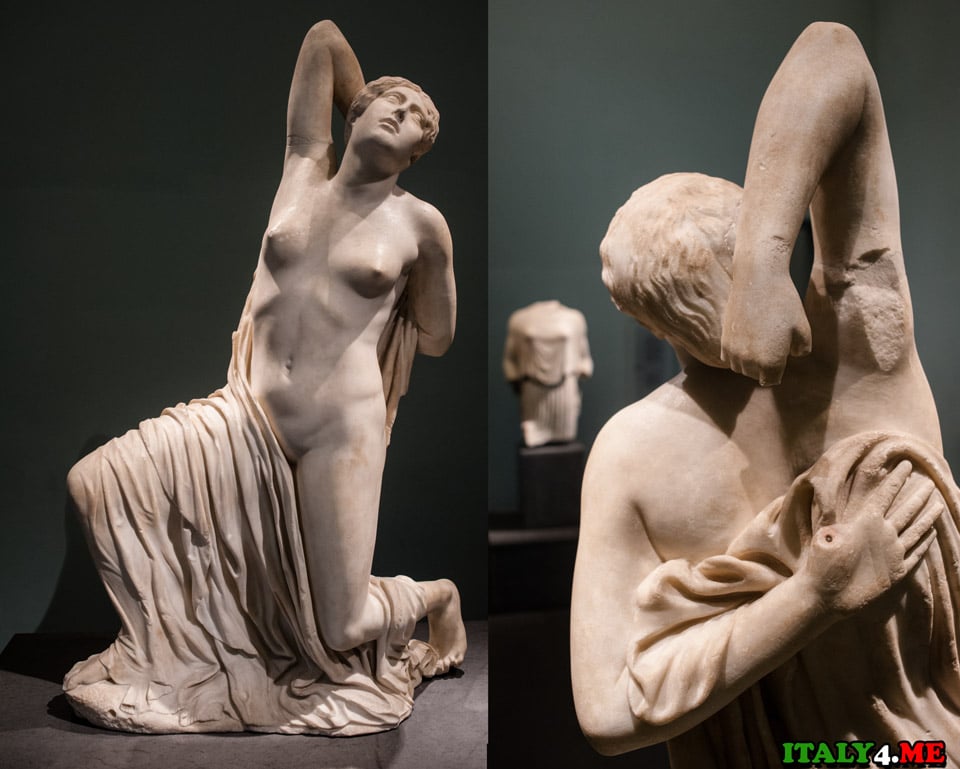
This white marble sculpture portrays a fatally wounded young woman, moments away from collapsing to her knees. Her arms are twisted behind her back in a desperate attempt to remove a deadly projectile. The tragic figure is Niobid, one of the seven daughters of the mythical Queen Niobe. According to legend, Niobe defied the goddess Leto, provoking her children—Apollo and Artemis—to slay all of Niobe’s offspring in retaliation for her pride.
Ancient sources say that this statue of the dying Niobid was originally part of the Temple of Apollo in the major Greek polis of Eretria in the 5th century BCE. Under Emperor Augustus, the sculpture was brought to Rome to adorn the Temple of Apollo built by the emperor himself.
Augustus as Pontifex Maximus (Augusto Pontefice Massimo)
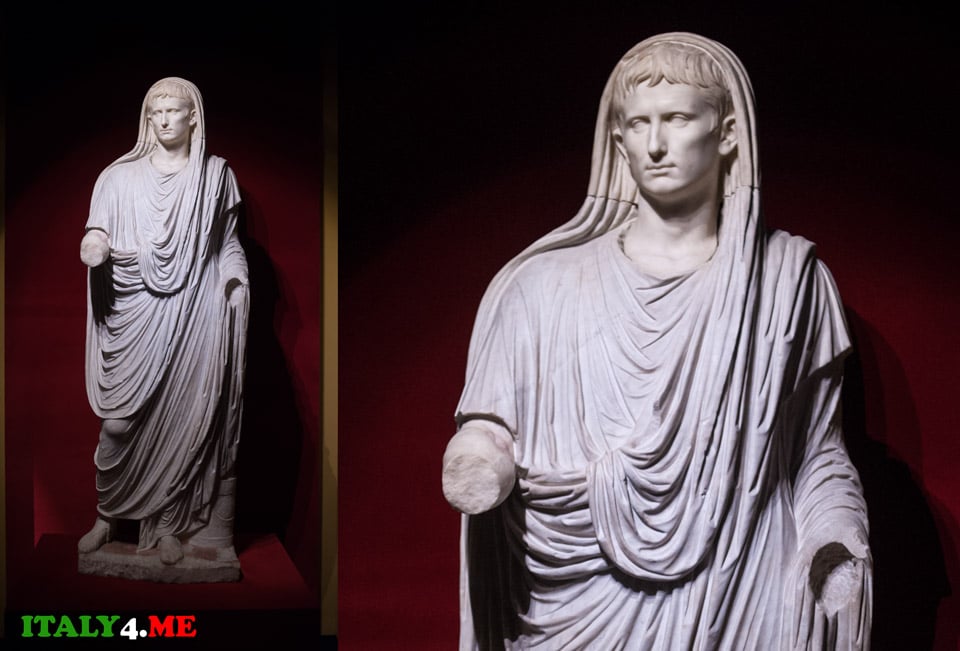
An important example of Roman sculpture, this statue presents Emperor Augustus as the Pontifex Maximus, or High Priest. Draped in a marble toga, the folds realistically cascade to the ground. His head is covered—a typical ritual gesture during sacrifice. Though the statue’s hands are missing, scholars believe one held a sacrificial bowl and the other a sacred scroll.
The facial features are rendered with striking detail. Cheeks, nose, and deeply carved forehead wrinkles reflect the realism and technical skill typical of Augustan sculpture. This work is believed to date after 12 CE, following Augustus’s appointment as supreme religious leader.
Second Floor
This level showcases masterpieces in stone and bronze—ancient statues of extraordinary craftsmanship. Highlights include: the Discobolus, the Autumn Maiden, the Sleeping Hermaphroditus, and the stunning Portonaccio Sarcophagus.
Discobolus (Il Discobolo)
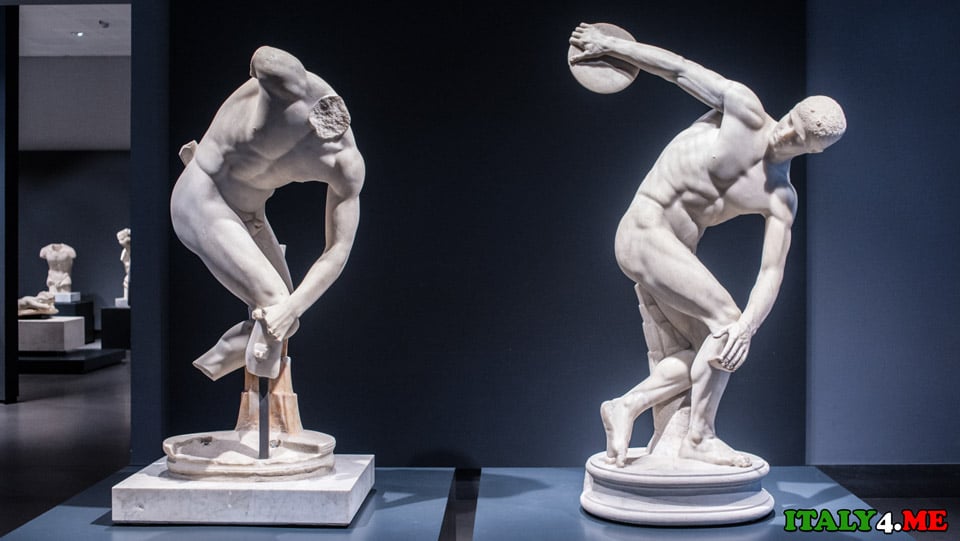
The Discobolus is one of the most iconic sculptures of antiquity, long associated with sports and athletic idealism. The original bronze version, created by the sculptor Myron around 450 BCE, is lost. However, two highly skilled Roman copies from the 2nd century CE survive. One of the finest is attributed to the sculptor Lancellotti. Even in ancient times, the Discobolus was admired as the pinnacle of capturing the human body in motion.
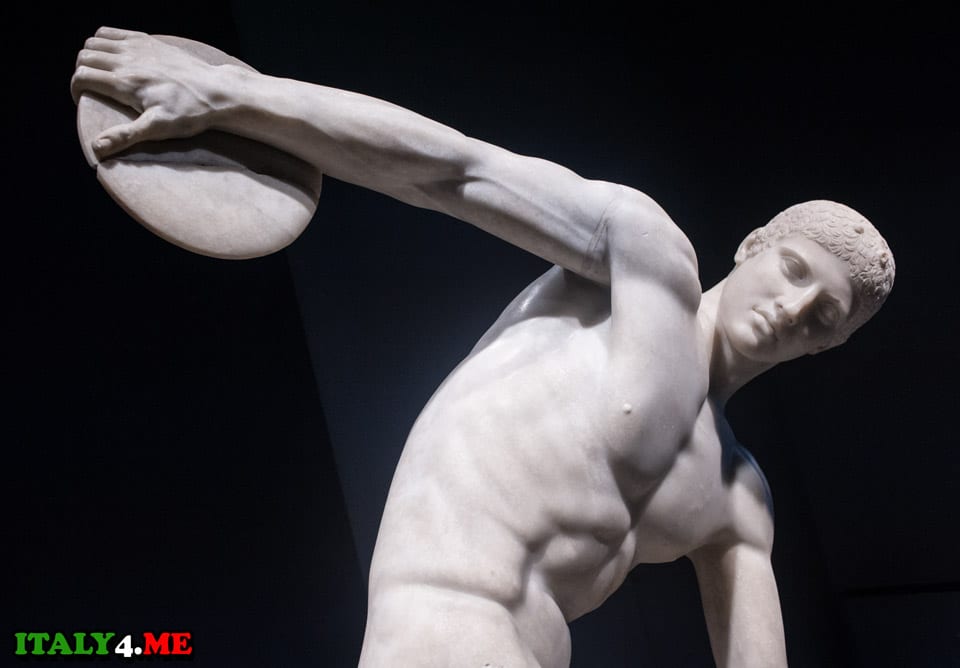
The statue on display at Palazzo Massimo was discovered in 1871 during excavations on the Esquiline Hill in Rome (Mons Esquilinus). It remains well preserved, unlike the second copy, which lost its head. In the 20th century, the Discobolus faced another chapter in its journey: it was confiscated by Nazi Germany and only returned to Italy in 1948.
Portonaccio Sarcophagus (Il sarcofago di Portonaccio)
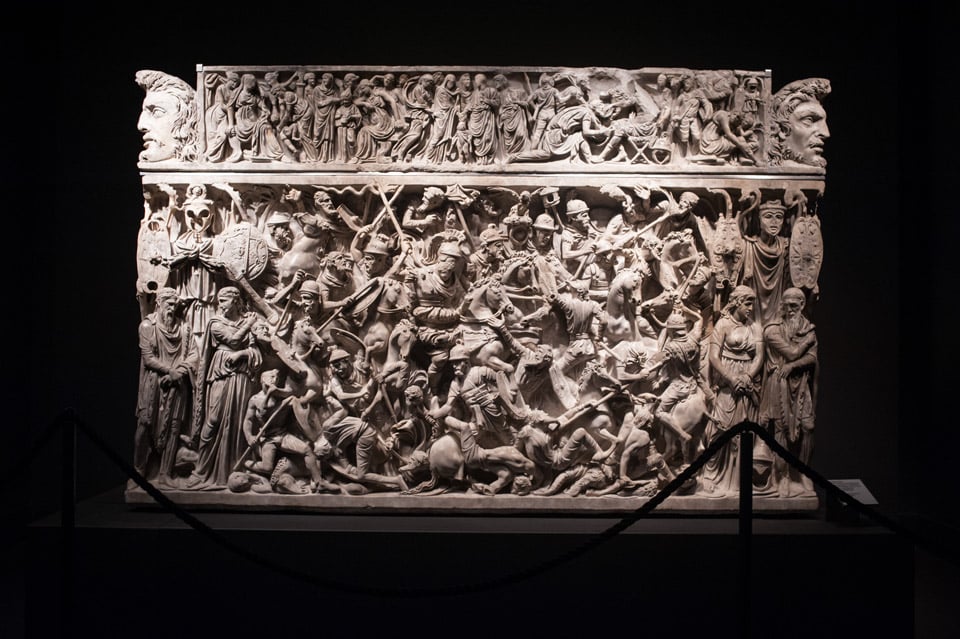
The Portonaccio Sarcophagus is a breathtaking masterpiece composed of four intricately carved marble panels, each densely packed with dramatic battle scenes in high relief. The level of detail is staggering—dozens of warriors are caught mid-strike in an endless clash of arms. At the center of the composition, a Roman general rides forth triumphantly, charging into the chaos with the authority of victory.
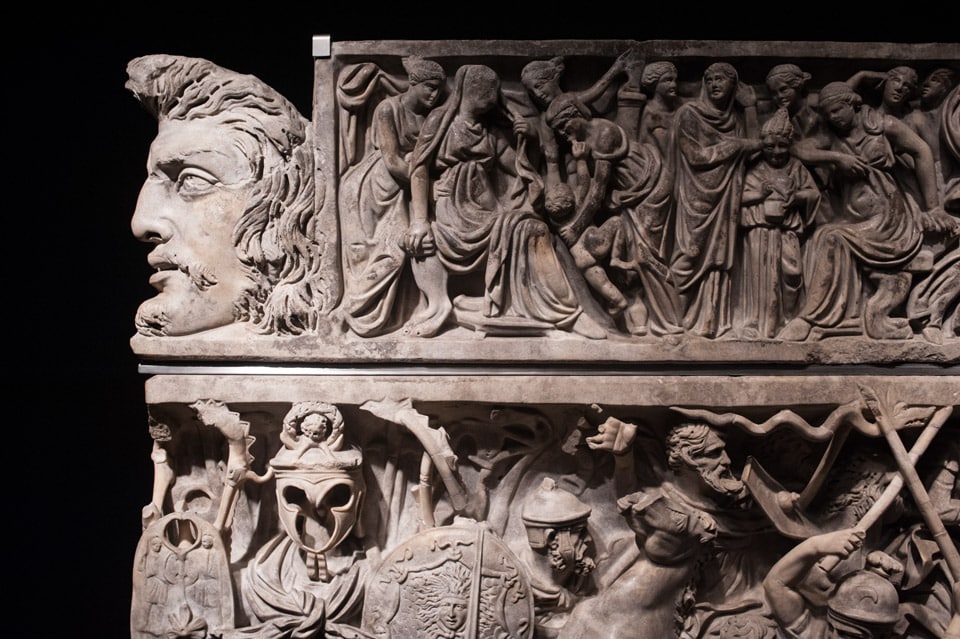
Surrounding the battle scenes are four expressive carved heads of captive barbarians. Their anguished faces symbolize the overwhelming might of Rome and its unyielding approach toward its enemies. The side panels depict the prisoners’ grim fate—barbarians in chains crossing a river, and their defeated leaders submitting to Roman envoys.
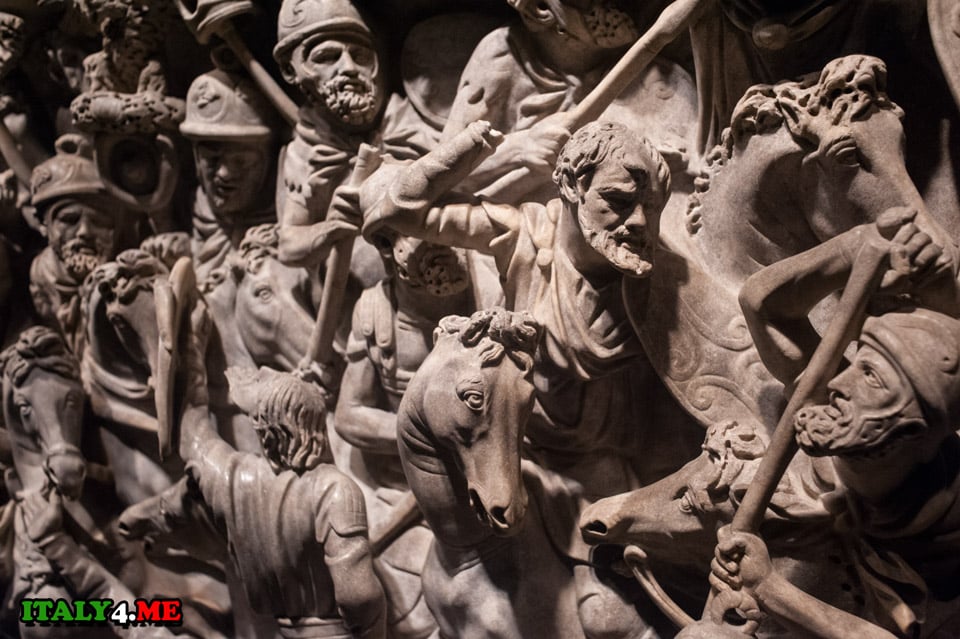
The stylistic features of the sarcophagus suggest a date around 180 CE. Carved into the upper edge of the lid are Roman military emblems, including an eagle and a boar, which helped historians identify the deceased as Aulus Pompilius (Aulus Pompilius), a close associate of Emperor Marcus Aurelius.
Sleeping Hermaphroditus (L’Ermafrodito dormiente)
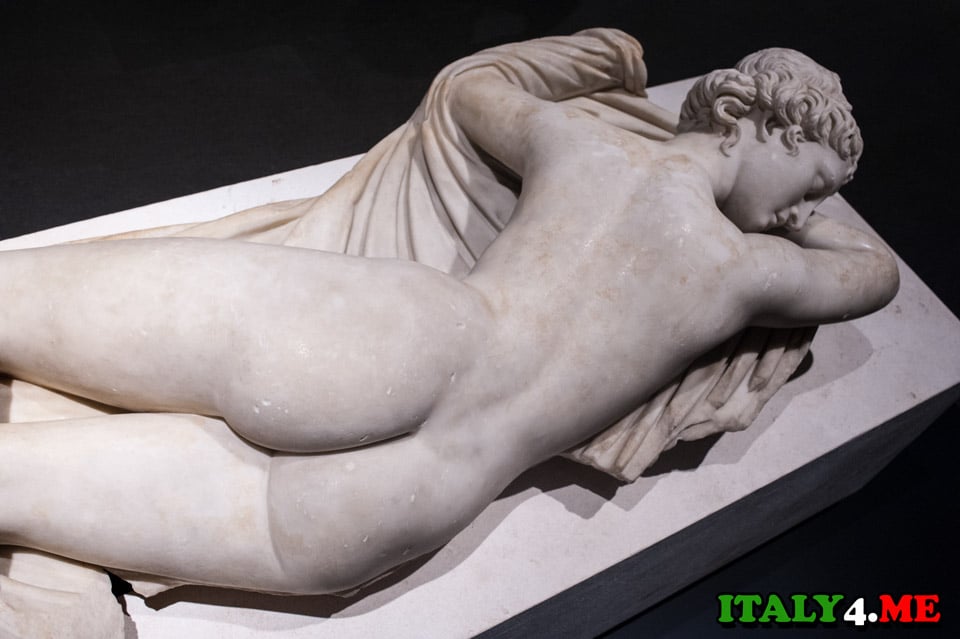
The Sleeping Hermaphroditus is a captivating fusion of ancient and Baroque sculpture. This marble figure gracefully depicts the mythological child of Aphrodite and Hermes—Hermaphroditus, the first androgynous being in mythology—resting peacefully in a lifelike pose.
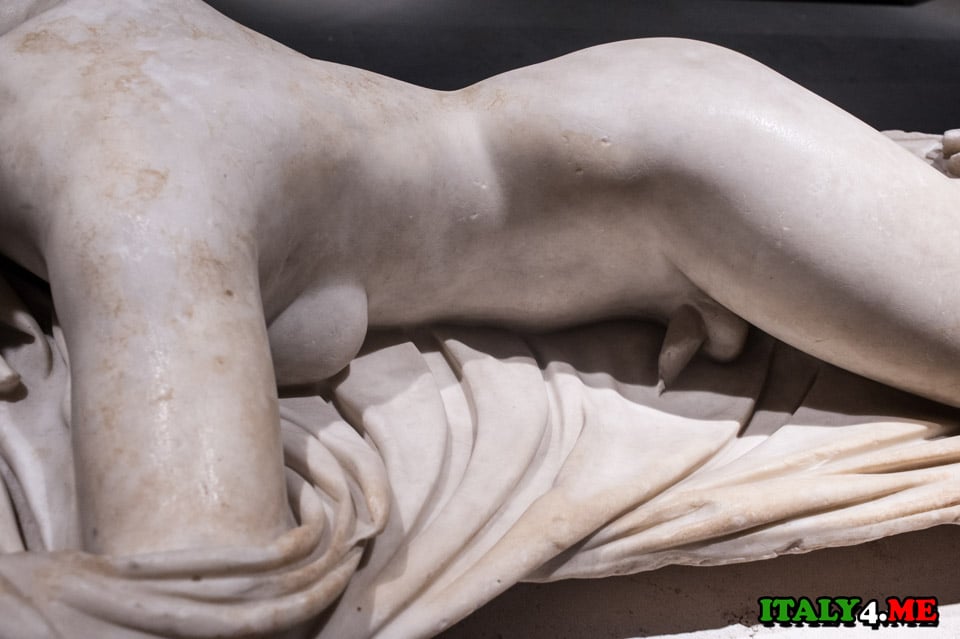
In the 17th century, the celebrated sculptor Gian Lorenzo Bernini was so inspired by the statue that he added a delicately sculpted marble mattress to enhance its realism. For many years, the enhanced work was part of the private collection of the powerful cardinal Scipione Borghese, whose refined taste helped shape Rome’s greatest art collections.
Third Floor
The third floor of Palazzo Massimo is dedicated to frescoes, mosaics, and inlaid decorations.
A highlight of the collection is the fresco cycle from the dining room of the ancient Roman Villa of Livia (Villa di Livia). This villa belonged to the wife of Emperor Augustus, and its walls were adorned with a magnificent garden fresco, wrapping the triclinium in lifelike images of trees, flowers, and lush vegetation. The frescoes measure an impressive 8.8 feet (2.7 m) in height and 38.4 feet (11.7 m) in width.
The mosaics from the Villa Farnesina were successfully transferred from Trastevere to the center of Rome without damage. They now serve as an outstanding example of the luxurious interior decoration once typical of aristocratic Roman estates.
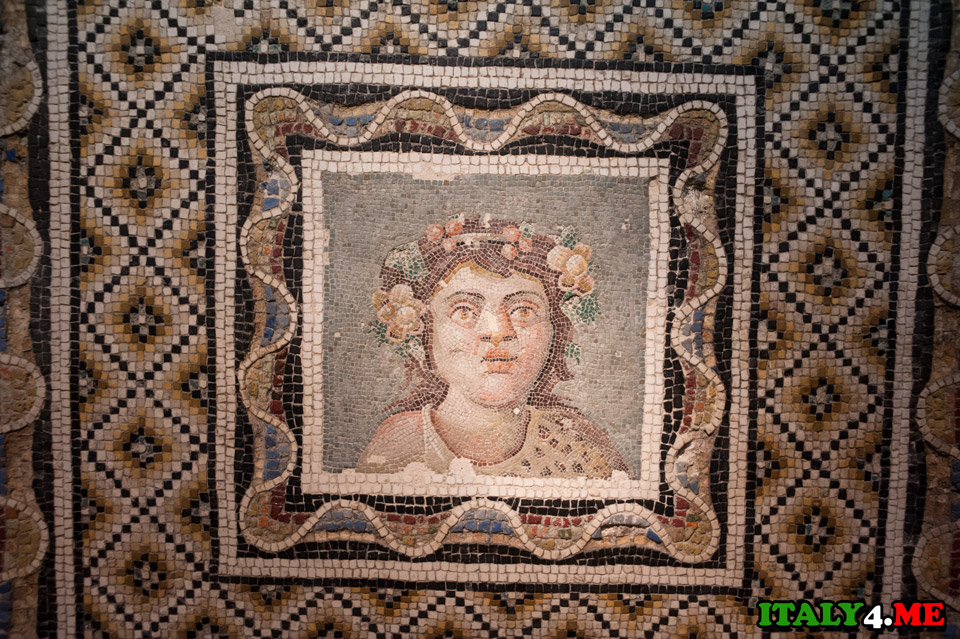
While the vibrant hues of some modern pieces provide visual contrast, most of the ancient mosaics—dating from the final centuries BCE to the early imperial era—are created in striking black-and-white compositions. Scenes of gods, goddesses, mythical creatures, and battles are rendered with remarkable clarity, with color used only sparingly for emphasis.
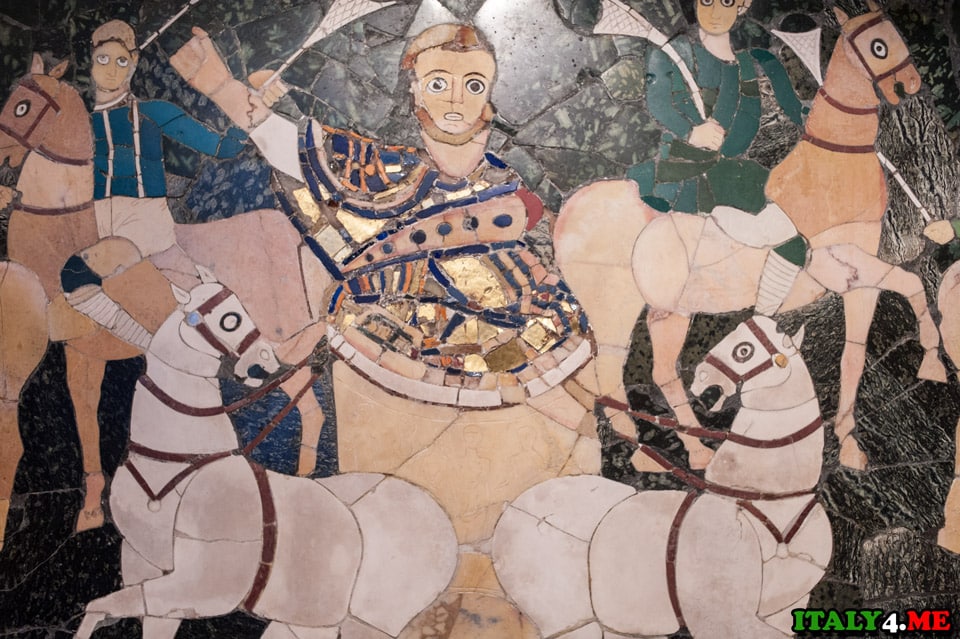
One rare and delicate highlight is an exquisite inlay that once decorated the Basilica of Junius Bassus (Basilica di Giunio Basso). Dated to the 3rd century CE, this handmade piece features rare materials and depicts the mythological journey of the Argonauts, showcasing fine craftsmanship and narrative detail.
Basement Floor
The underground level of the palazzo has been transformed into a treasury gallery, where coins and jewelry are the stars of the show.
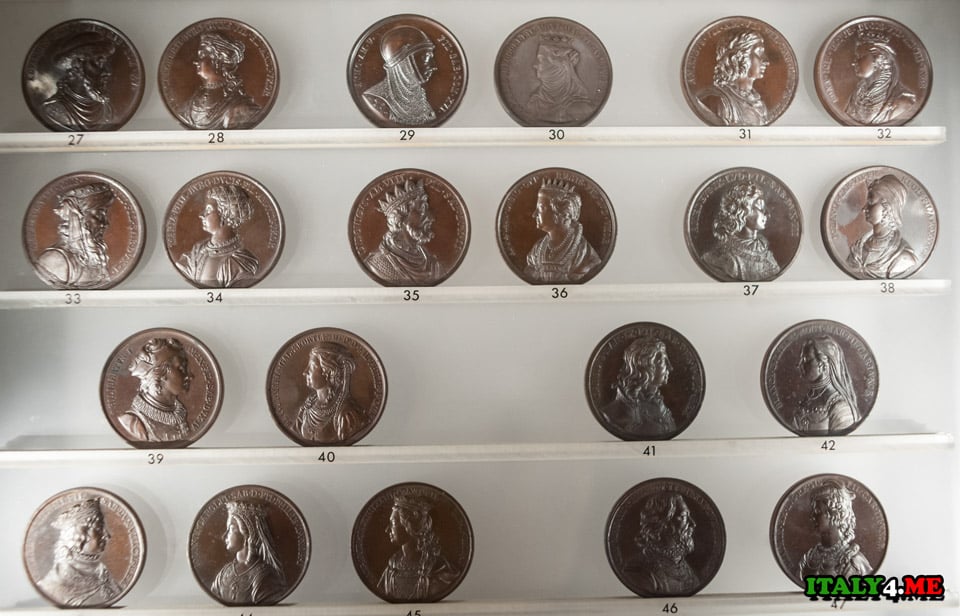
The museum’s numismatic collection includes thousands of coins once admired by none other than Victor Emmanuel II, the first king of unified Italy, and Francesco Gnecchi, a notable landscape painter and coin collector.
You might also enjoy reading about ancient Roman coinage.
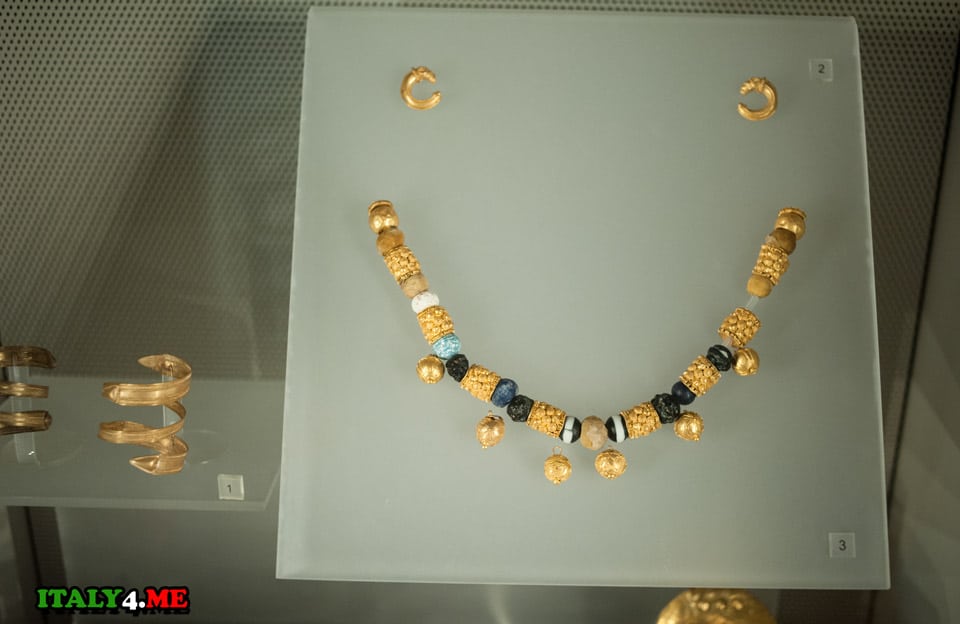
Among the rarest items are four ceremonial arrowheads, three spears, and three scepters—regalia that once symbolized the authority of Roman emperors. The jewelry section features dazzling accessories worn by Roman women: rings, bracelets, necklaces, and ornate hairpins.
One of the most poignant exhibits is the mummified remains of an 8-year-old girl, preserved in a small sarcophagus. Alongside her are her jewelry and a porcelain doll—silent witnesses to the life and death of a child from Rome’s distant past.
Address and Opening Hours
Palazzo Massimo enjoys a convenient location just a short walk from the Termini train station, easily accessible by metro lines A and B (Termini or Repubblica stop). Address: Largo Villa Peretti.
- Official website: museonazionaleromano.beniculturali.it
- Opening hours: Tuesday to Sunday, from 9:00 AM to 7:45 PM. On Christmas and New Year’s Day, open from 9:00 AM to 5:00 PM;
- Standard ticket price: €10 (an additional €2 fee applies when booking online);
- Free entry: First Sunday of each month. No advance booking allowed for this day—entry is based on a first-come, first-served queue.