 Italy for me From Italy with love


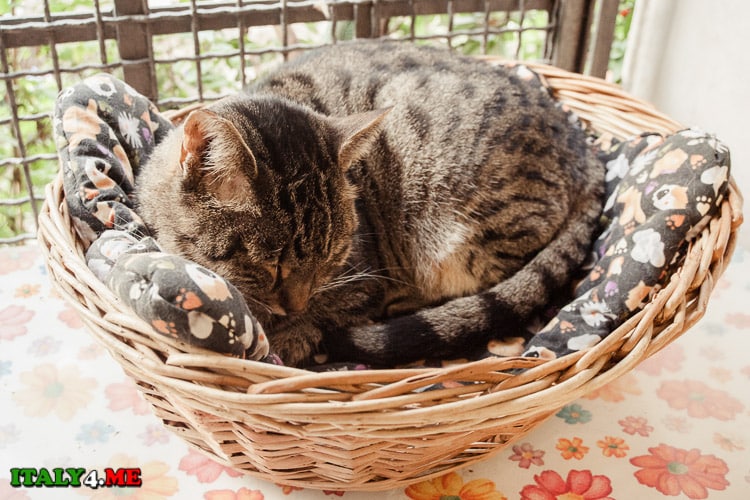
The historical symbol of Rome is the she-wolf who nursed and saved the lives of Romulus and Remus. But the unofficial symbol of the modern Italian capital is the cat.
Page Contents
The Real Owners of Rome
Not pampered beauties, but ordinary alley cats reign here. Locals and visitors to the Italian capital have grown fond of these free-roaming felines, and together, they ensure the cats’ well-being. City authorities even handed over a generous piece of land at Largo di Torre Argentina, not far from the Altar of the Fatherland, to the cats. There’s nothing quite like it anywhere else in the world. Want to take a stroll through Rome’s cat sanctuary?
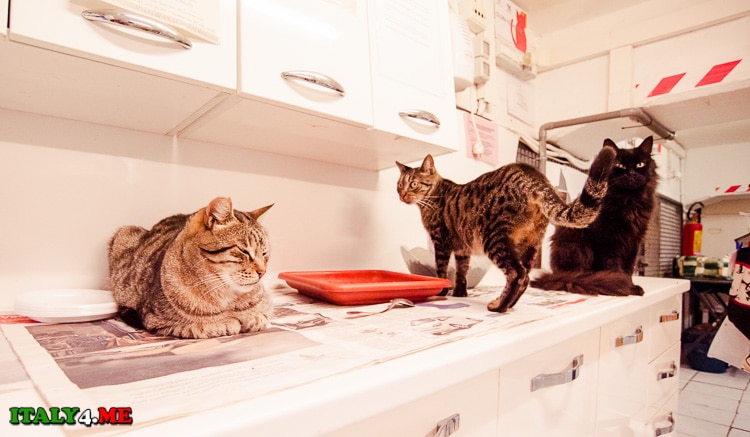
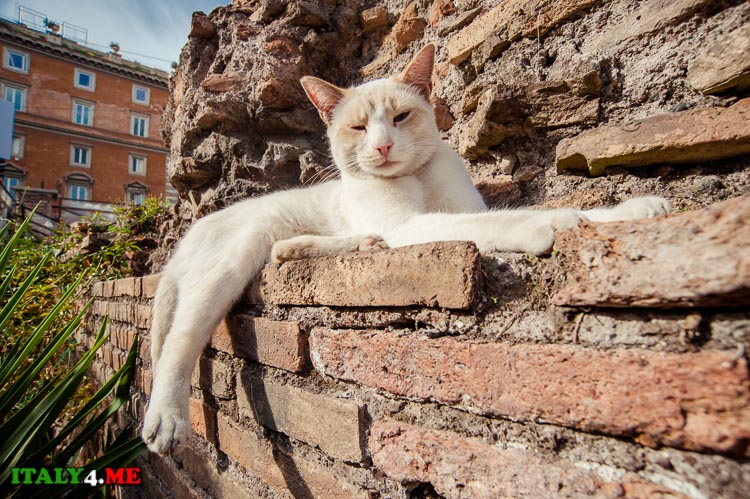
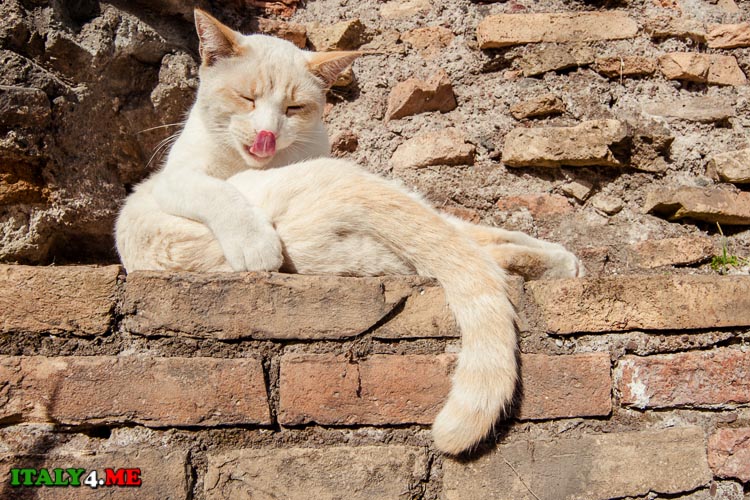
Italians are deeply devoted to their feline friends. Among the “gattare” (cat lovers) are both ordinary citizens and public figures. One well-known cat lover was Pope Benedict XVI. Furry companions have claimed ancient Roman ruins as their own. Colorful coats flash against the backdrop of historic remains: the ruins of four ancient temples that rise solemnly above the cobblestones of Piazza Argentina. This quiet corner of the Eternal City is saved from monotony by hundreds of whiskered residents.
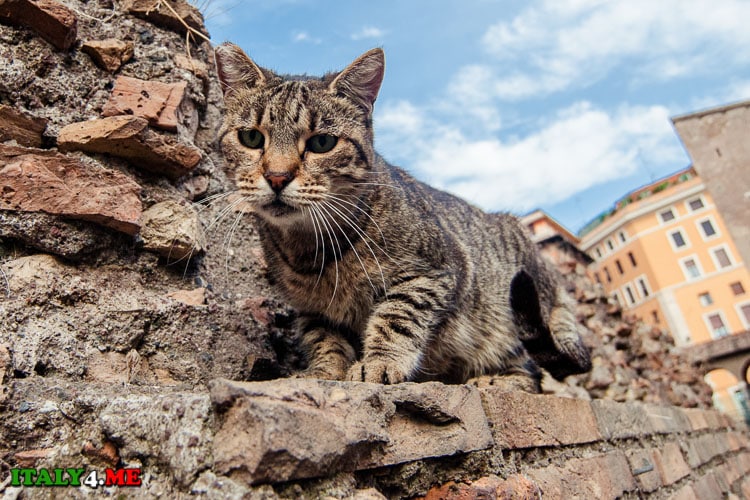
The weathered columns and ruins have been lawfully occupied. A discreet sign lets visitors know they’ve arrived at a sanctuary for Rome’s stray cats. And not just a shelter—it’s their official place of residence! The cats have earned their status as full-fledged citizens of Rome.
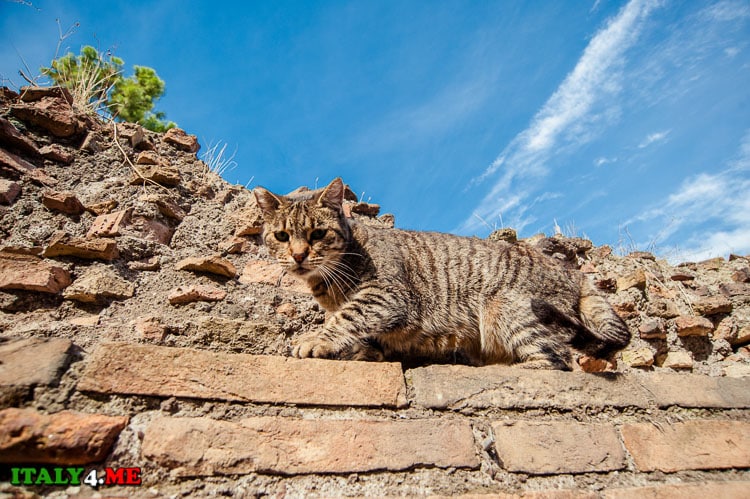
At Torre Argentina, the cats are fed, treated when needed, and of course, brought in for sterilization. Caring volunteers know each cat by name. During the day, the cats roam freely or nap on the warm ruins. They don’t rush to strangers but keep their proud distance.
An army of volunteers tends to the shelter’s many proud residents. People give a few hours of their day to feed the cats and tidy up their home. Tourists, too, have the chance to offer snacks—though it’s discouraged so the cats don’t get used to scattered feeding spots. That said, if the opportunity arises, these clever cats won’t hesitate to charm snacks out of sun-soaked visitors.
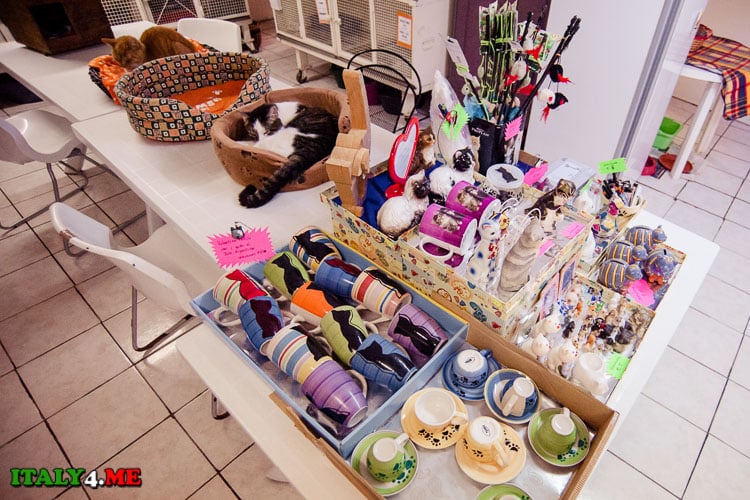
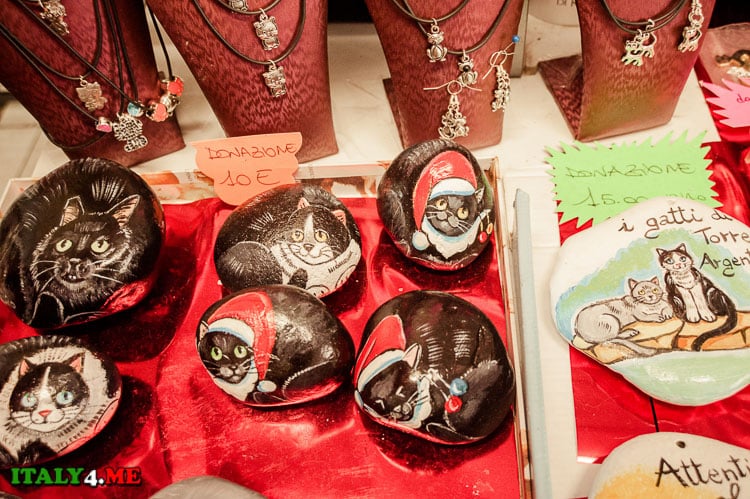
There’s also a gift shop inside the cat shelter. By buying adorable trinkets adorned with feline silhouettes, visitors help the sanctuary earn some much-needed funds.
Torre Argentina
As for the ruins that cats have grown so fond of, they are well worth your attention too. This small Roman square got its name in the 15th century when a stone tower was built there. The structure was funded by Johannes Burckhardt, who served at the Italian court. Burckhardt was born in the city of Strasbourg, known in Latin as “Argentoratum.” The new tower was named Torre Argentina (Tower of Argentina) by the nostalgic nobleman. And the square where it stood became Largo di Torre Argentina.
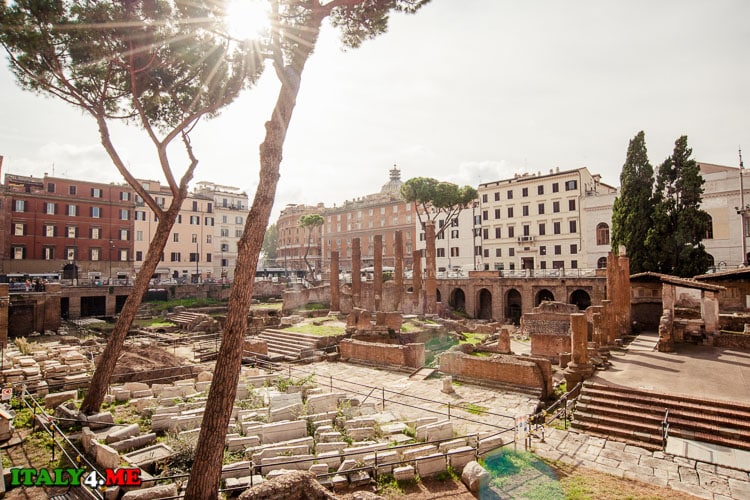
In the early 20th century, the tower—worn down by time—and other buildings on the square were demolished. In the 1930s, under the rule of Mussolini, some of the cobblestones were removed. Excavations began as part of research on the Area Sacra (Sacred Area). Torre Argentina gained a second name after archaeologists discovered the remains of several ancient temples beneath it. These places of worship were considered sacred by the people of the past. Modern Italians treat this heritage with the same reverence.
Temples
The oldest structure in the Area Sacra is believed to be a temple dedicated to the goddess of fertility, Feronia.
It dates back to the 4th–3rd centuries BC, and the surviving fragments are adorned with black and white mosaics. Another temple, only partially unearthed, was a place of worship for deities protecting the home and family (2nd century BC). The Temple of Juturna, the patroness of craftsmen, was likely built after the First Punic War, in 240 BC. To her followers, the goddess granted healing and good health. Equally fascinating is the history of the Temple of Fortune. This round structure, surrounded by six massive columns, was once decorated with a marble statue. It was erected by order of the military commander Lutatius Catulus in 100 BC.
The Site of Julius Caesar’s Assassination
The most notable landmark within the Area Sacra is the site where, according to legend, the famed general and first emperor of the Roman Empire, Julius Caesar, was assassinated. This great statesman had begun implementing numerous reforms to reshape the politics and economy of his nation. His chosen course threatened the interests of many powerful nobles.
As a result, on March 15, 44 BC, Caesar was killed by men from his own circle during a Senate meeting held in the theater of Pompey. The scene of the tragedy is also part of the Sacred Area.
The Cat Sanctuary
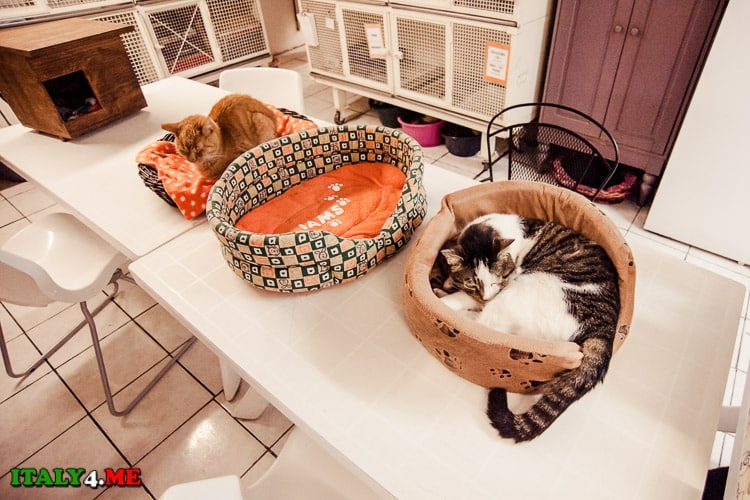
Back to our feline friends—Rome’s cat sanctuary was established in 1993 by two local women. The shelter is divided into two sections: one for kittens and younger cats, and the other for adult residents. On rainy or cold days, the cats are happy to stay indoors, but on sunny afternoons, you’ll surely spot them lounging among the stones of the abandoned temples.