 Italy for me From Italy with love

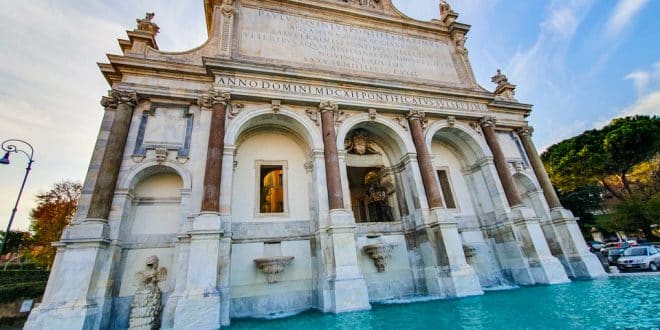
There are over 300 beautiful fountains in Rome, and one of the most striking and impressive is the Fontana dell’Acqua Paola, also known as “Il Fontanone” or “The Big Fountain.” It’s impossible to miss — majestic and graceful at once, drawing visitors in with the cool freshness of its flowing water. This fountain is truly a jewel of Rome and a source of pride for the Eternal City.
Page Contents
Why This Spot Was Chosen
The location of the fountain was chosen with intention and historical awareness.
As early as the 7th century BCE, Ancus Marcius — the fourth king of Ancient Rome — built fortifications on the western bank of the Tiber River (Tevere), on the Janiculum Hill (Gianicolo). His goal was to expand the city’s reach and protect it from attacks by warring tribes, particularly the Etruscans. This construction marked the beginning of settlement development in what would become a key district of Rome.
The hill got its name from the two-faced god of beginnings and transitions, Janus (Janus), and from a legendary king of Latium (Lazio), both believed to have once lived on this high ground. When the Pons Sublicius — the Pile Bridge — was later built over the Tiber, it linked the fortress to the Forum Boarium, the cattle market of Ancient Rome. That bridge is thought to have been the very first structure in Rome to cross the river.
Rome’s power continued to grow. Over centuries, this mighty empire expanded its dominion, conquering the prosperous lands of neighboring civilizations. These conquests brought immense wealth, which fueled the development of new cities, as well as the flourishing of art and science. As the capital of the empire, Rome revealed to the world grand-scale architectural masterpieces, precious works of art, and technically remarkable constructions.
One of these marvels of engineering was the aqueduct.
Aqueduct – The Water Source
The word “aqueduct” comes from Latin: aqua meaning “water” and duco meaning “to lead.” It refers to a complex architectural and engineering system designed to transport water from natural sources to places of consumption. For the massive and ever-growing population of Rome, access to clean drinking water was essential. Over time, the city came to rely on a network of 11 man-made aqueducts, constructed gradually over the course of more than 500 years.
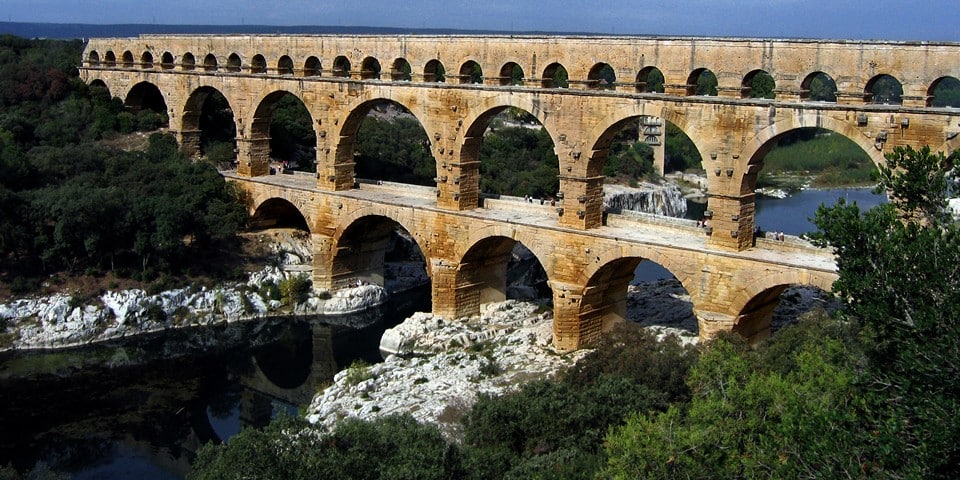
The city’s aqueduct on the Janiculum Hill, located in the Trastevere district, was built by Emperor Trajan (full name: Marcus Ulpius Nerva Traianus), under whose reign Rome reached the height of its imperial power.
The underground canal was laid at a depth of about 10 feet (3 meters) and stretched 35 miles (57 kilometers). Its water source was Lake Bracciano (Lago di Bracciano), a volcanic lake located about 25 miles (40 km) northwest of Rome, renowned for its clarity and purity.
The aqueduct ended on the Janiculum Hill, from where water was distributed throughout the Trastevere area.
The Aqua Traiana was formally inaugurated in 109 CE in the presence of the emperor himself. This major event was commemorated with the minting of new coins and the construction of a fountain at the aqueduct’s highest point.
In the 20th century, archaeologists discovered a hidden underground tunnel near an abandoned chapel on the Janiculum Hill — a 410-foot-long (125-meter) structure that once served to protect the water from contamination and acted as both a filtration and sedimentation system. This tunnel is a remarkable piece of ancient engineering. It was lined with stone and featured multiple vaulted chambers, painted with the costly “Egyptian blue” pigment made from copper silicate. In antiquity, the exact location of such tunnels was kept secret to prevent enemies from using them to infiltrate or sabotage the city’s vital infrastructure.
Thanks to this advanced filtration system, even water from public fountains remained clean and drinkable in ancient Rome.
The Aqua Traiana was damaged multiple times — notably during the Gothic siege of Rome in 537 CE and later in attacks by the Lombards. Though it was eventually repaired, the water quality was never quite the same. Over time, the aqueduct fell into disuse.
You may also enjoy reading about aqueducts and baths in Ancient Rome.
The Role of Pope Paul V
At the initiative of Pope Paul V (Paulus PP. V), a member of the noble Borghese family, construction of a new aqueduct began between 1605 and 1612 along the path of the ancient one. Originally called Aqua Sabbatina or Aqua Bracciano, it was renamed Aqua Paola (Water of Paul) after the pope’s death, in his honor.
At the end of the aqueduct, construction of a fountain began — due to its massive size, it soon earned the nickname Il Fontanone (The Big Fountain).
During the construction, the Pope believed he was restoring the ancient Aqua Alsietina aqueduct, originally built in 2 BCE, even including an inscription on the fountain that reads: “Paul V restored the ancient Aqua Alsietina.” However, he was mistaken. In fact, it was Aqua Traiana, which ran close to Aqua Alsietina, that was restored.
The Pope’s primary objective in building the aqueduct was to supply clean water to large sections of the city. For years, residents of the Trastevere, Borgo, and Vatican districts had to walk long distances to get drinking water or rely on the dirty waters of the Tiber (which didn’t even support fish at the time).
The Pope successfully persuaded the city municipality to allocate the funds necessary for the works. However, his noble intentions didn’t prevent him from imposing an unpopular wine tax — along with other sources of revenue, it enabled him to secure the rights to draw water from Lake Bracciano (Lago di Bracciano) for the fountain. To this day, this water source in Rome remains independent from the city’s main water supply.
The Architects
The project and construction of the fountain were entrusted to architects Flaminio Ponzio and Giovanni Fontana. Both were already established masters of their craft.
Flaminio Ponzio, the papal court architect, was responsible for several magnificent structures in Rome, including the chapel of the Basilica of Santa Maria Maggiore, the renowned Borghese Gallery, the façade of Palazzo Borghese, and the chapels of Saint Barbara and Saint Silvia on the Caelian Hill (Celio).
Giovanni Fontana, between 1601 and 1605, renovated and gave a new look to the famous Castello di Torrenova in the Lazio region, adorning it with Renaissance-style features and a crenellated wall. While some of his works have not survived, Giovanni is best known as the brother of Domenico Fontana — the prominent architect and engineer of the early Baroque period. His talents were wide-ranging. He contributed to palace projects, the Vatican Library building, completed the construction of the dome of St. Peter’s Basilica, participated in building the Four Fountains (Quattro Fontane) on the Quirinal Hill, erected obelisks in public squares, and worked on restoring the port of Naples.
It is believed that Giovanni Fontana borrowed both concepts and techniques from his brother’s work on the Fontana dell’Acqua Felice, known as the Fountain of Moses, constructed between 1585 and 1588.
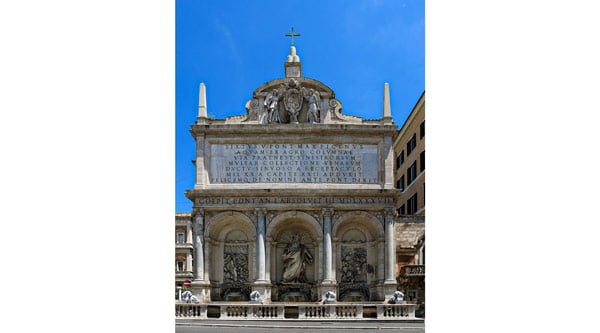
That fountain became the first monumental fountain built since ancient times — and the similarities between the two are unmistakable.
Appearance
The great Johann Wolfgang von Goethe, who saw the fountain in December 1787, described it in his book Italian Journey as follows:
“At Piazza San Pietro in Montorio, we admired Acqua Paola, where waters poured in five streams through gates and passages of a triumphal arch, filling a large basin to the brim. This abundance flows here via the aqueduct restored by Paul V, tracing a twenty-five-mile journey from Lake Bracciano in winding paths through rugged terrain. On its way, it powers numerous mills and factories before finally reaching Trastevere in expanding streams.
Lovers of architecture could not praise enough the ingenious idea — to give these waters a visible entrance. Columns, arches, cornices, and attics remind us of grand gateways through which brave victors once entered the city. Now, with no less might and strength, the peaceful provider enters triumphantly, earning admiration and gratitude for the burden of its distant journey. The inscriptions on the gates proclaim that, thanks to the efforts of the pope from the Borghese family, the Almighty makes his eternal triumphant entrance here.
However, a recently arrived northerner remarked that it would have been better to pile up raw rocks, so the waters could emerge naturally. To which it was replied: these are not natural waters, but artificial ones, and thus their arrival is quite rightly marked.”
The vision of the patron and the architects left no room for doubt: on this hill, offering sweeping views of the city, a grand and luxurious monument was to rise. Rome would gain yet another architectural masterpiece.
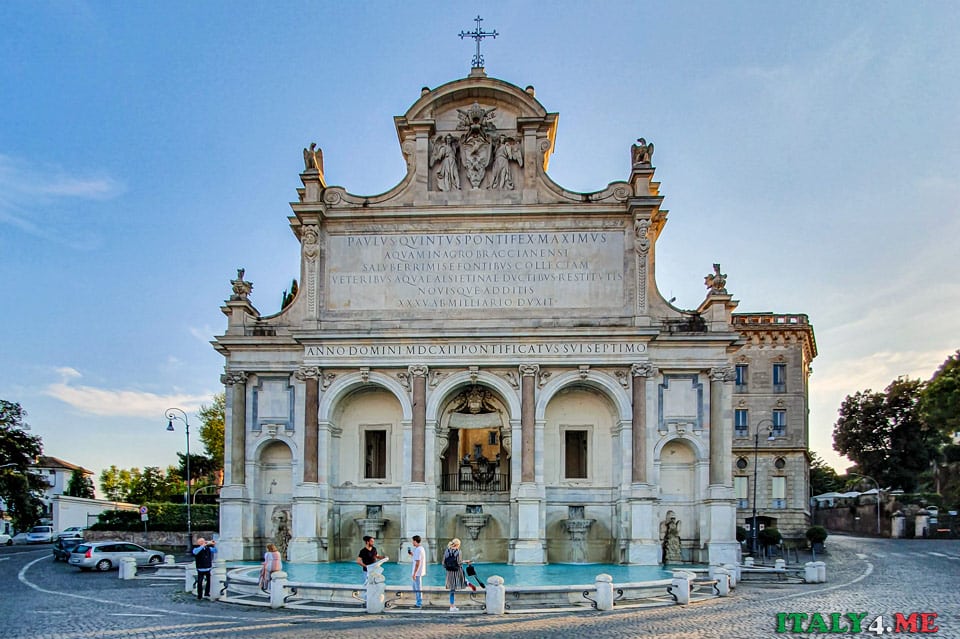
Noble white marble was used for construction, sourced from the ruins of the Temple of Minerva (Minerva), located in the Forum of Nerva (Forum Nervæ) — one of the five imperial forums of Rome. The ancient building was nearly dismantled, which was a common practice for new constructions in later periods.
The fountain was built in the Baroque style, known for its elaborate forms, abundance of decorative elements, and grandeur. It more closely resembles a church façade or a triumphal arch than a typical fountain.
Unlike the Fontana dell’Acqua Felice, which features elaborate Old Testament figures, the Fontana dell’Acqua Paola has no sculptures. What immediately draws attention is the water itself — the source of life — and it becomes the central compositional focus.
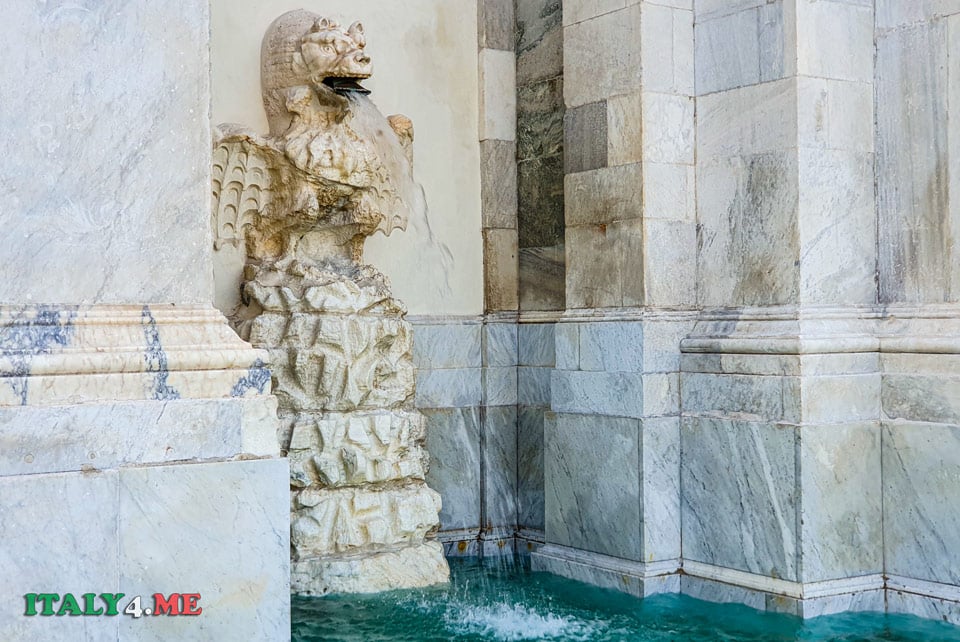
The façade consists of three large and two smaller arches, divided by red and gray granite columns set on high pedestals. Niches were fitted with basins, into which water poured in powerful streams. The water pressure was calculated to exceed that of several other fountains combined. The elevated location also helped, as the aqueduct reached its highest point here. In 1690, the fountain’s appearance was modified.
By commission of Pope Alexander VIII Ottoboni (Alexander VIII PP), architect Carlo Fontana added a semicircular marble basin. This allowed water to cascade into a grand bowl — a more practical and aesthetically pleasing solution. The Acqua Paola later served as inspiration for the design and construction of the Trevi Fountain (Fontana di Trevi).
In 1698, the basin was enclosed with a balustrade of small columns joined by iron railings — mainly to prevent horses from drinking directly from the fountain when carriages arrived.
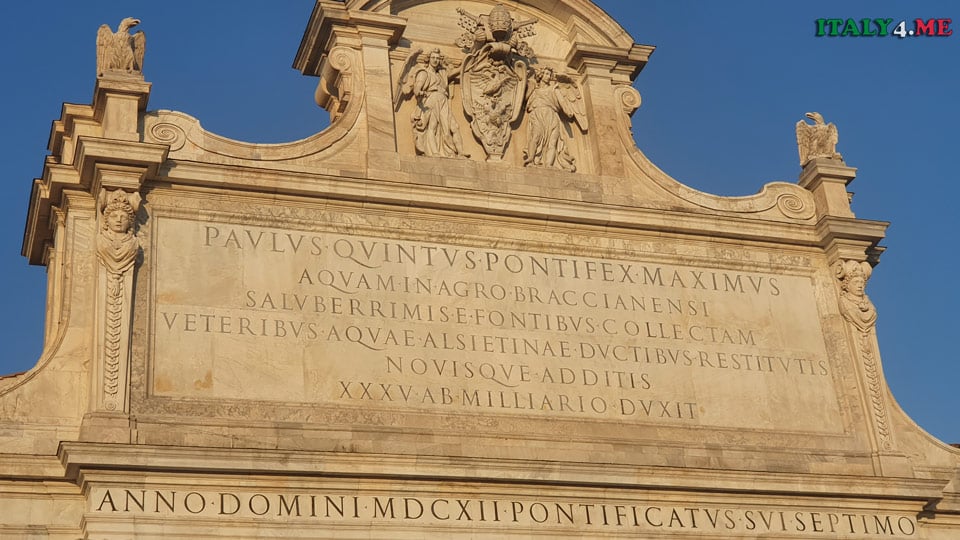
Romans quickly embraced this new source of water: they drew water from it, washed clothes, bathed animals, and even used it as a public bath. In 1707, city authorities had to pass a law forbidding such casual behavior — but that didn’t stop the locals from continuing to enjoy its refreshing waters.
In Film
Rome is often called the “City of Fountains.” The Eternal City would be unimaginable without its spectacular architectural ensembles and sculptural masterpieces surrounded by turquoise water. For some time, the Fontana dell’Acqua Paola was not among the most-visited landmarks by tourists. That changed after the release of Paolo Sorrentino’s 2013 film The Great Beauty, which drew renewed attention to this architectural gem.
This film wasn’t the only one to give Rome’s fountains a starring role.
Three Coins in the Fountain, 1954
The American melodrama Three Coins in the Fountain (Tre soldi nella fontana) was released in 1954. The story follows three young American women seeking love in Rome, each tossing a coin into the Trevi Fountain for good luck. The film was nominated for several Academy Awards.
The Cardinal, 1963
The 1963 drama The Cardinal (Il cardinale) spans multiple cities, but its scenes of religious rituals—such as ordinations and elevations to bishop and cardinal—are emotionally stirring and memorably staged against the backdrop of St. Peter’s Basilica (Basilica di San Pietro) and other locations around Rome.
Trastevere, 1971
Vibrant and comical, everyday Roman life is celebrated in the Italian comedy Trastevere (1971). The characters, residents of this historic district, consider themselves true descendants of ancient Romans. Their colorful stories unfold in the winding alleys of Trastevere, with glimpses of the Fontana dell’Acqua Paola featured on screen.
An Australian in Rome, 1987
The 1987 film An Australian in Rome (Un’australiana a Roma) was directed by the acclaimed Sergio Martino and starred Massimo Ciavarro, Maurizio Mattioli, and Nicole Kidman. The film quickly won audiences over, showcasing Rome’s iconic landmarks in all their cinematic glory.
Spectre, 2015
In the 2015 James Bond film Spectre, Agent 007 arrives in Rome via Via Garibaldi, entering through Porta San Pancrazio. The camera soars over the Fontana dell’Acqua Paola, offering a sweeping view of the Eternal City. Moments later, Bond drifts stylishly past the fountain while fleeing a member of Spectre. You can check out my scene-by-scene breakdown of the movie featuring all the locations filmed in Rome.
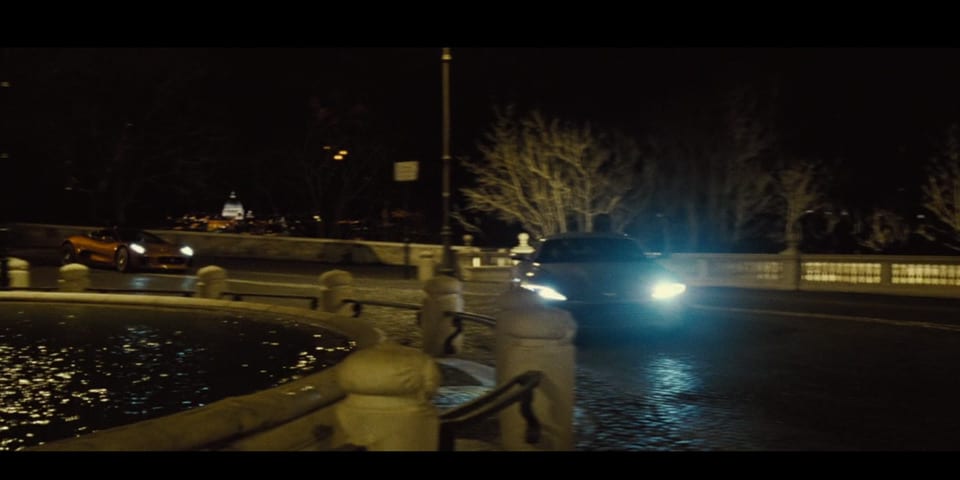
Other films showcasing the city’s stunning fountains include In the Name of the Sovereign People (In nome del popolo sovrano, 1990), Where Are You Going All Naked? (Dove vai tutta nuda?, 1963), and many more.
- Be sure to check out my list of favorite films about Rome and Italy—and of course, give them a watch.
Today, the Acqua Paola fountain is a favorite among both locals and tourists. It’s a place to cool off on a hot day, connect with history, enjoy a breathtaking panoramic view of old Rome, and admire the elegant forms of this celebrated “Big Fountain.”
How to Get There
The Fontana dell’Acqua Paola is located on Via Garibaldi. You can reach it on foot from the Ponte Sisto</a) bridge, though be prepared for an uphill walk. A more comfortable option is to take a taxi to the panoramic terrace (Passeggiata del Gianicolo) near the monument to Giuseppe Garibaldi. The ride costs about €10 ($11), but it’ll save your energy. From the overlook, it’s a 5-minute walk to the fountain, and afterward you can stroll downhill into Trastevere.