 Italy for me From Italy with love


While walking the streets of Rome, you’ll likely want to take home a piece of this magnificent ancient city—a souvenir or delicacy that captures the essence of your vacation. Whether it’s something with a story or a taste of local tradition, the markets of Rome—both food and flea—are here to help.
Thousands of vendors offer their goods daily, ranging from one-of-a-kind works of art to mass-produced trinkets, from the freshest oysters to fine olive oil.
Page Contents
Ancient Rome
Trajan’s Market (Mercati di Traiano)
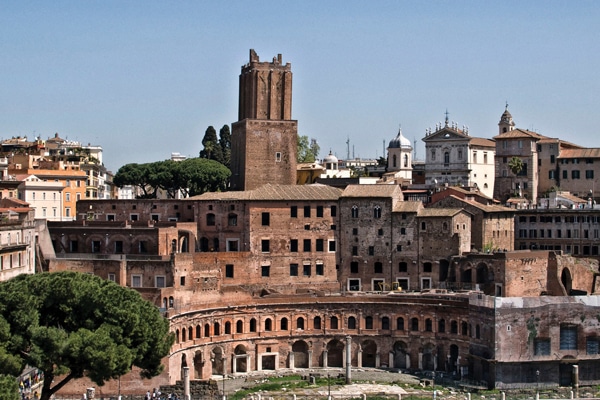
The best place to discover the history of Roman commerce is at the Museo dei Fori Imperiali. Keep in mind this is a historical attraction, not a functioning market—you’ll leave with inspiration rather than goods.
Many believe that “forum” meant marketplace in ancient Rome, but that’s only partly true. In fact, the Roman Forum (Forum Romanum) included not only trading areas but also adjacent buildings. It served as the venue for public assemblies, senate meetings, and was the political heart of Ancient Rome.
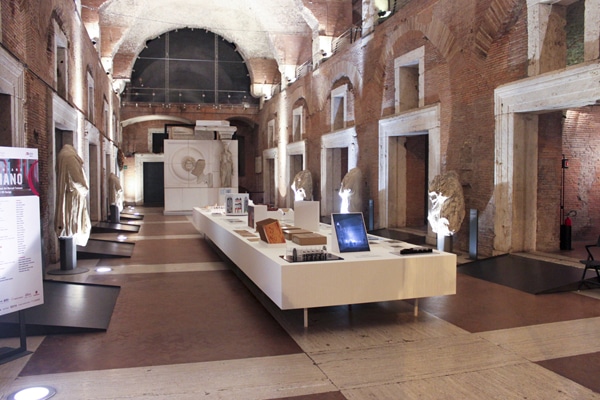
There are at least five Roman forums that have survived to this day, the newest of which (constructed nearly two millennia ago) is the Forum of Trajan (Forum Traiani). It was commissioned by Emperor Trajan (Marcus Ulpius Nerva Traianus) and designed by Apollodorus of Damascus. The forum included a six-level commercial complex with more than 150 individual rooms. Historians believe some served as shops, while others housed administrative offices.
This complex represents just a portion of Trajan’s Forum, which also included the Basilica Ulpia and two libraries flanking the emperor’s commemorative column. After Trajan’s death, the Temple of the Divine Trajan (Templum Divi Traiani) was also built here.
An intriguing fact: Rome’s first slave market was located in the forum, behind the Basilica Julia, in the Graecostadium. It specialized in Greek slaves and also received enslaved people from Africa, Spain, Turkey, Syria, and other territories.
- Address: Via IV Novembre, 94
- How to get there: Take bus 51, 85, 87, 118 and others to Fori Imperiali or Campidoglio. Or walk from Piazza del Campidoglio or the Colosseum.
- Opening hours: Daily from 9:30 AM to 5:30 PM.
- Official website: www.mercatiditraiano.it
- Ticket price: From €15 for adults.
Active Markets in Rome
Campo de’ Fiori
In the past, Campo de’ Fiori square was a site for public executions. In 1600, inquisitors burned Giordano Bruno at the stake here.
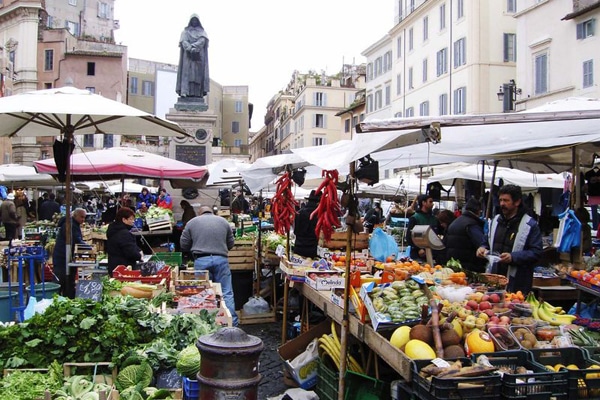
Today, thanks to its central location, the Campo de’ Fiori market is a favorite shopping spot for tourists. Alongside travelers, you’ll find locals shopping for fresh, farm-grown produce. You can grab a quick snack or enjoy a full meal in one of the many restaurants surrounding the square—including seafood spots. Budget-conscious visitors will appreciate fresh sandwiches made with local specialties.
What to buy: fresh fruits and vegetables, cheeses and seafood, spices, flowers, jewelry, Murano glass, and locally produced wines. Prices are generally higher than in supermarkets, except for fresh baked goods, which are often more affordable.
- Address: Piazza Campo de’ Fiori
- Hours: 00:00–12:00, closed Sundays.
- How to get there: Walk around the Basilica of Sant’Andrea della Valle on the right and continue via Piazza del Paradiso and Via del Biscione straight to the square. Look for the statue of Giordano Bruno. Or take tram No. 8 from the Trastevere neighborhood and walk through Piazza Benedetto Cairoli, then follow the small shopping street Via dei Giubbonari.
- Nearby streets: Explore Via dei Cappellari and Via dei Baullari, or the aforementioned Via dei Giubbonari, where charming boutiques often hold delightful surprises.
- Interesting fact: The statue of Giordano Bruno faces the Vatican, and the inscription on the pedestal reads “And yet it moves.”
Porta Portese
One of Rome’s most famous flea markets, Porta Portese is a paradise for lovers of antiques, vintage finds, and secondhand treasures. 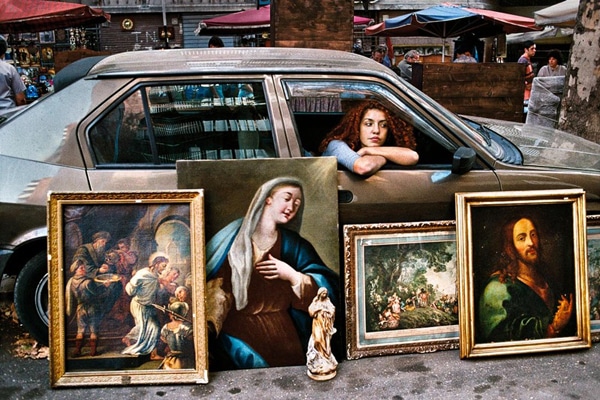
Stretching nearly 7 kilometers from Via Portuense to Via Ippolito Nievo, thousands of vendors offer an incredible range of goods from every decade and quality level.
Italians often say about Porta Portese: “You can find everything here—from pills to a Jumbo Jet.”
One thing you won’t find much of here is food—so for gourmet delights, head elsewhere.
- Address: Via di Porta Portese
- When to visit: Sundays only, 7:00 AM–1:00 PM
- What to buy: vintage shoes and clothing, souvenirs, books, home décor, jewelry, motorcycle parts, and endless curiosities—some dating back to the 18th century.
- Nearby attractions: Porta Portese gate, and the Church of San Francesco a Ripa Grande.
Urban Mercato Monti
Monti is a relatively young urban market. It resembles a small designer garage sale more than a traditional flea market, but it’s packed with original fashion pieces and accessories.
- Address: Via Baccina, 36
- Hours: 10:00 AM–8:00 PM daily
- How to get there: Metro Line B, Cavour station; or by bus: 117 to Via dei Serpenti, 75 to Via Cavour, 70, 64, 60, or 40 to Via Nazionale
- Website: www.mercatomonti.com
Via Sannio
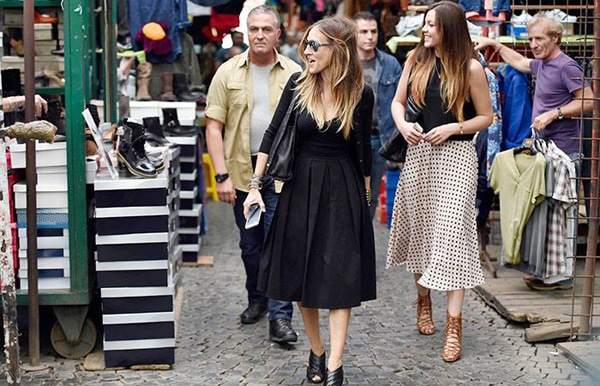
Via Sannio Market, located in a bustling business district, caters more to budget-conscious shoppers. While it’s not as vast as Porta Portese, it offers a focused selection—mainly clothing and footwear.
- Address: Via Sannio
- Hours: Monday–Friday 8:00 AM–2:00 PM, Saturday 8:00 AM–5:00 PM, closed Sundays
- What to buy: new and vintage clothing, shoes, military gear, and some food products. Regulars say the selection has declined in recent years, but deals on new items from brands like Massimo Dutti can start from just €10.
- How to get there: San Giovanni metro station, or buses 118, 87, 81, 16
- Nearby sights: Lateran Palace (Palazzo del Laterano) and the Basilica of St. John Lateran (Basilica di San Giovanni in Laterano)
Borghetto Flaminio
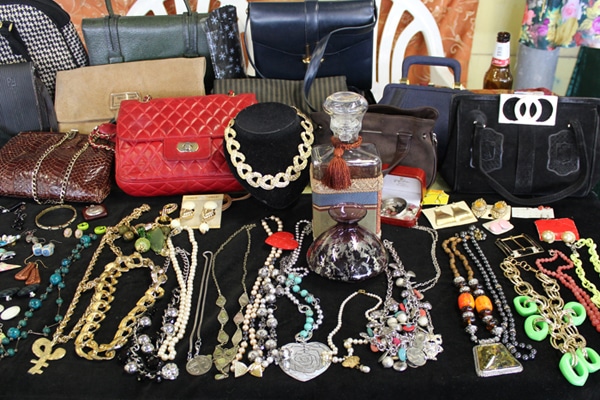
This is one of the few markets in Italy that charges an entrance fee — €1.60. But the foot traffic and double-parked cars speak volumes about its cult status. From antiques and vintage finds to modern fashion, jewelry, handbags, figurines, and tableware — you won’t leave empty-handed.
- Address: Piazzale della Marina, 32
- When to visit: Sundays only, 10:00 AM–7:00 PM
- What to buy: designer and vintage fashion, old books, jewelry
- How to get there: Flaminio metro station. With Villa Borghese behind you, walk along Via Flaminia to the bus depot, which transforms into a massive fairground every Sunday.
- Nearby sights: the Borghese Gallery
Mercato Antiquario Piazza Borghese
Mercato delle Stampe is a unique, highly specialized flea market for print lovers. It’s a paradise for collectors of books, magazines, stamps, newspapers—both modern and antique—along with rare editions.
- Address: Piazza Borghese
- When to visit: Daily, from 7:00 AM to 1:00 PM
- What to buy: Printed materials and collectible stamps
- How to get there: Bus routes 70, 81, 87, 492, 628, C3, N7 to Via Di Ripetta stop
- Nearby attractions: The architectural complex of Emperor Augustus (Piazza Augusto Imperatore), including the Altar of Peace (Mausoleo de Augusto), the Ara Pacis Museum (Museo dell’Ara Pacis), and several churches
The markets above are among Rome’s most famous, but if you truly want to discover them all, you may need to move to the Eternal City and explore a new one every day!
Mercato di Testaccio
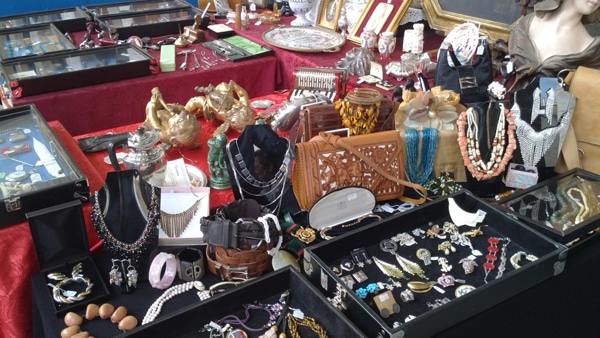
Mercato di Testaccio is a vibrant covered market set between Via Galvani and Via Alessandro Volta, offering a mouthwatering selection of Italian delicacies, as well as fresh fruits and vegetables.
- Address: Via Aldo Manuzio, 66b
- How to get there: Bus No. 719 to the Franklin stop, or take Metro Line B to Piramide station
Shopping Tips
- Comfortable shoes are a must!
- Leave valuables, cash, and expensive electronics in your hotel safe
- Arrive early for the best selection, or late for the best bargains
- Don’t overdo it—markets hold more treasures than your suitcase can handle. All the more reason to return to Rome!