 Italy for me From Italy with love


For many decades, one of the islands in the Venetian Lagoon, the island of Murano, has been renowned for its unique glassmaking artistry.
The creation of stunningly beautiful blown glass items, later carefully refined by skilled artisans, brought worldwide fame to this small island.
Page Contents
The Secret of the Craft
The secret to producing extraordinary blown glass figurines was strictly guarded by the authorities of Venice. Those who knew the secrets of glassmaking were forbidden to leave the city. While these craftsmen couldn’t leave Venice, it’s worth noting that their lives were far from unpleasant.
The fame of Venetian glass spread swiftly across the world, attracting more and more merchants to the Venetian Lagoon each year.
Initially, all workshops producing blown glass figurines were located in Venice itself. However, as production grew, the city’s authorities decided to move the industry outside city limits to Murano. As a result, the glass came to be known as Murano glass.
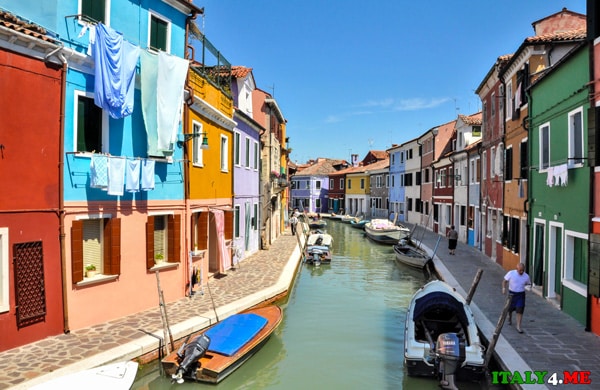
As early as the 15th century, Murano glass pieces were considered luxury items and were often gifted to high-ranking visitors to Venice. No one remained unimpressed by the Murano masters’ ability to turn blown glass into true works of art.
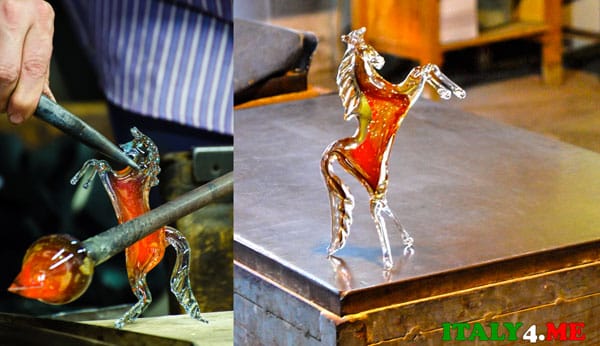
This remarkable craft reached its peak in the 16th century, when master artisans surpassed even their own standards, and the glory of Murano masterpieces echoed worldwide.
These creations amazed with their lightness and apparent weightlessness. They were frequently featured in books and even depicted in paintings.
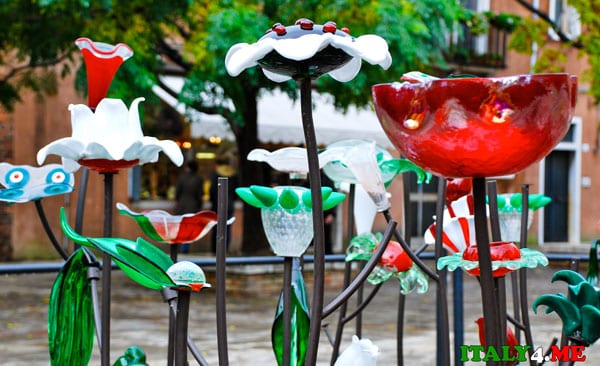
In 1797, Murano was attacked by French troops who occupied the island until 1806, destroying all factories and workshops that produced these unique glass figures. It seemed like the story of Murano glass had come to an end. But in the mid-19th century, a lawyer from Vicenza, Antonio Salviati, with the support of two enterprising Englishmen, built a factory on Murano and revived the production of colorful blown glass items. The island’s former fame and the exceptional skill of modern-day artisans ensured that Murano glass regained—and continues to enjoy—global popularity and demand.
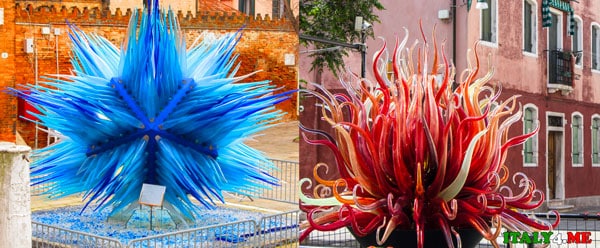
Today, the intricate and distinctive craft of Murano glassblowing thrives in the field of product design—and for good reason. The endless range of colors, textures, and techniques allows artists to bring any vision to life. Murano glass fits effortlessly into nearly any interior, whether as part of a traditional dining set or a bold designer creation.
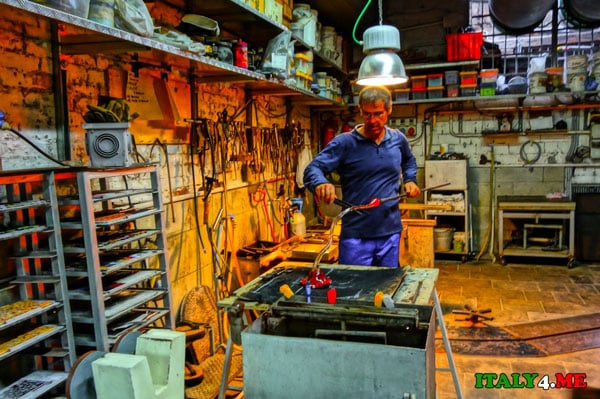
Today, skilled artisans—many from families who have practiced this craft for generations—continue working on the small island of Murano. Talented designers frequently visit this part of the Venetian Lagoon, eager to collaborate with the island’s glassblowers. Just as in centuries past, Murano glass continues to delight admirers, evolving and taking on new forms with each passing year.
How to Get There
You can reach the island of Murano by taking a vaporetto (public water bus) on lines 41, 42, 51, or 52, boarding either at the S. Zaccaria stop (near St. Mark’s Square) or at the train station. The journey takes about 30 minutes. You can also take line LN from S. Zaccaria or line 13 from Fondamenta Nuove directly to Murano.
Guided Tours
You can join a group tour to the islands of Murano, Burano, and Torcello for €20 – book in advance on tiqets.com.
Over the course of 4.5 hours, you’ll:
- Enjoy a motorboat ride with a local guide — the most convenient way to explore the islands in the northern part of the Venetian Lagoon.
- See the island of San Giorgio Maggiore, its 16th-century Benedictine church, the city gardens, the island of Sant’Elena, the famous Lido beach, and much more!
- Watch master glassblowers at work on Murano and skilled lace makers on Burano — these traditional crafts have flourished in Venice since the 10th century.
The tour usually begins at 2:00 PM from the Ponte della Paglia (Straw Bridge), near the Doge’s Palace and Hotel Danieli. Please arrive at the meeting point at least 20 minutes before departure. Simply show your mobile voucher at the yellow Shore Excursion booth.
Attractions
Naturally, you’ll find plenty of shops selling masterpieces created by Murano’s renowned glassblowers. These stores line the island’s main canal. Here, you can find everything from elegant wine glasses (starting at around $16 USD [€15]) to whimsical figurines and exquisite Murano glass jewelry.
Glass Museum
The Glass Museum (Museo di Vetro) preserves the full tradition of Murano glassmaking and houses an extensive collection of glass artifacts dating all the way back to ancient Egypt. The museum is easily accessible on foot from the Murano Faro vaporetto stop, where all boats from Venice arrive.
- Museum Address: Fondamenta Marco Giustinian, 8, 30141 Venice, Italy
- Opening Hours: Summer: Mon–Tue, Thu–Sun 10:00 AM – 5:00 PM; Winter: Mon–Tue, Thu–Sun 10:00 AM – 4:00 PM
- Admission Fee: €4 (approx. $4.30 USD)
Church of Santi Maria e Donato
The Church of Santi Maria e Donato is one of the oldest churches in the entire Venetian Lagoon, dating back to the 12th century. Inside, visitors are transported to the era of ancient Byzantium — with stunning mosaics adorning the walls and ceilings, the setting evokes a deep sense of history. The church is located on the island’s main square, about 1,300 feet (400 meters) from the nearest vaporetto stop.
- Church Address: Campo San Donato, 11, 30141 Venice, Italy
Hotels on Murano Island
Since the island is quite small, most tourists visit Murano from Venice just for a few hours. However, there are 7 hotels on the island where you can stay—perfect for a romantic getaway in Italy with someone special. Room rates range from about $80 to $170 USD (€75–160) per night.
We recommend considering the island’s only 4-star hotel: La Gare Hotel Venezia – MGallery Collection. The average room rate during peak season is around $215 USD (€200), but if you book several months in advance, you can often find rates between $110 and $130 USD (€100–120)—an excellent deal for a hotel of this caliber.