 Italy for me From Italy with love


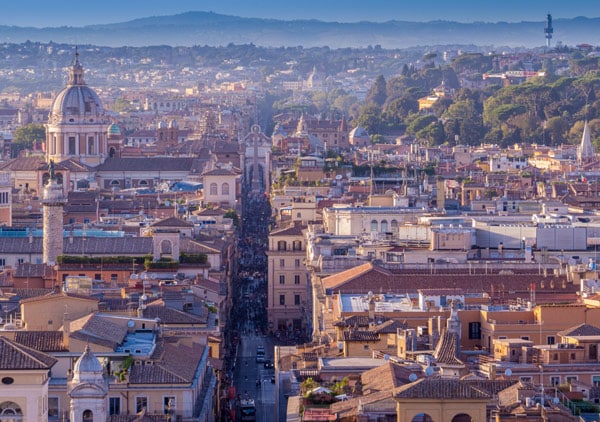
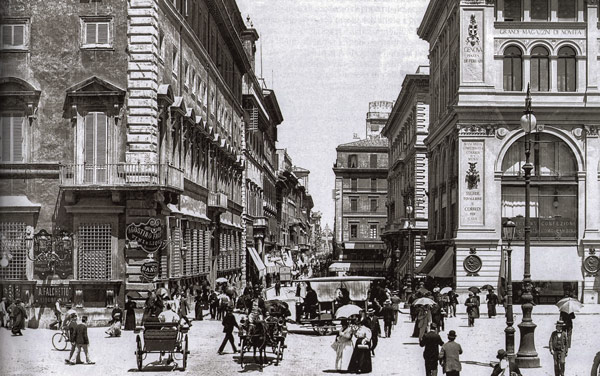
Via del Corso is the main street in the historic center of Rome and forms part of the ancient consular road Via Flaminia, which was laid out in 220 BC between Rome and Rimini.
This section of the route runs in a straight line for about 1 mile (1.6 km) through the city, connecting Piazza Venezia and Piazza del Popolo, while flanked by numerous historic landmarks of Rome on both sides.
Page Contents
Name
Until 1466, Via del Corso was known as Via Lata, meaning “Broad Street.” The new name was inspired by horse races (corso – to run) first held here in 1467 during the Roman Carnival. The stars of these races were Berber horses, and the annual riderless race became known as the Corsa dei Barberi. The street itself adopted the name Via del Corso. These spectacular races were abolished by the King of Italy, Vittorio Emanuele II, in 1874 after the tragic death of a young man. Without the races, the Roman Carnival gradually lost its popularity.
In 1900, after the assassination of King Umberto I, the road was renamed Corso Umberto. In 1944, it became Corso del Popolo. Two years later, in 1946, its historic name, Via del Corso, was restored.
History
The history of Via del Corso began in 220 BC when the renowned Roman politician Gaius Flaminius laid out the Via Flaminia, a road connecting Rome to the Adriatic Sea.
The starting point in Rome was Porta Fontinalis, located in the Servian Wall (Mura Serviane) on the northern slope of the Capitoline Hill (Capitolium). The urban section of the route—Via Lata—was a wide (up to 33 feet) and straight stretch running north to south, connecting Rome’s entrance gates to its center.
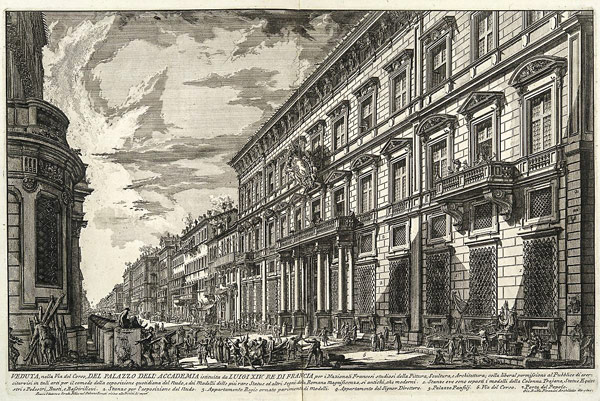
During the imperial era, four triumphal arches were erected along Via Lata: those of Domitian, Diocletian, Claudius, and Marcus Aurelius. Their remains were demolished by the 15th century. Be sure to read about the three surviving Roman arches: Titus, Septimius Severus, and Constantine.
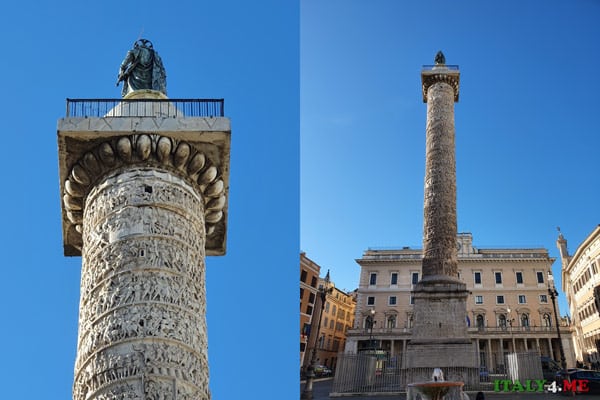
Important architectural landmarks lined the road, including the Temple of the Sun built by Aurelian (Templum Solis), the Ara Pacis Augustae, the Ustrinum Domus Augustae, and the Column of Marcus Aurelius (Colonna di Marco Aurelio).
In the Middle Ages, frequent flooding by the Tiber River led to the temporary abandonment of Via del Corso in favor of the higher Via Biberatica, which originated at the Forum of Trajan (Foro di Traiano).
In 1467, Pope Paul II restored the old road and moved the Carnival horse races, previously held on Monte Testaccio, to this thoroughfare. The somewhat brutal tradition involved daredevils from the crowd attempting to stop the frenzied, riderless horses as they raced. Huge crowds from all social classes gathered annually to watch the races.
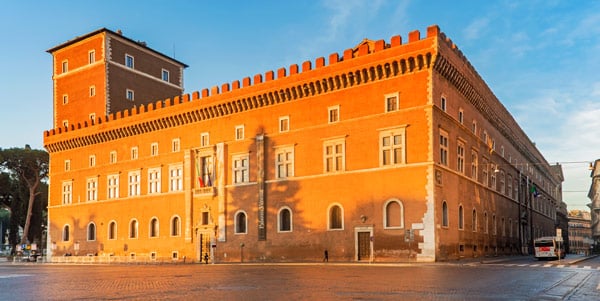
Incidentally, the Palazzo Venezia (Palazzo Venezia di Roma) on Piazza Venezia was also built during this time, fulfilling Pope Paul II’s (1464–1471) desire for a luxurious residence in the prestigious Via del Corso area.
In the 16th century, the urban development of Rome was further enhanced by the creation of the so-called Tridente, a trio of radiating roads emerging from Piazza del Popolo: Via di Ripetta, Via del Babuino, and Via del Corso.
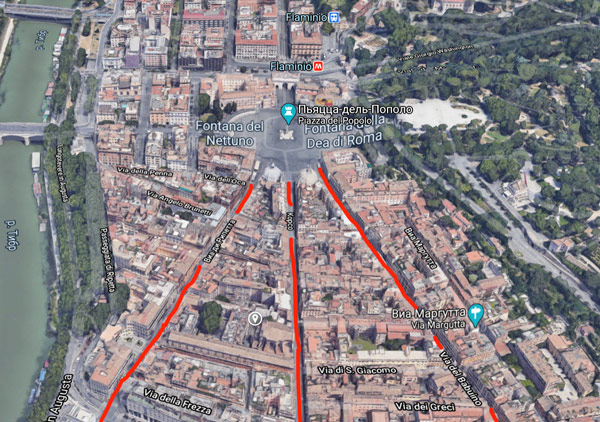
Via del Corso became the main artery of this road complex and a sought-after location for building new churches and aristocratic palaces.
Attractions
Today, a number of Rome’s well-known architectural landmarks are concentrated along Via del Corso.
Near Porta del Popolo (originally called Porta Flaminia) stands the Basilica of Santa Maria del Popolo, built in the 11th century on the site of Nero’s tomb. It houses numerous artworks and funerary monuments dating from the 15th to the 19th centuries.
On Piazza del Popolo are the twin churches of the 17th century—Santa Maria dei Miracoli and Santa Maria in Montesanto.
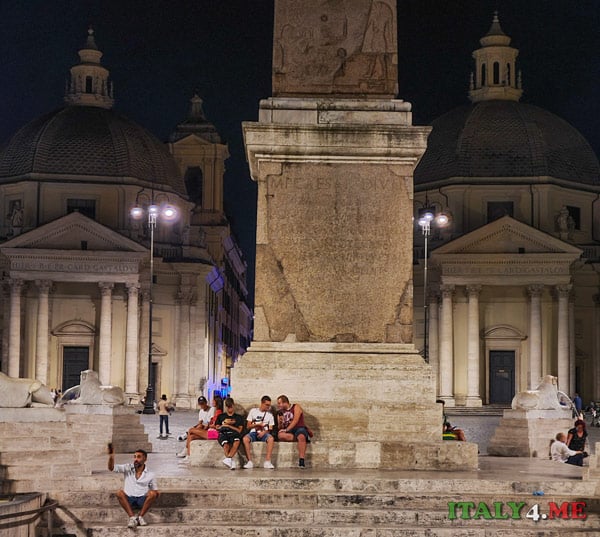
The creators of this stunning architectural ensemble were the renowned Carlo Rainaldi, Carlo Fontana, and Lorenzo Bernini (Giovanni Lorenzo Bernini).
Among the significant religious buildings along the historic Via del Corso, three churches are especially worth a visit:
- Santa Maria in Via Lata, founded on the site of ancient Roman buildings and rebuilt in Baroque style by Cosimo Fanzago in 1639;

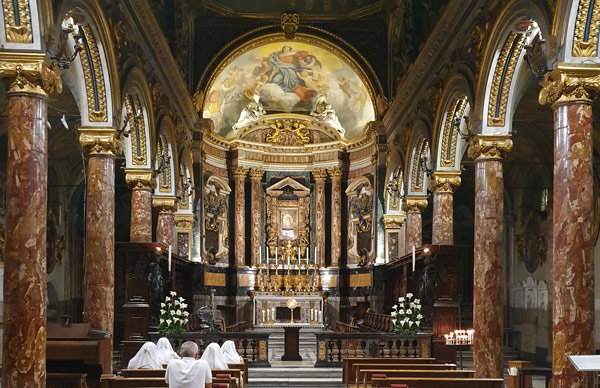
- The 17th-century church of San Carlo al Corso, also known as the Church of Saints Ambrose and Charles, dedicated to the bishops of Milan;
- San Marcello al Corso, an ancient church with foundations dating to the 4th–5th centuries, while the current building, designed by Carlo Fontana, dates to the 17th century.
Via del Corso is also home to more than ten palaces built between the 16th and 18th centuries. These include Palazzo Doria Pamphilj, featuring the magnificent Doria Pamphilj Gallery, Palazzo Bonaparte, Palazzo Chigi, Palazzo Rondinini, and others that have become architectural landmarks of past eras.
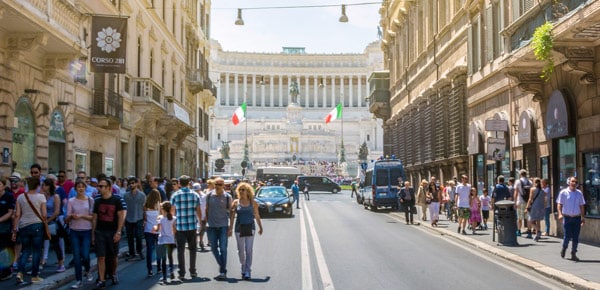
This main street in Rome’s historic center is beloved by both locals and tourists. It’s a delightful place for an evening stroll, browsing boutique shops, and immersing yourself in the rich history that surrounds you at every turn.