 Italy for me From Italy with love


Where should you go on your first visit to Rome?
Wandering the city without a plan can be time-consuming and inefficient. That’s why I’ve selected the most stunning spots for a romantic self-guided walk or a guided tour. Rome’s fountains and piazzas are true masterpieces of art—so grab a map and let’s go!
Page Contents
Piazza Navona
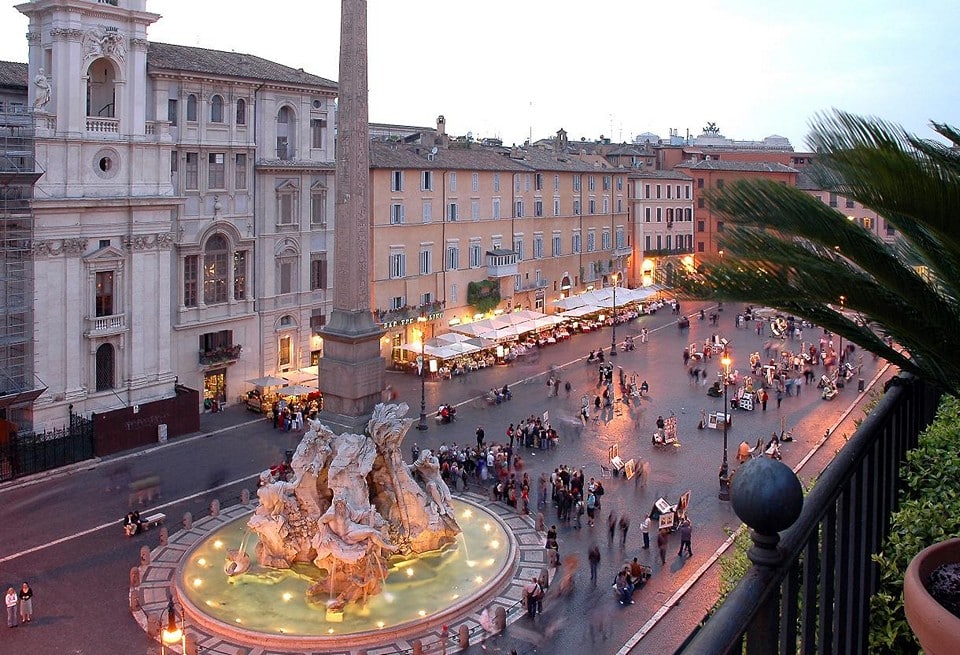
The pride and beauty of Piazza Navona are its three magnificent fountains. At the center stands the Fountain of the Four Rivers (Fontana dei Quattro Fiumi), a masterpiece by the legendary Bernini. This monumental structure symbolizes the unity of the four continents and is adorned with a towering Egyptian obelisk brought from the Circus of Maxentius. On either end of the square are the Fountain of the Moor (Fontana del Moro) and the Fountain of Neptune (Fontana del Nettuno).
Piazza Navona is a beloved venue for Christmas markets and festive carnivals. Even on regular evenings, it’s alive with street performers and artists. The square is never without visitors. For the faithful, a highlight is the Church of Sant’Agnese in Agone, built in 1652 on the site of a chapel dedicated to Saint Agnes and, in ancient times, a Roman brothel.
Trevi Fountain
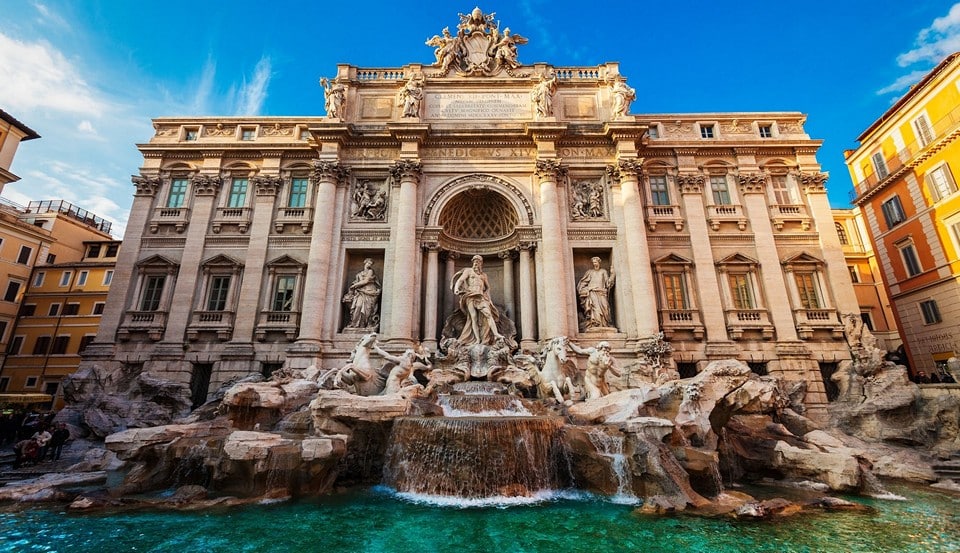
The Trevi Fountain (Fontana di Trevi) is Rome’s largest and most iconic fountain. Built between 1732 and 1762, it was designed based on sketches by the ever-present Bernini, though completed after his death. At the center stands Neptune, commanding a chariot pulled by sea horses. Water cascades into a vast pool—the same one where Anita Ekberg’s character famously bathed in the film *La Dolce Vita*. Don’t try to recreate the scene though—the fine is €500.
Want to return to Rome someday? Toss a coin into the Trevi Fountain—it’s a time-honored tradition. I threw one in once, came back, and never left.
Campo de’ Fiori
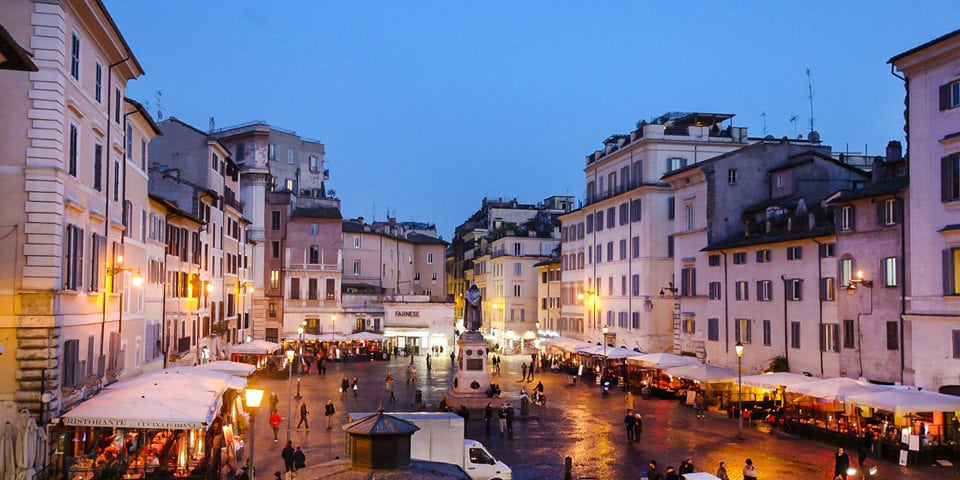
Campo de’ Fiori translates literally to “field of flowers.” This rectangular square is located between Piazza Navona and the Palazzo Farnese. In 1600, it became the site of the execution of Giordano Bruno, whose statue now stands in the center of the square. Today, Campo de’ Fiori hosts a lively market where you can find Roman delicacies, fresh produce, and of course—flowers.
Piazza del Popolo
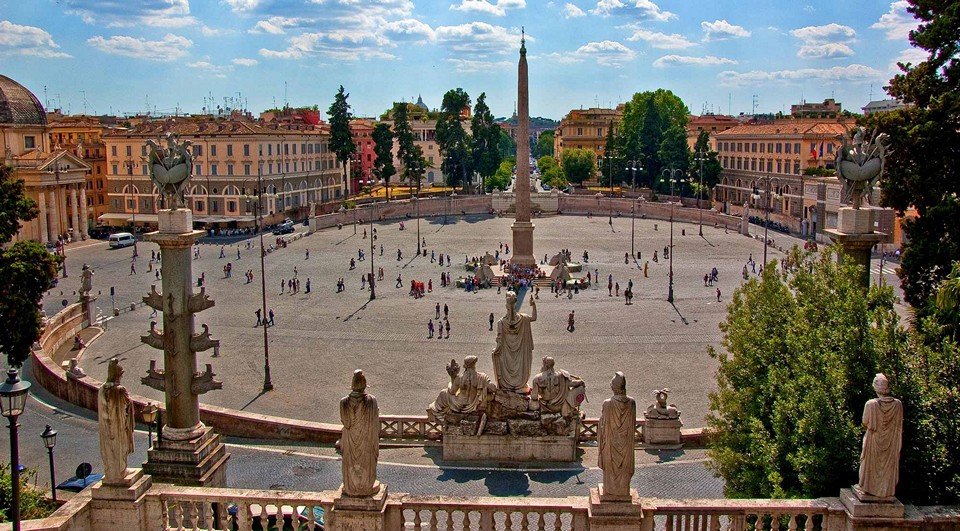
Piazza del Popolo translates from Italian as the People’s Square. Its name comes from the Church of Santa Maria del Popolo, built in the 10th century on what legend claims is the burial site of Emperor Nero. At the center of the square stands the Flaminio Obelisk, a 78-foot (24-meter) ancient Egyptian monument surrounded by fountains featuring marble lions. This is a perfect starting point for a sightseeing tour, as it’s close to the Spanish Steps and the Borghese Gallery.
Recommended: Tour of the Borghese Gallery
St. Peter’s Square
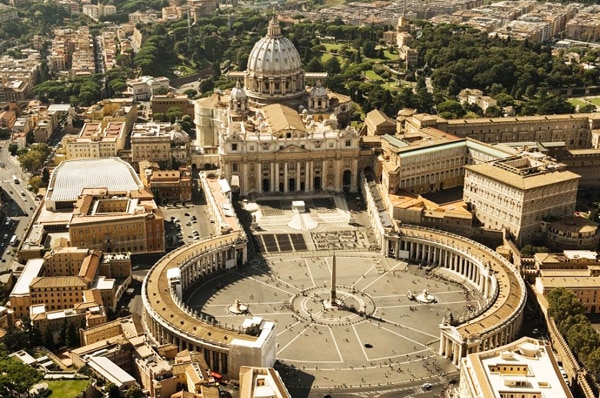
St. Peter’s Square (Piazza San Pietro, 1556–1567) was designed by Bernini (yes, him again!) in the form of two grand semicircles embracing the entrance to St. Peter’s Basilica. A sacred site for Roman Catholics, it fills with pilgrims every Sunday for the Angelus prayer and papal address.
I highly recommend climbing the dome of St. Peter’s Basilica for a breathtaking view of Vatican City and Rome.
Turtle Fountain
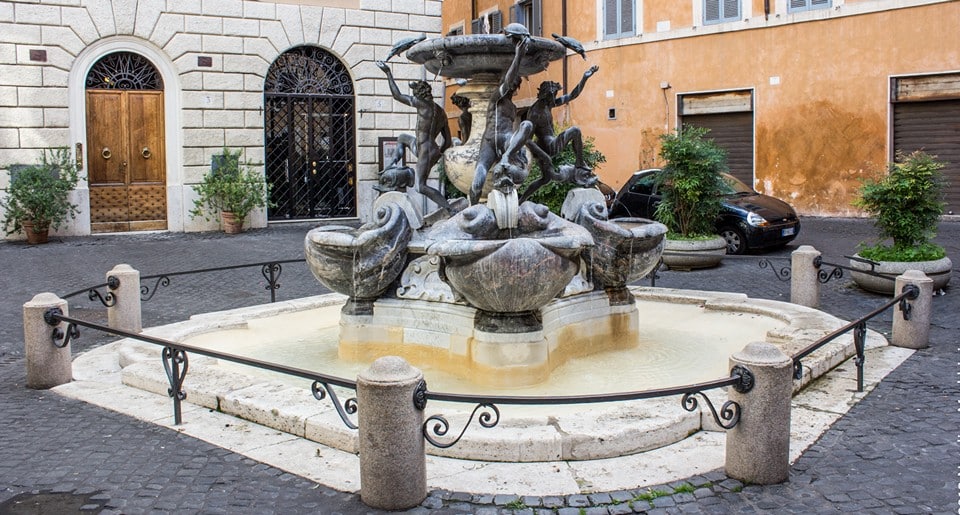
The Turtle Fountain (Fontana delle Tartarughe, 1580–1588) is tucked away in Rome’s Jewish Ghetto, in the charming Piazza Mattei. This was the first Roman fountain adorned with nude male figures. Its design features dolphins and turtles climbing toward the basin—a creative expression of the Latin motto “festina lente,” or “make haste slowly.”
Piazza Barberini
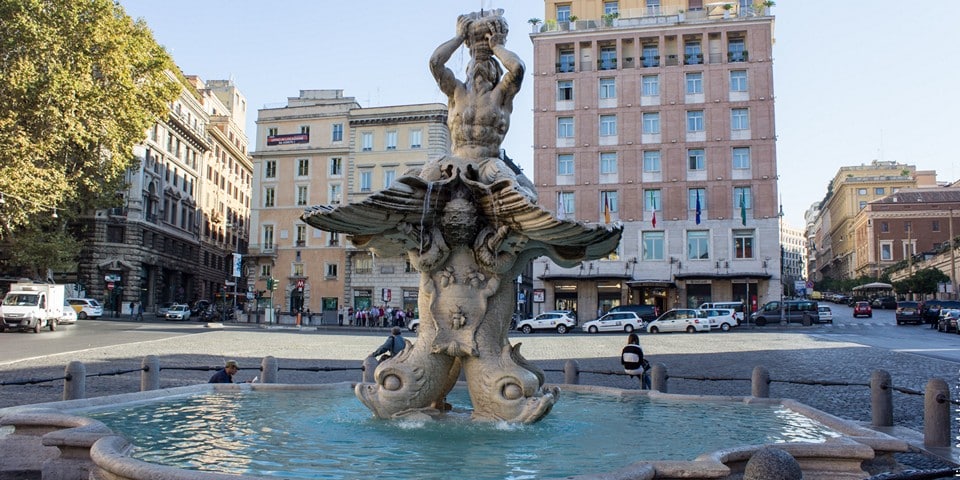
Piazza Barberini takes its name from the nearby Barberini Palace. The square features two fountains designed by Bernini for Pope Urban VIII (born Maffeo Barberini). At its center is the striking Triton Fountain (Fontana del Tritone), and on the corner with Via Veneto stands the charming Fountain of the Bees (Fontana delle Api).
Piazza Venezia
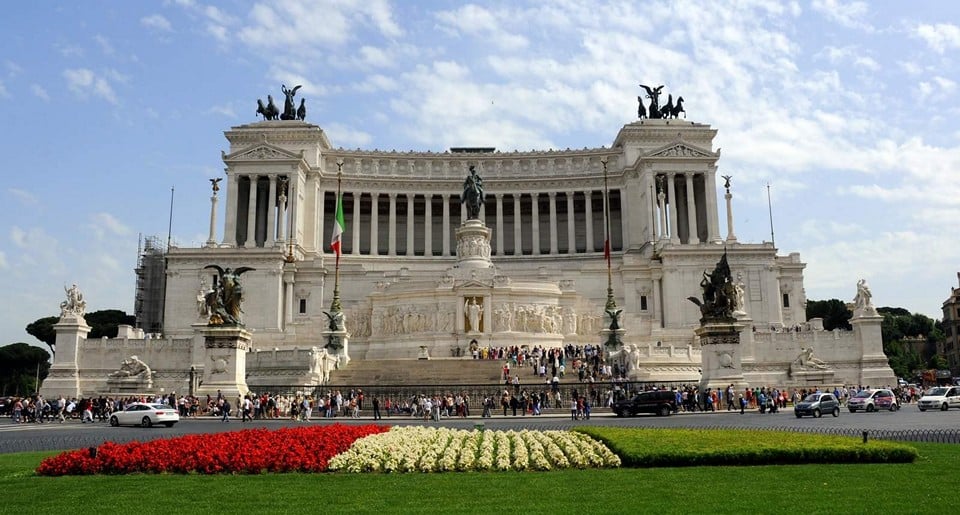
Piazza Venezia, located at the foot of the Capitoline Hill, is named after the Palazzo Venezia, which once housed the embassy of the Republic of Venice. Other landmarks on the square include the grand Monument to Victor Emmanuel II and the Palazzo Bonaparte (formerly Palazzo Misciattelli), where Napoleon’s mother resided during the Empire.
Fountain of the Naiads
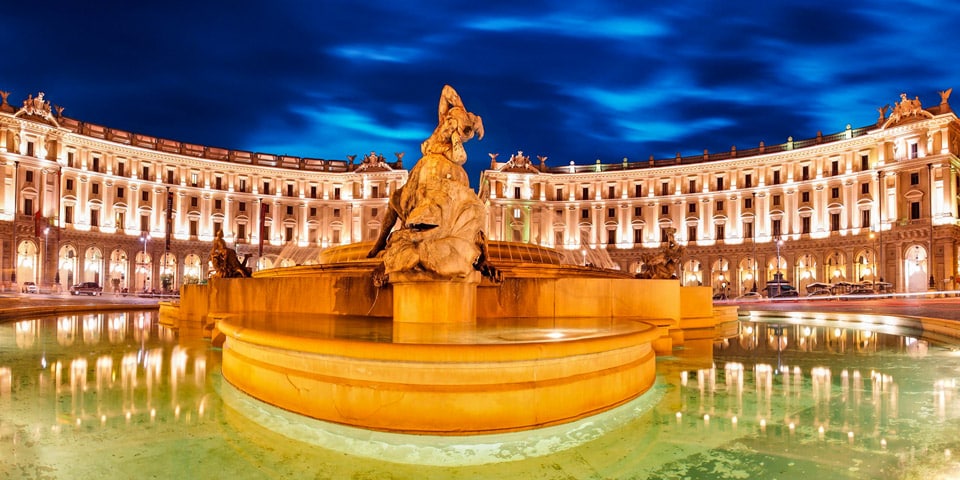
The Fountain of the Naiads (Fontana delle Naiadi) is one of Rome’s most beautiful fountains, located in Piazza della Repubblica. It received its current name in 1901 when sculptor Mario Rutelli replaced the massive bronze lions with elegant sculptures of naiads seated on sea creatures.
Piazza Santa Maria in Trastevere
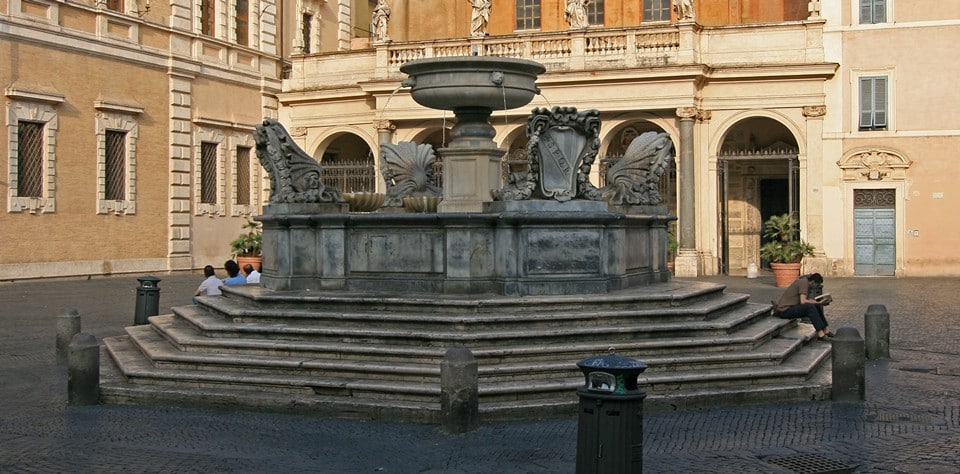
Piazza Santa Maria in Trastevere is one of the most enchanting spots in the Trastevere district, a cozy enclave of papal Rome. The gem of the square is the Basilica of Santa Maria in Trastevere, considered the first church in Rome dedicated to the Virgin Mary.
According to tradition, the church was built in the 3rd century on the site of a miraculous oil spring that heralded Christ’s birth. The basilica is adorned with exquisite mosaics by Pietro Cavallini, a friend and contemporary of Giotto. But it’s not only a feast for the soul—this square is surrounded by some of Rome’s best restaurants. Trastevere is a true foodie paradise, and I’ll never stop saying it!