 Italy for me From Italy with love


Piazza della Repubblica in Rome is a renowned tourist attraction with a rich historical background. At the same time, its modern architectural layout is considered a prime example of contemporary urban design. For years, this part of the city has remained a favorite gathering place for both locals and visitors to the Italian capital. No visit to Rome feels complete without experiencing Piazza della Repubblica.
Page Contents
Historical Overview
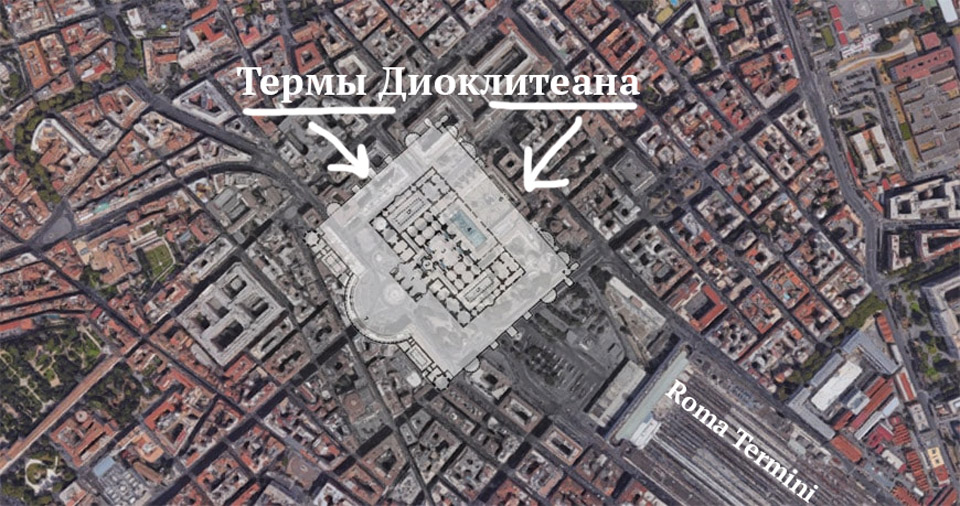
More than 40,000 Christians and slaves reportedly perished from hunger and forced labor during its construction. These public baths—hugely popular among Romans—spanned around 32 acres (13 hectares) and could accommodate roughly 3,000 people.
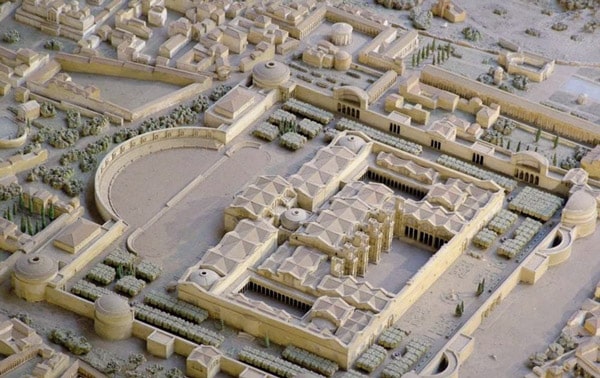
The so-called Baths of Diocletian included a variety of structures, not all dedicated to bathing:
- Baths with hot and cold pools
- Gymnasiums
- Spaces for theatrical performances
- Libraries
- Orangeries with pavilions and fountains
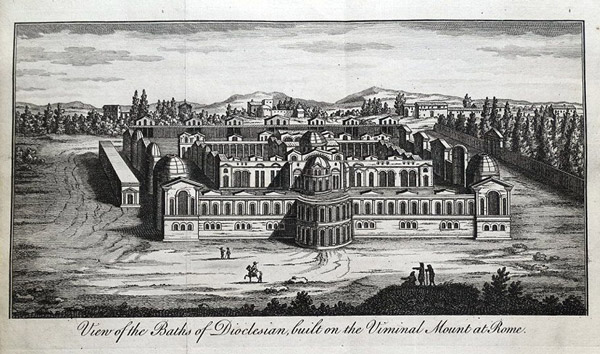
During the Renaissance, a decision was made to breathe new life into the Roman ruins. A new square, Piazza Esedra, was formed. On the remains of the baths, a basilica was constructed by the great Michelangelo Buonarroti, preserving the exedra-shaped niches of the ancient structure.
Years later, further transformations followed: In 1870, under Pope Pius IX, a fountain with bronze lions was installed, though its appearance has since evolved significantly.
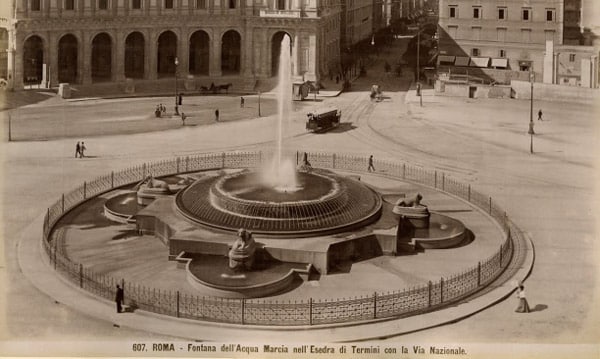
By 1898, the construction of semicircular neoclassical buildings with colonnades and arched windows was completed. The project, which gave the complex its monumental and grand style, was led by Italian architect Gaetano Koch.
In 1960, for the Summer Olympics, the square was renamed Piazza della Repubblica, although locals still affectionately call it Piazza Esedra.
How to Get There
Finding Piazza della Repubblica is easy. The fastest and most convenient way is to take the metro on Line A and exit at the Repubblica stop. The square is just a short walk—less than five minutes—from the Roma Termini train station. It also marks the start of Via Nazionale, one of Rome’s main shopping and strolling avenues.
- Check out our guide to hotels near Termini Station
Fountain of the Naiads
The Fountain of the Naiads (Fontana delle Naiadi), steeped in symbolism, is undoubtedly one of Rome’s most dazzling landmarks. Completed in 1901, it occupies the central space of the square. The fountain’s sculpture ensemble was created by Italian artist Mario Rutelli.
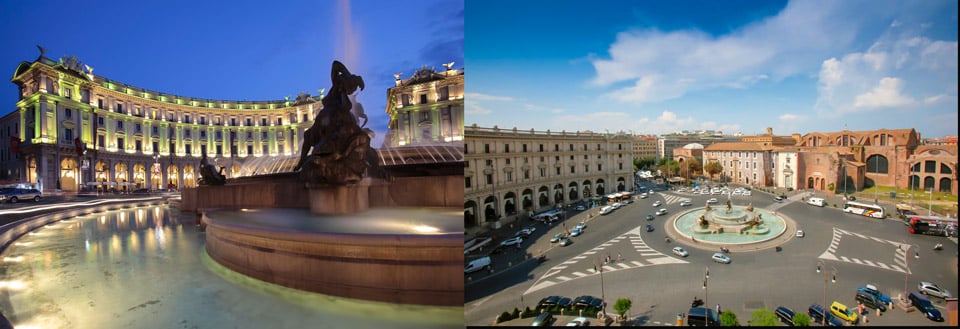
The artist envisioned each of the nude female figures to represent ancient Greek nymphs—the naiads—guardians of seas, rivers, lakes, and subterranean waters. The mythological figures encircle a vast semicircular basin, symbolizing the world’s oceans. Originally, the center featured bronze sea monsters with gills, fins, and fish tails. In 1912, these were replaced by a statue of a young man wrestling a dolphin, symbolizing humankind’s triumph over the power of water.
- Read more about the most beautiful fountains in Rome
The sensuous poses of the naiads sparked widespread controversy at the time, drawing harsh criticism from clergy and conservative citizens. At one point, the statues were even enclosed by a wooden fence to shield onlookers from their “tempting” forms. Eventually, the uproar died down, and the city chose to preserve the fountain in its original artistic form.
Basilica of Santa Maria degli Angeli e dei Martiri
On Piazza della Repubblica stands a remarkable church dedicated to the Virgin Mary, the Angels, and the Martyrs. Its full name is the Basilica of Santa Maria degli Angeli e dei Martiri.
In the mid-16th century, with the blessing of Pope Pius IV, construction of the church was approved. The story behind its creation is fascinating: according to legend, a Sicilian priest named Antonio del Duca saw an unusual, radiant light above the ruins of the ancient bath complex. This vision inspired him to propose building a church on the site. His discussions with the ecclesiastical authorities about the need for such a basilica lasted for decades.
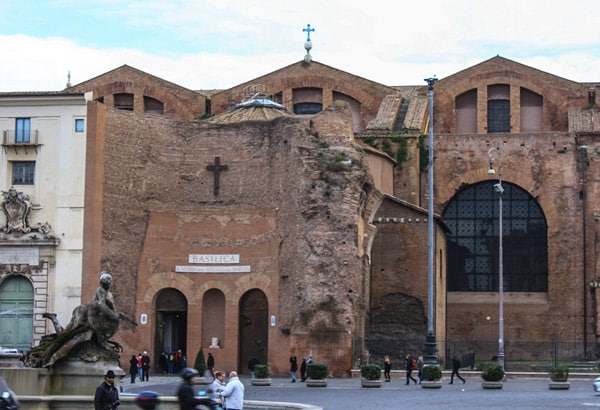
Finally, in 1561, the great Michelangelo designed the plans for the church, using the reconstructed walls of the ancient Roman baths as its façade. Although the main structure was completed within five years, the interior decoration of the basilica continued for more than a century, finally concluding in the mid-18th century. The interior, inspired by Michelangelo’s vision, is adorned in the Italian Baroque style and was executed under the direction of renowned architect Luigi Vanvitelli.
Hotel
Housed within the grand palazzo that frames the square is the prestigious 5-star hotel Palazzo Naiadi Boscolo Exedra Roma.
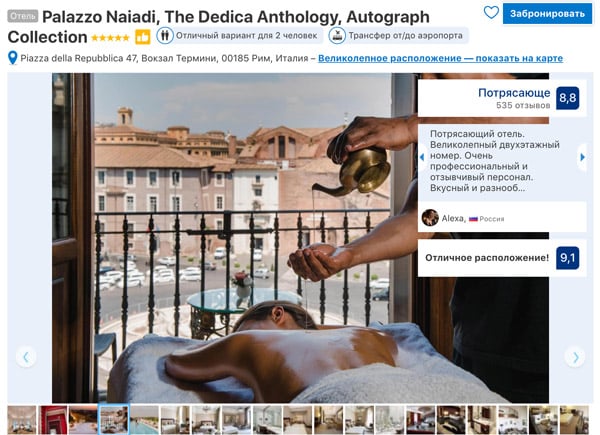
Built in the early 19th century from white marble in the neoclassical style, the building epitomizes aristocratic elegance and luxury. Guests enjoy lavish suite interiors and a rooftop terrace with a swimming pool offering sweeping views of Rome.