 Italy for me From Italy with love

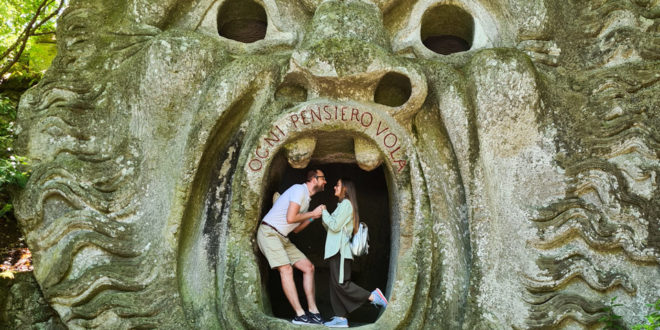
The Sacred Grove (Sacro Bosco), also known as the Park of Monsters (Parco dei Mostri), is one of the most unusual places in Italy, located in the town of Bomarzo. Within its grounds, various mythical creatures come to life to the sound of flowing water, and it feels as if time has stood still in this shadowy medieval world.
Page Contents
Location, Hours, Tickets
The town of Bomarzo is located 69 miles (111 km) from Rome. The park is open daily from 8:30 AM to 5:00 PM.
Tickets cost €11 for adults and €8 for children ages 4 to 13. A visit usually takes no more than two hours. The most convenient way to get there is by car — see our detailed guide for a day trip from Rome.
Getting to the Park of Monsters by public transport is theoretically possible — a few Cotral buses run daily from Viterbo.
- Official website: www.sacrobosco.eu
- Download the park map (PDF)
History of Creation
The Renaissance era gave birth to many historical marvels, including the Sacred Wood. Scholars still debate its origins, but a romantic version claims that the park was founded in 1547 by Pierfrancesco II “Vicino” Orsini as a gift to his beloved wife Giulia Orsini Farnese.
Important: Giulia Orsini Farnese (1527–1557) was the daughter of Galeazzo I Farnese (1477–1537), Duke of Latera and a relative of Pope Paul III (Paulus PP III; born Alessandro Farnese). She should not be confused with the more famous Giulia Farnese (1474–1524), mistress of Pope Alexander VI Borgia and sister of Paul III.
In the 16th century, Roman nobility frequently built countryside estates, and the duke didn’t want to fall behind his rivals.
Pierfrancesco had fought in papal wars that devastated Europe in the first half of the 16th century. His long years as a soldier led to a disillusioned and ironic worldview that stood in contrast to the polished Renaissance culture of the papal court. This new sensibility, paired with an interest in alchemy, may have inspired the vision behind the Bomarzo wood.
The plan was to create something so extraordinary that it could never be replicated. The result was a fantastical park designed to resemble a tangled forest in which one could easily get lost.
Construction of the park wasn’t completed until 33 years later in 1580.
Sadly, Giulia never got to see its full grandeur—she passed away in 1557.
In her memory, the Temple of Eternity was erected. Historians continue to debate why such frightening statues were chosen instead of the classical forms popular at the time. One theory suggests the park was inspired by the romance novel “Hypnerotomachia Poliphili,” in which the protagonist navigates a dark and monster-filled forest in pursuit of his beloved.
After its creator’s death in 1585, the park was largely forgotten. For centuries, only local shepherds wandered among the eerie statues, which helped preserve them.
In the mid-20th century, the Bettini family acquired the estate and began restoring the grounds. After renovations in 1954, the Sacred Wood was opened to the public.
Personal Experience and Photos
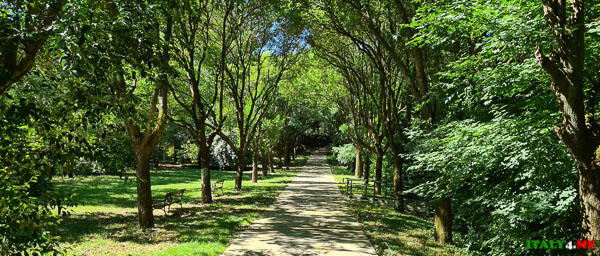
From the ticket office, it’s a walk of several hundred meters down a beautiful tree-lined path to reach the garden.
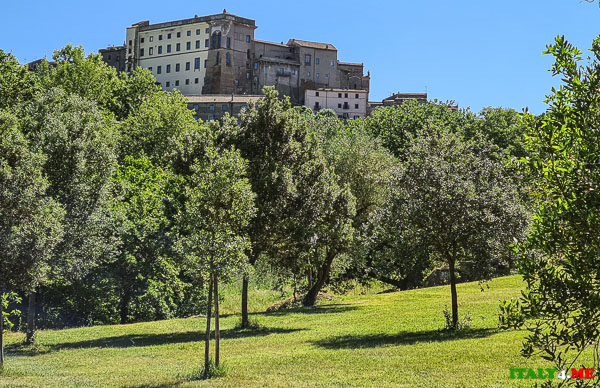
To the left on the hill, you can spot Palazzo Orsini.
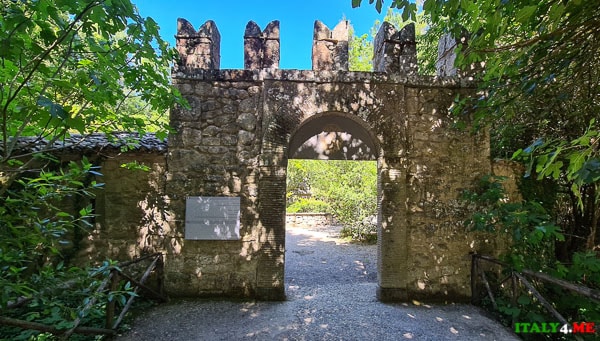
The entrance to the Sacred Wood is designed like a fortress gate.
Right at the entrance, sphinxes greet visitors, warning what lies ahead:
“You who enter the Sacred Wood
Declare whether these marvels be
Deceptions crafted to beguile,
Or wonders wrought for artistry.”
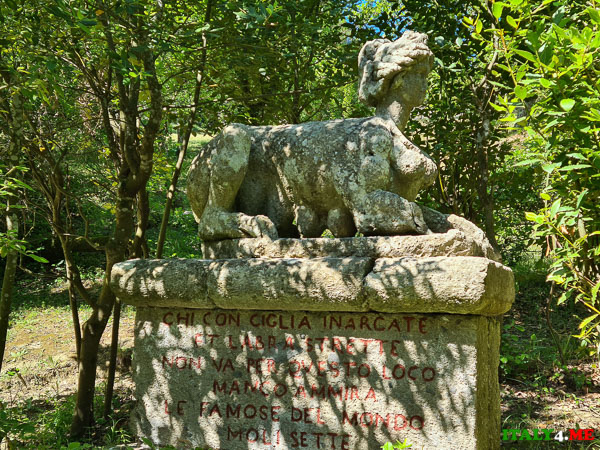
It’s worth noting that many statues are accompanied by intriguing names and verses that often reflect the philosophy of Vicino Orsini.
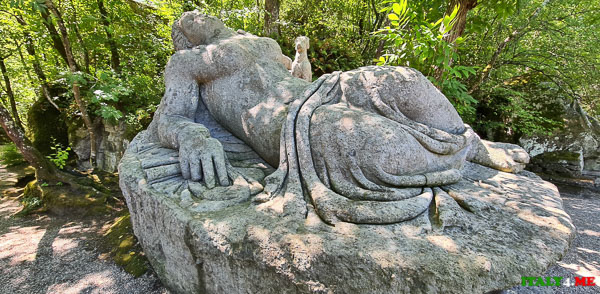
Even today, the statues leave a strong impression—despite their worn condition. In the past, they likely terrified and stunned visitors.
Just imagine the shock of a shepherd stumbling upon one of the most frightening sculptures in the park—Orcus (the Gates of Hell). The most surprising element is a small pavilion where you can take refuge from the heat.
Other statues stun with their brutal and violent interpretations. For example, there’s Hercules defeating Cacus.
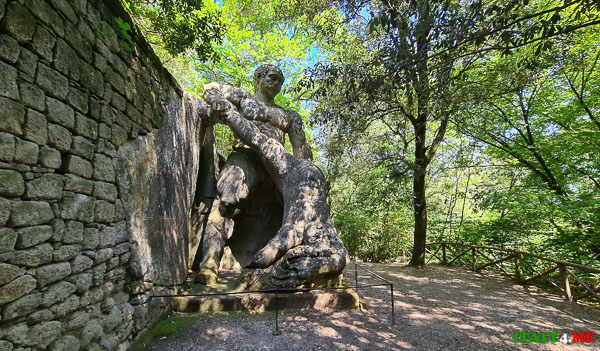
The emotional expression is vivid—you can even see the agony on the petrified face of the defeated.
There’s also Hannibal’s elephant crushing a man, a leaning house, and a nymph with a jug on her head.
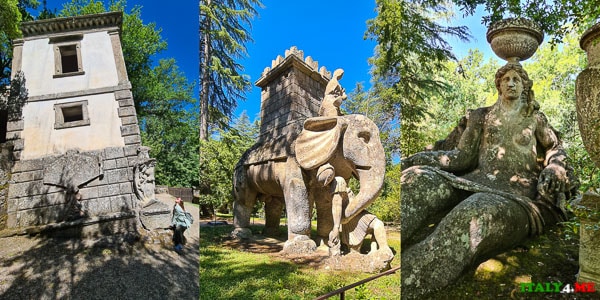
Фountain of Pegasus.
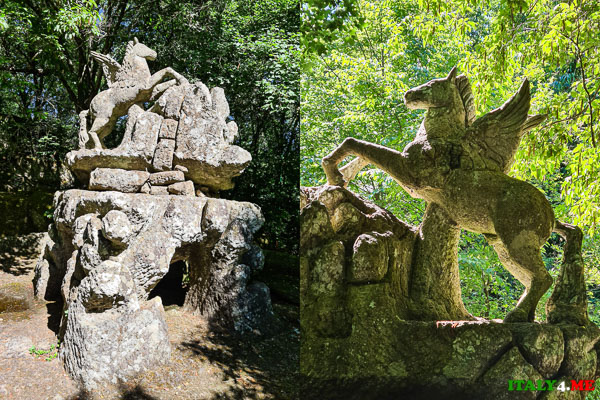
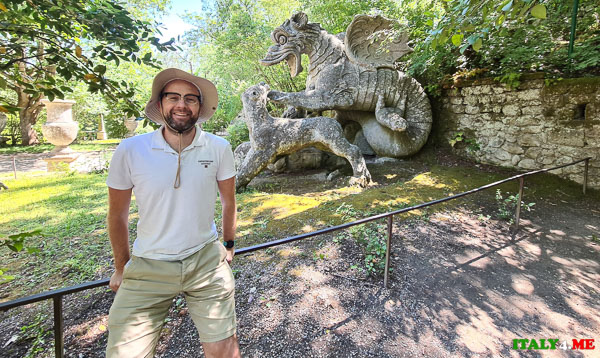
And a dragon, simultaneously trying to defeat both a dog and a lion.
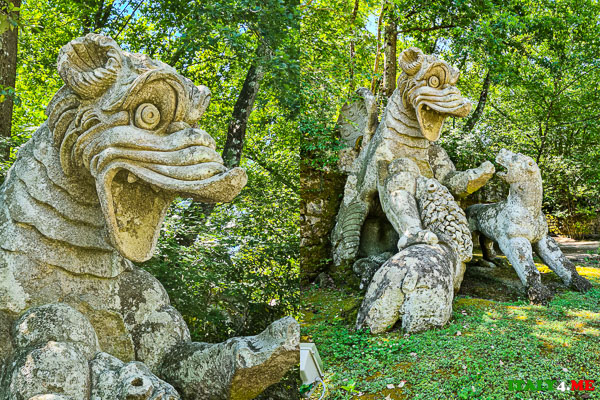
The dragon was my absolute favorite!
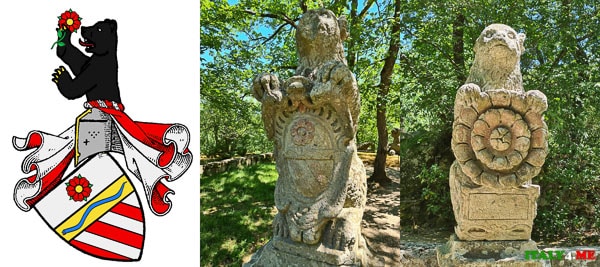
Next to the dragon, take note of two bears holding the Orsini family coat of arms in their paws.
Here you’ll also find sea gods, nymphs, a serpent-woman, mythical creatures, and much more. It’s nearly impossible to list them all.
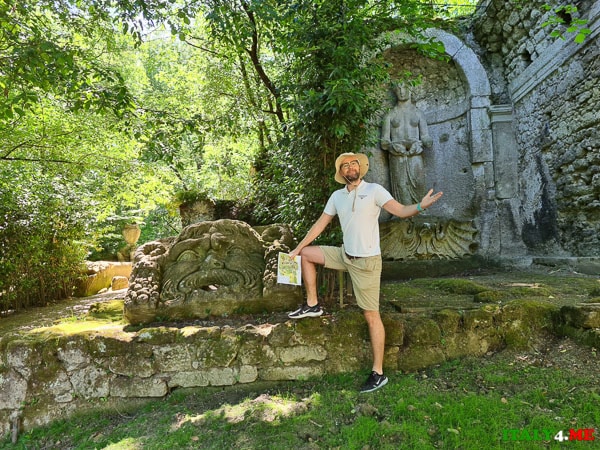
It’s hard to say what amazes more: their majestic grandeur or their beauty.
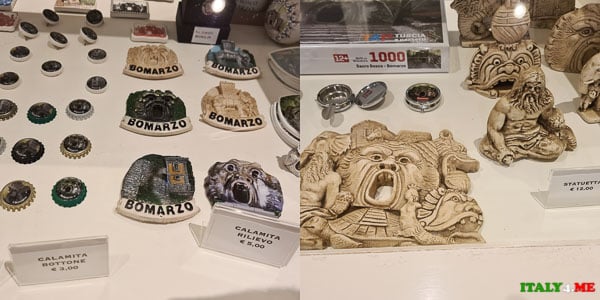
At the park’s exit, there’s a gift shop with a great selection of souvenirs. You’ll find a 1,000-piece puzzle, various types of magnets, and miniature replicas of the sculptures.
Park in Later Art
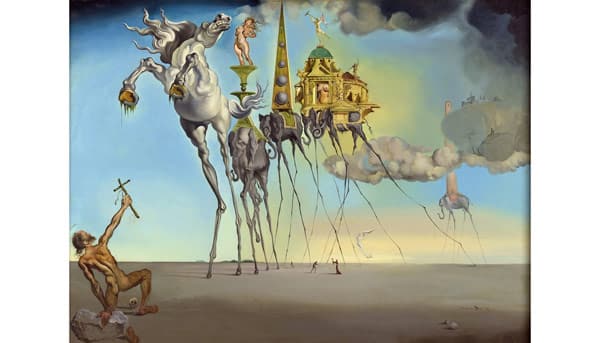
One of the visitors was Salvador Dalí in 1938. Some of the elements he saw are reflected in his painting “The Temptation of Saint Anthony,” created eight years later.
Garden elements also appear in the witchcraft landscapes of Dutch artist Albert Karel Willink.
In 1950, Michelangelo Antonioni released a documentary film about the Sacred Grove and created a series of photographs that helped bring international fame to the site. Watch the video:
French poet André Pieyre de Mandiargues and Italian writer Mario Praz dedicated essays to the park’s statues.
The sculptures have fascinated and continue to inspire countless creatives. For instance, it took French artist Niki de Saint Phalle several decades to create the “Tarot Garden” (Giardino dei Tarocchi) in Tuscany.
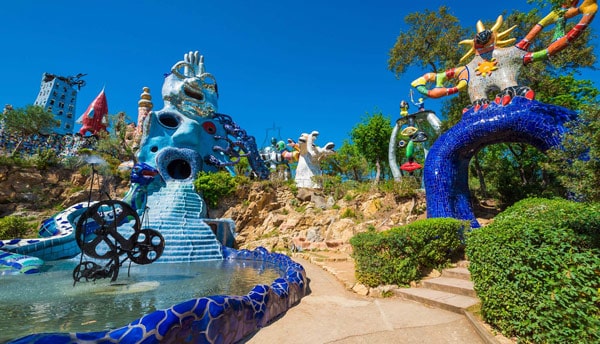
The grandeur of the Park of Monsters’ stone statues is echoed in this modern garden.
- Recommended reading: best day trips from Rome