 Italy for me From Italy with love


Theaters are an undeniable source of pride for Rome. Fans of classical opera and ballet will no doubt visit one of the grand cultural venues in the Italian capital. History and archaeology enthusiasts can explore the remains of ancient theaters that once entertained audiences during the era of Ancient Rome.
Page Contents
Ancient Theaters
The Theater of Marcellus
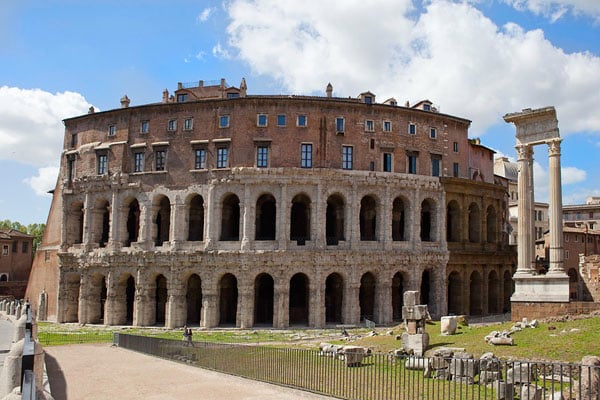
The Theater of Marcellus (Teatro di Marcello) was built during the Roman Republic in the 1st century BC and was originally known in Latin as Theatrum Marcelli. Residents of ancient Rome could enjoy drama and live performances under the open sky. The 111-meter-wide stone amphitheater was commissioned by Emperor Augustus in memory of his nephew Marcus Marcellus (Latin: Marcus Marcellus).
This grand amphitheater was constructed from tuff stone and clad in travertine. At its peak, it could seat up to 20,000 spectators.
By the 4th century AD, the Theater of Marcellus had lost its original function and fell into disrepair. During the early Middle Ages, it was converted into a fortress. In the 16th century, the Orsini family transformed the ruins into a private residence. Today, the upper floors of Teatro di Marcello house exclusive residential apartments, while the lower level is occasionally used for small summer concerts.
- Address: Via del Teatro di Marcello
- Visiting Hours: The building can only be viewed from the outside
The Theater of Pompey
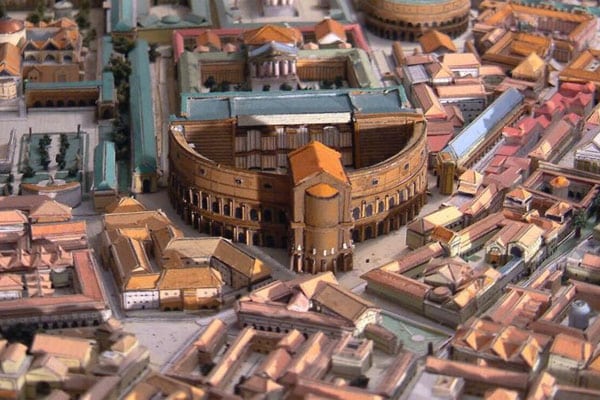
The Theater of Pompey (Teatro di Pompeo) has not survived, but it is known as the site of Julius Caesar’s infamous assassination (Latin: Julius Caesar).
Also read the life story of Julius Caesar.
The Theater of Pompey was built around 55 BC by the statesman Pompey Magnus. It was the first theater in ancient Rome constructed entirely of stone. The theater was part of a vast complex that included gardens and a senate meeting hall. Over time, the structure was dismantled and its materials were repurposed for churches and noble villas throughout the city.
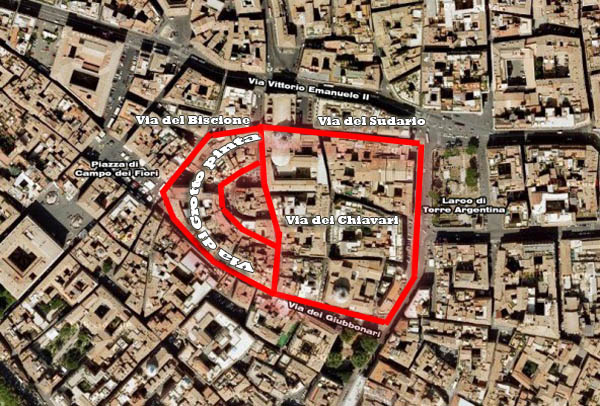
The site of the ancient Theater of Pompey is so extensive that today it spans an entire city block and includes a public square in Rome:
- Via del Biscione, Via di Grotta Pinta, Via dei Chiavari, Via dei Giubbonari, Via del Sudario – now part of the Jewish Ghetto;
- Largo di Torre Argentina – a square in Rome that preserves the ruins of ancient temples. This archaeological site also serves as a sanctuary for stray cats, which has earned it the nickname “the place where cats live.”
Modern Theaters
The Eternal City boasts around 10 active theaters, but the demand for classical arts is so high that securing a ticket is no easy task.
Ticket prices range from €20 to €150 ($21–$160), but the issue isn’t just the cost. Avid theatergoers reserve the best seats well in advance or purchase season passes. Wondering how to get tickets to a Roman theater? There’s one key piece of advice: always use the official website of the venue to book or purchase tickets online. Most importantly, plan your cultural outings several months ahead of your trip to Rome. For major premieres and world-class productions, tickets can sell out as early as six months in advance!
Rome Opera House
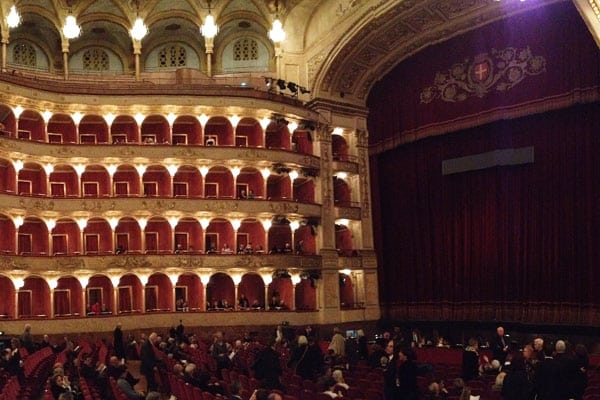
The Rome Opera House (Teatro dell’Opera di Roma), also known by the name of its founder as Teatro Costanzi, is one of the most renowned cultural institutions in the Italian capital.
This temple of Roman opera was built in 1880 by the brilliant entrepreneur Domenico Costanzi, who owned a chain of luxury hotels across Italy. One of Costanzi’s hotels was located on Via Nazionale, and for a time after the theater’s opening, it even had a direct connection to the entertainment venue.
The theater’s original architecture reflected a Neo-Renaissance style, and its interior impressed visitors with an elegant painted dome. Roman theater aficionados praised the venue’s excellent acoustics. The debut performance was Gioachino Rossini’s opera “Semiramide,” which was attended by members of the royal family, including King Umberto I and his wife. Despite all efforts, the investment Costanzi made in the theater did not yield the returns he hoped for.
Throughout the final decade of the 19th century, the stage saw a string of dazzling premieres. However, in 1907, the Rome Opera was acquired by Italian activist and impresario Walter Mocchi. In 1926, the venue officially became the property of the City of Rome. Over the next two years, the building underwent extensive renovations, including a major expansion of the auditorium. On February 28, 1928, it reopened under the name “Royal Opera House” (Teatro Reale dell’Opera), ushering in a new era for Costanzi’s creation.
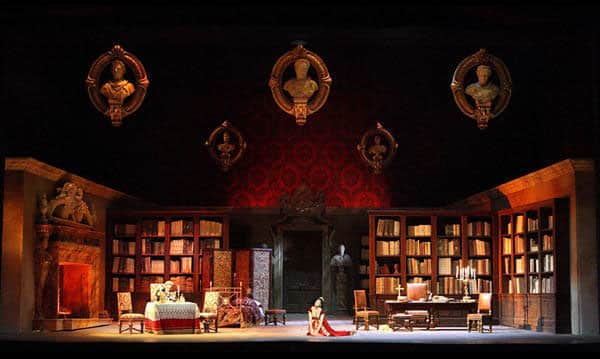
In 1946, the venue adopted its current name — Rome Opera House. Another major renovation took place in 1956, bringing a new sense of grandeur to the building: a wide ceremonial staircase, a spacious foyer, a 1,700-seat auditorium, and a refreshed façade. Since then, countless opera legends have graced its stage: Enrico Caruso, Feodor Chaliapin, Maria Callas, Renata Tebaldi, Montserrat Caballé, José Carreras, Plácido Domingo, Leontyne Price, and Luciano Pavarotti. The venue’s ballet school, under the direction of Micha van Hoecke, is also celebrated for its captivating productions.
Baths of Caracalla (Terme di Caracalla)
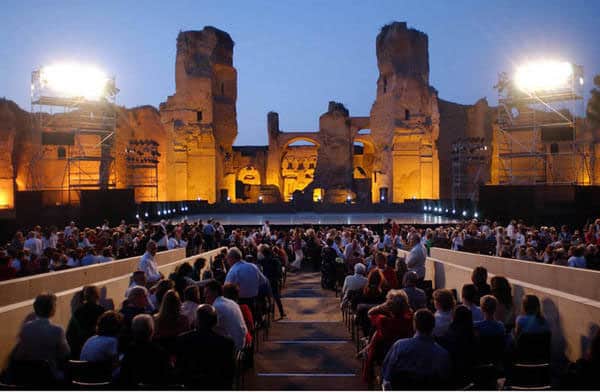
Since 1937, part of the Rome Opera’s summer program has taken place at the Baths of Caracalla (Terme di Caracalla). In addition to classical opera and ballet, this archaeological site hosts concerts and other performances. A highlight of this series was Elton John’s concert on July 12, 2015.
- Address: Viale delle Terme di Caracalla
- Ticket prices: from €25 to €150 ($27–$160)
- Dress code: required
- Official website: www.operaroma.it – available in both Italian and English. Note: there is no Russian-language version.
- Important: Tickets should only be purchased through the official platform www.ticketone.it – simply search for “Terme di Caracalla”. See the detailed guide.
Teatro Argentina
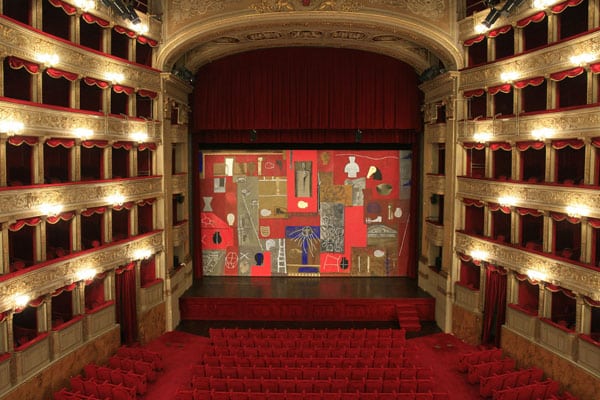
Teatro Argentina was originally dedicated entirely to opera, but today it embraces modern art and bold productions.
Located on Largo di Torre Argentina — better known as “the place where the cats live” — this theater was built in 1731, making it the oldest in Rome. Interestingly, the construction showed little regard for Rome’s historical heritage, as part of the ancient Theater of Pompey lies buried beneath its foundation.
The early 19th-century renovation was funded by the influential Sforza-Cesarini family and carried out by architect Gerolamo Theodoli. In 1815, Teatro Argentina reopened with Rossini’s opera “The Barber of Seville” as its debut. Throughout the 19th and 20th centuries, the stage hosted many major premieres, including operas by Giuseppe Verdi and Luigi Pirandello, as well as plays by Maxim Gorky and Henrik Ibsen.
- Seating capacity: 696
- Address: Largo di Torre Argentina, 52
- Opening hours: Tue–Sun from 10:00 AM to 2:00 PM and 3:00 PM to 7:00 PM
- Official website and schedule: www.teatrodiroma.net
Il Sistina Theater
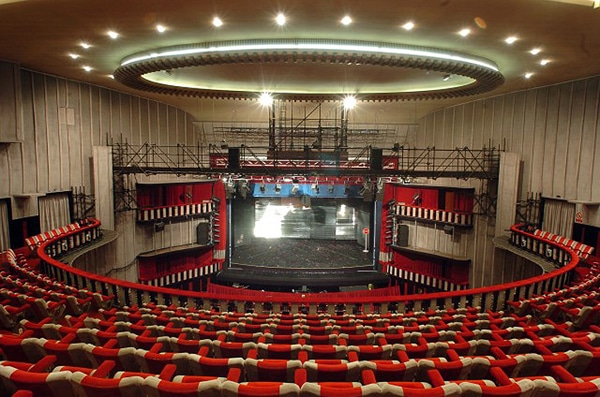
Teatro Il Sistina was built in 1946 by Marcello Piacentini. By 1949, the venue had shifted focus to the booming film industry. However, by the 1960s, its stage transitioned to hosting theatrical performances and cabaret shows. Since 2003, Teatro Il Sistina has been officially recognized as the theater of Italian musical comedy.
Over the years, the spacious 1,500-seat auditorium has welcomed global stars such as Louis Armstrong, Nina Simone, Burt Bacharach, and Liza Minnelli. Musicals like “Evita” and “West Side Story” thrilled packed audiences at Il Sistina. Many renowned Italian stage and screen actors have also performed here, including Marcello Mastroianni, Delia Scala, Gigi Proietti, Enrico Maria Salerno, and more.
- Address: Via Sistina, 129
- Opening hours: Mon–Sat from 10:00 AM to 7:00 PM, Sun from 11:00 AM to 7:00 PM
- Website and schedule: www.ilsistina.it
Teatro Olimpico
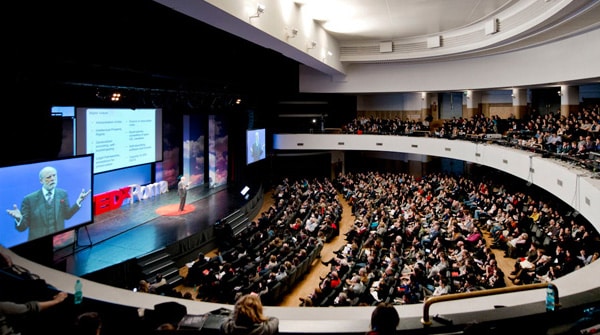
Located in the Flaminio district, Teatro Olimpico began its journey in 1936 as a film studio.
Over time, the venue was transformed into a theater. During the 1980s, its programming expanded to include not just drama, but also modern performance art—cabaret, musicals, dance shows, and philharmonic concerts. Over the years, performers have included Gigi Proietti, Mikhail Baryshnikov, Joaquín Cortés, Maurizio Battista, and others.
With a capacity of 1,400 seats, it’s the only Roman theater that, according to American playwright Orson Welles, truly captures the spirit of Broadway.
- Address: Piazza Gentile da Fabriano, 17
- Opening hours: 10:00 AM to 7:00 PM
- Website and schedule: www.teatroolimpico.it
Globe Theatre
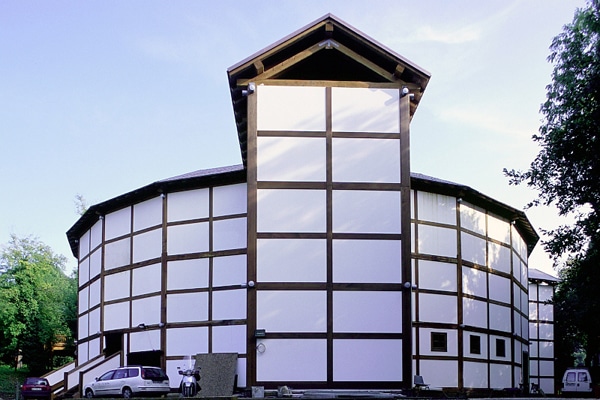
The Il Silvano Toti Globe Theatre proudly bears its Shakespearean name. The project was spearheaded by iconic Italian actor and filmmaker Gigi Proietti. Founded in 2003 within Villa Borghese, the theater’s architecture is a faithful replica of London’s famous Globe Theatre. Authentic materials like oak wood and tuff stone enhance its historical charm.
- Capacity: 1,200 spectators
- Repertoire: Plays by William Shakespeare
- Address: Via Vittoria Colonna, 39
- Opening hours: Daily from 9:00 AM to 9:00 PM
- Ticket prices: Standing – €10 ($11); seated – from €15 to €23 ($16–$25)
Teatro dell’Angelo
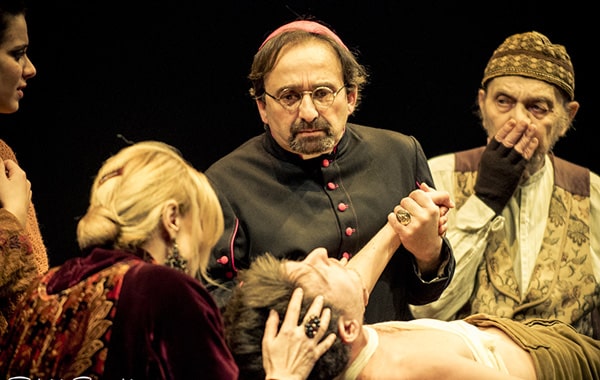
Teatro dell’Angelo was originally constructed in the 1930s but had nothing to do with the dramatic arts for many years. The building served as a warehouse and later as a dance club. In 1995, it was transformed into a theater that began hosting performances by local Roman actors. For a time, Teatro dell’Angelo collaborated closely with Teatro Argentina. Over the years, the small 290-seat venue has also hosted conferences, symposiums, and art exhibitions. On weekends, it offers children’s shows during the daytime.
- Address: Via Simone de Saint Bon, 19
- Unfortunately, the theater is temporarily closed.
Il Gran Teatro
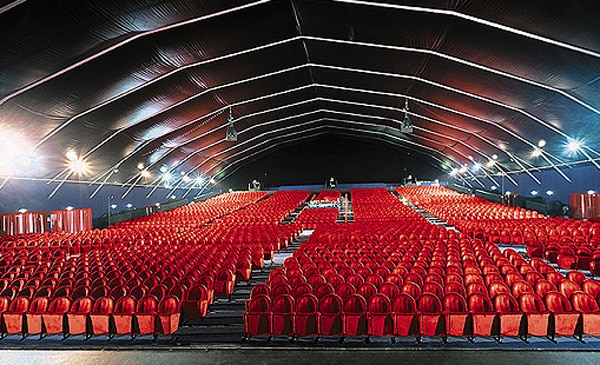
Il Gran Teatro was established on the left bank of the Tiber River in the Tor di Quinto district in 2002.
The theater was designed with a modern “modular” concept, allowing the stage and auditorium to be quickly adapted for various events. This multi-functional venue is ideal for large-scale shows, concerts, celebrations, sports events, and theatrical performances.
Covering a total area of 43,380 sq ft (4,030 sq m), Il Gran Teatro can accommodate 3,040 guests. Its theatrical programming focuses mainly on contemporary productions.
- Address: Viale Maurizio Barendson
- Opening hours: 10:00 AM to 9:00 PM
Teatro Eliseo
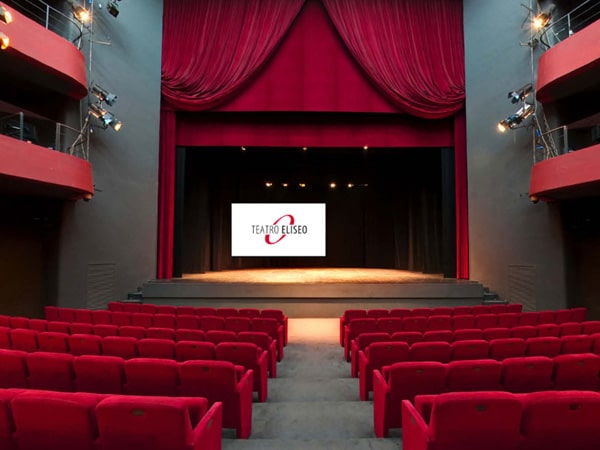
One of Rome’s most beloved venues, Teatro Eliseo, opened its doors in 1900 and quickly became a favorite among audiences.
Light operettas, comedies, and popular shows were a hit with both the public and stage stars. The theater received its current name in 1938, at which point its artistic direction shifted toward more serious dramatic productions. Today, its reputation for high-quality performances remains a hallmark. Conveniently located in the heart of the capital, the theater seats 706 guests.
- Address: Via Nazionale, 183
- Opening hours: 9:30 AM to 7:30 PM; closed on Mondays
- Tickets: from €10 to €47 ($11–$51)