 Italy for me From Italy with love

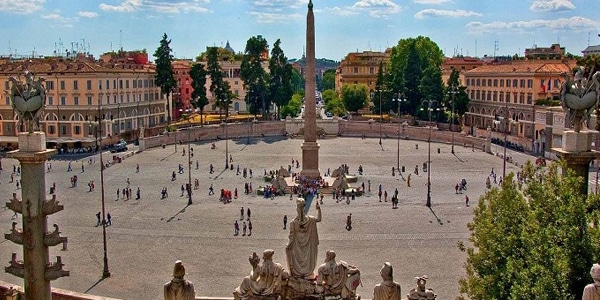
Rome rose to fame as the capital of the Ancient World—a cradle of culture, science, and military prowess. Yet even in such an extraordinary city, there was space for exotic imports. The obelisks of Rome pay homage to an even older civilization—ancient Egypt. These towering stone spires pierce the Roman sky, adorning the squares of the Eternal City.
Page Contents
Where Did the Obelisks Come From?
The term “obelisk” (from ancient Greek βελίσκος) originated in Egypt and meant “little spit.”
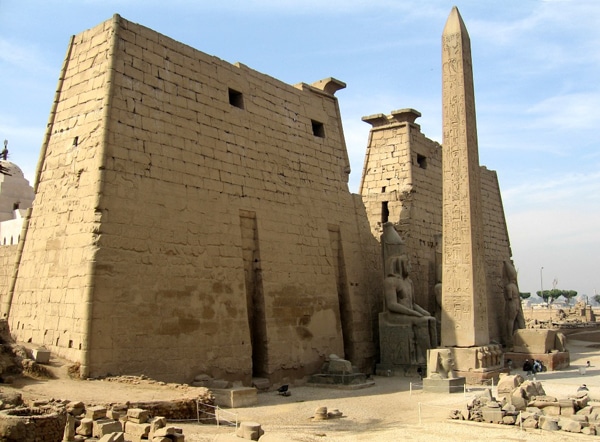
One glance at the square-based, pointed monument, and you can see why the name stuck—it does resemble a colossal skewer. The Egyptians carved obelisks from a single granite block and covered them with inscriptions praising the sun god Ra (Ρα in Greek) and other deities.
They stood 98–115 feet (30–35 meters) tall and weighed 150–240 metric tons (330,000–530,000 pounds). Egyptians traditionally placed them in pairs at the entrance to temples dedicated to Ra. In ancient Egypt, obelisks were deeply sacred. The Romans, however, gave these artifacts a more practical role—using the tall, pointed monoliths as gnomons for sundials, roadside markers, and memorials for nobles.
Fun fact: Rome is home to exactly 13 obelisks—a “devil’s dozen.”
The first Roman to turn his attention to these ancient monuments was Emperor Augustus (Latin: Caesar Dīvī Fīlius Augustus). In 10 BCE, he had the first obelisk shipped from Heliopolis (Ἡλίουπόλις in Greek) to Rome. Centuries later, during the Middle Ages, Italian architects brought obelisks back into fashion, blending the grandeur of medieval architecture with Egyptian and Roman monuments.
Ancient Obelisks
To explore Rome’s ancient obelisks, simply follow a route that begins in the heart of the city.
At Piazza del Popolo
Address: Piazza del Popolo
This obelisk was the first monument transported from Egypt to Rome.
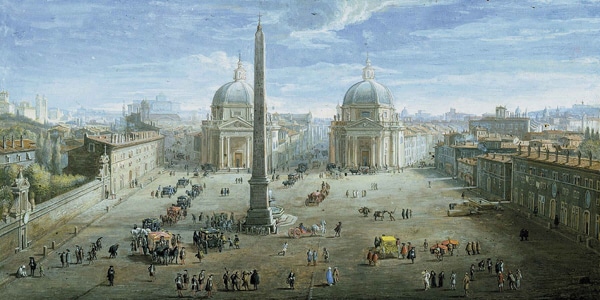
Brought by Emperor Augustus from Heliopolis, the massive stone pillar was initially erected at the Circus Maximus as a sundial marker. During the fall of the Roman Empire, it was buried underground.
In the late 16th century, Pope Sixtus V (Latin: Sixtus V) ordered the rediscovered obelisk to be re-erected at the center of Piazza del Popolo. In 1823, it was further embellished with Egyptian-style lion fountains that spout water from their mouths.
The obelisk today stands 79 feet (24 meters) tall, although its original height was 118 feet (36 meters).
On Pincian Hill, Villa Borghese
Address: Viale dell’Obelisco
This ancient obelisk, approximately 56 feet (17 meters) tall, remained unknown to the public until the 16th century, when archaeologists discovered it near Porta Maggiore.
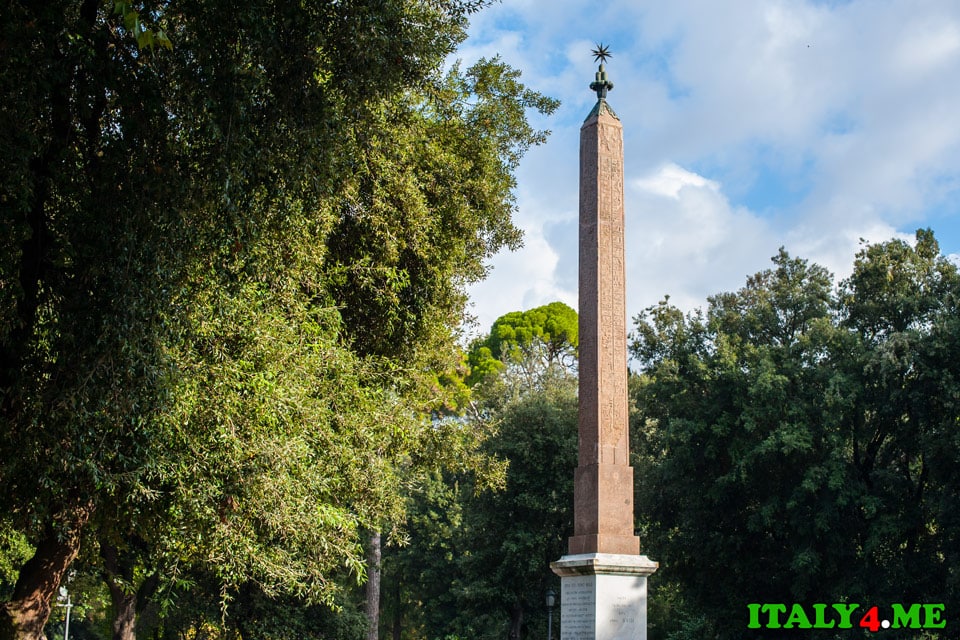
This sacred pillar changed locations several times—from Palazzo Barberini to the Vatican—before finding its home in the Borghese Gardens on Pincian Hill.
At Piazza della Trinità dei Monti
Address: Piazza della Trinita dei Monti
Above the Spanish Steps, in the center of Piazza della Trinità dei Monti, stands an obelisk that is a smaller copy of the one brought to Rome by Emperor Augustus.
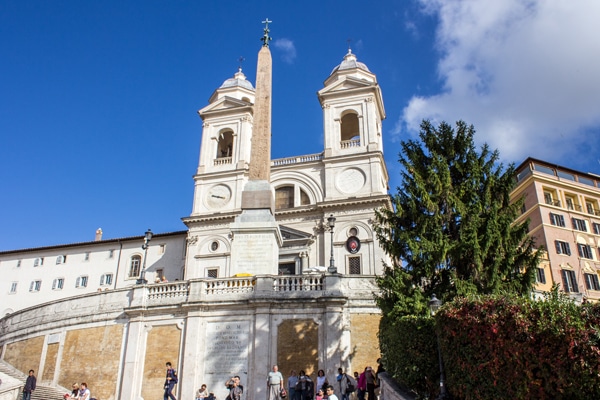
Originally intended to decorate the Gardens of Sallust (Horti Sallustiani) in Ancient Rome, the obelisk was discovered by the noble Ludovisi family, who gifted it to the city.
It spent a period near the Lateran Basilica (Arcibasilica Papale di San Giovanni in Laterano), before being permanently installed in the late 18th century in front of the Trinità dei Monti church.
At Piazza Navona
Address: Piazza Navona
This 98-foot (30-meter) obelisk was brought to Rome by Emperor Domitian (Latin: Titus Flavius Caesar Domitianus) in the 1st century AD.
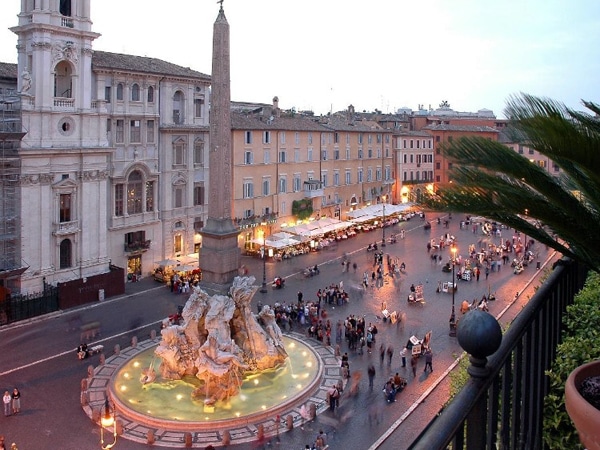
It was a replica of a sacred pillar originally erected in a temple dedicated to the god Serapis (Greek: Σέραπις). In the 3rd century AD, Emperor Maxentius (Latin: Marcus Aurelius Valerius Maxentius) relocated the monument to the Circus Maximus.
In the early 17th century, a British earl purchased the obelisk—which had been split into four pieces—and planned to transport it to England. Pope Urban VIII blocked the move. In 1651, Gian Lorenzo Bernini incorporated the ancient monument into the centerpiece of the Fountain of the Four Rivers (Fontana dei Quattro Fiumi), located at the heart of Piazza Navona.
At Piazza della Rotonda
Address: Piazza della Rotonda
The monument that stands in Piazza della Rotonda, in front of the Pantheon, is one of a pair that once marked the entrance to the Temple of Ra in Heliopolis.

At just 20.8 feet (6.34 meters) tall without the pedestal, this obelisk is much shorter than its twin at Villa Celimontana. Originally positioned at the entrance to the Temple of Isis, the obelisk was lost over time and rediscovered in the 14th century during the construction of the Church of San Macuto (Chiesa di San Macuto).
It wasn’t until 1711 that the obelisk found its current home in front of the Pantheon, placed there by order of Pope Clement XI (Latin: Clemens XI). It was mounted atop a fountain designed by Filippo Barigioni.
At Piazza della Minerva
Address: Piazza della Minerva
Just one block from the Pantheon lies Piazza della Minerva, home to the church of Santa Maria sopra Minerva.
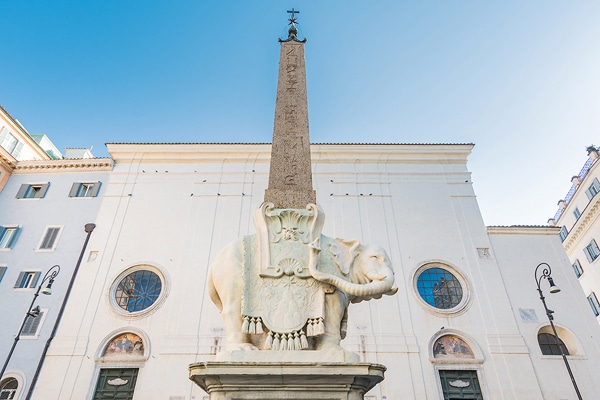
Near the church entrance stands one of a pair of obelisks originating from the Egyptian city of Sais (Greek: Σάϊς). This modest obelisk, just under 20 feet (6 meters) tall, is supported by Bernini’s famous elephant. It was brought to Rome in the 1st century AD by Domitian to decorate the Temple of Isis, and later reused by Bernini in the 17th century to grace the Roman square.
The obelisk’s unique charm lies in its pedestal—carved into the shape of a small elephant. With this, the master sculptor symbolized divine wisdom.
At Piazza di Monte Citorio
Address: Piazza di Monte Citorio
This obelisk is believed to have been brought to Rome by Emperor Augustus from Heliopolis in the 1st century AD.
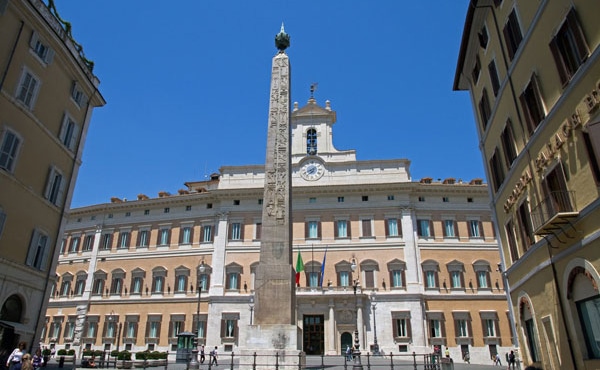
Standing 72 feet (22 meters) tall, it served as the gnomon (shadow-caster) for a massive sundial at the Campus Martius.
The obelisk was rediscovered in the 16th century, but initially only its pedestal was excavated and restored, having been mistakenly attributed to Mark Antony. It wasn’t until the late 18th century that Pope Pius VI (Latin: Pius VI) ordered the red marble obelisk to be erected in Piazza di Monte Citorio.
At St. Peter’s Square
Address: Piazza San Pietro, Vatican
This 83.6-foot (25.5-meter) stone spire was originally intended for the Forum Iulium in Alexandria, Egypt, by Roman prefect Cornelius Gallus (Latin: Cornelius Gallus).
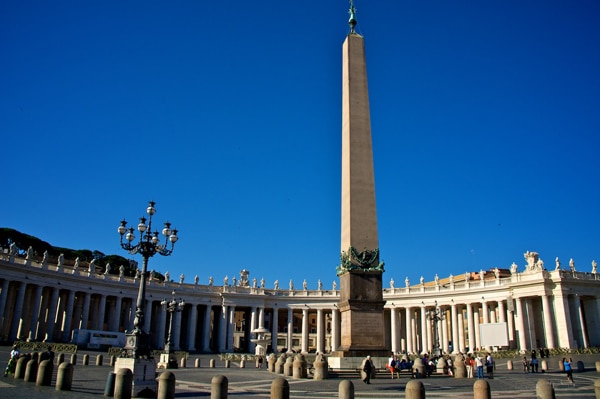
Created in the 1st century BCE, this obelisk is unique for lacking any hieroglyphic inscriptions. In the 40s AD, Emperor Caligula (Latin: Gaius Julius Caesar Augustus Germanicus) had it transported to Rome to decorate the Circus of Nero (Circo di Nerone).
Read more about Emperor Nero.
In the late 16th century, Pope Sixtus V ordered its relocation to St. Peter’s Square in Vatican City. The daunting task of moving the massive monument was carried out using a method designed by architect Domenico Fontana.
This is the only obelisk in Rome that was never toppled or destroyed during the decline of the Roman Empire. Another curious detail: for centuries, the bronze sphere atop the obelisk was believed to contain the ashes of Julius Caesar (Latin: Gaius Julius Caesar). When Fontana opened it and sent it to a museum, it was found to contain only ancient dust.
This obelisk stands directly in front of St. Peter’s Basilica (Basilica di San Pietro), the patriarchal basilica of the Vatican.
At Piazza di San Giovanni in Laterano
Address: Piazza di San Giovanni in Laterano
This is the tallest obelisk in Rome, reaching a height of 125 feet (38.12 meters) and weighing 230 tons—making it the largest of its kind in the world.
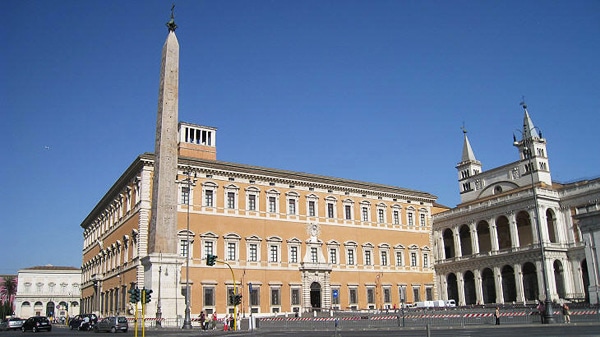
Originally from the Temple of Amun-Ra (Greek: Ἅμμων Hámmōn) in Karnak, the obelisk was brought to Rome in the 4th century AD by Emperor Constantius II (Latin: Flavius Julius Constantius Augustus). In 357 AD, it was installed at the Circus Maximus.
Centuries later, after the fall of Rome, the obelisk was rediscovered broken into three pieces. In 1587, it was reassembled, though 13 feet (4 meters) shorter than its original height. Its new home became the square in front of the Lateran Palace (Palazzo del Laterano)—the former residence of the Popes and site of the papal basilica San Giovanni in Laterano. It replaced a gilded equestrian statue of Marcus Aurelius (Latin: Marcus Aurelius Antoninus Augustus), which was relocated to the Capitoline Hill (Campidoglio).
On the Esquiline Hill
Address: Piazza dell’Esquilino
Esquiline (Esquilino), one of the Seven Hills of Rome, is home to an obelisk once taken from the tomb of Alexander the Great in Alexandria.
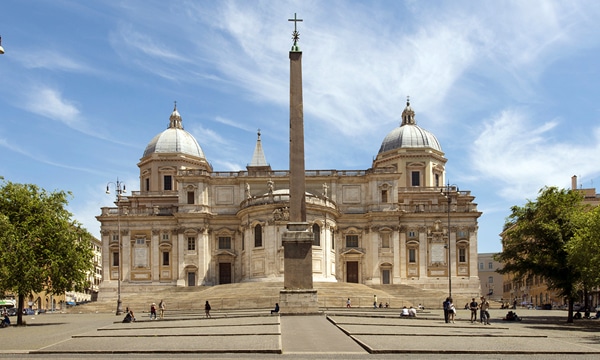
The monument and its twin were later placed at the entrance to Emperor Augustus’s mausoleum in the Campus Martius. The pillars were unearthed in the early 16th century. One was erected beside the papal basilica of Santa Maria Maggiore in Piazza dell’Esquilino, the other at the Quirinal Palace (Palazzo del Quirinale). All work was overseen by Pope Sixtus V’s favorite architect, Domenico Fontana.
At Piazza del Quirinale
Address: Piazza del Quirinale
The obelisk in Piazza del Quirinale is a twin of the one on the Esquiline Hill.
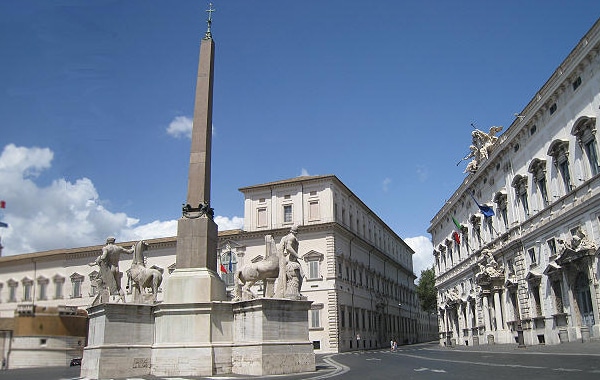
Smooth and free of hieroglyphics, the stone column stands just under 49 feet (15 meters) tall. Although discovered in the early 1500s, it remained unused until 1786. That year, Pope Pius VI ordered it installed between the marble statues of the Dioscuri (Greek: Διόσκοροι) in front of the Quirinal Palace—today the official residence of the President of Italy.
At the Baths of Diocletian
Address: Via delle Terme di Diocleziano
The obelisk now gracing the Baths of Diocletian (Terme di Diocleziano) was originally one of a pair erected in Heliopolis in the temple of Pharaoh Ramses II. The Romans relocated it in the early imperial period to a Temple of Isis in Rome. In 1883, archaeologist Rodolfo Lanciani rediscovered the monolith during excavations near the Church of Santa Maria sopra Minerva.
For a time, the obelisk stood in front of Termini train station (Stazione Termini). It became part of a memorial to Italian soldiers who died in the 1887 Battle of Dogali in Ethiopia. In 1924, the memorial—topped with a star—was moved from Piazza dei Cinquecento to the gardens of the Baths of Diocletian.
At Villa Celimontana
Address: Via della Navicella
The lush gardens on the Caelian Hill (Celio) are adorned with an obelisk transported from Heliopolis in the 2nd century AD.
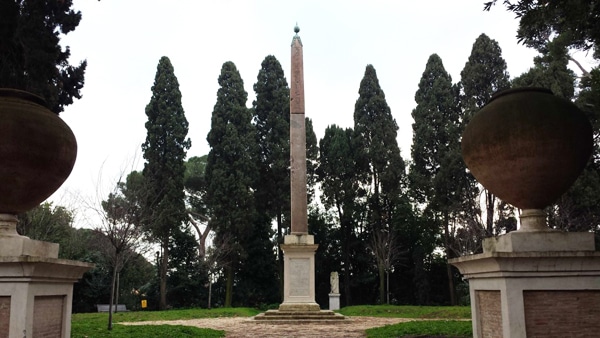
Originally about 39 feet (12 meters) tall, today the monument measures just 8.8 feet (2.68 meters). It once decorated a sanctuary of Isis near the Church of Santa Maria sopra Minerva.
Rediscovered in the 14th century, the obelisk was used to embellish the Basilica of Santa Maria in Aracoeli on the Capitoline Hill. In the latter half of the 16th century, Michelangelo Buonarroti reorganized the gardens of what was then known as Villa Mattei (now Villa Celimontana), and the obelisk was integrated into the design. Lost once again, it was rediscovered in the 19th century in a damaged state, reducing its height by nearly fourfold—making it the smallest obelisk in Rome’s grand collection.
Modern Obelisks
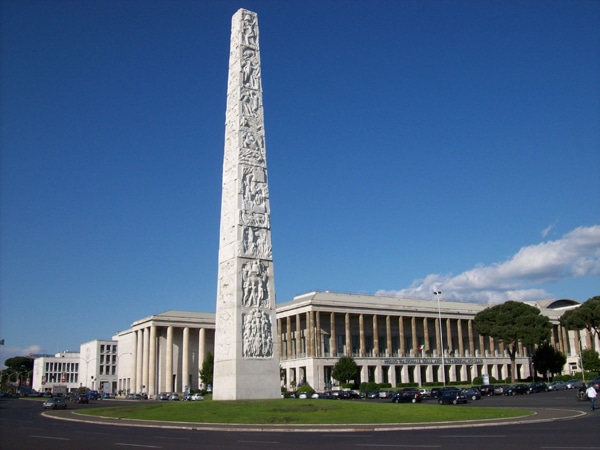
In addition to its historic monuments, the Eternal City is also home to five modern obelisks.
- The obelisk at Villa Medici is a 19th-century replica of an ancient artifact originally discovered in the estate’s gardens and later transported to Florence (Firenze).
- Two obelisks made from Bavarian granite were installed at Villa Torlonia at the end of the 19th century.
- In 1932, a Carrara marble obelisk was erected at the Foro Italico in honor of Duce Mussolini (Benito Amilcare Andrea Mussolini).
- In the EUR district (Esposizione Universale di Roma), a 148-foot (45-meter) white marble obelisk was dedicated to inventor Guglielmo Marconi in 1959.