 Italy for me From Italy with love


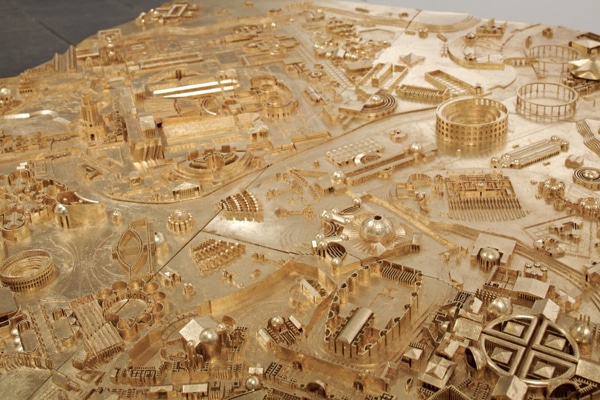
The Campus Martius (Campo Marzio) is a low-lying plain within a bend of the Tiber River, covering about 618 acres (250 hectares), nestled between the Quirinal, Pincian, and Capitoline Hills. It was originally designated for athletic training and military exercises. The center of the field, where an altar to Mars was built, later remained undeveloped and became known simply as the Campo. As early as the Ancient Roman era, it was transformed into a military memorial, while the surrounding area was gradually built up.
Page Contents
History
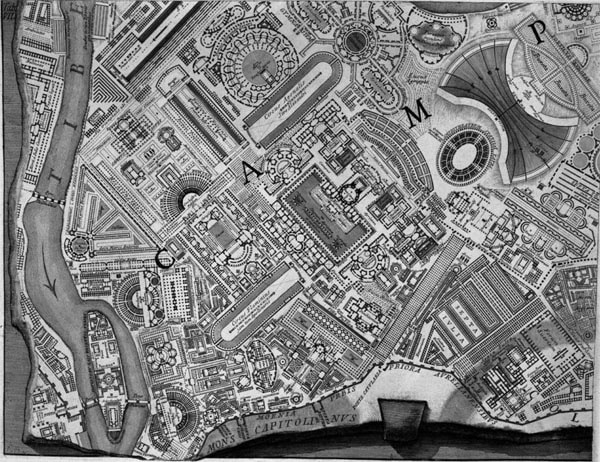
The history of the Campus Martius is closely tied to Rome’s military glory. In antiquity, this area served as a “campus”—a complex of barracks and auxiliary structures for Rome’s massive army, including hospitals, armories, and training grounds. At its center stood a statue of Mars, god of war and protector of Rome, along with an altar for sacrifices.
After the expulsion of the Tarquins in the 5th century BCE, the field’s status changed. It became a site for public gatherings, military inspections, and athletic competitions. Annual festivals known as Equirria, which featured horse races, were also held here. The vast open space offered entertainment and engagement for all.
First Constructions
Villa Publica (Villa Publica)
The Villa Publica is considered the first public building constructed on the Campus Martius. Built in 435 BCE, it initially consisted of a 300-meter-long cleared area surrounded by a modest colonnade. This space was used for the quinquennial census, when Roman citizens assembled for political and administrative purposes.
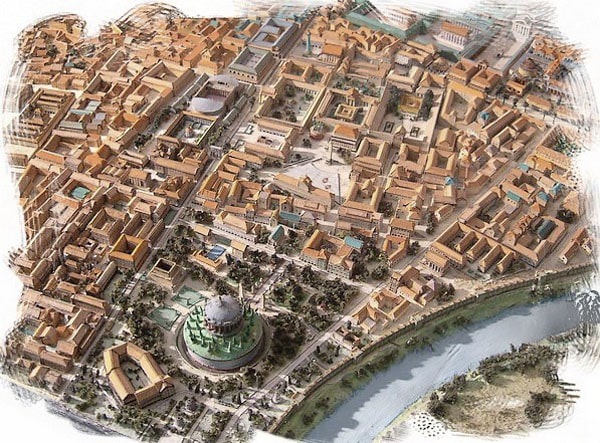
During the Punic Wars in the 3rd century BCE, most battles took place far from Rome and its surroundings. Yet, Roman generals returning victorious from these campaigns felt compelled to honor the fallen and pay tribute to their gods. As a result, the Campus Martius became filled with temples, monuments, and mausoleums.
Circus Flaminius (Circo di Flaminius)
In 221 BCE, Consul Flaminius built a circus in the southern section of the Campus Martius for horse races and the Plebeian Games. A road was constructed leading to the circus, linking the Porta del Popolo with the Tiber River crossing—what became known as the Via Flaminia. The Circus Flaminius has not survived to the present day.
Largo di Torre Argentina
During the Republic, a space known as the Area Sacra (Latin: Sacred Area) was established on the Campus Martius.
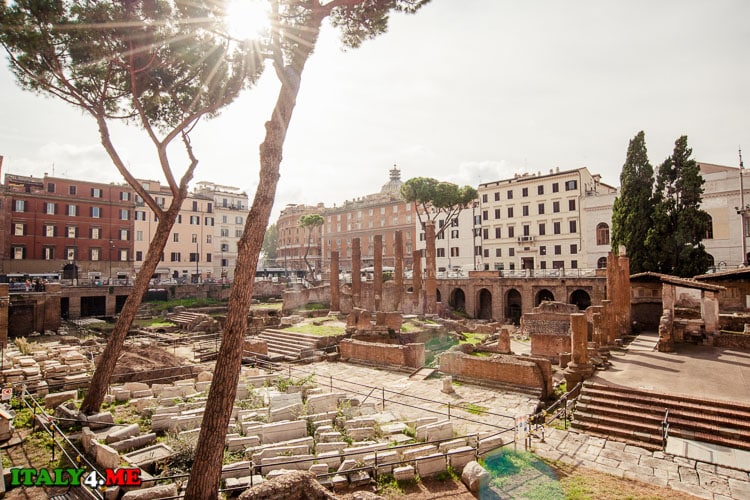
The name is well deserved. Within this relatively small section of central Rome once stood four significant structures: the Hall of 100 Columns (Hecatostylum), the Baths of Agrippa, the Theatre of Pompey, and the Circus Flaminius.
Archaeological excavations began in the 20th century and continue today, revealing the remnants of ancient temples and public buildings. Today, however, the site is just as well known for its feline residents. Largo di Torre Argentina is now famously known as Rome’s cat sanctuary.
Temples
Temple of Bellona (Templum Bellona)
The Temple of Bellona, goddess of war and protector of Rome’s defenders, was erected in 295 BCE by Appius Claudius Caecus to commemorate Rome’s victory over the Etruscans. Located on the Campus Martius near the Theatre of Marcellus, this temple once hosted political meetings and formal receptions for foreign ambassadors. Today, only ruins remain.
Temple of Hercules (Ercole Oleario)
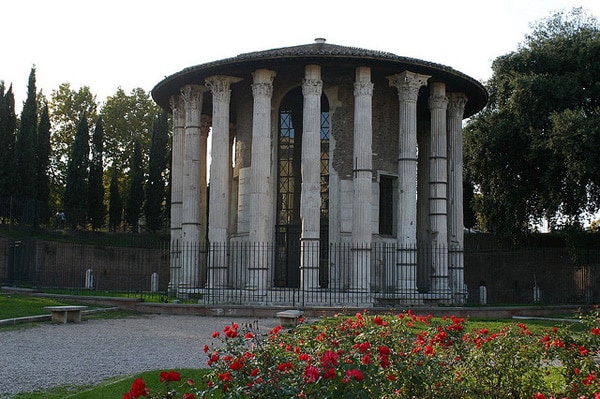
The Temple of Hercules was built around 120 BCE on the sloping banks of the Tiber, in an area then called the Forum Boarium (Cattle Market). This circular rotunda, surrounded by a ring of columns, is the oldest surviving marble building in Rome and continues to impress modern visitors. Some historians believe the temple was funded by a wealthy olive oil merchant, based on an inscription found within the sanctuary. It stands in the square opposite the Mouth of Truth (Piazza della Bocca della Verità).
Pantheon (Pantheon)
In 27 BCE, Marcus Agrippa built the first Pantheon—a temple dedicated to all the gods. It burned down half a century later, along with some of Rome’s earliest public baths.
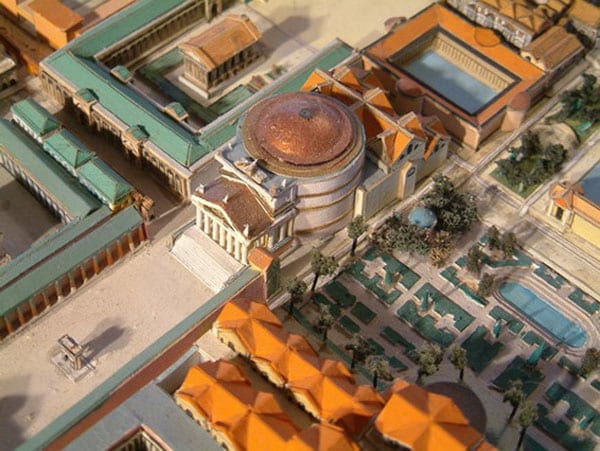
Agrippa’s original Pantheon was a majestic structure, fronted by a grand Corinthian colonnade made of massive granite columns. Unfortunately, no ancient manuscripts survive that describe the original temple in detail. What is known is that today’s Pantheon stands precisely where the first one did, in the area of the former Circus Flaminius.
The current Pantheon was completed in 126 CE under Emperor Hadrian. It features multiple rows of columns topped with a triangular pediment. The core of the building is hidden beneath a massive dome, which includes a central circular opening called the oculus (Latin for “eye”).
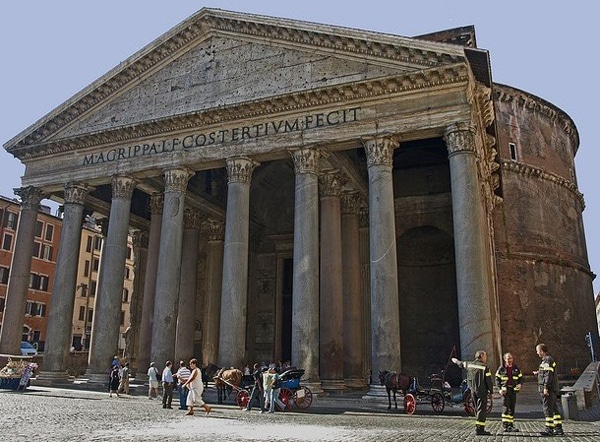
Unique feature: the height to the oculus and the diameter of the dome are exactly the same—43.3 meters (142 feet). Interestingly, the oculus aligns with the sun on the spring equinox and on Rome’s birthday, April 21!
Temple of Divine Hadrian (Templum Divi Hadriani)
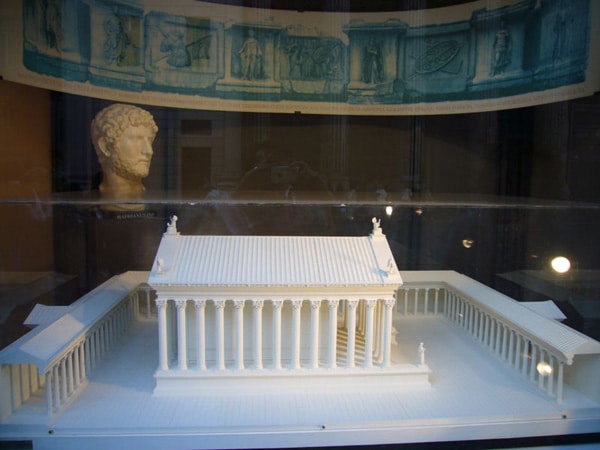
The Temple of Hadrian was erected in 145 CE by his successor, Antoninus Pius. The structure was designed in a luxurious style: set atop a rectangular podium, it featured two rows of 13 marble columns supporting an elaborately decorated roof. A wide marble staircase adorned with reliefs led up to the temple.
Sadly, only 11 columns and a portion of the temple wall have survived. These remains were incorporated into the 19th-century customs office, which later became the Roman stock exchange. The temple is located on Piazza di Pietra.
Theaters
In the 2nd century BCE, military leader Lucius Cornelius Sulla popularized the Campus Martius among Rome’s elite. Income-generating apartment buildings, known as insulae, were constructed along with public buildings, transforming the once-abandoned plain into a vibrant district filled with homes, porticoes, palaces, and theaters.
We recommend reading about the Insula dell’Ara Coeli, located at the foot of the Capitoline Hill.
Theatre of Pompey (Theatrum Pompeium)
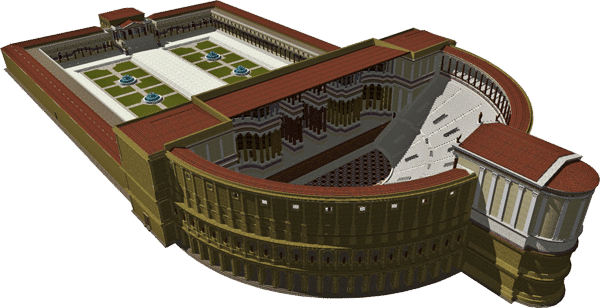
In 52 BCE, Gnaeus Pompey began construction on a massive stone theater capable of seating 27,000 spectators. The theater’s amphitheater had a diameter of 158 meters (518 feet). This enormous cultural complex—Rome’s first stone theater—also included fountains, gardens, and a curia, or meeting hall, where the Senate occasionally convened.
It was inside this curia, during the Ides of March in 44 BCE, that Gaius Julius Caesar was assassinated by members of the Roman Senate.
Theatre of Marcellus (Theatrum Marcelli)
The Theatre of Marcellus is an ancient open-air venue originally built for public performances and plays.
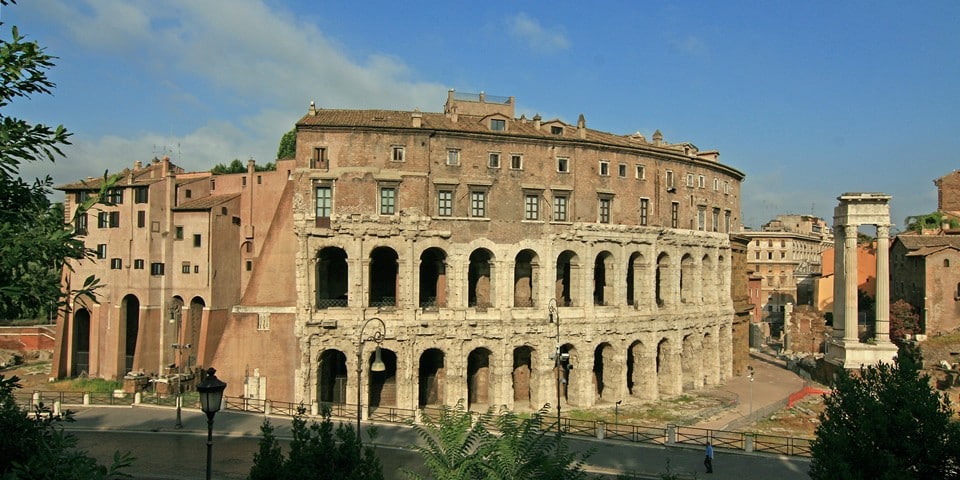
The site for the theater was chosen by Julius Caesar himself, though most of the construction was completed by his successor, Emperor Augustus. The theater was named in honor of Augustus’s young nephew, Marcus Marcellus, who died at an early age.
In its prime, the theater could accommodate around 20,000 spectators and is one of the best-preserved monuments from Ancient Rome. Occasionally, small summer concerts are still held on the site.
Imperial-Era Constructions
Saepta Julia
During the reign of Emperor Augustus, the Campus Martius became home to a vast voting complex for the citizens of Rome—the Saepta Julia. This large structure (984 x 312 feet / 300 x 95 meters) served Roman civil life for many years until falling into disrepair in the 3rd century CE. A portion of the Saepta Julia’s wall can still be seen near the Pantheon.
Portico of Octavia (Porticus Octaviae)
Near the Theatre of Marcellus and the Circus Flaminius are the ruins of a portico dedicated to Emperor Augustus’s sister, Octavia Minor. Built around 27 BCE, the marble-clad structure was twice ravaged by fire in the early Christian era. In its prime, the portico housed important works of art and literature, including Pliny the Elder’s *Natural History*. In later centuries, it was repurposed as a fish market before falling into decay.
Ara Pacis (Altar of Peace)
In 13 BCE, the Roman Senate presented Emperor Augustus with a monument—the Altar of Peace, dedicated to the goddess Pax.
This monumental open-air altar, beautifully decorated with sculpted marble reliefs, was erected on the western side of the Via Flaminia in the Campus Martius to commemorate the emperor’s military victories. Thought lost for centuries, parts of the Ara Pacis were rediscovered in the 16th century.
In the 19th century, deeper excavations enabled much of the monument to be recovered. In 1938, under the direction of Benito Mussolini, the altar was reconstructed across from the Mausoleum of Augustus. Today, a protective modern structure houses the monument, shielding it from the elements.
Mausoleum of Augustus (Mausoleo di Augusto)
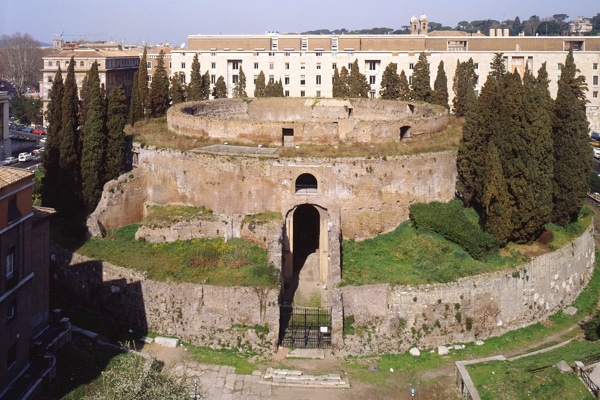
The Mausoleum of Augustus is a monumental tomb built by the emperor himself in 28 BCE. The structure consists of several concentric rings made of brick and earth, stacked to form a massive circular tomb. Originally, it was topped with an equestrian statue of Augustus, which has not survived.
The mausoleum once housed the remains of the emperor’s relatives and successors, including his sister, son-in-law, adopted son, Augustus himself, his wife Livia, and many others.
Over the centuries, the mausoleum was repeatedly looted. Restoration efforts were initiated only during Mussolini’s rule. Currently, access to the interior is not permitted, so visitors can only admire the structure’s faded grandeur from the outside. The monument stands on the bank of the Tiber near Piazza Augusto Imperatore.
Stadium of Domitian (Stadio di Domiziano)
Following the Great Fire of 64 CE, Emperor Domitian undertook the reconstruction of many public spaces in Rome. Notably, today’s Piazza Navona was originally a stadium built on the Campus Martius, where Rome’s most significant sporting and public events were held.
Column of Marcus Aurelius (Colonna di Marco Aurelio)
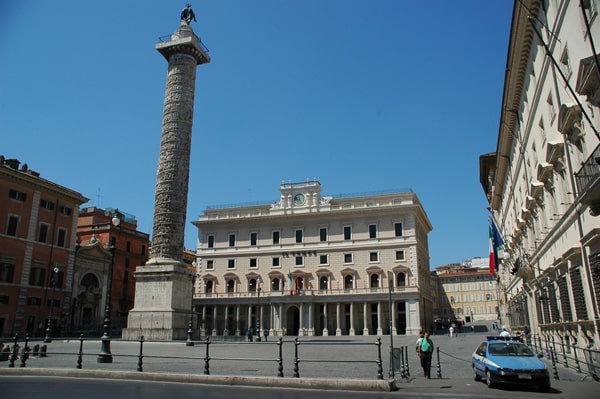
This 98-foot (30-meter) column was erected after the conclusion of the Marcomannic Wars (166–180 CE) between Rome and the Germanic tribes. The marble shaft is richly decorated with battle scenes celebrating the valor of Emperor Marcus Aurelius (Marcus Aurelius Antoninus) and his Roman legions.
Originally crowned with a statue of the emperor himself, the column’s top was replaced in the Middle Ages with a sculpture of the Apostle Paul. Today, the column is well preserved and stands proudly in Piazza Colonna.
Modern Day
Today, the Campus Martius is part of Rome’s historic center and one of the city’s 22 administrative districts. It has retained much of its original layout and urban structure. At its heart lies the Campo Marzio, an open square and green space that continues to echo the military glory of Rome’s past.
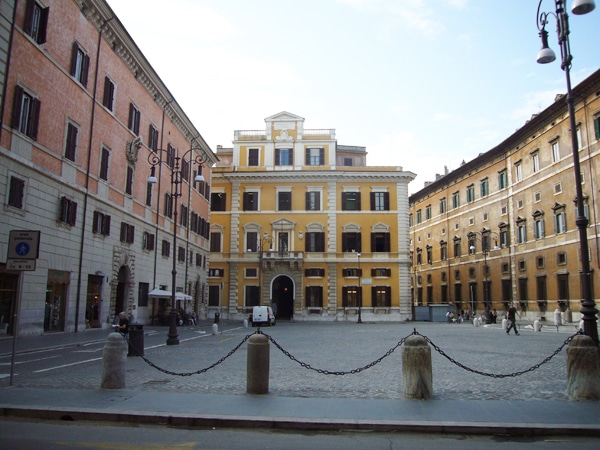
Over time, the Campo Marzio underwent many transformations, though it never regained its former grandeur. Now a typical residential district, the area was built up with apartment buildings, which unfortunately led to the loss of many ancient monuments. Where temples once stood, grand palaces of wealthy Roman families rose in their place—such as the Borghese, Firenze, and Ruspoli palaces, among others.
How to Get There
You can reach the Piazza in Campo Marzio from the nearest metro station, Barberini, by walking along Via del Tritone.
If you’re already in the Campo Marzio district, it’s just a short walk from the Pantheon, Piazza Venezia, Largo di Torre Argentina, and many other central landmarks.