 Italy for me From Italy with love

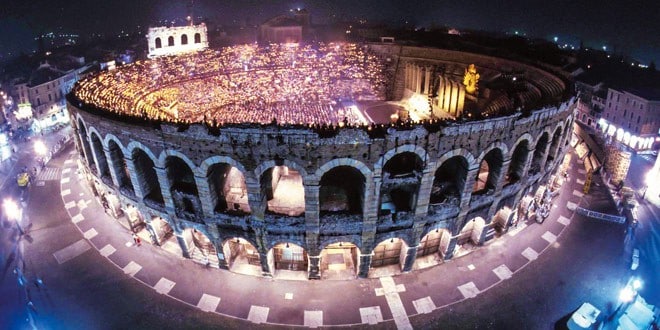
Italy’s guests—especially theater lovers—know Verona well for one of its most iconic landmarks: the ancient Arena di Verona. From the outside, this Roman amphitheater looks every bit the historic monument. But inside, it has been transformed into a grand stage that hosts a world-renowned annual opera festival.
Page Contents
History
During the reign of Emperor Tiberius Julius Augustus (Latin: Tiberius Julius Augustus), an amphitheater was built in Verona. Its primary purpose was to stage spectacular gladiator battles.
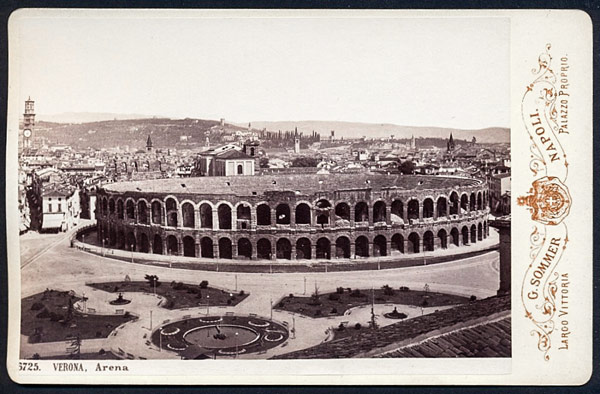
After the fall of the Roman Empire, the amphitheater lost its former importance and fell into neglect.
In the early 12th century, a powerful earthquake struck northeastern Italy, causing significant damage to the ancient structure. The collapsed outer ring of the theater was soon repurposed by locals as a convenient source of free building materials.
During the Middle Ages, Italy came under the harsh rule of the Inquisition. The crumbling ruins were used by stern judges as a site for public executions of dissenters. Centuries later, however, Verona shed its somber image. The ancient arena once again came to life—this time with chivalric tournaments and lively public celebrations. In the late 18th and early 19th centuries, Italy adopted the Spanish tradition of bullfighting, which often took place inside the amphitheater.
Opening Hours, Tickets, and How to Visit
The amphitheater is open to visitors on Mondays from 1:30 PM to 7:30 PM, and from Tuesday to Sunday from 8:30 AM to 7:30 PM. Ticket counters close at 6:30 PM. Admission is €10.
Opera Festival
A new chapter in the history of the Arena di Verona began with the arrival of the 20th century. In 1913, operatic tenor Giovanni Zenatello and theatrical impresario Ottone Rovato took a bold risk by investing in the ancient structure. Their efforts led to the successful launch of a festival dedicated to the 100th anniversary of composer Giuseppe Verdi.
Verdi’s *Aida* transformed the Arena di Verona into the world’s largest open-air opera stage!
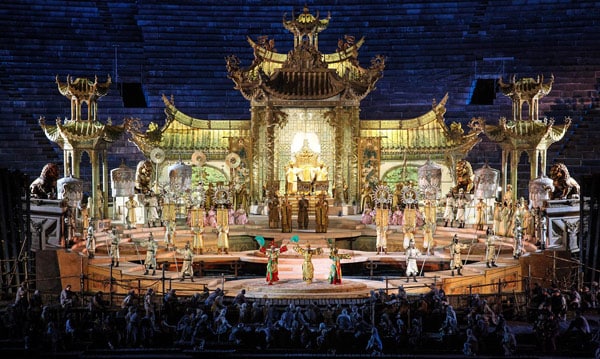
Since that summer of 1913, Verona has hosted the opera festival 79 times! Over the years, the productions have been curated by some of Italy’s most influential figures in the performing arts. The Arena is renowned for its phenomenal acoustics, allowing audiences even in the farthest rows to fully enjoy each performance. Its enormous stage is perfectly suited for grand, imaginative set designs.
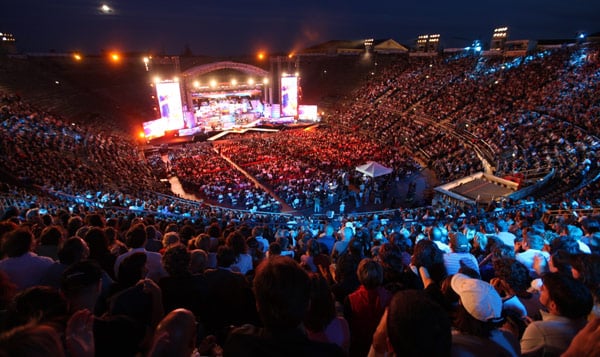
At its peak, the amphitheater could seat up to 20,000 people! But since the 2000s, capacity has been reduced to 15,000 for fire safety reasons.
The open-air opera season begins in June and runs through the end of August. During this period, the ancient stone amphitheater welcomes around 70,000 opera lovers from across the globe—tickets can be hard to come by!
Over the years, the Arena has hosted legendary voices: dramatic soprano Maria Callas in 1947, tenor Giuseppe Di Stefano in the 1950s, and starting in 1971, lyric tenor Luciano Pavarotti became a regular at Verona’s opera festivals.
Pavarotti performed many dramatic roles in operas by Puccini (Giacomo Antonio Puccini), Verdi, Ponchielli (Amilcare Ponchielli), and Leoncavallo (Ruggero Leoncavallo). In 1969, Spanish tenor Plácido Domingo appeared at the amphitheater, performing Puccini’s Turandot. In the years that followed, he returned for several gala concerts on Verona’s ancient stage.
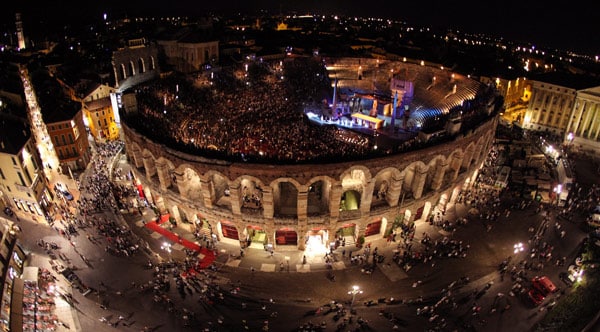
Today’s festival program offers the best of Italian opera. Its signature masterpieces include Aida, Nabucco, Tosca, Don Giovanni, The Barber of Seville, Romeo and Juliet, and Carmen. Ballet and symphony orchestra concerts are also part of the lineup.
Opera and Concert Tickets
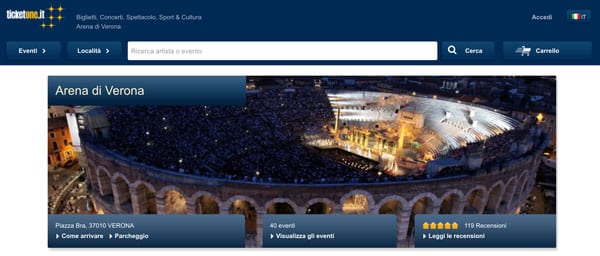
Ticket prices vary widely. The most affordable seats are unnumbered and located at the very top of the amphitheater, ranging from €15 to €25. The most expensive tickets are for front-row seats closest to the stage. A Saturday evening in this section can cost up to €200 per person.
See the full guide on how to buy concert tickets in Italy.
Below is the seating chart for the Arena di Verona:
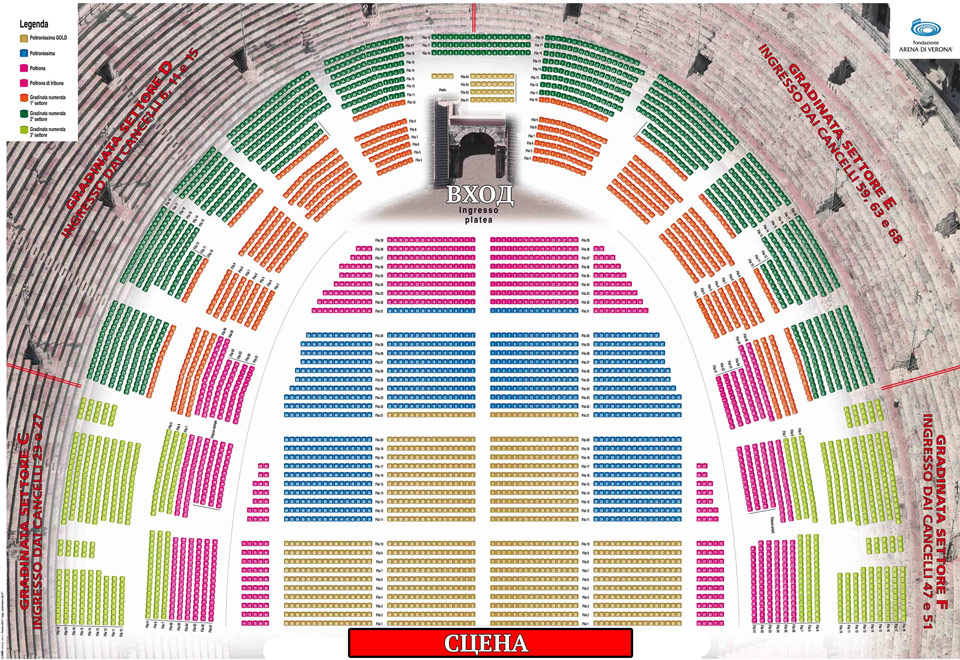
You can download the seating chart in high-quality PDF format using this link.
Adriano Celentano’s Concert
Opera brought worldwide fame to the amphitheater, but on rare occasions, the Arena di Verona also hosts major pop concerts. One of the most memorable was the spectacular performance by Adriano Celentano, held on October 8–9, 2012. This was a truly unique event—Celentano had been on a creative hiatus since 1994 and hadn’t toured in 12 years. Italy had long awaited the return of its beloved icon, and finally, the star delivered a live show for his fans.
When showtime arrived, the Arena di Verona was packed to the brim, with tickets selling out at record speed. Celentano personally insisted that tickets not exceed €15, making the event accessible to as many people as possible.
The first concert featured more than just music. It also touched on Italy’s economic landscape and the future of European democracy. Alongside guest singer Gianni Morandi, the event included an appearance by French economist Jean-Paul Fitoussi.
The musical portion of the evening was nothing short of phenomenal. Much of the performance featured songs from Celentano’s new album Facciamo finta che sia vero. Fans were also thrilled to hear old favorites like “Soli,” “Il ragazzo della via Gluck,” and “Azzurro.” The 74-year-old performer was joined on stage by 18 musicians and about 20 backing vocalists. A stunning light show added a magical dimension to the entire experience.
The concert was broadcast on national television and drew an enormous audience. Critics unanimously declared Adriano Celentano’s performance in Verona the “Best Italian Concert of 2012.” On November 30, 2012, the city of Verona officially presented Celentano with the keys to the city.
Interesting Facts and Figures
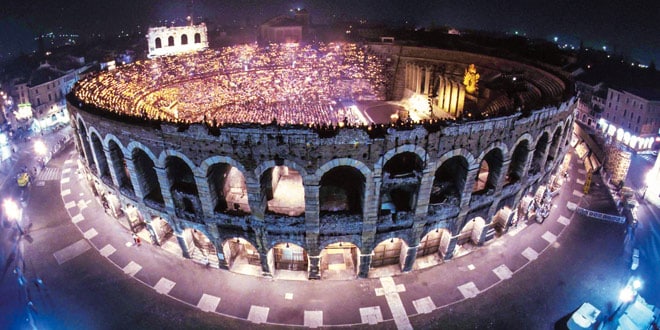
Verona’s Arena is smaller than Rome’s Colosseum and the amphitheater in Santa Maria Capua Vetere. The original Roman structure had four elliptical rings nested within each other. The innermost ellipse, marking the stage and the “Poltronissima” section, measures 145.8 feet (44.43 m). The next ellipse, measuring 241.7 feet (73.68 m), outlines the current outer boundary. Two additional ellipses—359.4 feet (109.52 m) and 455.3 feet (138.77 m)—once defined the now-ruined second ring.
How to Get There
The amphitheater is located at Piazza Bra, 5. Piazza Bra is the city’s main square and can be reached by taxi or by buses No. 11, 12, 13, 14, 72, and 73 from Verona Porta Nuova railway station.
- See our step-by-step guide: how to get from Verona Airport to the city center