 Italy for me From Italy with love

Page Contents
Insula dell’Ara Coeli – A Glimpse of Daily Life in Ancient Rome
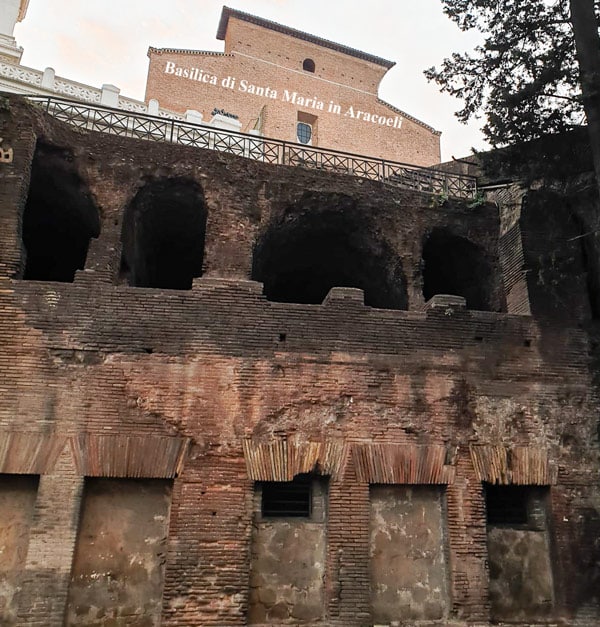
Insula dell’Ara Coeli is the remains of a Roman-era apartment building, preserved on the slopes of the Capitoline Hill (Campidoglio), nestled between the staircase leading to the Basilica of Santa Maria in Aracoeli and the Vittoriano monument to Victor Emmanuel II at Piazza Venezia.
This multi-story residential building from the Roman period was uncovered and miraculously survived the large-scale redevelopment of Rome’s historic center carried out between 1929 and 1933 under the direction of Benito Mussolini.
Roman Insulae: The Apartment Blocks of Antiquity
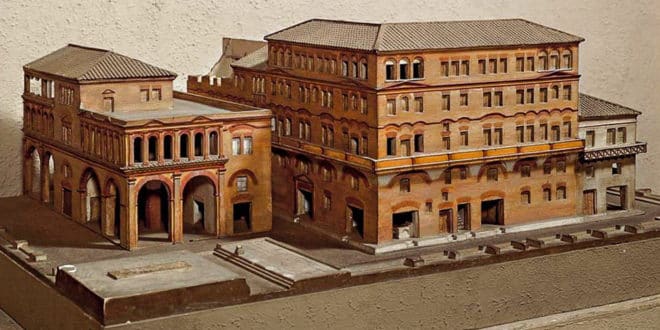
The Latin word “insula” literally means “island.” In ancient Rome, it referred to multi-unit apartment buildings, typically rising four to five stories high, which housed the majority of the city’s population.
These rooms were rented out to working- and lower-class families. Much like modern metropolises, Rome had a constant demand for affordable housing for its citizens.
Some insulae reportedly reached up to 10 stories in height, despite imperial edicts limiting buildings to four or five levels.
These overcrowded tenements were notoriously unsafe, prone to collapse, fires, and the spread of disease. While lower floors often featured kitchens, running water, and toilets, the upper levels lacked basic amenities.
Tenants in upper apartments relied on public facilities such as fountains, bathhouses, and communal latrines—hallmarks of urban Roman infrastructure.
The Insula dell’Ara Coeli, made of brick and tuff stone, dates to the 2nd century AD. While similar structures were built as early as the 2nd century BC, it’s remarkable how few examples remain. Their disappearance is largely due to the poor quality of construction materials used, which led to rapid deterioration. Landlords cut costs wherever possible, prioritizing rental income over long-term durability or comfort.
Churches Built Within the Insula
Insula dell’Ara Coeli owes its remarkable state of preservation to its foundation on a mesh-like retaining wall constructed in the 1st century AD to stabilize the Capitoline Hill. Its upper floors were later repurposed for two successive churches.
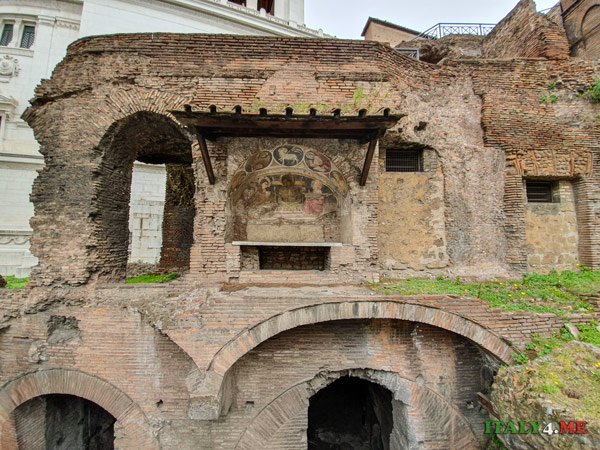
The earlier church, San Biagio de Mercato (Chiesa di San Biagio de Mercato), was established in the 11th century, followed by Santa Rita da Cascia in Campitelli (Chiesa di Santa Rita da Cascia in Campitelli) in the 17th century.
The ruins of the ancient Roman structure were uncovered during the dismantling and relocation of the latter church. Excavation revealed the insula extended more than 30 feet (9.14 meters) below ground. From the original medieval church, remnants of the bell tower and a 14th-century apse fresco have survived. The Church of Santa Rita was rebuilt in 1928 just a few hundred meters away near the Theater of Marcellus (Teatro di Marcello).
Architectural Description
Today, visitors can view four surviving levels of the Insula dell’Ara Coeli, though archaeological studies indicate that the building once had at least six floors, reflecting a common layout for Roman apartment blocks.
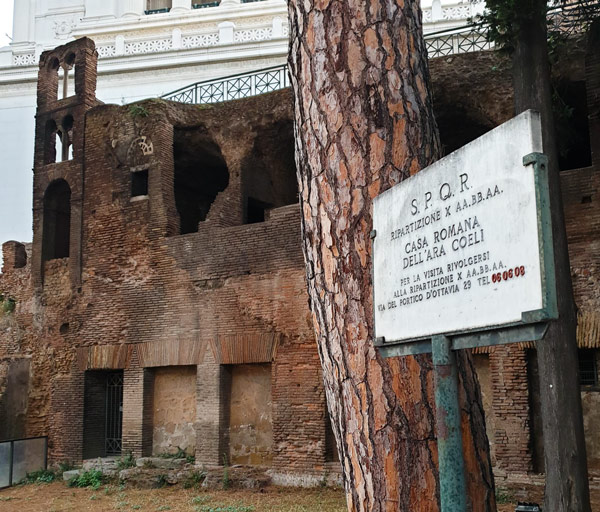
The upper two stories were likely constructed of wood and have not survived. The ground floor served commercial purposes, housing shops and storage areas with street-facing windows and mezzanines.
The upper levels contained residential units. On the third “noble” floor, apartments spanned up to 2,150 square feet (200 sq. m), while the fourth level featured layouts similar to contemporary Roman homes.
Each apartment was accessed via a shared corridor and typically consisted of three rooms: a possible living room, a bedroom, and a utility space. In Imperial times, the building’s interiors were not as bleak as one might imagine—windows brought in natural light, and walls and ceilings were often decorated with basic frescoes or mosaics. Entry staircases, usually located in the inner courtyard, led to the apartments; the staircase still visible today was added during the Middle Ages.