 Italy for me From Italy with love


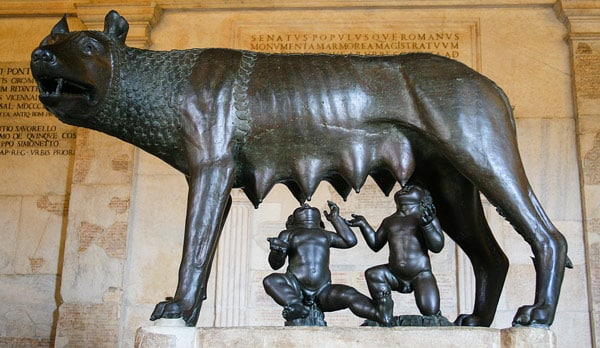
The Roman She-Wolf is a symbol of the city of Rome, a sculptural depiction of the animal nursing the twins Romulus and Remus—legendary founders of the city.
For centuries, the she-wolf has been known in Rome as the “mother of the Romans,” and after the statue was relocated to the Capitoline Palace in the late 15th century, it became known as the “Capitoline Wolf” (Lupa Capitolina).
Page Contents
Legend
The Capitoline Wolf is the central figure in the legend of Rome’s founding, which tells the story of the divine origins of the twin brothers Romulus and Remus.
They were the grandsons of Numitor, ruler of the city of Alba Longa, founded by Trojans. His younger brother Amulius seized power, murdered Numitor’s son, and forced his daughter, Rhea Silvia, to take a vow of chastity and serve as a priestess of the Temple of Vesta—a Vestal Virgin. However, four years later, Rhea Silvia gave birth to twin boys, fathered by Mars, the god of fertility.
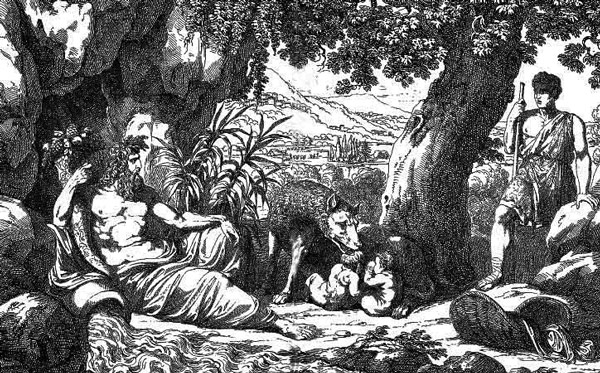
Furious and fearing revenge, Amulius ordered his niece executed and her children drowned in the Tiber River. A servant carried out the command—placing the infants in a basket on the swelling riverbank, hoping the waters would take and destroy them. But the river receded, the hungry babies cried, and a she-wolf nearby heard them, licked them clean, and nursed them with her milk. She continued to care for the twins, sheltered under a fig tree, until a shepherd discovered them, took them in, raised them, and gave them their names—Romulus and Remus.
The boys grew up to become skilled warriors. During one of their battles, they were captured and brought before their grandfather. Upon learning their true identity, they helped him reclaim the throne of Alba Longa (Alba Longa). The brothers then agreed to found a new city on the Palatine Hill (Palatium)—the place where the Tiber had once set them ashore.
Cave
In 2007, to support the legend, archaeologists in Rome discovered a cave beneath the ruins of Emperor Augustus’s palace on the Palatine Hill, believed to be the place where the she-wolf nursed the children.
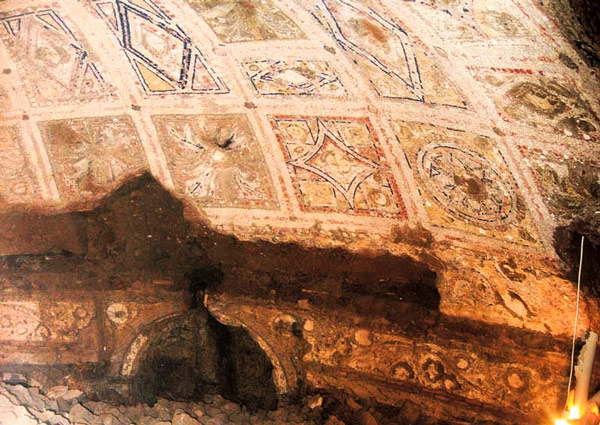
This site was identified as the ancient temple of Lupercale (Lupercale, from Latin *lupa* – she-wolf), dedicated to Romulus and Remus. The ancient grotto—measuring 24.6 ft (7.5 m) in diameter and 26.2 ft (8 m) high—was discovered 52 ft (16 m) underground, partially filled with earth. Due to the risk of collapse, the exploration was carried out using probes and video equipment. After an investment of €12 million, parts of the site were opened to the public. This very spot is now regarded as the legendary founding place of Rome.
Statue
The bronze-cast statue depicts a standing she-wolf, 29.5 inches (75 cm) tall, baring her teeth and firmly pressing her front paws into the ground. Beneath her belly, two infants—Romulus and Remus—stretch toward her teats.
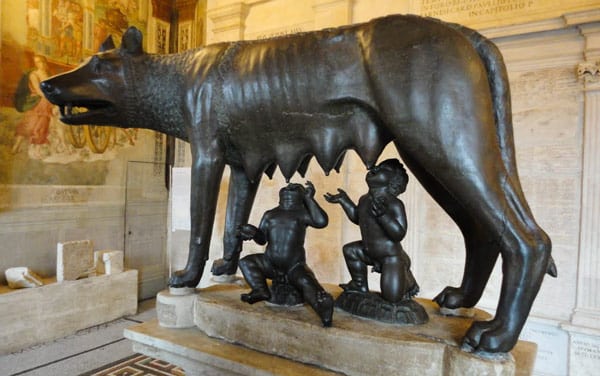
The Capitoline Wolf—originally without the twins—has been mentioned in records since ancient times. It was long believed to have been cast in the 5th century BCE by the Etruscans and erected in Rome as a symbol of unity among Romans, Sabines, and Etruscans. However, recent studies by restorer Anna Maria Carruba in 2006 shifted the statue’s origin to the 8th–10th centuries CE.
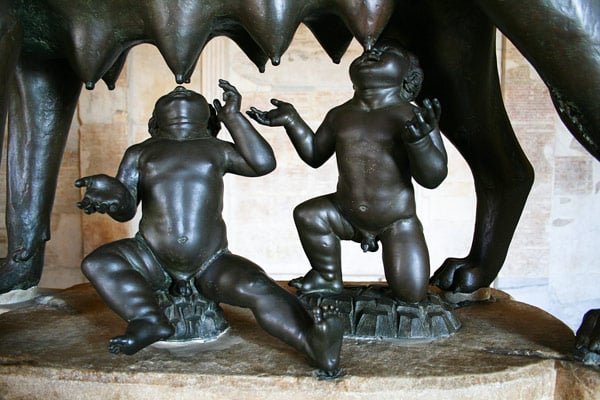
The figures of the twins, clearly sculpted in a different style, were added beneath the she-wolf’s belly in the late 15th century. The sculptor is believed to be Antonio del Pollaiolo.
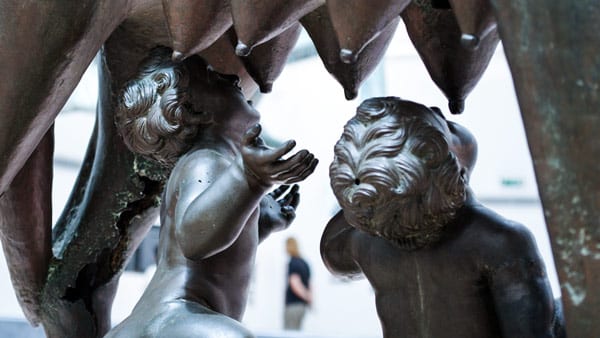
According to 10th-century notes by Benedict, a monk chronicler, the Capitoline Wolf once stood in the Lateran Palace at the site of a tribunal. It was not just a monument but considered a deity—the “mother of Romans,” watching over the behavior of her children. References to trials and executions “at the she-wolf” are found up to the mid-15th century. In 1473, Pope Sixtus IV ordered the statue moved to the Capitoline Hill, into the Palazzo dei Conservatori, where it remains today.
Monument and Replicas
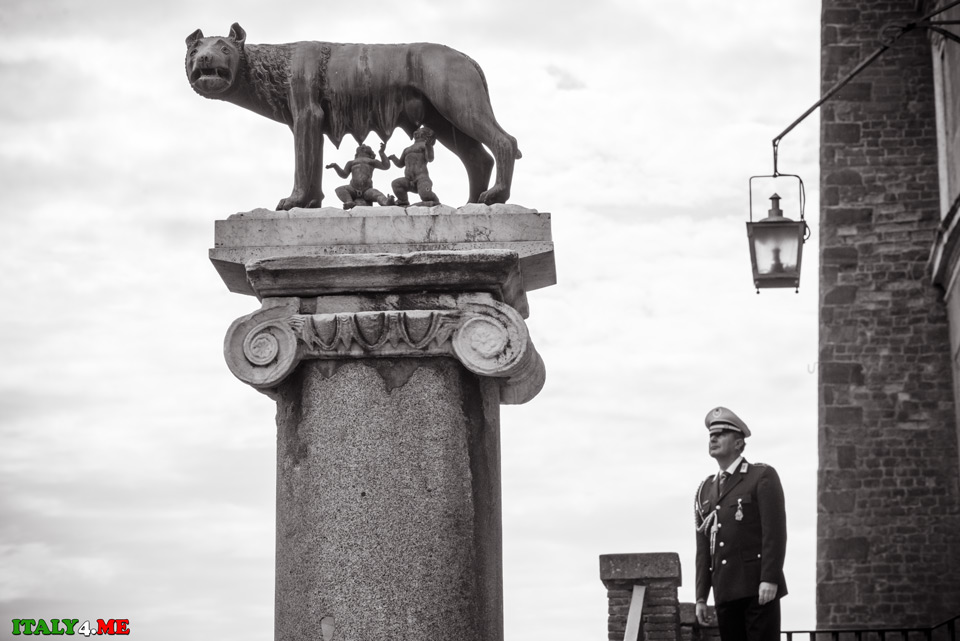
The monument to the she-wolf is a replica of the famous sculpture, installed atop a tall column to the left of the central building of the Capitoline Museum (Musei Capitolini) and the city hall. Similar monuments can be found in other locations around Rome, as well as across the world:
- In Pisa (Tuscany, Italy), the monument stands between the Leaning Tower and the Pisa Cathedral;
- In the Latin Quarter of Paris and in Segovia, Spain;
- In many cities throughout Romania, where the she-wolf is seen as a symbol of cultural heritage;
- Near the Olympic Stadium in Tokyo, Japan;
- Beside the Juscelino Kubitschek Memorial in Brazil’s capital, Brasília;
- In the United States, where replicas sent by dictator Benito Mussolini are displayed in Eden Park (Cincinnati, Ohio), Rome (Georgia), and New York City.
Symbol of Rome
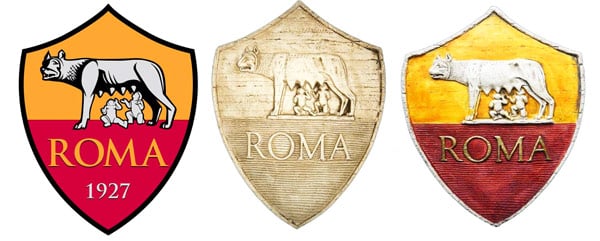
The she-wolf in Rome is more than just a statue or a monument—it is a symbol of the divine origins of the Eternal City. That’s why her image appears everywhere, with the oldest representations found on coins uncovered during archaeological excavations. The she-wolf is also the emblem of the Roma football club and features prominently on its crest.
Benito Mussolini was known to be a devoted admirer of the she-wolf. For him, she symbolized the ambition to restore the Roman Empire. He sent replicas of the “Mother of the Romans” around the world.
How to Get There
The original Capitoline Wolf is displayed in the Palazzo dei Conservatori, part of the Capitoline Museum located at Piazza del Campidoglio, 1. It stands on Capitoline Hill near Piazza Venezia and the Roman Forum (Foro Romano). The nearest metro station is Colosseo.
Official website of the Capitoline Museum: www.museicapitolini.org