 Italy for me From Italy with love


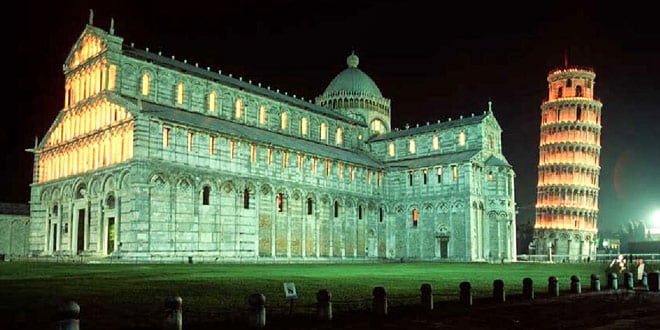
Pisa Cathedral is one of four architectural masterpieces forming the ensemble of Pisa’s world-famous square – Piazza dei Miracoli (Square of Miracles).
Page Contents
Historical Information
Construction of Pisa Cathedral, also known as the Cathedral of Pisa (Duomo di Pisa), began in 1063. The Pisan Archbishop Buscheto di Giovanni Giudice initiated this project and closely supervised its progress. He also founded a distinctive new style during construction, which became known as the Pisan Romanesque style.
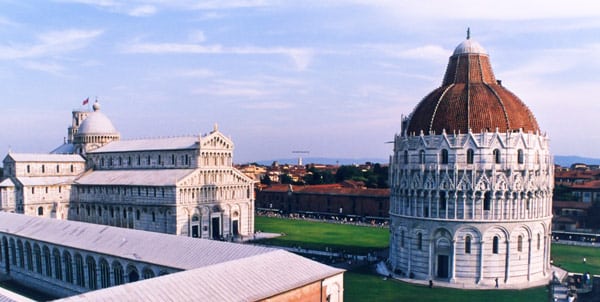
Although the Pisan Romanesque style prevails in the cathedral’s architecture, you can also spot elements of other architectural traditions. For example, by looking at the four rows of open galleries directly above the entrance, you’ll see small circular arches—typical features of Moorish architecture. Meanwhile, the interior décor clearly shows Byzantine influence, including mosaics of remarkable beauty.
During the construction of this architectural masterpiece, Pisa enjoyed a reputation as a powerful maritime state, so historians suggest that sailors and travelers introduced these various stylistic and cultural influences to the city.
At that time, and even now, the Duomo di Pisa was (and remains) one of the most impressive works of its kind in both Italy and the entire world. It is no coincidence that it is located in Pisa, given that the city was then one of the most formidable powers in the Mediterranean region.
The Duomo di Pisa was dedicated to the Assumption of the Virgin Mary. Funds for its construction came from the tributes Pisa collected from the Balearic Islands.
Why You Should Visit Duomo di Pisa
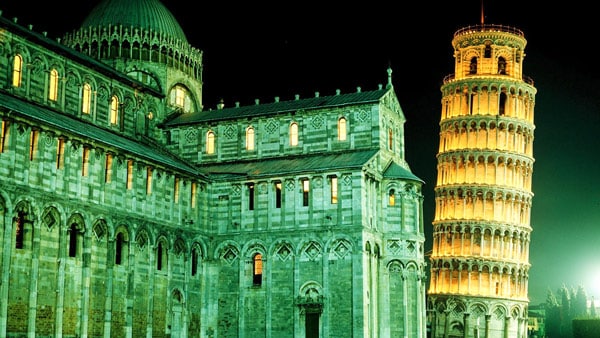
Pisa Cathedral is truly one of the most important tourist destinations not only in Pisa but also in all of Italy, and it definitely has a lot to offer travelers.
One of the most striking features of this Italian architectural monument is, without a doubt, its exterior. If you look at the upper portion of the western façade, you’ll see a statue of Mary with the Christ Child. On either side of Mary stand the Four Evangelists.
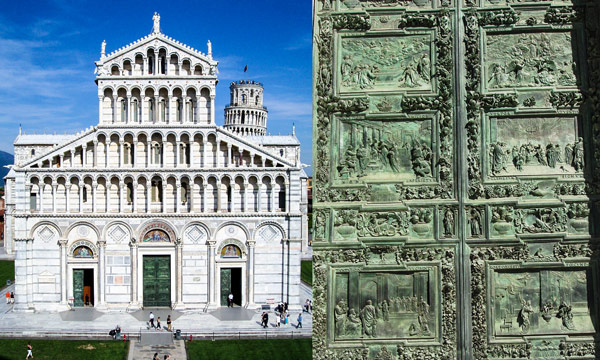
Another remarkable element of the exterior is its massive bronze gates. On closer examination, you’ll notice they are covered with reliefs depicting various biblical scenes.
The interior of Duomo di Pisa is no less impressive than its exterior. It is adorned with both black and white marble. A gilded ceiling featuring the Medici coat of arms complements the dome, which itself is decorated with frescoes.
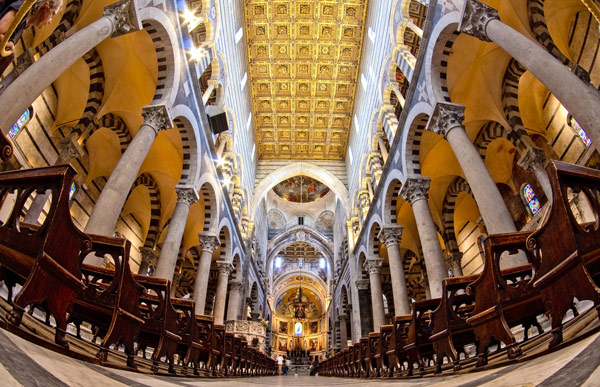
The most striking interior highlights are its vast nave and a beautiful side chapel. Granite Corinthian columns line the nave of Duomo di Pisa. Few people know that these columns originally adorned the interior of the Palermo Mosque. The Pisans seized them and brought them to the city in 1063.
Works of Art
In addition to its unique exterior and interior design, the interior of Duomo di Pisa also includes several of the greatest works of medieval art, although many were lost in a 16th-century fire that the building endured.
One of the most significant and unique pieces that survived the fire is the mosaic in the apse. This mosaic depicts Christ surrounded by the Holy Virgin and Saint John the Evangelist.
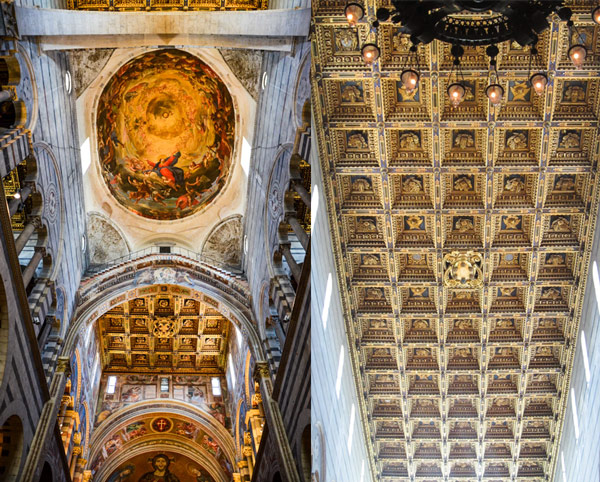
The most impressive work of art visible inside the building is the pulpit, adorned with skillful carvings. Created by Giovanni Pisano, it also survived the 16th-century fire through a fortunate turn of events and is now highly valued as one of the masterpieces of medieval sculpture.
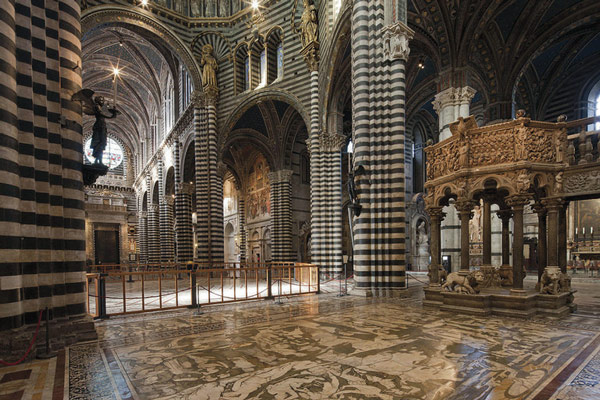
The pulpit is supported by simple columns, as well as columns in the form of sculpted human figures known as caryatids—female sculptures—and atlantes—male sculptures. The upper portion of the pulpit features reliefs portraying dramatic scenes from the New Testament, spanning from the Annunciation to the Crucifixion.
Pisa Cathedral also contains several tombs of prominent local figures of that era. For instance, the Cathedral houses the tomb of Saint Ranierus, the patron of the city and of all travelers. It was also the final resting place of the Holy Roman Emperor Henry VII. Additionally, Pope Gregory VIII was buried in the Cathedral, though his tomb did not survive the fire.
Interesting Facts and Useful Information
A fun fact about this architectural monument, which most visitors don’t know, is that the Duomo di Pisa, much like its equally famous neighbor – the Leaning Tower of Pisa – also tilts slightly. Of course, it doesn’t lean nearly as much as the Tower, so it isn’t as obvious at first glance. However, visitors standing on the sidewalk in front of the building will definitely notice.
Opening Hours
- December–January: 10:00–12:45 / 14:00–17:00
- December 22–January 6: 10:00–18:00
- November–February: 10:00–12:45 / 14:00–17:00
- November 1: 13:00–16:30
- March: 10:00–18:00 (from March 30: 9:00–20:00)
- March 23–29: 9:00–19:00
- April–September: 10:00–20:00
- October: 10:00–19:00 (October 1–4: 10:00–20:00)
- October 27–November 1: 10:00–18:00
- On public holidays, Duomo di Pisa opens to visitors at 13:00.
Ticket Prices
Visiting the Duomo di Pisa is free of charge.
Useful Tourist Information
Address: Piazza del Duomo, 56100 Pisa, Italy
Phone: 050 560 547
Official website: www.opapisa.it