 Italy for me From Italy with love


Lago Maggiore—literally translated as “Great Lake”—is one of the four major lakes of Italy, and the name couldn’t be more fitting. Situated at the very top of the Italian “boot,” Lago Maggiore spans both Italian and Swiss territories.
Protected by the Alpine mountain range from harsh external influences, Maggiore enjoys a mild climate, crystal-clear waters, and breathtaking scenery. At times, a soft mist rolls down from the mountain peaks, giving the lake an air of mystery.
Page Contents
Geography
The lake fills a natural basin nestled among the Alpine mountains, giving Lago Maggiore its unique and winding silhouette. The shape of the lake is often compared to a serpent meandering through the landscape. Its dimensions are indeed impressive: it stretches 6 miles (10 km) wide and nearly 37 miles (60 km) long, with a surface area of 82 square miles (212 km²), an elevation of 633 feet (193 m) above sea level, and a depth of about 1,214 feet (370 m).
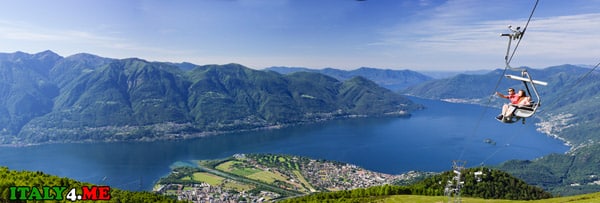
On the map of Italy, the lake spans two regions: Lombardy (Italian: Lombardia) and Piedmont (Italian: Piemonte). On the Swiss side, the fast-flowing Ticino River (Italian: Ticino, German: Tessin) feeds into Lago Maggiore before continuing its course through northern Italy. Another contributing river is the Cannobino (Italian: Cannobino).
The Toce River (Italian: Toce) links Lago Maggiore with nearby Lake Orta (Italian: Lago d’Orta). Numerous small streams also originate in the picturesque basin of Lago Maggiore, which remarkably never freezes—even in winter.
The lake’s curving contours have gifted it with a special charm: island archipelagos. These small land masses surrounded by the lake’s waters are picturesque and long inhabited. On the Italian side, two island groups stand out: the Castelli di Cannero (Castles of Cannero) and the enchanting Borromean Islands (Italian: Isole Borromee).
The History Behind the Name Lago Maggiore
In ancient times, the fertile lands surrounding the lake attracted early local tribes, who were eventually displaced by nomadic Celts. The earliest name of the lake has long been lost to history, leaving no trace in written records. However, with the arrival of the Roman Empire in Lombardy, the lake was given a majestic new title—“The Great Lake” (Latin: *Lacus Maximus*).
During the Middle Ages, the lake’s shores saw an increase in settlement. Hillsides were cultivated with fields, olive groves, vineyards, and humble peasant homes. In the region’s most scenic corners, castles were built by nobles and clergy. It was during this era that the lake received its next name—Verbano (Italian: Verbano). The fragrant verbena plants that grew in abundance along its shores inspired not only the lake’s new name, but also that of an entire province in the Piedmont region bordering its waters.
In the early 19th century, Emperor Napoleon made a rapid military advance through the Alps into northern Italy. Thanks to Lago Maggiore’s strategic location along the path of the great general’s army, a well-developed road network was soon established around the lake. It didn’t take long for Italy’s wealthy aristocrats to be lured by the area’s mild climate and pristine natural beauty. The traditional local name failed to impress these discerning elites, and thus the more melodious and elegant name—Lago Maggiore—rose to prominence.
Attractions
The surroundings of Lake Maggiore are incredibly picturesque—featuring mountain landscapes, sweeping lake views, and magnificent villas, palaces, and botanical gardens.
The lake’s remarkably mild climate keeps the air temperature between 72°F and 82°F (+22 to +28°C) from May through October, drawing waves of tourists to the resort towns that dot the shoreline. Thrill-seekers can head into the mountains for skiing, snowboarding, or paragliding, or join windsurfers on the water. Cycling, horseback riding, sailing, and sightseeing tours to historical landmarks are also popular.
What must-see gems should be on your list?
One of the most renowned resort towns in the Lake Maggiore region is Stresa.
Located on the lake’s western shore in the province of Verbano, Stresa was discovered by European travelers in the 19th century. Today, the town proudly preserves its cultural heritage. Within Stresa, you’ll find elegant villas built between the 19th and 20th centuries. Most are architectural gems surrounded by lush parks, though some have fallen into romantic decay, with ivy-covered walls offering a different kind of beauty.
Villa Ducale
One of the most prominent residences in Stresa is Villa Ducale—the Duke’s Villa—built in the late 18th century. In the 19th century, it served as the residence of Duchess Elisabeth of Genoa. Later restored, the villa became the headquarters of the Rosminian order. Visitors can explore the order’s museum and stroll through a vast 5-square-mile (13 km²) park filled with the fragrant blooms of camellias, azaleas, magnolias, and other exotic plants.
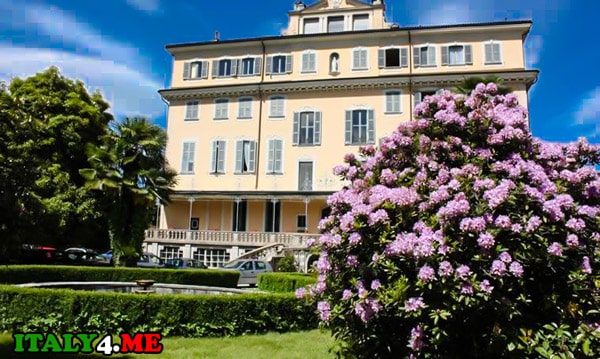
Villa Pallavicino
Located just outside Stresa, Villa Pallavicino is prized for its expansive park, which includes a charming zoo and wildlife area.
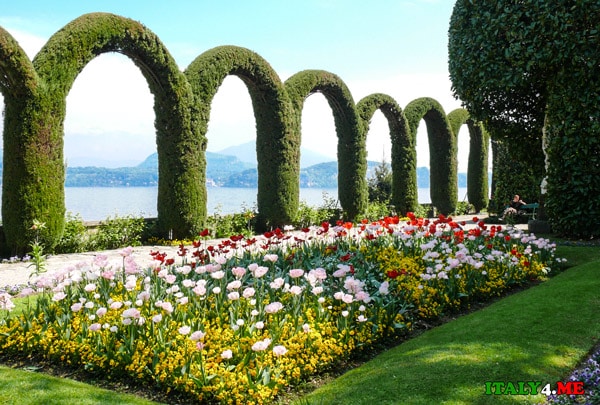
Margheritine Shortbread Cookies
Another must-try attraction in Stresa comes in the form of a sweet treat. The crumbly Margheritine shortbread cookies (*Le Margheritine*) are a local specialty found only in the town’s cafés and pastry shops. They were created in the late 19th century by a local baker to delight the future queen of Italy, Princess Margherita of Savoy. You can taste this royal dessert or take some home as a souvenir—exclusively in Stresa!
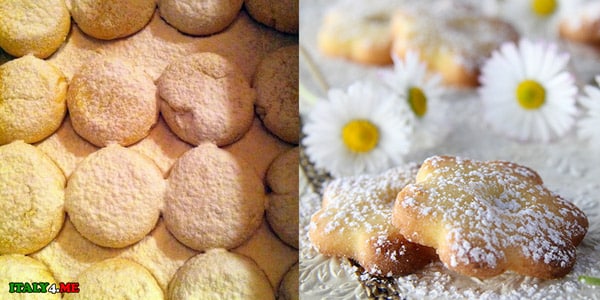
In addition to its sweet delights, Stresa features a well-connected port. Ferries and boats regularly depart from town, offering scenic rides to the lake’s famous island archipelagos. And at Piazzale Lido, visitors can hop on a cable car that soars high into the mountains, taking you all the way to the summit of Mount Mottarone (Mottarone).
Borromean Islands
Just half a kilometer of water separates Stresa from the enchanting Borromean Islands, making it the perfect opportunity for a boat excursion and a close-up view of this remarkable attraction.
For centuries, these five small islands have revealed their rocky backs in the bay off Lake Maggiore’s western shore. In the 17th century, the prestigious Milanese Borromeo family turned their attention to these once-barren stones rising from the lake’s shimmering blue waters.
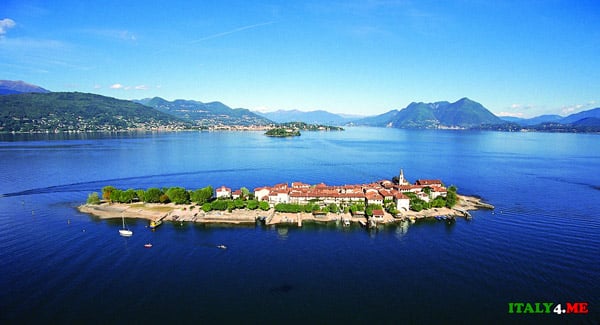
Spanning roughly 50 acres (20 hectares), these islands were transformed into blooming jewels amid the lake’s calm waters. The first to be developed was Isola Bella, meaning “The Beautiful Island.” Turning a rugged rock into a refined paradise required massive effort—even fertile soil had to be transported from the shores of Lago Maggiore.
In 1632, Carlo III Borromeo began construction of a palace intended as a gift for his wife, Isabella. However, the project was completed by his sons. Today, the Borromeo Palace is open to visitors and stuns with its richly decorated interiors and impressive art collections.
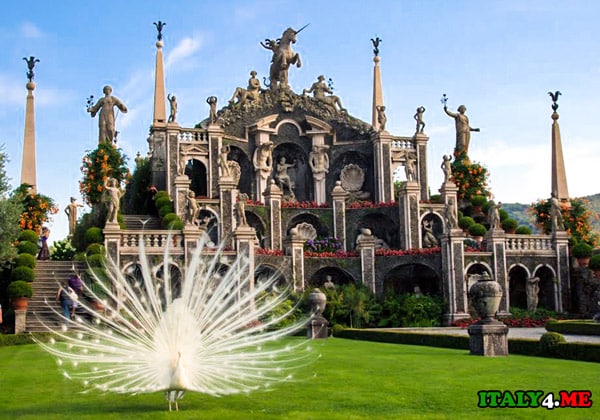
Equally breathtaking is the garden, designed in cascading stone terraces. Ten grand levels descend from the top of the island to the water’s edge, filled with evergreens and brilliantly fragrant flowers that contrast beautifully with the gray stone.
In the 18th and 19th centuries, the palace halls and garden terraces welcomed notable guests such as Napoleon Bonaparte and his wife, as well as the Duchess of Caroline of Wales.
Isola Madre
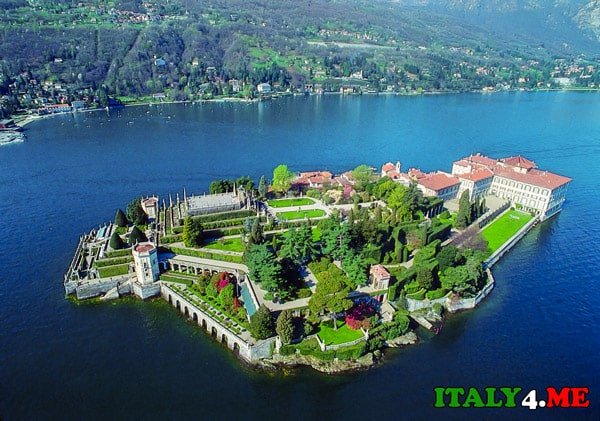
Isola Madre, or “The Mother Island,” is the largest in the Borromean archipelago. A stately palace was built here and has remained remarkably well-preserved over time. In the 19th century, the grounds were enhanced with a stunning English-style garden. One of the botanical highlights of the island is a palm tree planted at the garden’s founding in 1858—which still stands tall today!
Isola dei Pescatori
Isola dei Pescatori, or “Fishermen’s Island,” is a small sliver of land—about 1,150 feet (350 meters) long and only 330 feet (100 meters) wide. True to its name, it was once home to a humble fishing community. Despite its tiny size, the island hosts several cozy hotels. One of the most charming is Albergo Verbano, a romantic 12-room property that’s a favorite among couples and a popular wedding venue.
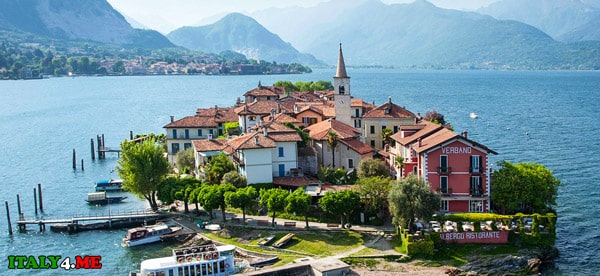
The remaining two members of the Borromean archipelago—**Scoglio della Malghera** and **Isolino di San Giovanni**—are quite small and not especially popular with tourists. However, Malghera is sometimes romantically referred to as “the island of love.”
Verbania
No journey around the scenic and verdant shores of Lake Maggiore would be complete without a stop in Verbania. As the capital of the Verbano province, this city spans a large area and is renowned for its annual arts festival featuring classical music, literature, and more. For travelers, Verbania’s crown jewel is the expansive botanical garden on the grounds of Villa Taranto.
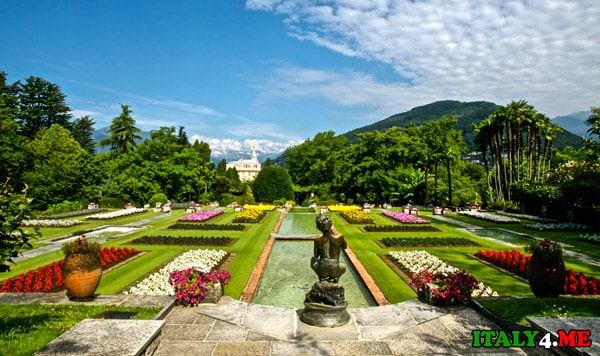
The stunning park owes its existence to Scottish army captain Neil McEacharn, who fell in love with the lush beauty of Italy in his youth. After fulfilling his military duty, McEacharn used part of his fortune to purchase the villa La Crocetta on the shores of Lake Maggiore. Over time, he bought neighboring plots to bring his botanical vision to life. It took ten years to expand and reorganize the grounds.
In 1940, he officially renamed the estate Villa Taranto in honor of one of his ancestors and began work on the garden.
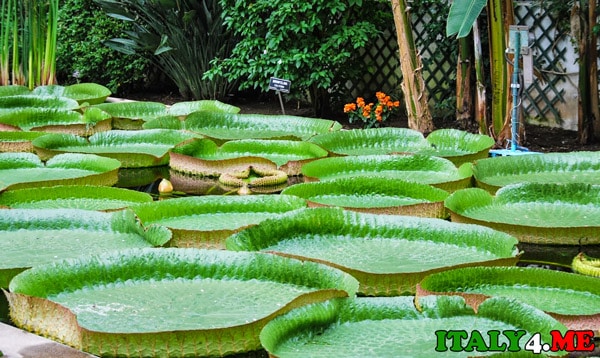
By 1952, the first visitors strolled the garden’s exquisite paths. Today, 40 acres (16 hectares) of terraced terrain host themed sections filled with leafy trees, massive pines, rhododendrons, magnolias, and exotic flora from around the globe—all carefully acclimated to the Alpine foothills.
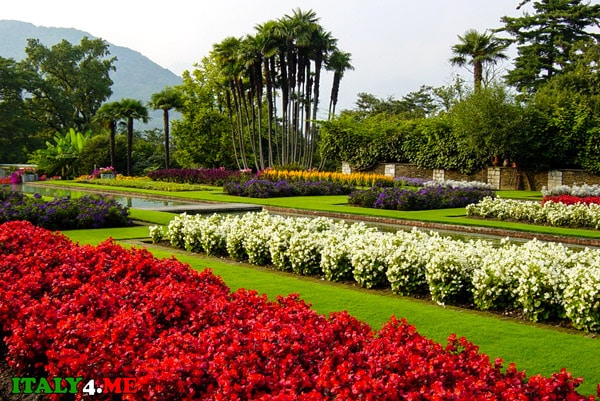
Tulips, azaleas, camellias, lily ponds, and a rainbow of other botanical wonders fill the space with color. While the villa itself is not open to the public—it serves as the local police prefect’s residence—its beauty can still be admired from the gardens.
After a stroll through the gardens, visitors can explore other attractions in Verbania: the 12th-century San Remigio Villa, a historic oratory, the 16th-century Madonna di Campagna Church, the Baroque-style Dugnani Palace, and the 19th-century Villa Giulia—famed for its graceful architecture and English-style gardens.
Also worth noting during a trip through Piedmont is another group of islands known as the Castelli di Cannero. These so-called castles are the remains of ancient fortifications built on small islands near Cannero Riviera in the 11th and 12th centuries. These stone forts played key roles during civil wars among Italy’s divided city-states.
During the 15th and 16th centuries, tensions flared between papal supporters and their opponents. The castles frequently changed hands as power shifted. Once the conflict ended, the military importance of these island outposts faded, and the structures gradually fell into ruin. Today, visitors can marvel at the haunting remnants of once-mighty fortresses—outlined starkly against the blue sky and deep waters of Lake Maggiore.
Santa Caterina del Sasso Monastery
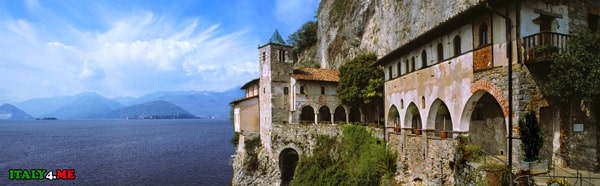
One of the most remote yet awe-inspiring landmarks on Lake Maggiore is the Santa Caterina del Sasso Monastery. The monks who once lived here led a true hermit’s life, establishing their sanctuary on a nearly vertical cliff. Construction began in the 13th century, and the monastery was dedicated to Saint Catherine of Alexandria. In the 16th century, part of the overhanging cliff collapsed onto the buildings. In memory of this event, the monks added “del Sasso” (of the rock) to the name of the martyr.
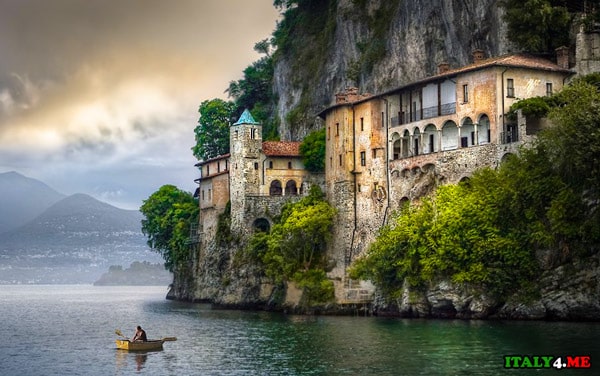
Today, a museum operates on the grounds of this former women’s monastery. Visitors can admire 14th-century frescoes and soak in the peace and spirituality of the place. The monastery is accessible by both land and water, and entry to the museum is completely free.
Sacred Mount of Ghiffa
The Sacro Monte di Ghiffa nature reserve has been under UNESCO protection since 1993. Located near Lake Maggiore, this holy mountain shelters a Baroque-style church complex built between the 17th and 18th centuries. The chapels, ideal for reflection and spiritual connection, are surrounded by a vast nature reserve. Covering nearly 500 acres (200 hectares) of forest and meadows, the area is dotted with colorful informational panels—and deep within lies the mysterious Witch’s Lake!
How to Get There
The best way to reach the Lake Maggiore resorts is from Milan. Trains connect Milan with both Verbania and Stresa. Taking the train is fast, budget-friendly, and convenient.
For a full guide, check out how to buy Italian train tickets online. On the official railway site www.trenitalia.com, you can view schedules and pre-purchase tickets. For example, trains from Milano Centrale to Verbania-Pallanza run nearly every hour and cost just €8.90.

If your destination lies beyond Verbania or Stresa, consider using local buses or renting a car at auto.italy4.me. Water transportation is also well-developed on Lake Maggiore.
Thanks to Navigazione Lago Maggiore, ferries and boats connect even the most remote lakefront spots, offering unforgettable scenic journeys along the way.
That’s everything! We hope your experience at Lake Maggiore exceeds all expectations. Have a fantastic trip—and don’t forget your camera and an extra memory card!