 Italy for me From Italy with love


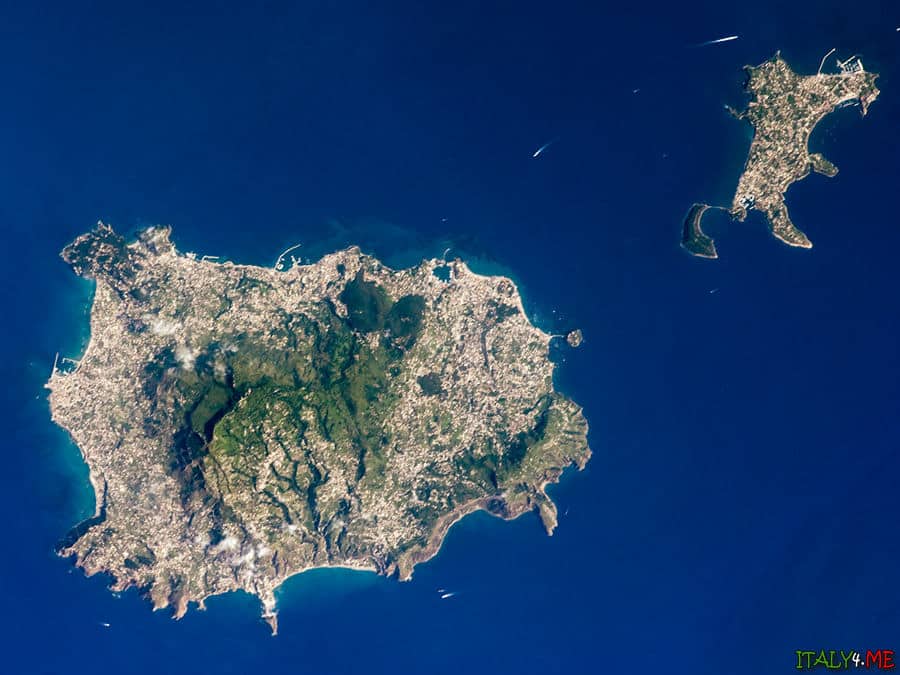
Ischia is a volcanic island located in the Tyrrhenian Sea, on the western coast of Italy, in the northern part of the Neapolitan Bay. It is part of the Campania region. The island covers an area of 46.3 km² (17.9 square miles), with a population of about 62,000. Ischia is situated 40 km (25 miles) from Naples and is the largest island in the bay.
Along with Capri Island, located 30 km (18.6 miles) away, Ischia is one of the most fashionable and beautiful Italian islands for relaxation. The island features three extinct volcanoes: Epomeo (its highest peak, at 789 meters or 2,585 feet), Trabotti, and Monte Vezzi. The last eruption occurred in 1301.
Here are recommended tours during your stay in Ischia.
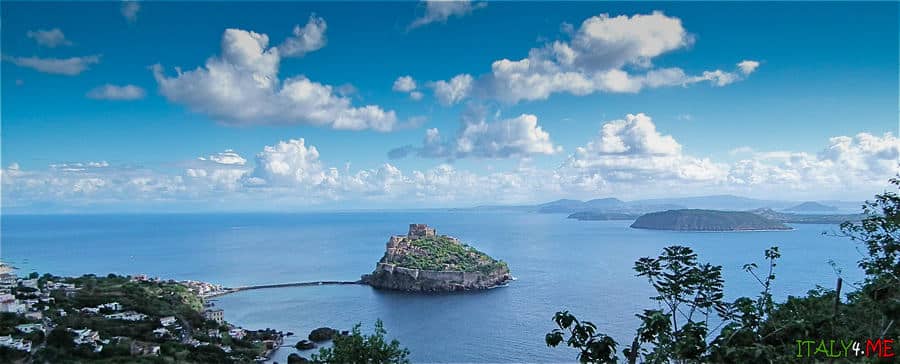
During the Ancient Roman era, Ischia was already a popular resort. It is often referred to as the “island of youth and beauty” due to its thermal springs, whose healing properties are widely used in various spa centers. The island enjoys a typical Mediterranean climate, with the highest number of sunny days on the Tyrrhenian Sea coast. The average winter temperature does not drop below +15°C (59°F). The thermal springs flow continuously, making Ischia a year-round destination for relaxation.
Explore our tips on selecting a 4-star hotel on Ischia
Page Contents
 History of Ischia
 History of Ischia
In ancient mythology, there is a legend about the island’s origin. During a battle with the Giants, Jupiter hurled a massive rock at Typhon. The goddess Venus changed the rock’s trajectory, and it landed in the bay’s waters, creating Ischia as part of Venus’s collection of beautiful islands. The goddess covered the island with greenery and populated it with animals. However, Typhon’s wrath was not extinguished, and his anger manifested through volcanic eruptions and earthquakes. Though Typhon mostly slumbers, his breath escapes through underwater craters in the form of thermal springs.
The first settlements on Ischia were founded by the Greeks in the 8th century BC. They used the island as a strategic outpost in the Mediterranean. Later, during the Roman period, villas for the elite and wealthy citizens were built on Ischia. By the 16th century, people from Western Europe began visiting the island to take advantage of its thermal springs, marking the beginning of tourism. Today, Ischia boasts five main resort centers, with over 300 hotels and boutique hotels.
The average nightly rate for a double room ranges from 150 to 500 euros. In comparison, a room with a sea view at the luxurious five-star L’Albergo Della Regina Isabella in Lacco Ameno can reach up to 1,000 euros per night during the high season.
For budget-conscious travelers, there are special offers with rates as low as 45-60 euros per night. We recommend that our readers search for suitable options on Booking.com.
How to Get There
Getting to the island is straightforward. Ferries depart regularly from Naples, taking 1.5 hours to reach Ischia. You can also take a high-speed boat for 60 minutes at a cost of around 20 euros. Up-to-date prices and schedules can be found on the official website of the transport company www.alilauro.it.
Check out my detailed video on how we traveled from Rome to Ischia.
Also, enjoy a beautiful video about the road from the port to the hotel:
Ischia has an efficient bus transport system. A ticket costs 1 euro, valid for 90 minutes, and must be validated upon boarding. You can also purchase passes for 1, 2, or 7 days. The fine for traveling without a ticket is 50 euros. The island has two main bus routes that circle around it. Ischia consists of six communes and autonomous administrative units: Ischia, Forio, Casamicciola, Lacco Ameno, Serrara Fontana, and Barano.
Renting a car on the island may not be convenient or necessary due to its small size. However, taking a few days for an independent road trip from the port of Naples, which you can reach by boat in 60 minutes, is an exciting option. Car rental with full insurance costs around 70 euros per day. For the best deals, we recommend using the search tool at www.rentalcars.com to compare rental companies.
Cities and Attractions on Ischia
The commune of Ischia is the island’s oldest and its capital. Officially classified as a city, Ischia is divided into two parts: Ischia Ponte and Ischia Porto, with a population of 17,700. This area is home to numerous hotels, nightclubs, shopping centers, taverns, and restaurants. In the bay of Cartaromana, along the coast, there are natural baths with thermal springs. Ischia Ponte derives its name from the word “bridge.” A 220-meter (722-foot) stone bridge, built in the 15th century, connects Ischia to a small islet where the island’s most famous landmark, the Aragonese Castle (Castello Aragonese), is located.
Aragonese Castle
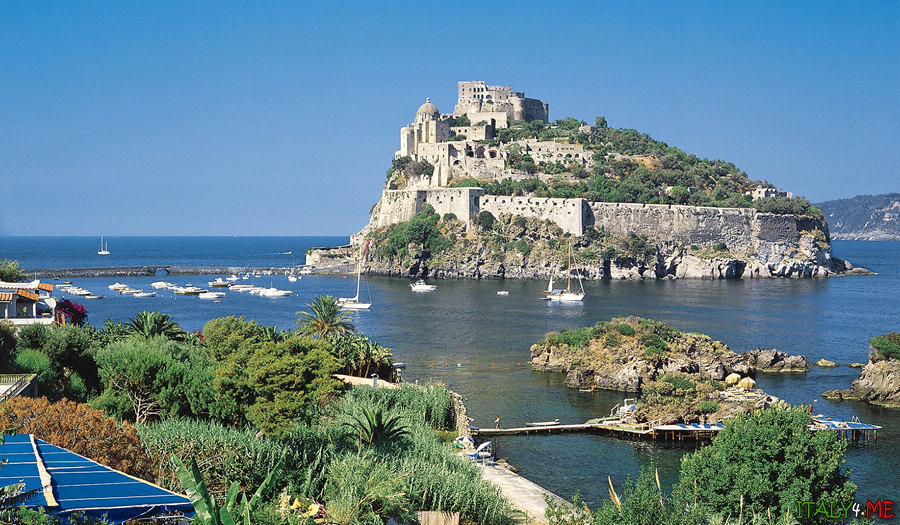
The first fortress on the islet was erected by the Greek Hiero in 474 BC during the Greek-Tyrrhenian war. Over the centuries, the fortress changed hands, and its appearance evolved depending on the ruling people. In 1441, Alfonso of Aragon restored and expanded the fortress into the castle we see today. In the 15th century, the citadel housed the Prince’s garrison, the Bishop with his Chapter, the Greek Basilian Abbey, the Convent of Poor Clares, 13 churches with 7 parishes, and 1,892 families.
During pirate raids, the entire island population took refuge behind the castle’s powerful walls. In the mid-18th century, pirate attacks ceased, and residents moved to more comfortable locations.
In 1823, the King of Naples turned the castle into a prison, and from 1851, the islet became a jail for political prisoners. Today, the castle, covering an area of 56,000 square meters (602,779 square feet), is privately owned but open to tourists. Visitors can reach the fortress by foot or by a modern elevator. Inside, there is a weapons museum displaying a collection of weapons and torture instruments from the 14th to 17th centuries.
Forio
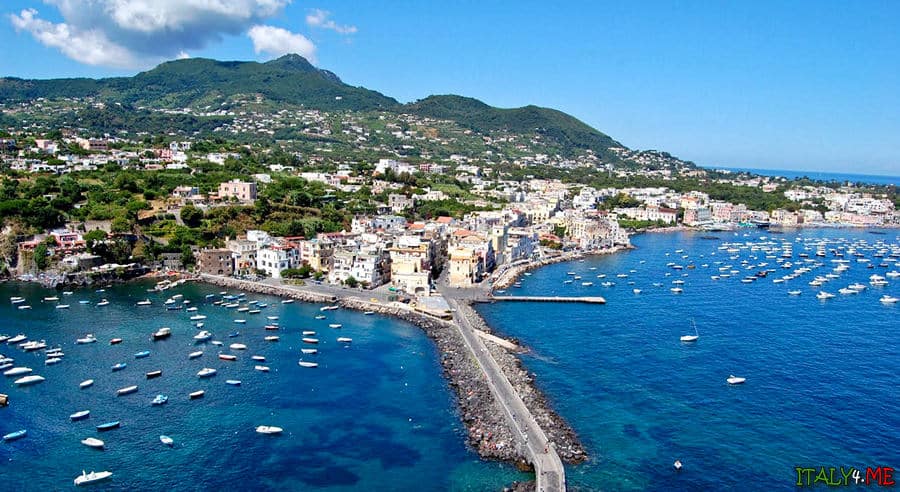
The commune of Forio is located on the western part of the island. It is the largest commune, with a population of 13,000. Forio is widely known for its thermal resources and is home to the thermal park “Poseidon Gardens.” This UNESCO-protected site is located in the bay of Citara.
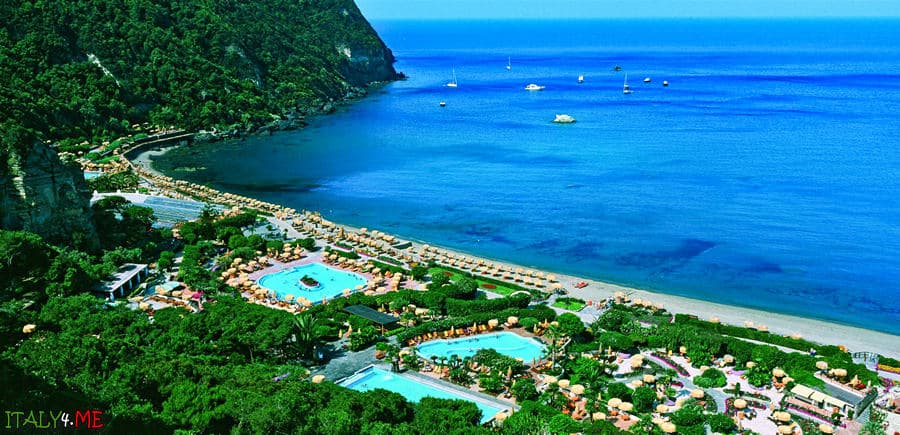
From April 1 to October 31, visitors can enjoy 22 pools with constantly refreshed water of unique chemical composition, ranging from 21°C to 42°C (69.8°F to 107.6°F).
Additionally, there is a large Olympic-sized pool filled with seawater. Higher up the cascade of pools, among olive trees, lies a natural grotto with a Roman sauna powered by a hyperthermal source. Special mention should be made of the “Japanese Bath,” an oval-shaped bath made of stone from the Mount Vesuvius. The floor of the tub is lined with large gravel.
The bath is divided into two sections, with water temperatures of 15°C and 40°C (59°F and 104°F), respectively. This alternating temperature regimen provides thermal shocks that are beneficial to the body.
Entrance fees for a brief visit are 5 euros (free for children under 3), while a full-day pass costs 32 euros (35 euros in August). A half-day pass is 23 euros (25 euros in August), with a 50% discount for children aged 3–12. When purchasing a multi-day pass, the daily rate slightly decreases to 29 euros. The official website for the park, with up-to-date pricing, is www.giardiniposeidonterme.com (Italian only).
La Mortella Gardens
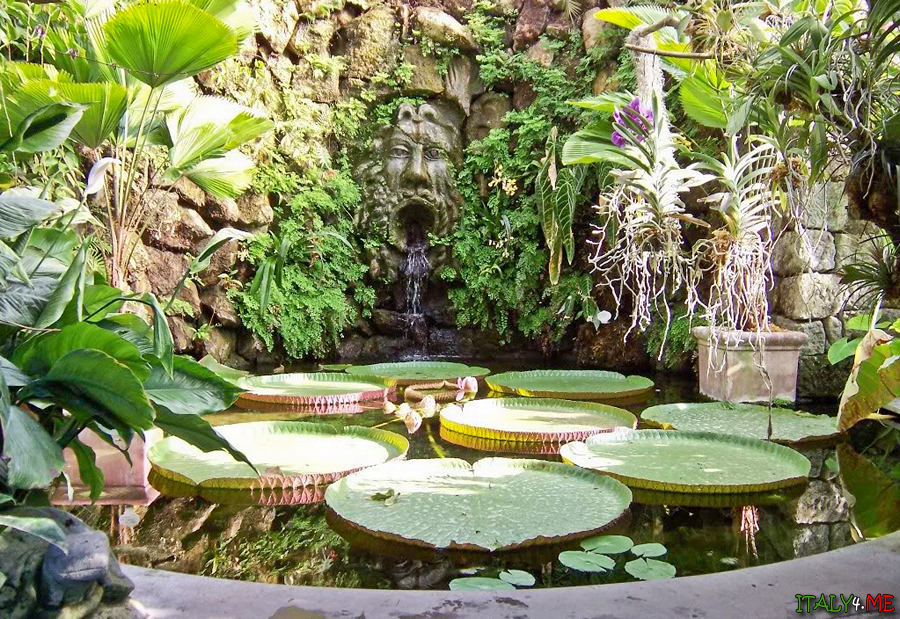
In Forio, be sure to visit La Mortella Gardens, created on a site where a lava flow once passed. The garden features exotic plants from all over the world, and tropical birds flutter above the tea house. William and Susana Walton came up with the idea for the garden, which designer Russell Page brought to life. The botanical garden is open four days a week from early April to late November.
Casamicciola
The commune of Casamicciola lies to the north of the island, near the extinct volcano Rotaro, and has a population of 7,140. The thermal park “Castiglione Gardens” is open to visitors here. Casamicciola is also famous for its hot mineral springs. It is a lush region, where it remains cool even during the summer months.
Lacco Ameno
The commune of Lacco Ameno is the smallest on the island, with 3,055 inhabitants. It is located on the northeast side of the island at the foot of Mount Epomeo. From the promenade, visitors can see one of Ischia’s symbols, the Fungus, a mushroom-shaped rock.
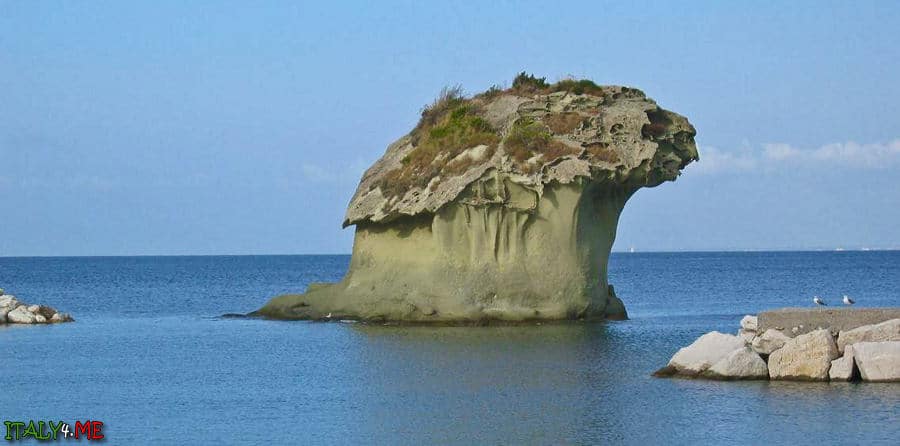
This tuff rock is a unique natural creation. Lacco Ameno is also known for its archaeological museum and the thermal park “Negombo Gardens.”
Serrara Fontana
The commune of Serrara Fontana lies in the southern part of the island, with a population of 3,000. It is considered the most prestigious area on Ischia. Here, the most luxurious hotels are located, many of which are fully booked months in advance, despite their high prices. There are no noisy discos or commercial centers in this area. For water therapy enthusiasts, the thermal parks “Aphrodite-Apollo” and “Tropical” are available.
Near the beach, you can still find small fishermen’s houses painted in pastel colors. This area offers breathtaking panoramas, as much of the territory is located more than 300 meters (984 feet) above sea level.
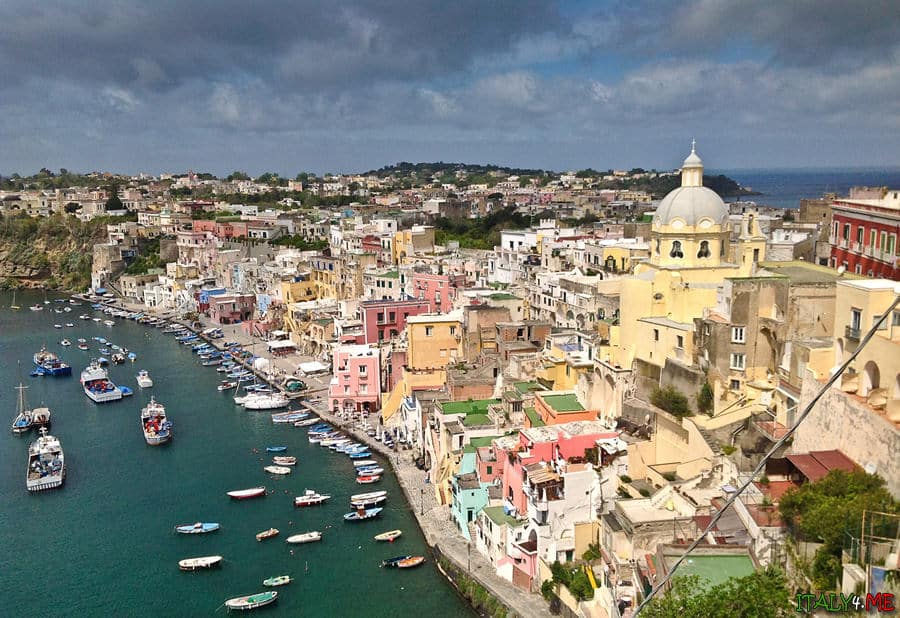
The commune of Barano occupies the southeastern slope of the island, with a population of 8,150. Here, you’ll find the best beach on the island – Maronti. Be sure to visit the Nitrodina spring for a healing shower and drink water, which is recommended for skin disease prevention. For those who appreciate Christian architecture, the churches of St. Sebastian Martyr, Our Lady of Grace, and St. John the Baptist are open to visitors.
Traditional Cuisine on Ischia
The island’s cuisine is closely tied to Neapolitan and Campanian cuisine.
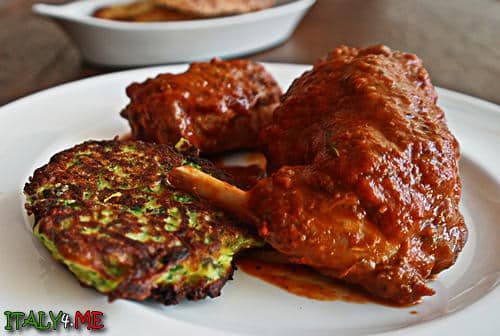
However, Ischia is famous for its traditional dishes. The most popular is Coniglio all’ischitana (Ischian-style rabbit), which is the top choice for Sunday dinners. The rabbits are raised in underground burrows and fed only grass.
As for drinks, the most popular on Ischia, as throughout Campania, is the lemon liqueur Limoncello.
Festivals on the Island
Ischia is known for its traditional festivals.
The Race of the Holy Angel. On Easter Sunday in Forio, the statue of Archangel Gabriel is carried from the church to announce the resurrection of Jesus. The angel is carried to the Virgin Mary three times, ringing bells to deliver the good news. On the third pass, Mary’s mourning veil falls.
The Feast of Saint Anne. Many years ago, a church dedicated to St. Anne stood on the shores of Cartaromana Bay. Every year on July 26, fishermen would sail there to conduct rituals in honor of St. Anne, the patroness of pregnant women, followed by picnics and celebrations. The tradition was revived
in the 1930s, and today, on July 26, boat races decorated with flowers take place. This beautiful festival attracts thousands of tourists from all over the world.
Where to Stay on Ischia
Watch a video review of our favorite hotel on Ischia