 Italy for me From Italy with love

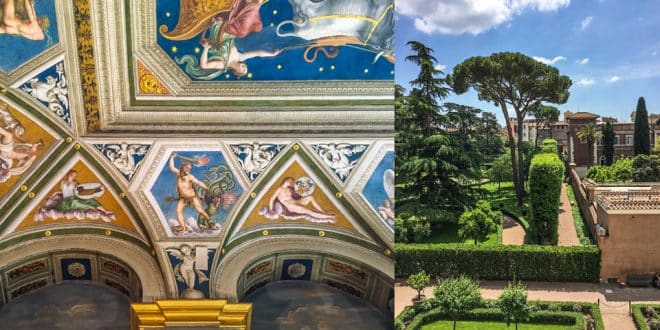
Villa Farnesina is a museum that appeals to both Renaissance connoisseurs and casual travelers. It offers a rare glimpse into what a wealthy Roman family’s residence looked like in the 16th century. The villa is adorned with frescoes by Raphael (Raffaello Santi) and other celebrated artists.
Page Contents
History
At the start of the 16th century (1506–1510), renowned Renaissance architect and painter Baldassarre Peruzzi began designing the building that would later become known as Villa Farnesina.
The villa was originally commissioned by Agostino Chigi, a prominent banker known for hosting lavish banquets.
The building was initially named “Palazzo Chigi.” Chigi financed Popes Julius II and Leo X, and also counted the Medici and Borgia families among his clients. Chigi was a patron of Raphael, who contributed to the villa’s decorative program.
In 1577, the villa was purchased by Alessandro Farnese, from whom it takes its current name. A cardinal, Farnese was also known as a patron of the arts and a passionate collector. The Farnese family once planned to connect the villa to their palace across the river with a bridge, but the project was never realized. In the 18th century, the villa passed into the hands of the Bourbon family.
Today, Villa Farnesina is owned by the National Academy of the Lincei (Accademia dei Lincei). Most of the building is dedicated to the Museum of Architecture and Painting. The upper floor, which is not open to the general public, houses the Institute of Graphic Arts and the National Print Cabinet.
In addition to guided tours, the villa regularly hosts concerts of early music.
What to See?
Villa Farnesina stands out from typical architectural designs of its era. While most residences of the time were built as rectangular blocks, this villa features a façade with projecting wings. A fountain welcomes visitors at the entrance, and access to the house is through a loggia. The villa’s garden is planted with fruit trees, and experts recommend visiting during blossom season.
The ground floor houses three main halls:
- The Hall of Friezes. This room displays frescoes depicting myths from Ancient Greece.
- The Loggia of Galatea. Named after Raphael’s fresco “The Triumph of Galatea,” which illustrates a scene from Ovid’s *Metamorphoses*.
 Here you’ll also find a painted head of a youth attributed to Michelangelo. According to legend, he stopped by while Raphael was working, but finding him absent, left a sketch instead. Raphael chose to preserve it.
 - The Loggia of Cupid and Psyche. This hall is adorned with frescoes based on the writings of Apuleius.

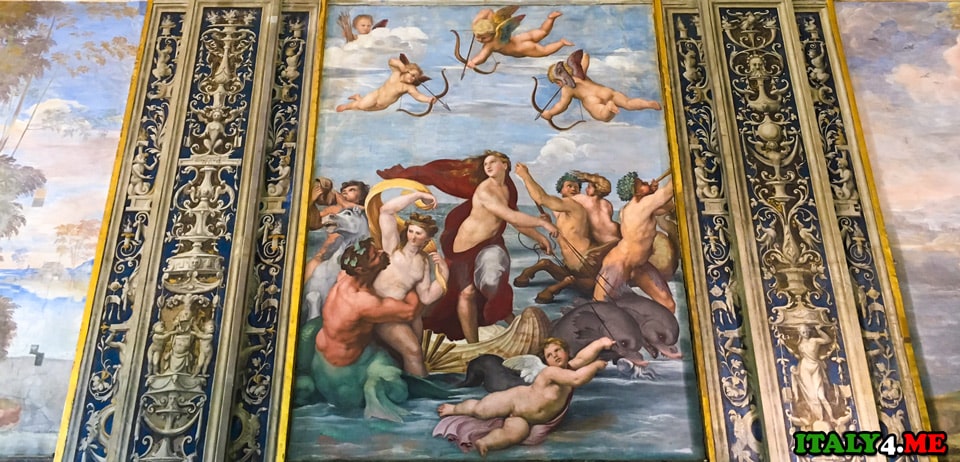 Here you’ll also find a painted head of a youth attributed to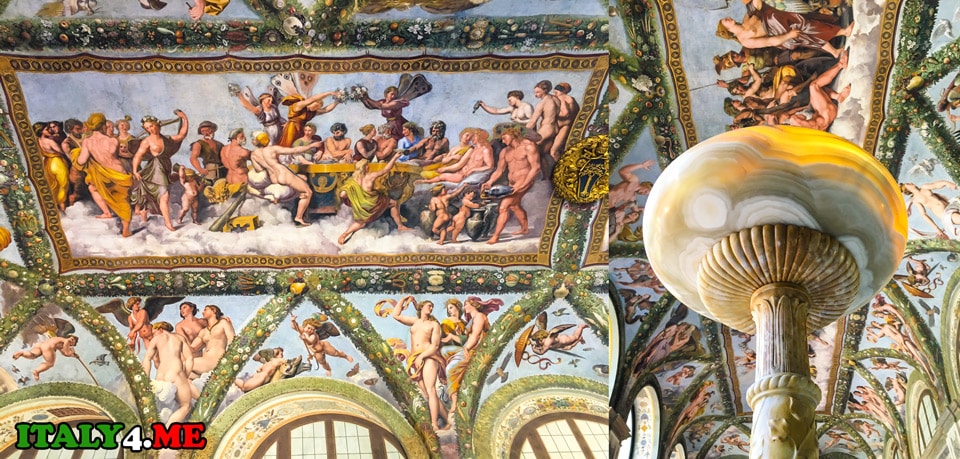
Upstairs, the Fireplace Hall features a stunning trompe-l’oeil fresco painted by Baldassarre Peruzzi. 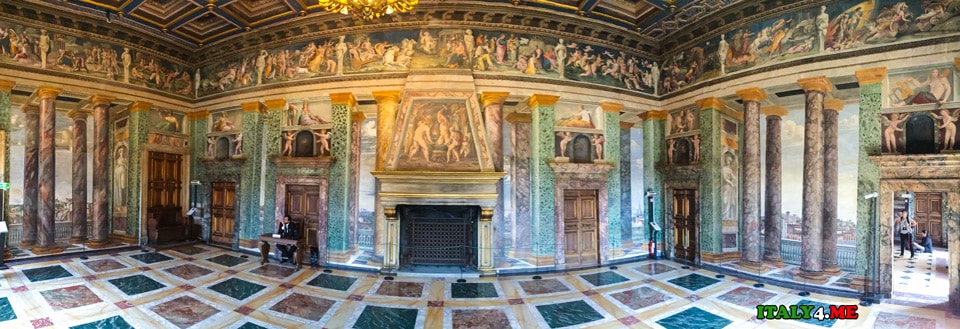
He painted a colonnaded view of the garden, creating the illusion of an open wall. In the painted opening, you can spot recognizable landmarks of Rome, such as the Colosseum, the Tiber River, and various churches.
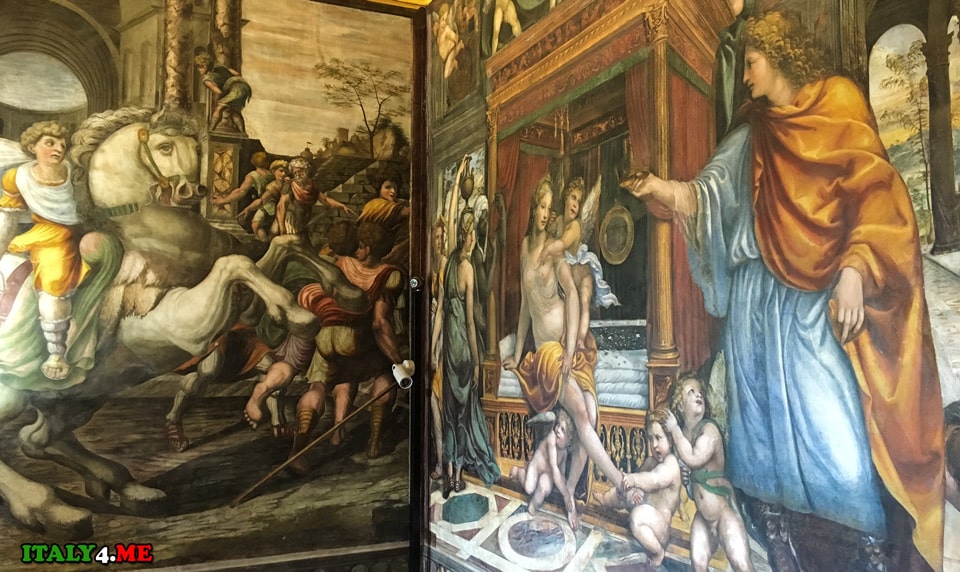
The room that once served as the master bedroom is now called the Wedding Hall, named after a fresco depicting the wedding of Alexander the Great.
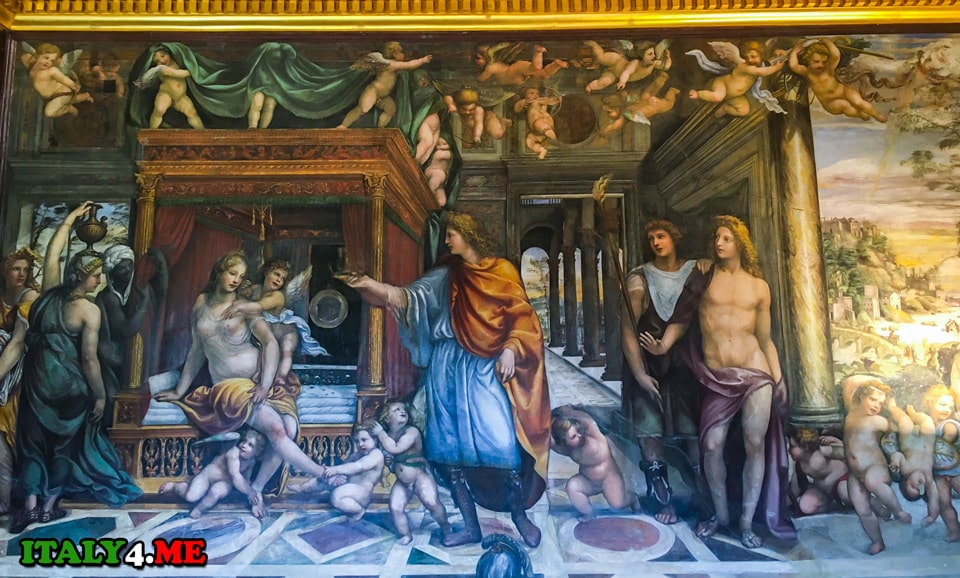
Other frescoes in the room recount scenes from Alexander’s life. One shows the taming of Bucephalus. According to legend, Alexander subdued the spirited horse at the age of just ten.
For more, check out the stunning Palazzo Farnese in Rome.
Useful Information
Ticket Prices
- A standard admission ticket to the villa costs €15 for visitors aged 18 to 65.
- Children under 10 accompanied by an adult enter free of charge.
- Tickets for children aged 10 to 18 are priced at €7.
- Seniors over 65 years old can enter for €12.
Photography is allowed inside the villa, but flash is prohibited.
Opening Hours
- Villa Farnesina is open Monday through Saturday, from 9 AM to 2 PM. It is closed on Sundays and public holidays.
- Additionally, the museum opens on the second Sunday of each month from 9 AM to 5 PM, but access is limited to guided tours only.
Location
- Address: Via della Lungara, 230, 00165 Rome, Trastevere district
- Official website: www.villafarnesina.it