 Italy for me From Italy with love


Altare della Patria (Altar of the Fatherland) or Il Vittoriano (The Vittoriano) is a memorial dedicated to the first king of unified Italy. It was built in honor of the anniversary of Italy’s unification by architect Giuseppe Sacconi and is located near Rome’s most famous landmark—the Colosseum. The monument, made of white limestone, was first inaugurated in 1911 after 26 years of construction.
This massive structure—443 feet wide (135 m), 427 feet long (130 m), and 266 feet high (81 m)—overwhelmed the surrounding buildings and did not blend harmoniously with the earlier architecture. Because of this, Romans grew to dislike the memorial and nicknamed it “The Denture” or “The Inkwell.”
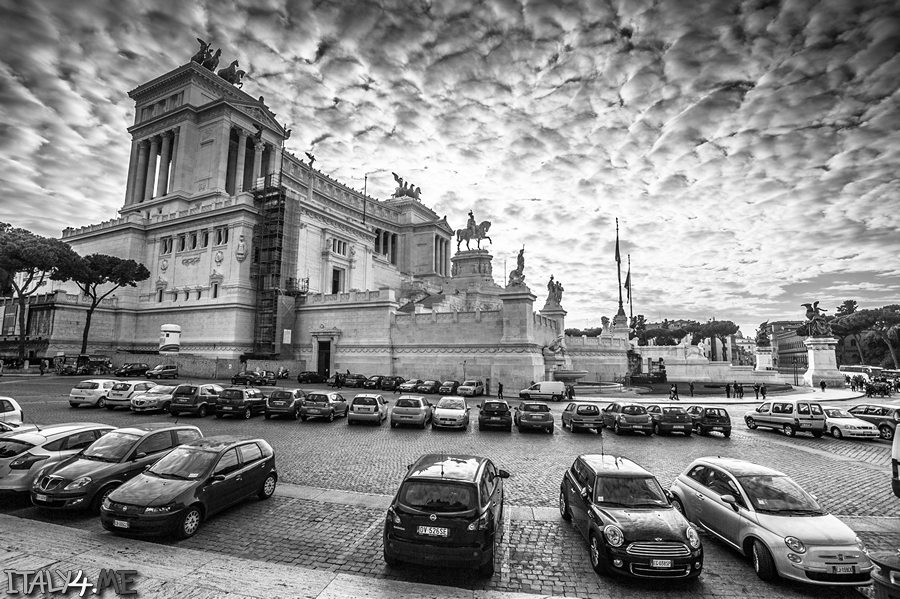
A wide staircase leads up to the Altar of the Fatherland, with a central bronze monument dedicated to Victor Emmanuel II.
The material for the statue was taken from old cannons from the Castel Sant’Angelo to symbolize the shift of papal power to the king. In 1927, a Tomb of the Unknown Soldier was added to the Altar of the Fatherland to honor those who died during World War I, and the memorial was re-inaugurated. An honor guard stands beside the soldier’s grave, and an Eternal Flame burns in remembrance.
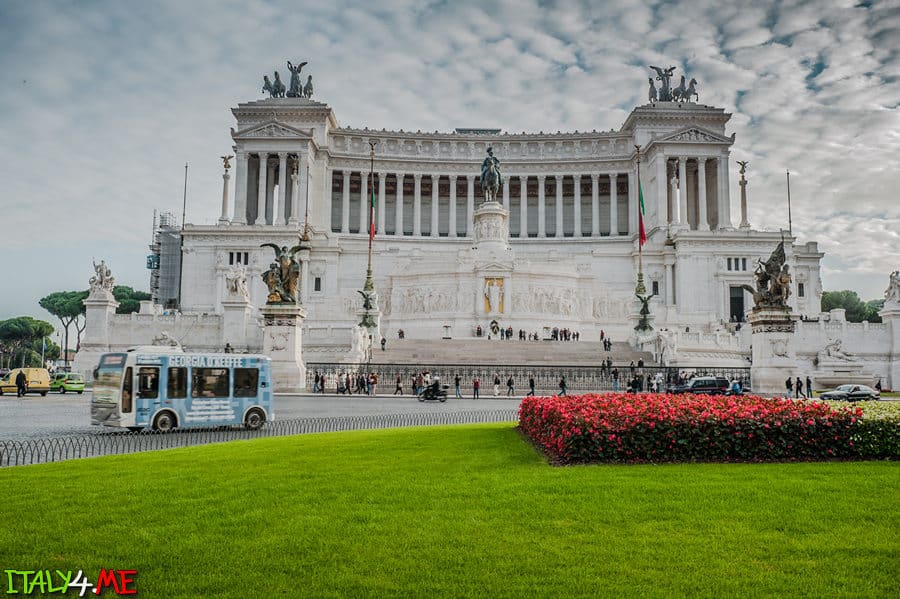
The bas-reliefs at the base of the Altar of the Fatherland represent the major cities of Italy. The fountains on either side symbolize the seas that border unified Italy—the Adriatic and the Tyrrhenian. Beneath the monument, inside the colonnade building, is the Museum of the Risorgimento, which also houses a collection of trophies and flags. The memorial offers sweeping panoramic views across all of Rome, each direction showcasing a different and unique perspective.
It is open to visitors daily from 9:30 AM. Access to the panoramic terrace costs around €10, subject to change.
The Altar of the Fatherland is often the starting point of our early morning tours of Rome.
Official website: vive.cultura.gov.it/en/vittoriano