 Italy for me From Italy with love


The National Archaeological Museum (Museo Archeologico Nazionale di Napoli) is one of the most fascinating attractions in Naples.
It houses unique artifacts unearthed during excavations of ancient Italian cities destroyed by a volcanic eruption—Pompeii (Pompei), Herculaneum (Ercolano), and Stabiae (Latin: Stabiae). Under one roof, the museum hosts some of the world’s largest and most culturally significant collections.
Page Contents
History
The building, home to thousands of artifacts, was originally constructed in 1615 as a university facility. In the second half of the 18th century, the former university was repurposed to store the Bourbon dynasty’s collections and the Royal Library. Over time, the museum expanded significantly, and the Farnese family’s (Farnese) collection was relocated here.
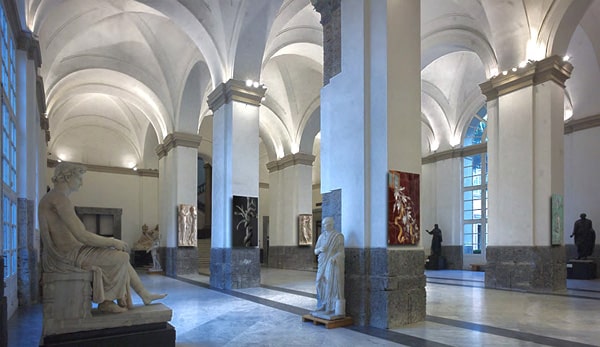
Excavations around Mount Vesuvius (Vesuvio) unearthed an extraordinary collection of artifacts, forming the core of a new exhibit. Over the years, the building was remodeled and expanded. In 1860, the museum became state property and was designated as a “national” institution. Later, its collection of paintings and other artworks was separated into an art gallery, while the museum focused exclusively on archaeology.
Top Exhibits
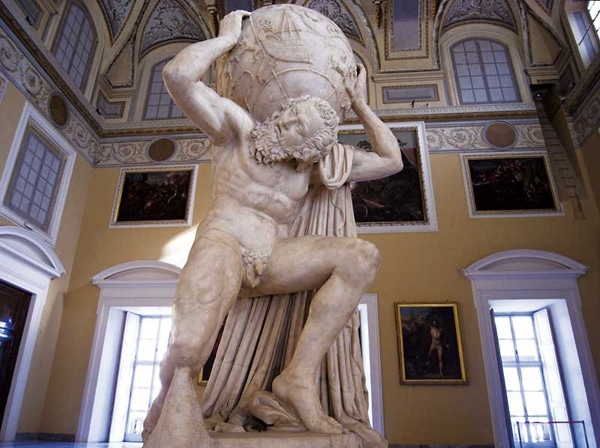
One of the finest exhibitions is the collection of sculptures from different eras, with the most valuable works created by ancient sculptors and architects, unearthed from the ruins of lost cities.
Artifacts discovered during excavations have been classified and divided into several distinct exhibitions: the Farnese Room, Sculptures from the Baths of Caracalla, and the Gallery of Emperors.
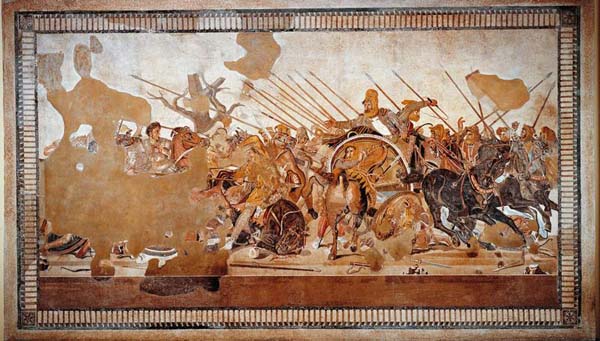
The Archaeological Museum is renowned for its unique collection of frescoes and both floor and wall mosaics, dating from the 2nd century BC to 79 AD. Some exhibits feature art pieces discovered in the House of the Faun (Casa del Fauno) in Pompeii. One of the most impressive pieces is the “Battle of Alexander the Great and Darius” mosaic. The subjects and sizes of the artworks vary greatly, from grand battle scenes to simple everyday moments and landscapes (such as Memento Mori, images of fish and sea life, and still lifes).
The National Archaeological Museum of Naples also boasts an outstanding collection of Egyptian antiquities. These exhibits were formed largely through the acquisition of private collections by the state, creating one of the largest Egyptian exhibitions in Italy.
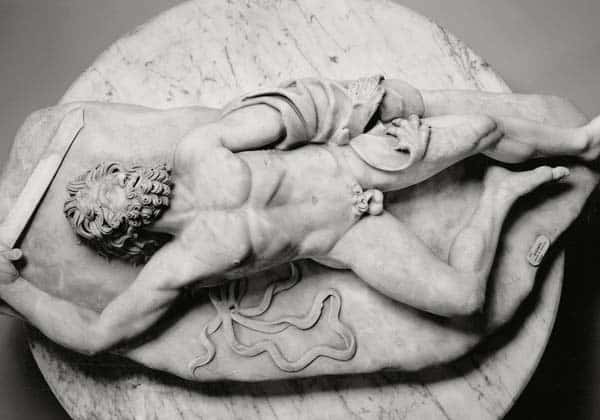
In 2000, the museum opened the so-called “Secret Cabinet”—a collection of erotic and openly pornographic artworks to the public.
This extensive collection of art and everyday objects highlights the ancient admiration for the human body. In the Secret Cabinet, visitors can view frescoes, reliefs, sculptures, household items, tableware, and decorative objects of an intimate nature. Most pieces were recovered from private homes buried by volcanic ash. This exhibit is among the very few in the world that offer such an ancient collection of this kind.
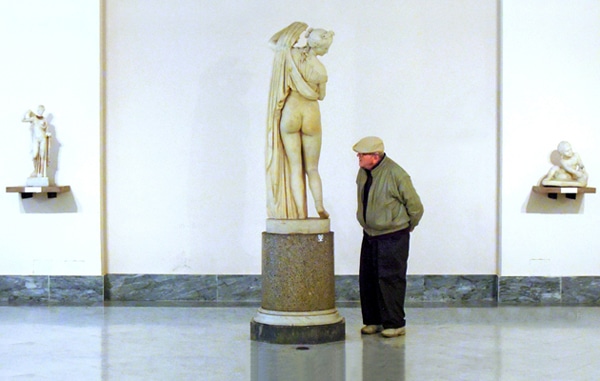
The museum’s vast coin collection occupies six rooms and includes around 200,000 items. It features coins and medals from ancient Greece, Rome, the Middle Ages, and the Renaissance. This is one of the largest collections of its kind and was also entrusted to the state by the Farnese family.
Other fascinating exhibitions include ancient household items, a collection of gladiator weapons, jewelry, religious artifacts, and items dating back to the Paleolithic era, among others.
Famous Exhibits
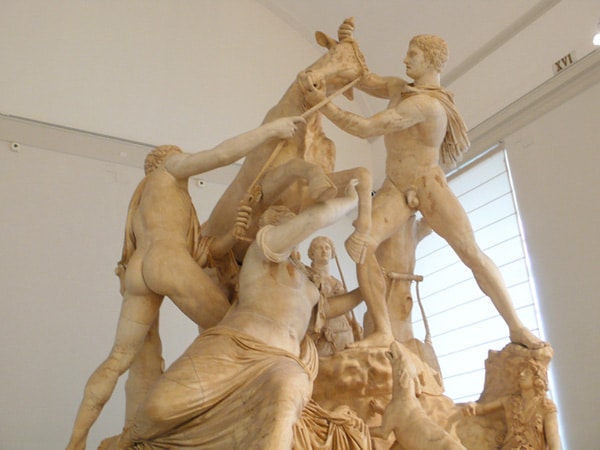
Many of the sculptures found among the ruins of Roman cities were copies of ancient Greek works, allowing humanity to gain a deeper understanding of classical art. Several pieces are true masterpieces:
- The sculpture of Athena Pallas—a copy of a 5th-century BC depiction;
- The head of the goddess Artemis;
- The bronze statue “Apollo Playing the Lyre”;
- The statue of “Narcissus”;
- The statue of Hercules, standing slightly over 10 feet (3 meters) tall;
- The Farnese Bull, a marble copy of a 3rd–2nd century BC Greek original.
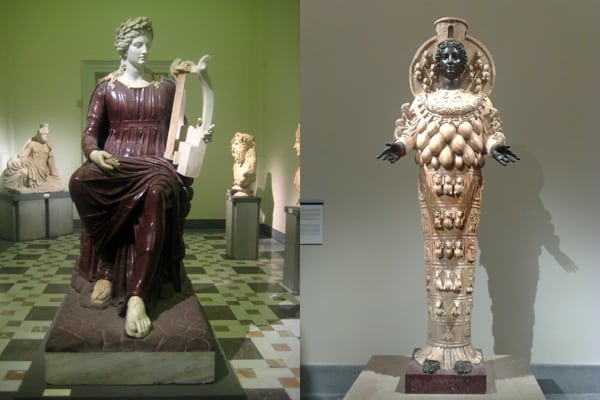
How to Get There
- Address: Piazza Museo, 19, near the “Museo” metro station.
- Tickets: €20 (approximately $22); prices may increase during international exhibitions; €2 (about $2) for EU citizens aged 18–25; free for EU citizens over 65 and for teachers.
- Opening Hours: 9:00 AM to 7:30 PM; closed on Tuesdays and occasionally on Sundays (it’s best to check the museum’s website for confirmation).
- Official Website: www.museoarcheologiconapoli.it