 Italy for me From Italy with love


Palazzo Braschi is an 18th-century neoclassical palace located in Rione Parione, one of Rome’s oldest districts, where the ancient Stadium of Domitian once stood. This monumental structure, occupying an entire city block, was the last of the great and lavishly decorated aristocratic palaces built for the family of a Roman pope.
Since 1952, Palazzo Braschi has been home to the Museo di Roma, known for its extensive collection of artworks and artifacts that trace the history of the city from the 6th century through the mid-20th century.
Page Contents
Location
The palace’s northern façade overlooks the majestic Piazza Navona and Via di Pasquino, which leads to Piazza di Pasquino—home to one of the city’s famous talking statues.
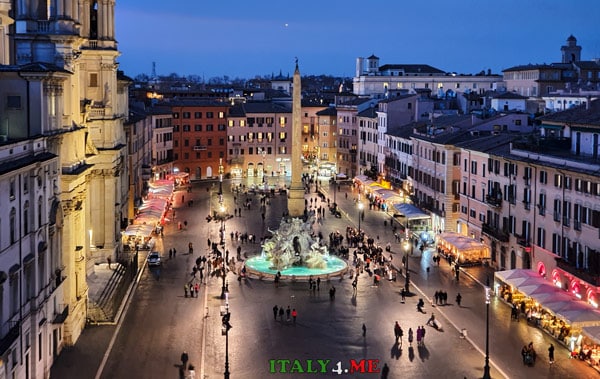
The western and eastern sides of the palace border Via San Pantaleo and Via della Cuccagna, respectively. The main façade faces south toward Piazza San Pantaleo, just off Via Corso Vittorio Emanuele II.
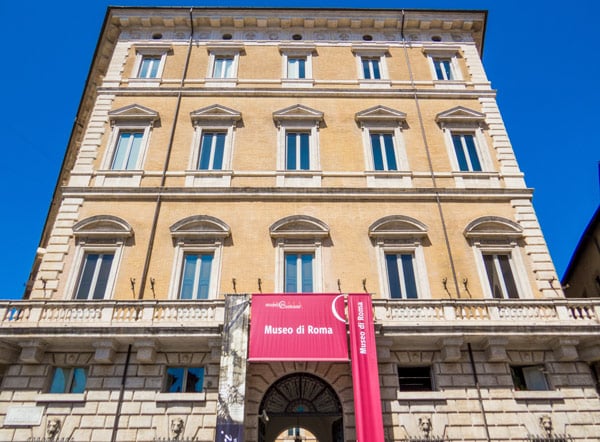
In the 15th century, this site was occupied by another noble residence—Palazzo Orsini, built in 1435 by Francesco Orsini, the prefect of Rome. Facing Piazza Navona, it was considered one of Rome’s most prestigious buildings. In the following century, it was home to Cardinals Oliviero Carafa and Antonio Maria Ciocchi del Monte. Under their patronage, architect Antonio da Sangallo the Younger added a loggia and a tower to the structure.
Commission and Construction
In 1790, Pope Pius VI, born Giovanni Angelo Braschi, purchased Palazzo Orsini from its last owner, the Neapolitan Prince Caracciolo di Santobono, and gifted it to his nephew Luigi Braschi Onesti.
The pope, who adopted and doted on Luigi, passed on both his surname and family coat of arms. Luigi further cemented his fortune and status by marrying Rome’s wealthiest noblewoman, Costanza Falconieri.
Notably, their lavish wedding took place in the Sistine Chapel in the presence of the pope and the Roman elite. Luigi’s wealth grew rapidly through papal favoritism, questionable inheritances, and real estate dealings.
In 1791, at the pope’s instruction, Luigi began construction of a new palace on the site of the demolished Palazzo Orsini and surrounding buildings, including shops.
Construction
The project was entrusted to one of the Papal States’ most sought-after architects, Cosimo Morelli, who was given free rein with the budget.
The main phase of construction lasted 13 years, from 1791 to 1804, with several interruptions due to the Napoleonic occupation of Rome (1798–1802), during which Pope Pius VI died in exile.
Luigi Braschi aligned himself with the new regime and, in 1809, when Napoleon declared Rome an imperial city, he was appointed mayor. He returned to his family palace and resumed construction. Completion of the work was overseen by Giuseppe Valadier, a leading figure in Italian neoclassicism. Valadier designed the chapel on the palace’s piano nobile (main floor) as well as the façade of the nearby Church of San Pantaleo, which gave the square its name.
After Luigi Braschi’s death in 1816, all work on the palazzo came to a halt due to a lack of funds among his heirs.
State Ownership
In 1871, the Palazzo Braschi became the property of the Kingdom of Italy and was used as the headquarters of the Ministry of the Interior.
The palace gained notoriety during the turbulent times of World War II. Under fascist rule, the historic building served as a political headquarters for Benito Mussolini (Benito Amilcare Andrea Mussolini). During the 1929 general elections in Italy, the façade was adorned with a massive sculptural portrait of the Duce—an image that would appear shocking by today’s standards.
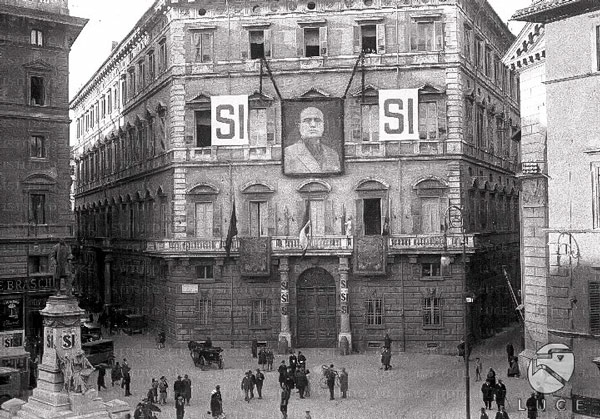
It wasn’t until 1949 that the building was officially transferred to the state. Significant time and funding were required to restore this 18th-century palace and establish within it one of Rome’s finest museums.
Architecture
The monumental Palazzo Braschi stands out for its austere architectural forms, blending 18th-century Neoclassicism with elements reminiscent of 16th-century Roman palaces, including striking color contrasts and travertine trim.
The building follows a trapezoidal plan with rounded corners extending toward Piazza di Pasquino and Piazza Navona.
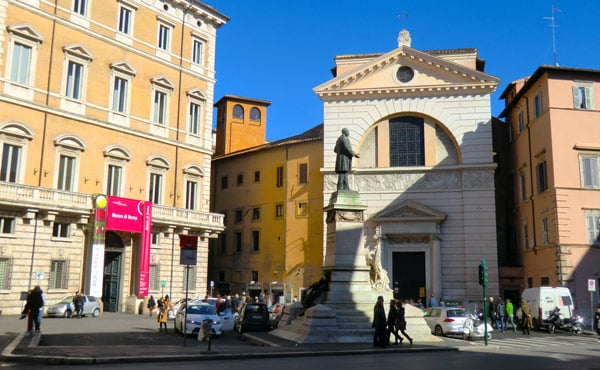
Each side of the building has its own entrance, but the two main ones—on Piazza San Pantaleo and Via di San Pantaleo—are adorned with balconies and the papal emblem of Pius VI: Boreas, the god of the north wind, blowing on a bending lily.
The palazzo features an open quadrangular courtyard with chamfered corners, each side containing a grand portal leading into the interior.
The palace has four levels: a ground floor, an attic, and two noble floors (piano nobile) that once housed the Braschi family apartments.
The façade is decorated with numerous heraldic symbols. The ground floor windows are crowned with lion heads gripping pinecones—an emblem of the Onesti family. The attic above the fourth floor features lilies and stars from the Braschi family crest.
A massive baroque coat of arms of Pope Pius VI on the building’s southwest corner remains visibly damaged. During the Napoleonic occupation, French forces tried to erase papal symbols, viewing them as outdated representations of the ancien régime and lacking in artistic merit.
Interior
The interior of Palazzo Braschi dazzles with its elegance and refinement. Several scenes from Paolo Sorrentino’s film “The Great Beauty” were shot in the palace’s opulent rooms.
A key highlight is the monumental double-flight staircase in the oval vestibule.
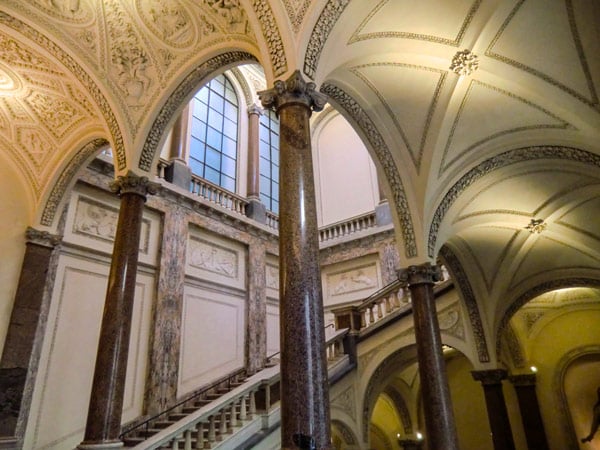
Designed by Cosimo Morelli and possibly Giuseppe Valadier, the staircase features red granite columns sourced from the convent of the Hospital of the Holy Spirit. Originally, these columns adorned a portico built by Caligula along the Tiber River.
The staircase is adorned with ancient Roman statues, including a sculpture of the mythological Achilles by Luigi Acquisti. Rich stucco work and carefully designed lighting create a sense of airiness and grandeur. The remarkable acoustics of the space even allow visitors outside the palace to enjoy music during concerts.
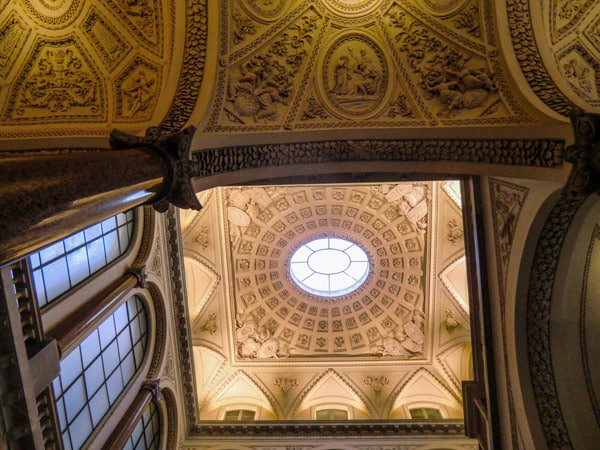
Most rooms in the noble apartments were decorated in the late 18th to early 19th century by painter Liborio Coccetti. The ceilings and walls are adorned with bucolic landscapes, historical scenes, and mythological themes, reflecting the neoclassical aesthetic popular at the time.
Museo di Roma
The Museo di Roma was founded in 1930 by art historian Antonio Muñoz. Initially, the collection was housed in the Palazzo della Pantanella—once a macaroni factory—located across from the famous Piazza della Bocca della Verità. The museum’s primary mission at the time was to collect and document Rome’s history and to bridge the gap between the city’s imperial legacy and its modern evolution.
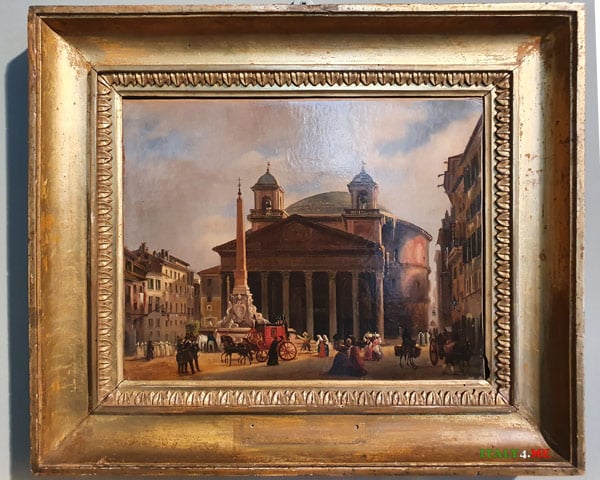
The collection included antique maps, views of Rome, scenes of everyday life, portraits, costumes, household furnishings, and more. Over time, with new acquisitions, the Museo di Roma evolved into a true fine arts museum.
The museum was closed during World War II and moved to Palazzo Braschi in 1952.
Collections
Today, artworks spanning the Middle Ages to the mid-20th century are displayed across 15 themed rooms on the second and third floors. The ground floor hosts temporary exhibitions and cultural events.
The museum’s permanent collection contains over 120,000 objects, including paintings, sculptures, rare wood furniture, mosaics and frescoes rescued from demolished buildings, ceramics, antique illustrated books, clothing, tapestries, and even carriages.
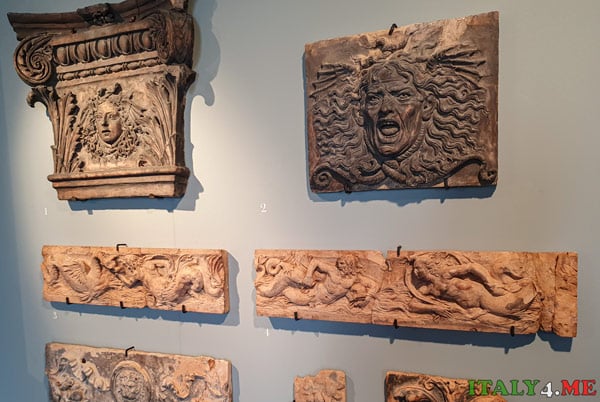
Some pieces were transferred from the demolished Palazzo Torlonia, including a bedroom ceiling fresco titled “The Judgment of Paris,” painted by Filippo Bigioli in 1837.
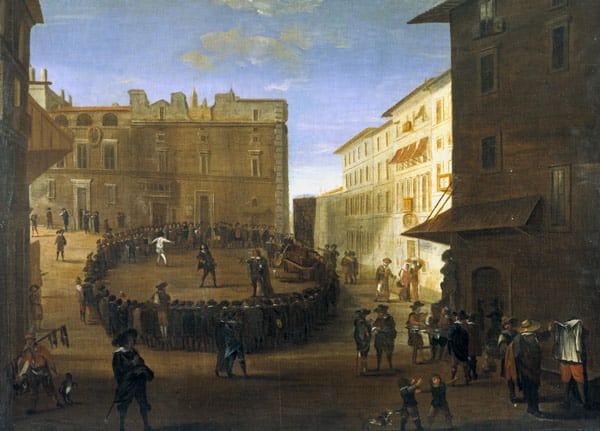
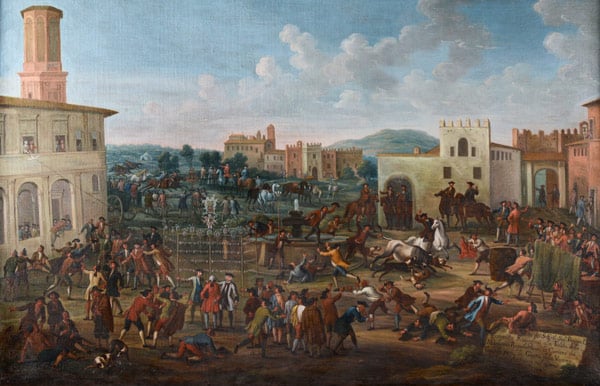
Historical paintings and engravings offer invaluable insight into lost corners of Rome and past public spectacles—from carnivals to tournaments and ceremonial processions, revealing Rome as a city-stage. The museum’s section titled “Festival on the Square” includes standout works such as:
- “View of Villa Aldobrandini at Monte Magnanapoli,” 1660–1685, attributed to Matthias Withoos, showing the lost hanging gardens of Aldobrandini;
- “Street Theater in Piazza Pasquino,” 1600–1610, by an unknown artist;

- “Ball Game,” 1620–1650, anonymous;
- “Bull Carousel Festival in Magliana Style,” 1748, by Johan Reder;

- “Carousel in the Courtyard of Palazzo Barberini in Honor of Queen Christina of Sweden,” 1656, by Filippo Gagliardi and Filippo Lauri;
and more.
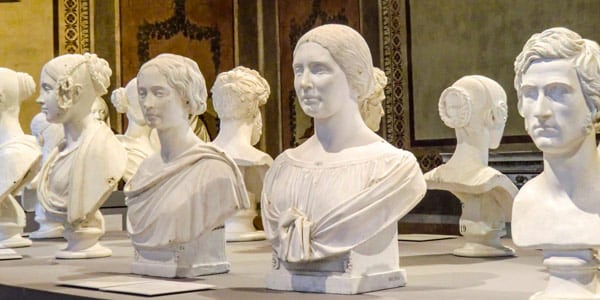
The sculpture collection, largely composed of busts of popes and Roman nobles, includes works by Gian Lorenzo Bernini, Francesco Mochi, Lorenzo Ottoni, Alessandro Algardi, Melchiorre Cafa, and others.
The museum’s paintings and graphic arts span a range of genres and include pieces by Pompeo Girolamo Batoni, Giuseppe Bottani, Ippolito Caffi, Antonio Canova, Giovanni Battista Piranesi, Giuseppe Bartolomeo Chiari, and many others.
Opening Hours, Tickets, Tours
Museo di Roma is open daily except Mondays, from 10:00 AM to 7:00 PM. Last entry is one hour before closing.
The museum is closed on January 1, May 1, and December 25.
Adult ticket: €13
Child ticket: €11
No advance booking required.
Address: Piazza di San Pantaleo, 10 / Piazza Navona, 2
One of Rome’s defining features is that many of its grand architectural landmarks double as museums, housing unique collections of historical and artistic treasures. Palazzo Braschi, in the heart of the Eternal City, is no exception—it invites you to step into the timeless beauty of Italian art and heritage.