 Italy for me From Italy with love


The National Gallery of Modern Art (in its native language, “Galleria Nazionale d’Arte Moderna,” also known as GNAM) is located within the picturesque Roman park Villa Borghese. More than seventy exhibition halls showcase over five thousand works of art.
The National Gallery of Modern Art serves as a natural complement to the Borghese Gallery, which is also situated on the same estate. While the Borghese Gallery focuses on masterpieces from the 15th to 18th centuries, GNAM features an extensive collection of paintings and sculptures from the 19th and 20th centuries.
Page Contents
History
The National Gallery of Modern Art began its journey at the end of the 19th century. The idea of creating a museum to showcase examples of contemporary Italian art had been circulating for some time. Finally, in 1883, the Palace of Exhibitions was built based on a design by architect Pio Piacentini. Until the early 20th century, painters from the newly unified Italy exhibited their works at the Palazzo delle Esposizioni, after which the entire collection was relocated to the more picturesque setting of Villa Borghese.
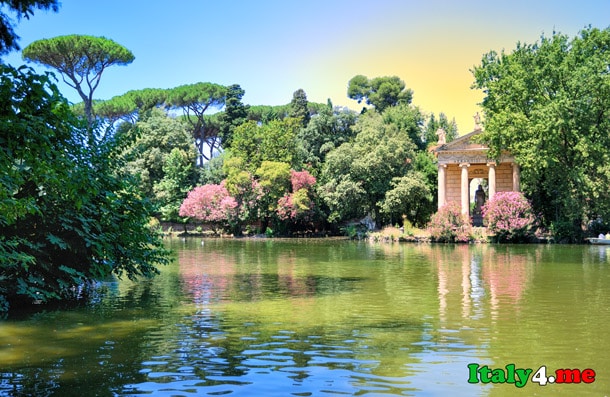
The history of Villa Borghese itself is unique and deserves special mention. In the early 17th century, Italian Cardinal Scipione Borghese, an avid art lover and hereditary prince, developed an expansive park covering 198 acres (80 hectares) of land in Rome.
On the grounds of the villa, he built a mansion that he transformed into a gallery of paintings and sculptures.
Following Scipione Borghese’s legacy, his descendants continued to expand the art collection. In 1903, the famous villa changed hands. The beautiful park, along with all its structures, became the property of the city of Rome.
In 1908, the Roman authorities initiated the construction of a palace to host the celebrations marking the 50th anniversary of Italy’s unification.
By 1911, the project was completed under the careful supervision of architect Cesare Bazzani. As a result, another magnificent building rose within the grounds of Villa Borghese. Four years later, this exhibition hall became the new home of the National Gallery of Modern Art.
Exhibitions and Displays
The very name of the exhibition hall indicates its focus on the works of contemporary Italian masters. Initially, the walls of GNAM were adorned with paintings by artists representing Romanticism, Realism, and Modernism. Portraits and landscapes by Boldini, Palazzi, Vincenzo Caprile, Chellintano, Vittorio Corcos decorated the space. The southern coast of Italy, brilliantly captured by the followers of the Sorrentine school, stands out in particularly vivid colors. Also noteworthy is a unique direction in Italian painting – macchiaioli (derived from the word macchia meaning “spot”).
Italian Impressionism is honored with works by Giovanni Segantini and Previati.
For lovers of abstract art and unexpected color forms, the work of the cosmopolitan artist Gino Severini is a must-see. His futuristic canvases have found homes in museums around the world: France, Britain, the Netherlands, and Hungary. Of course, native Italy was not overlooked; Severini’s selection of works inspires lively debates among gallery visitors. The exhibition of Futurism is further complemented by paintings from Giacomo Balla. 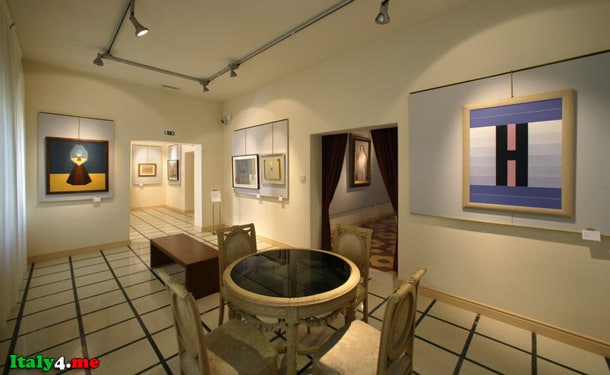
Realism replaced Futurism, and when combined with vibrant political views among the art community, it led to the birth of a new genre – realism infused with a strong element of symbolism. One of the most renowned proponents of Italian realism is the artist and graphic designer Renato Guttuso. One of his most powerful works, “The Crucifixion” (1941), is displayed in the National Gallery of Modern Art. By transposing a biblical theme to the events unfolding in Italy and Europe, the master offers his vision of the oppressed class and the ruling elite.
Italian Sculpture
Among the five thousand exhibits, Italian sculpture occupies a prominent place. As early as the 19th century, art historians claimed that the last genius of this genre was the maestro Giovanni Lorenzo Bernini.
However, the rich collection of modern works disproves this view. Sculptor Antonio Balcico, who worked throughout the 19th century, left behind several magnificent sculptures. “Cleopatra,” reclining on a stone slab, captivates with its shimmering grace. The master continues to celebrate the beauty of the female form in his work “Polygymnia.”
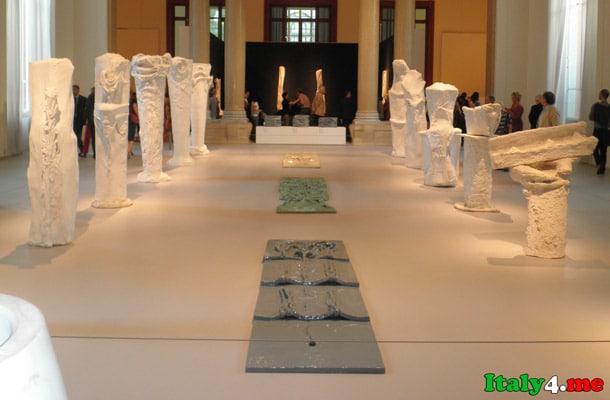
The contrast between power and treachery is vividly portrayed in the sculptural group “Heracles and Lyka” by Antonio Canova. The elegance and innocence shine through in the works of Chimenes. Meanwhile, the maestro Eugenio Maccagnani brings to life in marble female figures that exude vitality and allure (“Like Attracts Like”). Sculptor Paul-Albert Bartolome breathes life into delicate and vulnerable forms in his work “Reunion.”
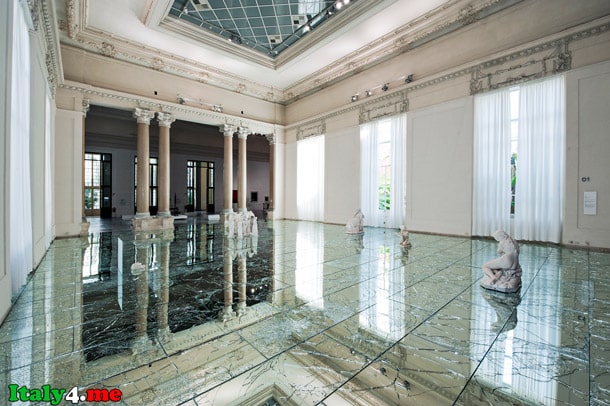
The 20th century introduced ideas that significantly transformed the aesthetic of sculpture. Realism and beauty gave way to exaggerated, at times grotesque, forms.
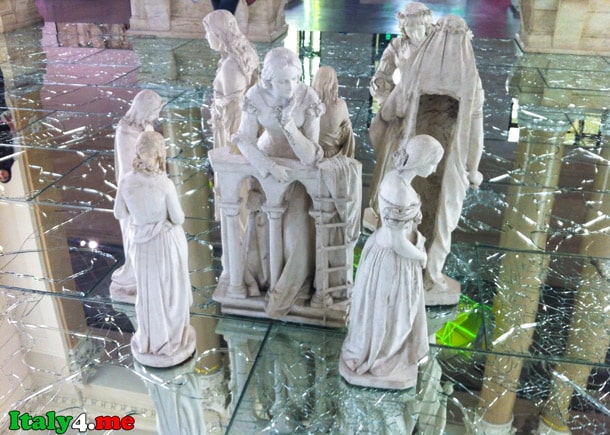
Among his contemporaries, the works of the futuristic artist and sculptor Umberto Bocchioni stand out. His most celebrated pieces include the apocalyptic canvas “The City Rises” and the ultra-realistic sculpture “Antigrazioso”.
Expansion of the Collection
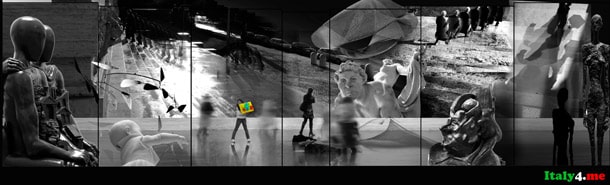
By the mid-20th century, it became clear that the gallery’s popularity extended beyond Italian artists to include international masters as well. The museum’s collection expanded significantly with the addition of works by European and even American creators. Paintings by Monet, Van Gogh, Picasso, Klimt, Matisse, Cézanne, Degas, Georges Braque, Jackson Pollock, Wassily Kandinsky, and Joan Miró enriched the gallery’s offerings. International sculpture was also represented by Henry Moore, Ivan Meštrović, Marino Marini, Giacomo Manzù, and Jesús Rafael Soto.
What to Know Before Visiting
- The National Gallery of Modern Art is located in Rome at: Viale delle Belle Arti, 131
- Official gallery website: www.galleriaartemodernaroma.it;
- Opening hours: The gallery is open from Tuesday to Sunday, 10:00 AM to 6:00 PM. The last admission is 30 minutes before closing time;
- Closed on: Mondays, January 1, May 1, December 25;
- Full-price adult ticket – €9 ($9.70), children’s ticket – €6.50 ($7.00);
You can reach the National Gallery of Modern Art by taxi, or:
- subway – Line A, Flaminio station near Piazza del Popolo. Then walk up Pincian Hill for about 0.6 miles (900 meters);
- by city buses No. 88, 95, 490, 495;
- by trams 2, 3, 19 to the Galleria Arte Moderna stop.