 Italy for me From Italy with love


Marcus Licinius Crassus was an ancient Roman military commander and prominent political figure. He was a member of the First Triumvirate and the wealthiest person of his time.
Page Contents
Biography of Marcus Licinius Crassus
Marcus Crassus rose to fame as the commander who defeated the rebellious slaves led by Spartacus. Exceptionally intelligent and politically astute, he rarely let any opportunity or advantage slip beyond his control. Throughout his career, Crassus served as consul alongside major historical figures, including Gnaeus Pompeius Magnus and Gaius Julius Caesar.
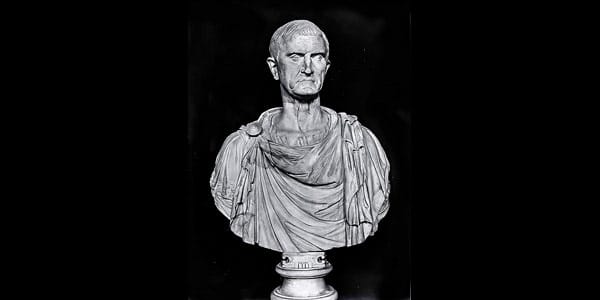
Crassus was known for his cruelty and uncompromising stance toward his enemies. Yet, he was remarkably popular among the Roman populace. As Plutarch observed, his overwhelming desire for wealth often eclipsed nearly all of his other virtues.
Origin
The exact birthdate of Marcus Crassus has not been definitively recorded, but historians estimate it around 115 BCE. Based on Roman naming traditions, he was likely the younger son in the family. In Ancient Rome, the first son was typically named after the father, the second was given common names such as Gaius or Lucius, and the third received the family name. In the Crassus lineage, the name Marcus was customarily given to younger sons.
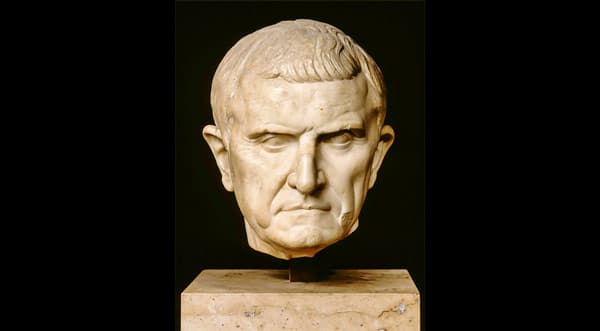
Marcus Crassus was born into a noble and influential plebeian family. Many of his ancestors played prominent roles in Roman public life. His father, Publius Licinius Crassus, served as both consul and censor. The family upheld long-standing traditions: all children, regardless of marital status, were expected to live under their father’s roof.
Early Years
Marcus Crassus received a traditional aristocratic education, with a military career destined for him from birth.
When his father was assigned as a deputy in Spain, he brought Marcus along. The young Crassus spent much of his youth in the Iberian Peninsula, where he used his time wisely. Gifted with a sharp mind and quick wit, he forged many valuable connections that would later support his rise to power. Even in his early years, he demonstrated the ambition and networking skills that would define his future.
After returning to Rome, Crassus took part in the Marsian War alongside his father, remaining active throughout the conflict. He also made a name for himself in the courts, frequently delivering persuasive speeches. According to Marcus Tullius Cicero, a close friend, Crassus’s rhetorical skill stemmed from his deep commitment to oratory during his formative years.
Cicero often remarked that if Crassus had seriously pursued a legal career, he might have become one of Rome’s finest lawyers. However, fate led him down a different path.
Escape to Spain
During a period when Rome faced turmoil under the threat of Gaius Marius and Lucius Cinna, Marcus Crassus’s father, together with his middle son, remained loyal to the Senate and stood in its defense. However, after intense and bloody conflict, the supporters of Marius seized control of the city, inflicting devastating losses on many Roman families.
These events deeply affected the Crassus household. Amid the chaos, Marcus lost the most beloved people in his life—his father and his elder brother (though historians are uncertain which brother perished). Left nearly alone, he fled Rome accompanied only by a few trusted friends and slaves. Choosing Spain as his sanctuary, Crassus spent the next eight months in hiding within a cave.
Believing that patience was the wisest course, Marcus waited, carefully observing the political landscape. He understood that immediate revenge would be futile and likely self-destructive. Only after hearing of Cinna’s death did he emerge from concealment and begin assembling an army that would ultimately grow to around 2,500 men.
Marcus Crassus and Sulla
Upon returning to Rome, Crassus quickly aligned himself with Sulla and joined his campaign. He took part in the civil war that raged between 83 and 82 BCE, siding with those marginalized under the rule of Marius and Cinna—including many who had lost family members or property.
Over time, Sulla began to trust Crassus more, though the young commander remained unaware of his growing influence. Ambitious but inexperienced, Crassus often felt his contributions were overlooked. He envied his contemporary Pompey, whom Sulla publicly hailed as “the Great.” Crassus, by contrast, struggled to build a similar reputation, hindered by his tendency to prioritize personal gain. His speculative nature and financial motives often stood in the way of greater recognition.
Beginning of His Political Career: Crassus and Pompey
As the civil war neared its end, Sulla tasked Crassus with compiling proscription lists in Bruttium (modern-day Calabria), aimed at identifying and confiscating the property of enemies of the regime. Although such assignments were common at the time, one incident damaged Crassus’s standing.
He included an individual on the list whose assets Sulla had taken a liking to. Offended by the misstep, Sulla immediately ceased employing Crassus in official matters.
Despite this, Crassus succeeded in building a vast fortune—largely through usury and opportunistic real estate dealings. By the time of Sulla’s death, he was among Rome’s wealthiest citizens. He soon entered a political rivalry with Pompey, who enjoyed immense respect due to his military triumphs. Crassus, lacking comparable achievements on the battlefield, used his wealth to level the playing field.
With eloquence and charm, Marcus Crassus quickly earned a reputation as a sociable and helpful statesman who possessed deep insight into Roman affairs and was always willing to assist others. Often through ethically dubious methods, he expanded his fortune—buying fire-damaged buildings at bargain prices and trading in highly trained slaves.
Though tensions between Crassus and Pompey persisted for years, they never resulted in armed conflict. Crassus lent money freely across the city but deliberately avoided being labeled a usurer. He never charged exorbitant interest, yet was relentless in demanding repayment when due—a policy that historians believe saved him from potential financial ruin.
In 76 or 75 BCE, Crassus campaigned for the office of praetor. Then in 73 BCE, he was accused of seducing a Vestal Virgin who was a relative of Lucius Licinius Murena. Had the court ruled against him, he would have faced execution—an infamously disgraceful end. However, Crassus successfully persuaded the court that his interactions with the priestess were purely motivated by a desire to purchase her property.
The Spartacus Rebellion
In 74 BCE, a major uprising was sparked by a group of gladiators—most of them former warriors captured in battle. Their leader was a Thracian named Spartacus.
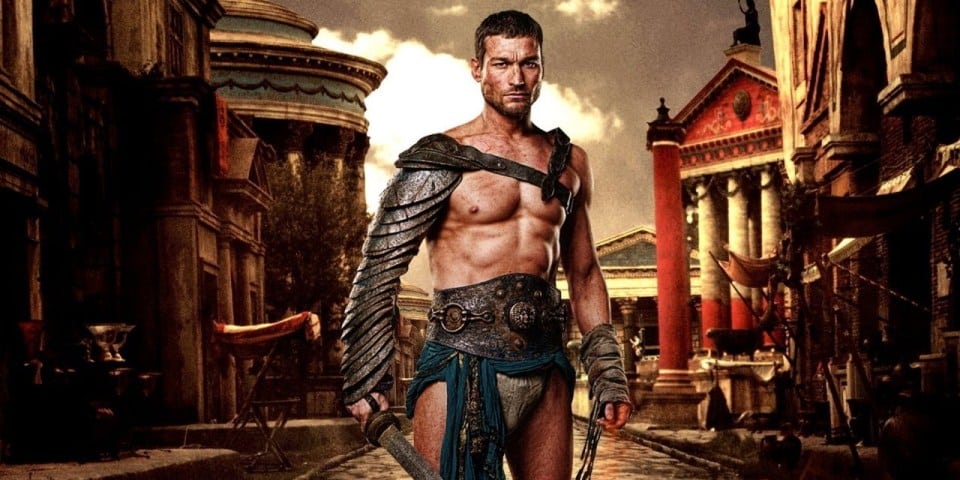
The rebels initially evaded Roman forces by taking refuge at the base of Mount Vesuvius. There, they outmaneuvered and ambushed a pursuing detachment, defeating a significant number of soldiers and seizing their weapons and supplies.
Although Crassus’s forces feared Spartacus, Marcus was resolute—he was a slave owner himself and viewed Spartacus as a personal enemy.
Driven by ambition and fearing that Pompey would arrive and steal the glory, Crassus acted swiftly to crush the rebellion. The decisive confrontation took place near the River Silarus, where Crassus ultimately triumphed. Around 6,000 captured slaves were taken alive, while Spartacus himself perished in battle. At Crassus’s command, all surviving captives were crucified along the Appian Way (Via Appia) as a brutal warning to others.
The First Consulship
Reforms
During his term as consul, Marcus Crassus introduced several key reforms:
- Restoration of the powers of the plebeian tribunes to the level they held prior to Sulla’s constitutional reforms.
- Judicial reform, reorganizing the composition of specialized courts into three equal groups: one-third senators, one-third equestrians, and one-third treasury tribunes (wealthy citizens outside the equestrian order).
- Reestablishment of the office of censor. Many of the newly appointed censors were allies of Crassus and Pompey, which led to a sweeping purge of the Senate—at least 64 senators were expelled.
Censorship
Crassus showed little interest in governing a province, and in 69 BCE, he returned to private life. Despite his influence, he often refrained from taking part in the most pressing matters of the time.
Details about his activities between his consulship and 65 BCE remain sparse, but sources agree that he continued to exhibit his distinctive political style.
In 65 BCE, Marcus Licinius Crassus himself assumed the office of censor. However, his tenure was marked by conflicting accounts. According to Plutarch, he neglected many of his responsibilities. Other historians claim he was active, though his efforts brought few lasting results.
During the census, Crassus attempted to include the population of Transalpine Gaul, especially its northern regions. He also proposed honoring the will of the murdered Egyptian king, Ptolemy XI, who in 80 BCE had declared Egypt a Roman possession. This echoed the precedent set by the will of Attalus III, King of Pergamon.
Triumvirate
In 60 BCE, Julius Caesar returned from Spain and sought to run for consul. When denied the right to campaign in absentia, he formed the First Triumvirate—a political alliance between himself, Pompey, and Marcus Crassus. The alliance was Caesar’s idea; he believed that if he joined forces with one, the other would inevitably become an enemy, so unity was the strategic choice.
Caesar secured the consulship largely through financial backing from Crassus, who in return was appointed to the agrarian commission. Crassus succeeded in reducing the rental payments owed by publicans (tax contractors) by one-third.
At the same time, Caesar received command of Transalpine Gaul. Crassus and Pompey subsequently ensured the addition of Narbonese Gaul to his jurisdiction.
Marcus’ Family and Personal Life
Marcus Crassus is believed to have married Tertulla, the widow of his deceased brother, Publius. Some historians claim she was also romantically involved with Julius Caesar. The couple had two sons, one of whom may have been Publius’s biological child. Their relationship was said to be affectionate, and they were regarded as an exemplary Roman couple.
Last Years of Crassus’ Life
No man in the Crassus family lived beyond 60, and Marcus was no exception. He met a tragic end in 55 BCE during the ill-fated Parthian campaign. His severed head and hand were sent as trophies to the Parthian prince Pacorus. Crassus died in the very year he turned 60.
Interesting Facts about Marcus
Although many aspects of Marcus Crassus’s life remain obscure, several fascinating details stand out:
- Early in life, Crassus showed greater aptitude for business than for law or military command. Some historians speculate that, had he not come from a noble family, he would have become a merchant.
- He not only acquired land and slaves but also trained the enslaved in specialized trades to resell them at higher value.
- He personally funded an army of 2,500 soldiers, even melting down his own gold to forge weapons and armor.
- To gain the public’s favor after becoming Rome’s richest man, he hosted a grand feast with over 10,000 tables—open to all residents of Rome, regardless of status or origin.
- Crassus was driven by vanity and the desire to leave a lasting legacy. He saw both Caesar and Pompey as rivals and constantly sought recognition as Rome’s foremost military leader.
Quotes
Among the most renowned quotes attributed to Marcus Licinius Crassus are the following:
- “Greed is a concept that can only be thrown around by envious people.”
- “The House of Crassus never bows to anyone.”
- “One person’s misfortune is a direct opportunity for another.”
- “A person in this world has many enemies, but doubt is the greatest and most formidable.”
- “Nothing ensures order in a state like dictatorship.”
- “If the Gods didn’t exist, I would have invented them, and if Rome didn’t exist, I would have built it.”
- “I knew how to skillfully make money, but equally skillfully, I knew how to lose it.”