 Italy for me From Italy with love

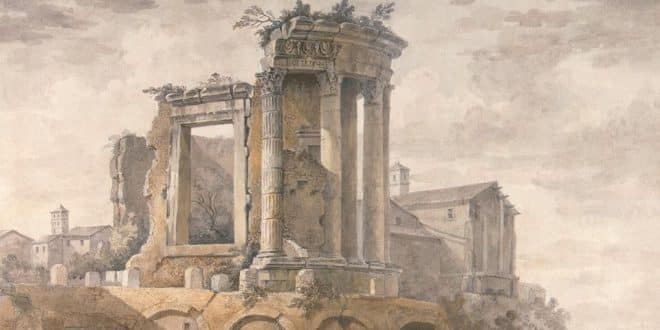
The Temple of Vesta (Tempio di Vesta) in Tivoli, now consisting only of a rotunda and fragments of walls, attracts both connoisseurs of ancient architecture and lovers of nature and scenic views. Nearby stand the more poorly preserved Temple of the Sibyl (Tempio di Sibilla) and the renowned Sibilla restaurant.
Page Contents
History
The temple was built in the 1st century BC on the hill of the ancient acropolis of Tibur, as Tivoli was once known. Etruscan rule and Greek artistic traditions greatly influenced local art, leaving their mark on architecture as well. The foundation of the structure seems to grow out of the rock, continuing it harmoniously, and rises toward an elegant circular rotunda supported by ten Corinthian columns (originally there were eighteen).
The frieze is adorned with reliefs depicting bull skulls (a nod to the Roman tradition of sacrifice) and heavy garlands hanging from them. Encircled by the rotunda is the cella—the core of the entire structure—where rituals were performed. The dome of the rotunda had an opening to allow smoke from the sacred fire, which burned here in honor of Vesta, to escape.
The entrance to the cella, following Etruscan custom, was cut only on one side of the building. Nearby, the picturesque waterfalls of the Aniene River contrast with the sanctuary’s heavy walls.
The Temple of Vesta preserved the name of its builder—an inscription on the architrave reveals he was Lucius Gellius. It is unknown to whom the temple was actually dedicated—Vesta, Hercules, the prophetess Albunea, or the local hero Tiburnus. Close by stands another unidentified sanctuary—presumably the Temple of the Tiburtine Sibyl, a prophetic maiden said to have lived in the area. Apart from the rectangular frame and two Ionic columns, nothing of this building remains, and it pales in comparison to its round neighbor. Its walls were once decorated with paintings that have not survived.
Later History
In the 4th century, Roman Emperor Theodosius (Flavius Theodosius) ordered the Temple of Vesta to be closed. This marked the beginning of its period of neglect. Later, the building was converted into the Catholic church of Santa Maria della Rotonda, a transformation that significantly contributed to the ancient monument’s preservation. However, in the 16th century, the church ceased to function, and all Christian additions were removed. Interestingly, the Temple of the Tiburtine Sibyl also housed a church dedicated to Saint George for an extended period.
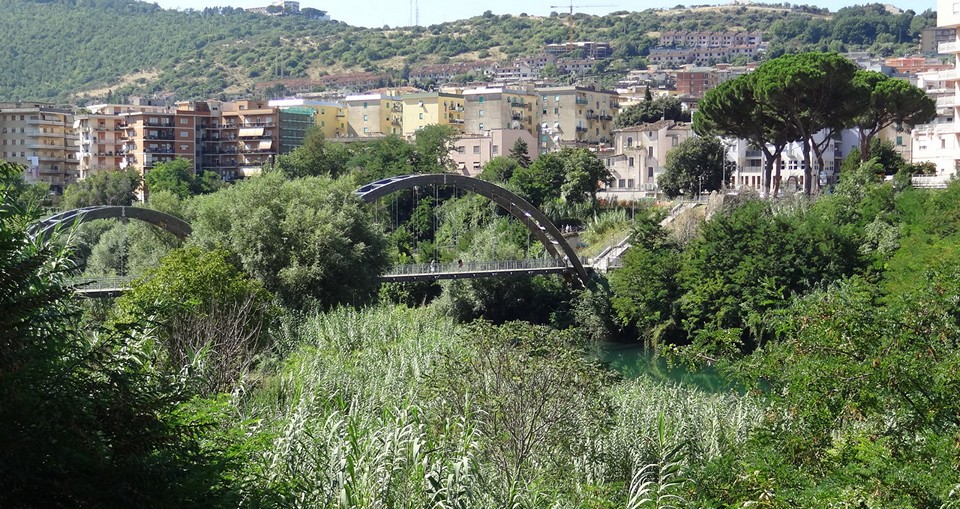
Since then, neither of these fascinating monuments of ancient architecture has undergone further restoration. However, the surrounding area has been restored. By order of Pope Gregory XVI (Gregorius PP. XVI), restoration work was carried out in 1835 to repair the Aniene River floodplain, which had been damaged by the 1826 flood. Today, visitors can admire the beautiful grottoes and waterfalls from the hills.
Some buildings beyond Italy were inspired by the Temple of Vesta, including a replica in the Royal Botanic Gardens in Kew (United Kingdom), Mussenden Temple in Downhill (Northern Ireland), and the Temple of Love in the Petit Trianon (France).
Location
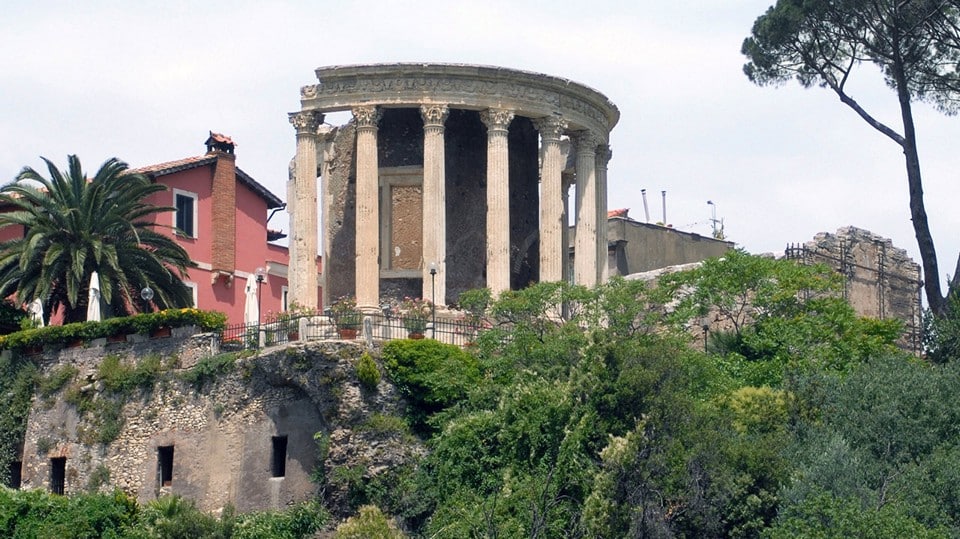
The temples are part of the park complex of Villa Gregoriana in Tivoli. From here, it’s a 15-minute walk to another Tivoli highlight, Villa d’Este. Tivoli is a wonderful destination for a countryside getaway, with plenty of charming restaurants scattered around.
Be sure to read my review of the Sibilla restaurant, which overlooks the waterfall and is located right next to the temple—I highly recommend it. Here’s a handy guide on how to get to Tivoli.