 Italy for me From Italy with love


Caserta is an Italian city that has become a popular tourist destination thanks to the legendary Royal Palace of Caserta (Reggia di Caserta), often called the “Versailles of Italy.” This architectural masterpiece is the largest building constructed in Europe during the 18th century.
Page Contents
History
The origins of Caserta remain a mystery to historians. A settlement existed here long before the arrival of the Romans. When the Lombards conquered the area in the 8th century, they laid the foundations of the future city. The central tower served as a watchpoint, and today, this historic structure houses the Prefecture Palace.
By the 11th century, the city had come under Norman control. In 1268, the Angevin dynasty took over, and by 1734, following the War of the Polish Succession (1733–1735), Caserta became part of the domain of the junior Bourbon branch—the Neapolitan Bourbons (Borbone di Napoli). This period marked the peak of Caserta’s development. In 1750, Charles VII of Naples decided to build a new royal residence. He intended to place it near Naples but far enough from the sea to keep French warships from disturbing the royal family.
Charles VII wanted the new palace to surpass all others in Europe, especially France’s Versailles. After a long search, he chose architect Luigi Vanvitelli to lead the project.
Vanvitelli arrived in Caserta only in 1751. He worked on the palace blueprints for over six months, completing them by November. The foundation stone was laid in January 1752, on Charles VII’s birthday. Work on the gardens began a year later. Recognizing the grandeur of the project, Vanvitelli enlisted the help of promising Roman architects.
According to preserved records, the construction workforce included:
- 458 guards,
- Numerous local residents,
- 165 convicts,
- 245 “Turks.”
In fact, the term “Turks” referred to the religious background of enslaved laborers, most of whom were brought from North Africa. The project was expected to be completed in 10 years, but when Charles VII left Italy in 1759, the responsibility for construction passed to his successors. Vanvitelli died in 1779, and his son, Carlo Vanvitelli, took over the work.
The palace became habitable by 1780, though construction continued until 1845.
You might also enjoy reading about the Royal Palace in Naples.
Structure and Appearance
The Palace of Caserta is designed as a rectangle enclosing four spacious courtyards. These are divided by cross-shaped passageways, with archways in the center of intersecting walls allowing access from one courtyard to another. The façade stretches 810 feet (247 meters), while the adjoining sides measure 607 feet (185 meters).
The palace has five floors and rises to a height of 118 feet (36 meters). The entire complex contains about 1,200 rooms, though only half are open to visitors.
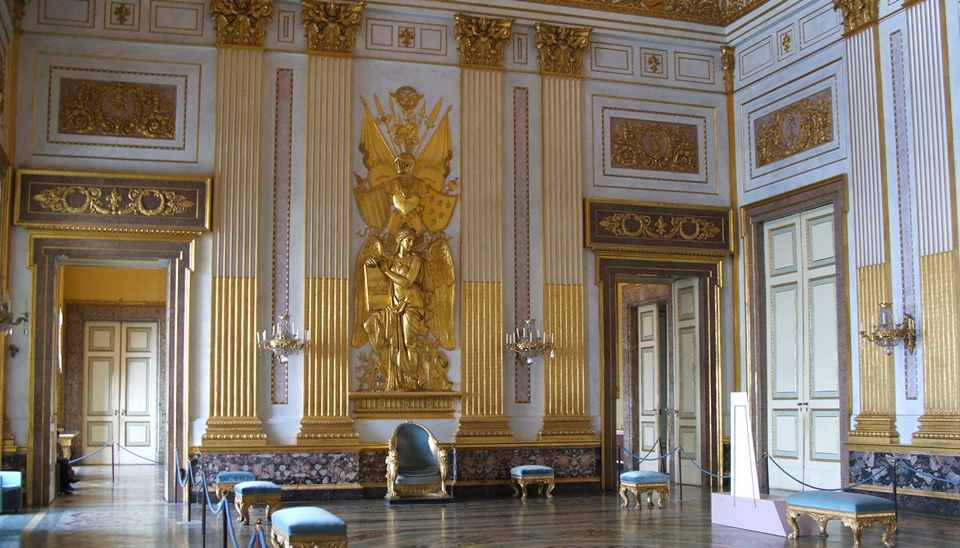
The main attractions within the complex include:
- The Territorial Museum,
- The Opera Museum,
- The Art Gallery.
In the central hall, visitors are welcomed by a grand symmetrical marble staircase. The right side leads to the Palatine Chapel (Cappella Palatina), while the left opens to a series of expansive halls. This section of the palace elegantly blends Baroque and Neoclassical styles. From the top of the staircase, you can see the opposite wall, adorned with three ornamental niches.
By the time construction neared completion, the Baroque style had fallen out of fashion, ending the imitation of Versailles. The newer halls were thus designed in the Empire style.
We also recommend reading about the Royal Palace of Venaria in Turin.
Park and Botanical Garden
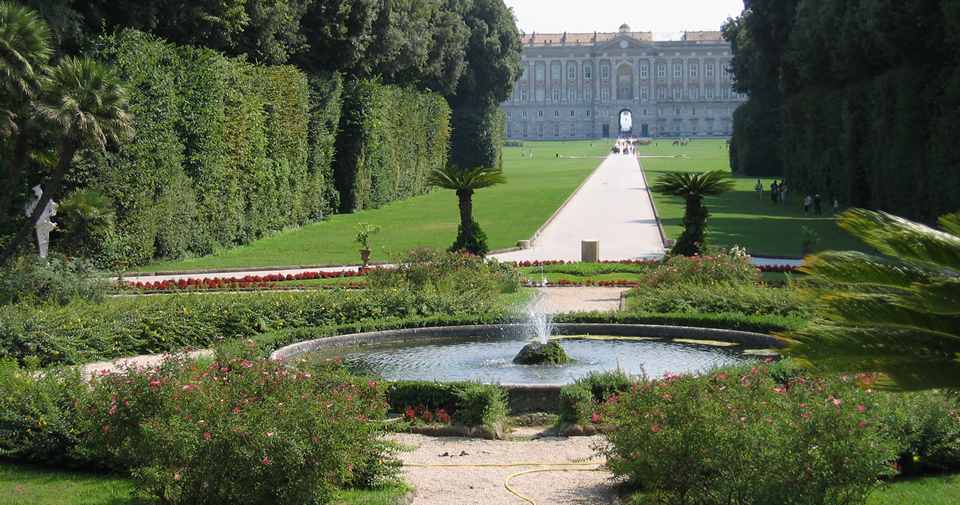
Just like at Versailles in France, a grand park complements the palace. It features a cascading fountain system, shaded pathways, lush gardens, and terraced landscapes. The Caserta Park spans 296 acres (120 hectares). Stretching 1.9 miles (3 kilometers) northward, the park descends along a series of fountains and tree-lined avenues. It also includes a botanical garden, designed in the English style by Carlo Vanvitelli and John Graefer.
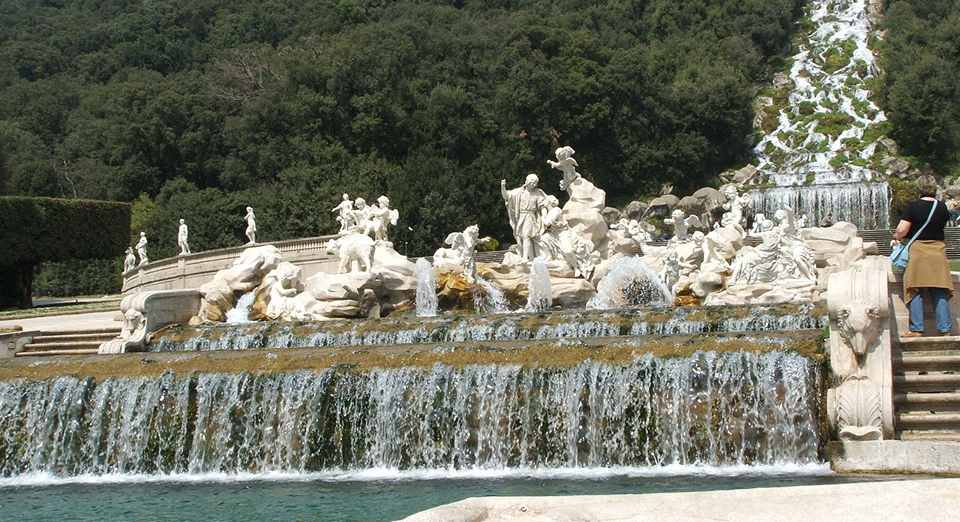
Among the highlights are the fountains of Diana and Actaeon, the Dolphins, Venus and Adonis. Sculptural decorations throughout the park lend it a distinct character.
The park is divided into two main sections:
- A small amphitheater area lies directly in front of the palace,
- Farther north, a landscape garden in the English style was created during the time of the Neapolitan Bourbons.
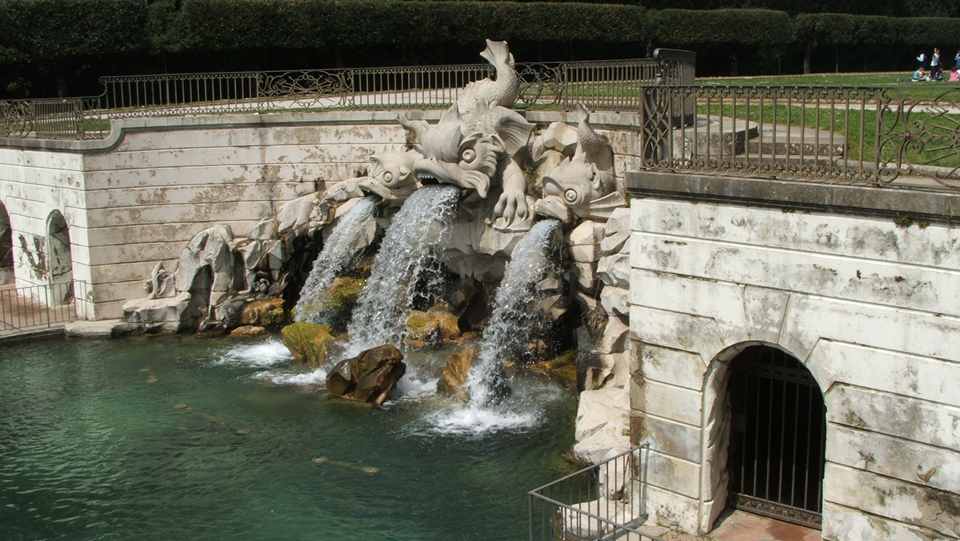
Following Luigi Vanvitelli’s death, his son Carlo aimed to preserve his father’s vision for the park. As the grounds expanded northwest, construction costs soared, leading to a reduction in the number of fountains—from 19 to 6.
A network of pathways leads visitors to a small hexagonal tower known as the Castelluccia, a miniature castle where the king would rest after hunting. West of the parterre lies the Old Forest (Bosco Vecchio), which predates the palace. North of this forest, a large fishpond was created.
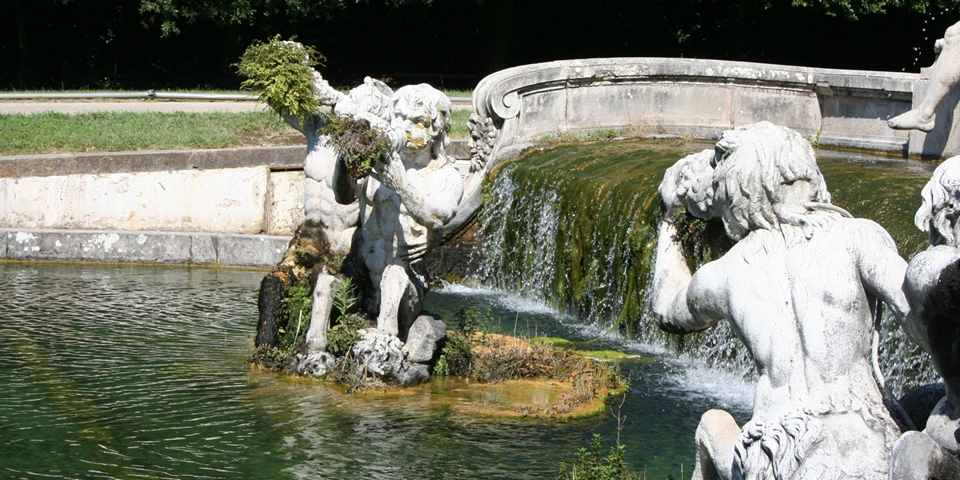
Beyond the parterre lies a cascading fountain series called the Margherita, which is relatively simple in design. It consists of four sequential basins, ending with the Grand Cascade. Water flows from the aqueduct and plunges 269 feet (82 meters). At the base is a large pool surrounded by a mythological scene depicting Diana preparing to bathe with Actaeon and the nymphs.
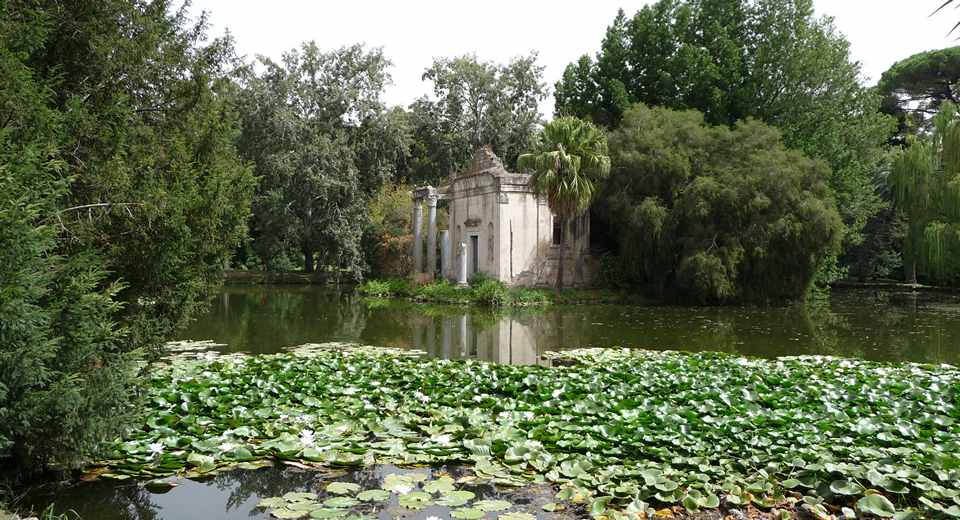
Heading eastward, the park paths lead to the English Garden (Giardino Inglese). Plants for this section were sourced from across the kingdom. At the northernmost edge of the park stands the Apiary (Aperia). During the French period, this site was used for beekeeping, which explains the origin of its name.
How to Get There
Caserta is located about 25 miles (40 kilometers) north of Naples. You can reach it independently by bus, train, or car, or you can visit the palace as part of a private guided tour from Naples.
From Naples
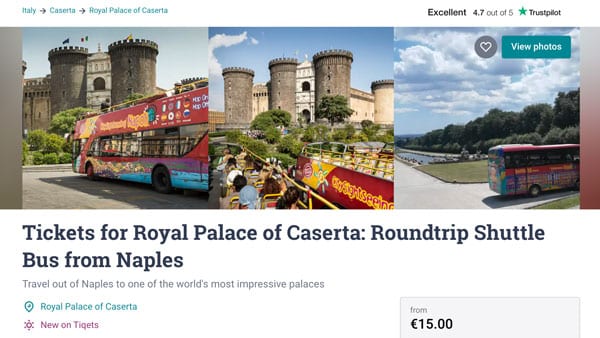
Buses depart daily from Naples at the following locations:
- Piazza Municipio – Largo Castello: 9:30 AM
- Piazza Garibaldi – Hotel Terminus: 9:45 AM
Travel time is 45 minutes, with around 4 hours of free time in Caserta. You’ll return to Naples at approximately 3:30 PM. There’s no need to print your ticket—just show the booking code on your phone to the driver. Super convenient.
For a budget-friendly option, take the train from Naples’ Napoli Centrale station to Caserta. Trains run every 30 minutes, and the journey takes 46 minutes. Tickets cost €3.10.
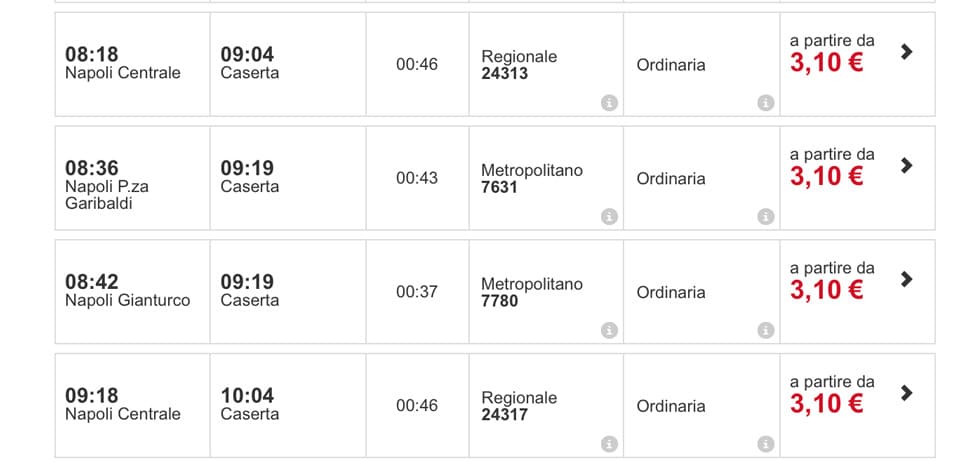
The train station is only about 1,640 feet (500 meters) from the palace.
From Rome
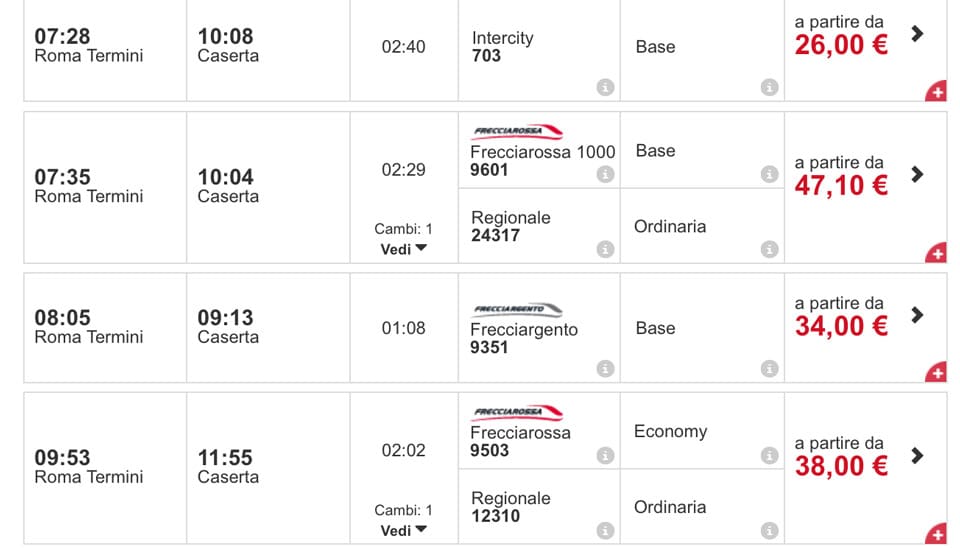
Trains from Rome to Caserta depart from Termini Station. The trip takes about 1 hour and 8 minutes, with ticket prices ranging from €34 to €47.10. Booking in advance can save you significantly. We recommend purchasing train tickets and checking up-to-date schedules exclusively via the official Trenitalia website.
If you’re traveling by rental car, parking near the palace costs €1 per hour.
Fun Facts
- Since 1997, the palace, park, and botanical garden have been UNESCO World Heritage Sites and are protected as part of the cultural heritage of humanity.
- The palace’s stunning interiors and exteriors have been featured in modern cinema, including in “Star Wars,” “Mission: Impossible III,” and “Lady Hamilton.”
- It houses an impressive gallery of 18th-century paintings, the royal apartments, and a court theater.
- The building also contains exhibits from the Opera Museum and the Territorial Museum.
A standout feature of the interior is the grand staircase, located near the Palatine Chapel.
Admission
The park is open daily from 8:30 AM to 7:00 PM. During the winter season, it closes at 3:00 PM. The palace is closed on Tuesdays, as well as December 25 and January 1. A full-access ticket costs €14 (€6 for children) and includes entry to the palace, gallery, royal apartments, English Garden, and the park. A palace-only ticket is available for €9.
You can check current prices on the official website of the Royal Palace: www.reggiadicaserta.beniculturali.it
There are usually no long lines, but tickets can be purchased online slightly above face value via tiqets.com.
Hotels
When visiting the Royal Palace of Caserta, you can stay at one of the nearby hotels. Room rates vary based on location and accommodation type (3-star, 4-star, or B&B).
3-Star Hotels
Hotel Amadeus
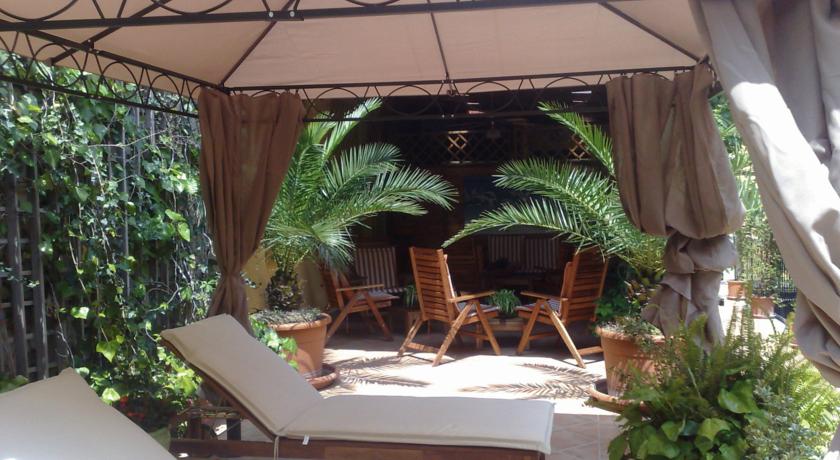
The Hotel Amadeus is just 650 feet (200 meters) from Caserta Train Station and less than 1,640 feet (500 meters) from the Royal Palace. Each room has a private bathroom, and breakfast is served daily.
Hotel Caserta Antica
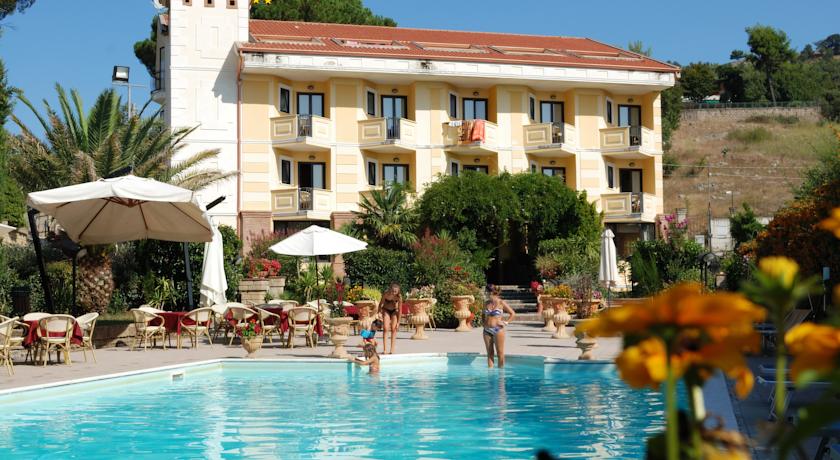
Hotel Caserta Antica is located on a hillside between two medieval villages, about a 15-minute drive from Caserta. Guests can enjoy a large outdoor swimming pool.
4-Star Hotels
Grand Hotel Vanvitelli
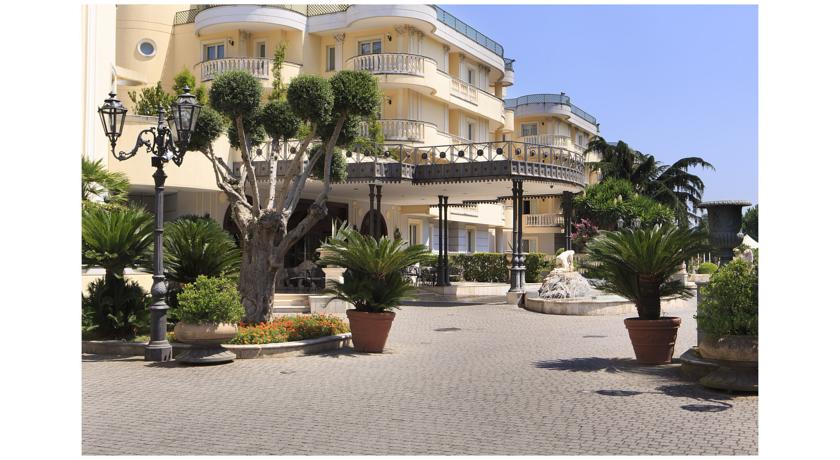
The Grand Hotel Vanvitelli is located near the airport, with a 5-minute drive to the city center. Baroque-style rooms are spacious and elegant, and there is a rooftop pool surrounded by greenery. This historic building also features minibars and satellite TV, with many rooms offering large balconies. The hotel’s pool is nestled in a garden with fountains.
Hotel Royal Caserta
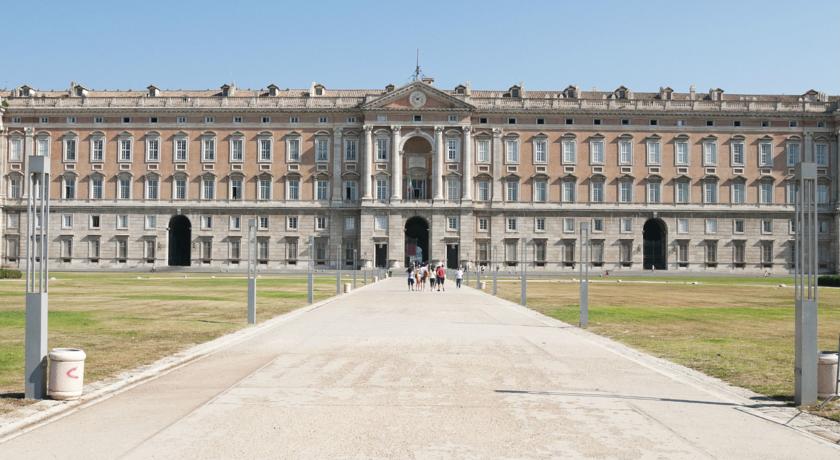
The Hotel Royal Caserta is practically next door to the Royal Palace and just 165 feet (50 meters) from the train station. Parking is available for €10 per day.
B&Bs and Apartments
B&B Al Dosello
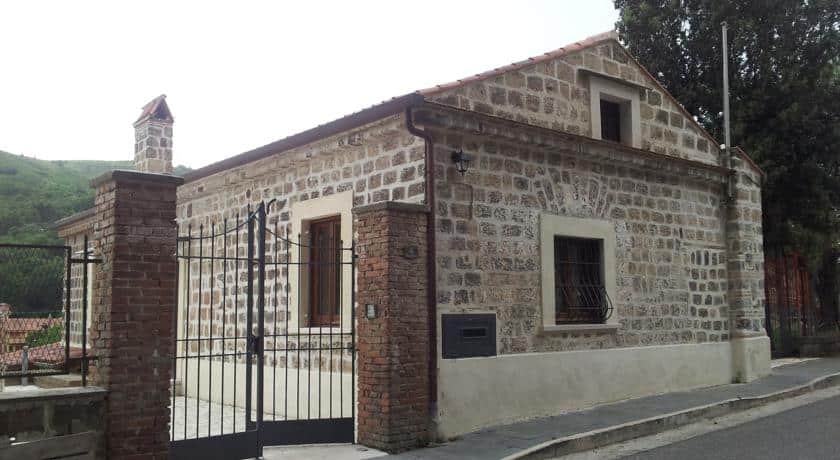
The Al Dosello B&B is located about 3 miles (5 kilometers) from the Royal Palace. Guests enjoy free parking and barbecue facilities.
B&B Montalbano
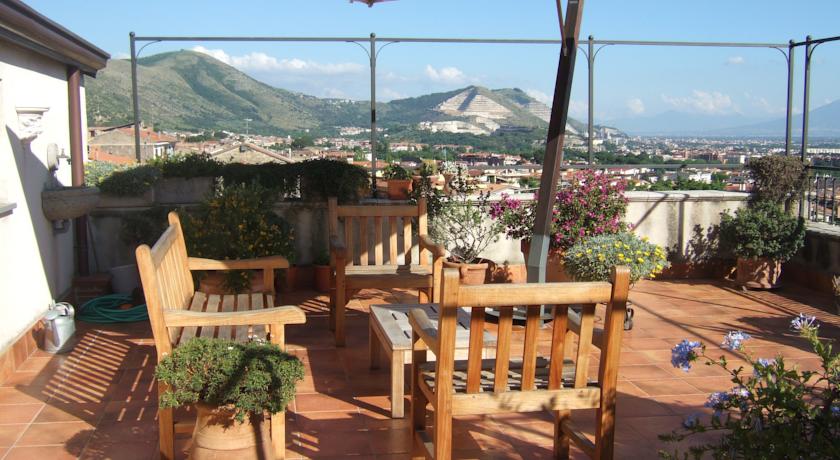
The cozy Montalbano B&B offers a terrace with panoramic views of Mount Vesuvius. The comfortable, air-conditioned apartments include free Wi-Fi and stunning vistas—perfect for any traveler.
Outlet Shopping
Italian-style shopping is an essential part of any trip to Italy—just like stopping at a local pizzeria. Caserta is a true shopping haven. The local LA REGGIA DESIGNER OUTLET features luxury brands like Patrizia Pepe, Calvin Klein, Prada, and Valentino. It’s located 5.5 miles (8.8 kilometers) from the palace—see the map route here.
The Centro Commerciale Campania shopping center just across the street is so stylish, it could rival the Royal Palace itself.