 Italy for me From Italy with love


The beautiful Sicily reveals its secrets. On Favignana, the largest island of the Aegadian archipelago, the Tuna Museum has opened. Now tourists can learn what many generations of local residents dedicated their lives to and how the legendary “mattanza” took place.
The sea around Favignana (Favignana) is always crystal-clear. It’s no wonder that the Red Cove (Cala Rossa) on the island is ranked among the top ten best beaches in Italy. Even near the port, where at dawn and dusk, fishermen’s boats fill with redfish, lobsters, squid, mullet, and sea bass. As soon as tourists step off the ferry onto the largest of the three islands in the Aegadian archipelago (there’s also Levanzo and Marettimo), the first word that catches their eyes and ears is “tuna.” Here, you’ll find the “House of Tuna,” “Tuna Gastronomy,” “Tuna-2011,” and a bar serving tuna-based aperitifs. However, the industrial tuna fishing that fed the local residents for several centuries ceased seven years ago.
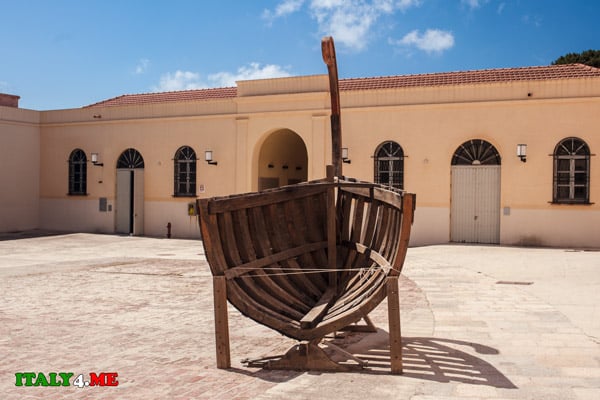
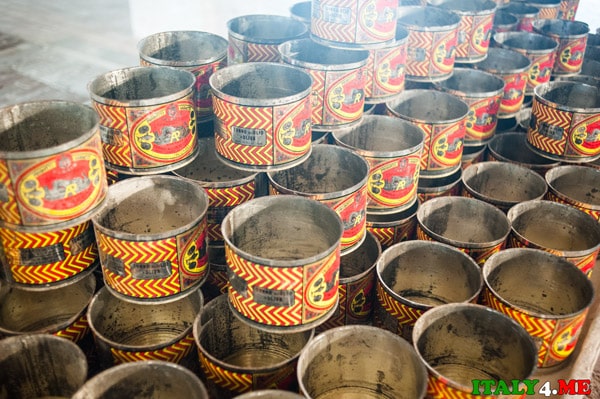
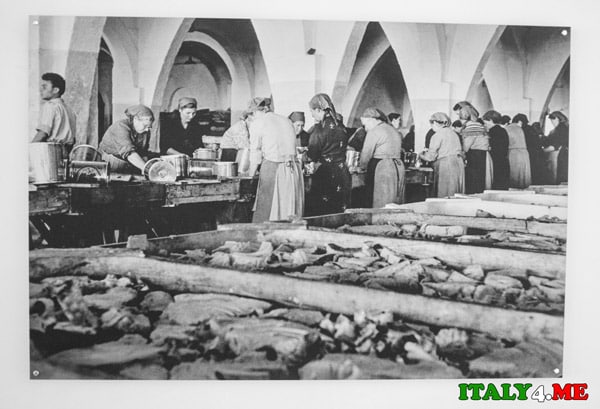
Today, the Tonnara Florio (the tuna fishing and processing factory, Tonnara Florio), now transformed into a beautiful museum, was once the most modern and successful tuna processing enterprise in southern Italy.
It was built in the mid-19th century by Senator Ignazio Florio, a member of a respected Sicilian entrepreneurial family. Ignazio organized a production cycle in his new factory, which employed several hundred people. He not only engaged almost all the island’s inhabitants in tuna fishing but also turned it into a tradition that became part of local folklore.
The tuna fishing process is called “mattanza” (mattanza), from the Spanish word “mactare,” meaning “to kill.” Every day, fishermen engaged in fierce battles, often one-on-one, with the sea creatures. The mattanza embodied features of a collective ritual, involving the entire population and infusing it with ritual songs asking for mercy or protection from the evil eye. Mattanza preached social unity as the basis for survival: to live, people had to form groups and establish social bonds.
Tuna fishing requires meticulous preparation: multiple specially equipped boats and barges would set out at once, each with a specific task. Dozens of anchors, hundreds of meters of nets, and countless people, each with a role in a well-orchestrated and carefully planned spectacle. 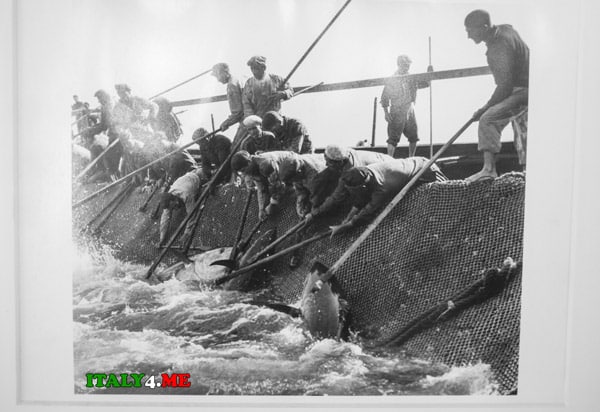
Mattanza is not just a hunt; it’s a method of fishing that employs cunning tactics and strategies. Tuna fishing isn’t just about a fisherman’s skill and talent—it requires precision in executing the death mechanism. A maze of nets would be built in the sea, through which unsuspecting fish would swim until they reached the so-called “chamber of death” from which there was no escape.
Before the mattanza began, rituals and songs were performed to appease the gods and ask for their favor. The person responsible for communicating with the gods and coordinating the mattanza was called the “rais.” He was the leader of the operation, controlling the process from start to finish. There was something legendary and grand about the mattanza, a breathtaking experience where all participants in the fierce battle became heroes beyond life and death. This traditional mattanza was described in the Odyssey and traces its roots back to practices of the ancient Phoenicians and Arabs.
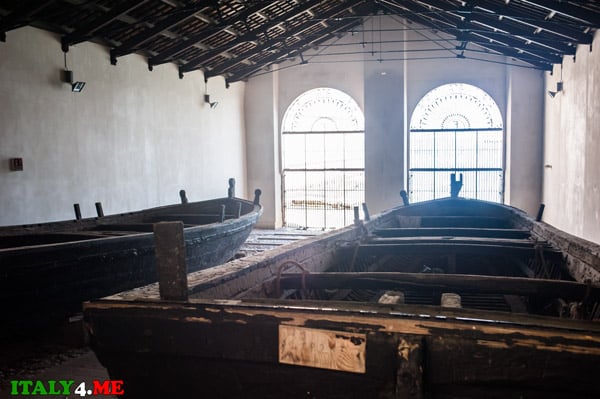
The last real mattanza took place in 2007. Various factors contributed, including the decline in fish numbers, as Japanese fishermen were catching tuna in the Atlantic before they reached the Mediterranean. For a time, “demonstration” mattanzas were held for tourists, but by 2009, even these ceased.
However, in August 2013, after renovation, the Tonnara Florio was reopened as the so-called Tuna Museum (officially “Ex Stabilimento Florio a Favignana”).
Visitor Information
Address: Via Amendola, 29, 91023 Favignana – near the ferry dock.
Opening hours: daily from 10:15 AM to 1:15 PM and from 4:15 PM to 7:15 PM.
Admission fee: €4, free for those over 65.
Guided tours are free in Italian.
Tour times: 10:30 / 11:15 / 12:00 / 16:15 / 17:30