 Italy for me From Italy with love

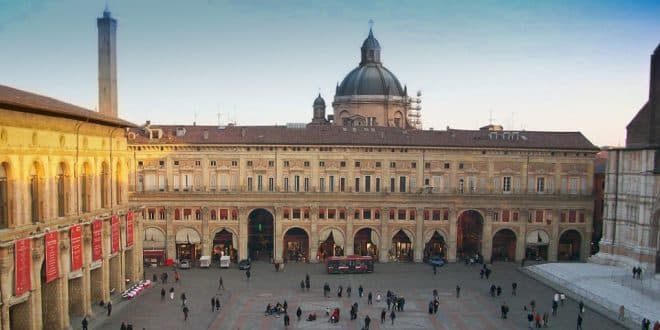
Piazza Maggiore is the largest square in Bologna. It’s home to the city’s most important buildings, including the Palazzo del Podestà, the Palazzo Comunale, and Bologna’s largest church—the Basilica of San Petronio (La Basilica di San Petronio).
Page Contents
History
Piazza Maggiore was established in the 13th century and quickly began filling with administrative and civic buildings. Development continued for several centuries, finally concluding in the 16th century. The square measures 377 feet (115 meters) long and 197 feet (60 meters) wide. During the Middle Ages, for two or three centuries, the entire piazza served as a bustling market.
Originally known as Curia Communis or Platea Communis, the square received its current name only in the 16th century.
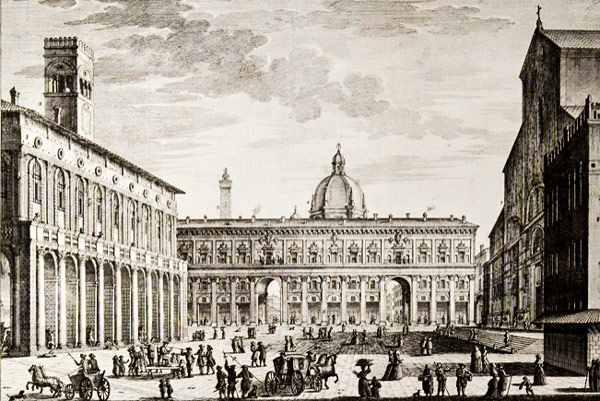
Between the expulsion of the Austrian army and 1944, the piazza was briefly renamed in honor of Italian King Vittorio Emanuele II. However, in early 1945, it officially returned to its original and now-famous name.
Over the centuries, the piazza has undergone many changes but still preserves much of its Renaissance character from the 15th and 16th centuries. Today, Piazza Maggiore remains vibrant at all hours. Under the arcades of the palazzi, you’ll find charming cafés with terrace seating, souvenir shops, and hotels.
The square is a central venue for citywide celebrations and festivals—it hosts grand public gatherings and fireworks displays. Piazza Maggiore also serves as a major transit hub, connecting to Bologna’s busiest streets, such as Via Caduti di Cefalonia and Via Altabella.
Recommended reading: Piazza del Nettuno
Architecture
The most prominent building on the square is the Palazzo Comunale, which today houses the city’s municipal government. It includes the Palazzo d’Accursio, built in 1290, which once served as the town hall and now hosts an art museum.
At that point, Palazzo d’Accursio was expanded to include office space. In 1336, it became the residence of the city’s elders and later temporarily housed the city government. Thanks to the work of architect Fioravanti, the structure was restored after a major fire in 1425, and a magnificent clock tower was added—dramatically transforming the building’s appearance.
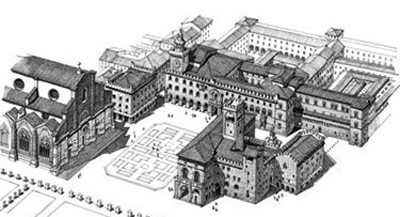
On the eastern side of the square stands the Palazzo dei Notai, constructed between 1384 and 1422 as the seat of the Notaries’ Guild. It was designed by architect Antonio di Vincenzo. On the northern edge is the Palazzo dei Banchi, which in the Middle Ages served as the city’s banking hub. It was the last building constructed around Piazza Maggiore, completed at the end of the 16th century. Its façade features 15 arches, two of which lead to Via Clavature and Via Pescherie Vecchie. Today, the building houses shops, cafés, offices, and apartments.
Behind the central part of the Palazzo dei Banchi, you’ll find several of Bologna’s other landmarks, including the Civic Archaeological Museum (Museo Civico Archeologico di Bologna), the Sanctuary of Santa Maria della Vita (Santuario di Santa Maria della Vita), and the historic Mercato di Mezzo market.
The unfinished façade of the Basilica of San Petronio also faces Piazza Maggiore.
Palazzo del Podestà
Palazzo del Podestà is located next to Palazzo d’Accursio and directly across from the Basilica of San Petronio. On its opposite side, it is connected to Palazzo Re Enzo, which faces the adjacent Piazza Nettuno. 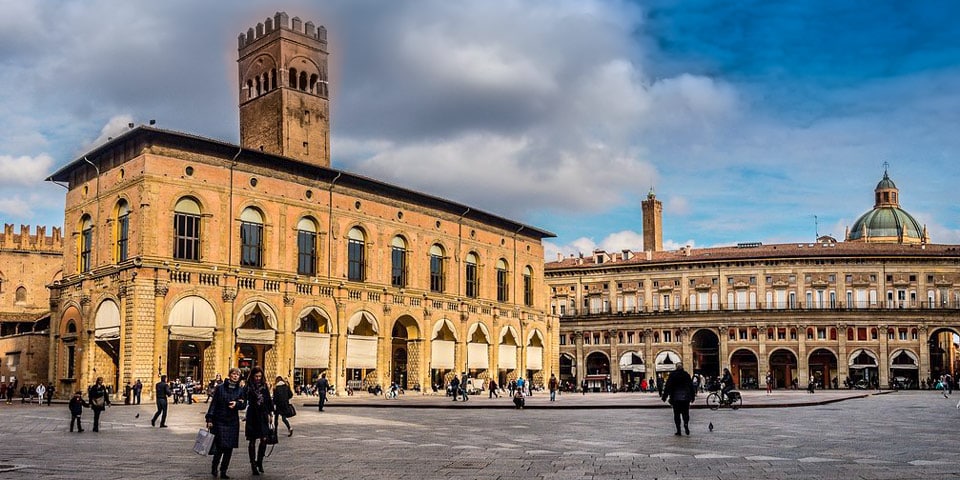
Construction of the palace began in the year 1200. It was originally intended as the residence of the city’s governing authorities, but from 1581 to 1767, most of its halls were used as a theater. In the Middle Ages, the lower levels were occupied by artisan workshops—today, they house upscale boutiques.
You can explore the interior of the Podestà only during exhibitions or special events.
Palazzo del Podestà appears more architecturally unified than the Palazzo Comunale. Its façade was originally planned in the Gothic style, but by the 15th century, it had been remodeled in the Renaissance style. This transformation was carried out in 1453 by architect Ridolfo Aristotele Fioravanti, commissioned by Giovanni II Bentivoglio.
Additional changes to the building’s appearance were made in the 18th century. Between 1837 and 1842, the portico was redesigned, and in 1887 the façade underwent restoration. Even in the 20th century, the palace continued to be refined, with architect Alfonso de Carolis overseeing further enhancements.
During the Middle Ages, a small wooden bell tower was attached to the palace. It was later replaced by a square-based brick tower, now known as the Voltone del Podestà. In 1525, four terracotta statues of Bologna’s patron saints—Petronius, Francis, Dominic, and Proculus—were added to the palace’s upper façade.
Be sure to check out the guide to Bologna’s top attractions before your visit.
Palazzo Comunale
In the Palazzo Comunale, the city hall operated during the Middle Ages. The building stands out among the other structures on the square with its elegant and noble appearance.
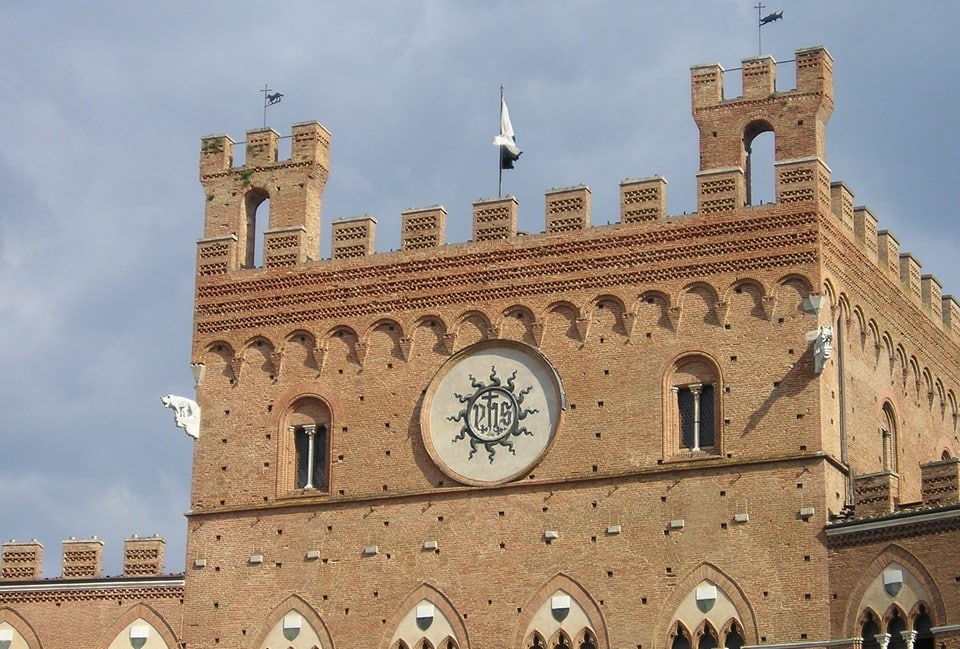
Today, the palace houses a remarkable art collection, featuring works from the Middle Ages through the 19th century. It also contains the city library, Biblioteca Salaborsa. Highlights inside the palazzo include the Senate Hall, Red Hall, Hercules Hall, and the Legate Chapel. The Farnese Hall, where the coronation of Charles V took place, is especially worth a visit.
The collection is open Tuesday to Sunday from 10:00 AM to 6:30 PM. On December 24 and 31, it closes early at 2:00 PM. Closed on Mondays, January 1, May 1, and December 25.
- Admission: €6 for adults; €3 for visitors ages 18–25 and seniors under 65.
Free admission is available to students and children under 18, on the first Sunday of the month from October through March, and every Thursday during the final two hours of opening time from April through September.
Basilica of San Petronio
The façade of the Basilica of San Petronio faces directly onto Piazza Maggiore.
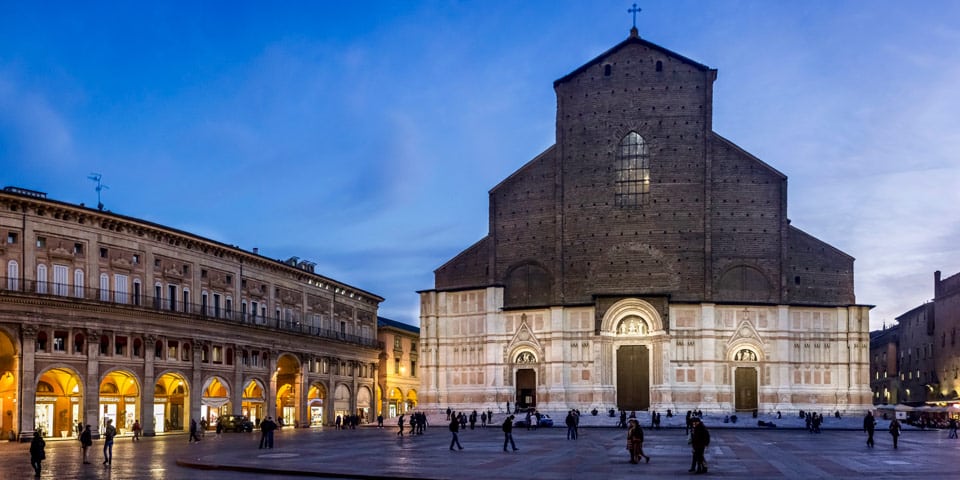
Construction began in 1390 and continued for several centuries, but in 1759 the work was unexpectedly halted. Since then, the church has remained unfinished. Despite this, San Petronio is the largest church in the city. It measures 682 feet (208 meters) in length and 466 feet (142 meters) in width. The basilica famously hosted the coronation ceremony of the Holy Roman Empire.
The exterior bas-reliefs depict artistic interpretations of the creation of the world from a religious perspective.
Panoramic Terrace
Visitors can climb to the panoramic terrace—either by stairs or elevator—for breathtaking views from 177 feet (54 meters) above ground. The entrance is located on Piazza Galvani and the terrace operates on the following schedule:
- Monday to Thursday: 10:00 AM – 1:00 PM and 3:00 PM – 6:00 PM;
- Friday to Sunday: 10:00 AM – 1:00 PM and 2:30 PM – 6:30 PM.
Admission is €3. If you’d like to visit the Cappella dei Magi, there is an additional fee of €3. The chapel is open daily from 10:00 AM to 6:00 PM.