 Italy for me From Italy with love


The famous Piazza dei Miracoli—also known as the Square of Miracles—is home to four masterpieces of medieval architecture: the Cathedral (Duomo of Santa Maria Assunta), the Baptistery (Battistero di San Giovanni), the Bell Tower (Campanile), and the Monumental Cemetery Campo Santo. The latter two are so architecturally distinctive that their construction gave rise to a new style known as Pisan Romanesque.
In 1987, the Square of Miracles was officially added to the UNESCO World Heritage List.
Located in the far northwest of Pisa, the Piazza dei Miracoli cathedral complex originally stood near the river port on the banks of the now-vanished Auser River. This area was chosen for the construction of the first monument in the square—the Cathedral of Santa Maria Assunta—thanks to its strategic central location. Built in 1064, the Cathedral symbolized the grandeur of Pisa during its reign as a powerful Maritime Republic.
Page Contents
Cathedral
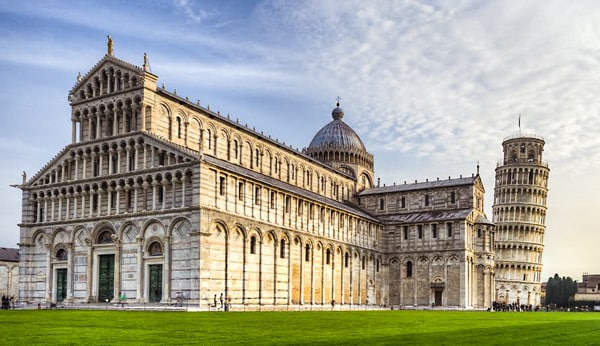
The design of the Cathedral was created by the renowned architect Buscheto di Giovanni Giudice. The funds used for this architectural masterpiece came from tribute collected in the Balearic Islands.
The Cathedral features five naves with a transept divided into three aisles, crowned by a majestic dome surrounded by a loggia. Its famous façade showcases intricate marble decorations (which also adorn the interior), mosaics, and bronze elements. Both the interior and exterior design reflect clear Arab influences—certain decorative aspects in the interior, for example, strongly resemble features typically found in Islamic mosques.
Baptistery
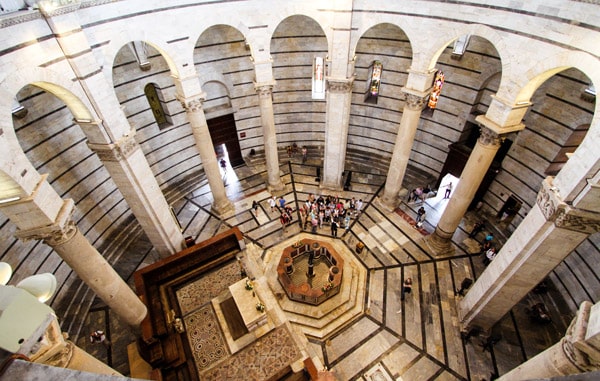
The Baptistery is the second structure to be added to the Square of Miracles. Located directly in front of the Cathedral, it too is built in the signature Pisan Romanesque style.
Construction began in 1152, but the architectural masterpiece was not fully completed until the 14th century, when Gothic elements were added. Cylindrical in shape and encircled by arcaded columns, this white marble structure is notable not only for its striking architecture but also for its acoustics. The interior is modest and serene, centered around an octagonal baptismal font created in 1246 by architect Guido da Como Bigarelli. The structure is topped with two domes—one oval, the other pyramidal.
Bell Tower
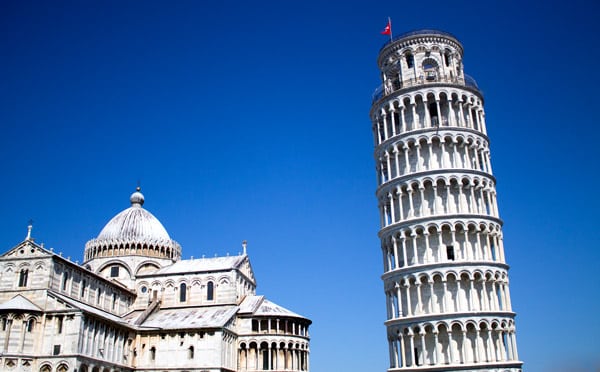
Another iconic feature of the Square of Miracles is the Bell Tower, more famously known as the Leaning Tower of Pisa.
The Leaning Tower is an unmistakable symbol of the city, essential to Pisa’s identity. Built on soft ground and affected by flaws in the original architectural design, the tower began to tilt during construction due to the sinking foundation—an unintended feature that ultimately earned it worldwide fame.
The tower is cylindrical in shape, with a base of blind arcades that give way to six tiers of open loggias, mirroring the motifs of the cathedral. Inside, a spiral staircase with 294 steps leads visitors to the top of one of the world’s most renowned towers, offering breathtaking panoramic views of the surrounding landscape.
Campo Santo Cemetery
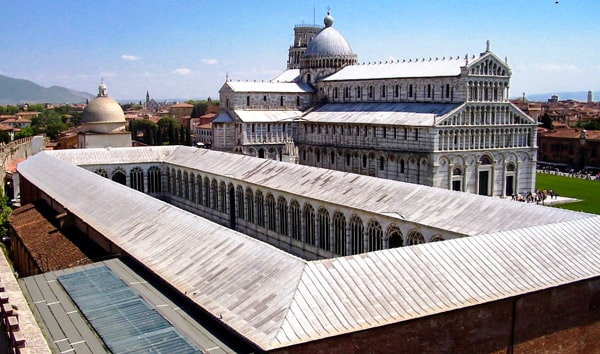
The Campo Santo Cemetery marks the northern boundary of Piazza dei Miracoli, completing its architectural ensemble. This monumental cemetery, whose construction began in 1278, is enclosed by a marble wall, with a central courtyard at its heart. Most of the frescoes that once adorned the cemetery walls were tragically destroyed in a fire in 1944.
Interestingly, the soil used for this now-renowned cemetery was brought back from Palestine by the Pisans during the Crusades.
Museums
In addition to the architectural masterpieces listed above, the Square of Miracles also houses two remarkable museums: the Museo delle Sinopie and the Opera del Duomo Museum.
Travel Tips
You can combine your visit to Piazza dei Miracoli with a walking tour through the historic center of Pisa, including another stunning nearby attraction—Piazza dei Cavalieri. This square is home to Italy’s most prestigious educational institution, the Scuola Normale Superiore, founded by order of Napoleon Bonaparte. Its intricately decorated façade was crafted using a unique fresco technique by the renowned architect Giorgio Vasari.
Recommended reading: How to get from Pisa Airport to the city center
Ticket Prices and Opening Hours
Entry to nearly all architectural “wonders” and museums within Piazza dei Miracoli requires a ticket.
Admission fees:
- 1 monument/museum: €20
- 2 monuments/museums: €28
- 3 monuments/museums: €36
- 4 monuments/museums: €44
You may choose from the Baptistery, Campo Santo, the Museo delle Sinopie, and the Opera del Duomo Museum.
- Admission to the Cathedral is free of charge.
- Leaning Tower of Pisa: €18 per person
Tickets for the Leaning Tower can be purchased online via the official website (available from 20 days up to 1 day before your planned visit).
Family Information
- Children under the age of 10 enter free of charge, except for the Leaning Tower.
- For safety reasons, children under 8 are not permitted to climb the tower, even with adult supervision.