 Italy for me From Italy with love


Gianni Morandi, whose real name is Gian Luigi Morandi, rose to fame as a beloved Italian singer and musician during the 1960s and 1970s. His popularity extended far beyond Italy—in the Soviet Union, for instance, Gianni Morandi was famous for filling entire stadiums with devoted fans. Today, he still performs in concert, although he spends more of his time surrounded by family and close friends, many of whom are renowned musicians themselves.
Page Contents
Biography
On December 11, 1944, in the tiny Italian village of Monghidoro—a town of barely 4,000 residents located in the Emilia-Romagna region—Gianni Morandi, the future musical legend, was born.
His parents worked tirelessly, instilling in their son a strong work ethic from an early age. His mother managed the household, while his father, Renato Morandi, worked as a cobbler and was an active member of the Communist Party. As a local party secretary, Renato took part in meetings, distributed political literature, and circulated flyers. Young Gianni often helped his father with these tasks, reading aloud daily from Karl Marx’s “Das Kapital” and the newspaper *L’Unità*.
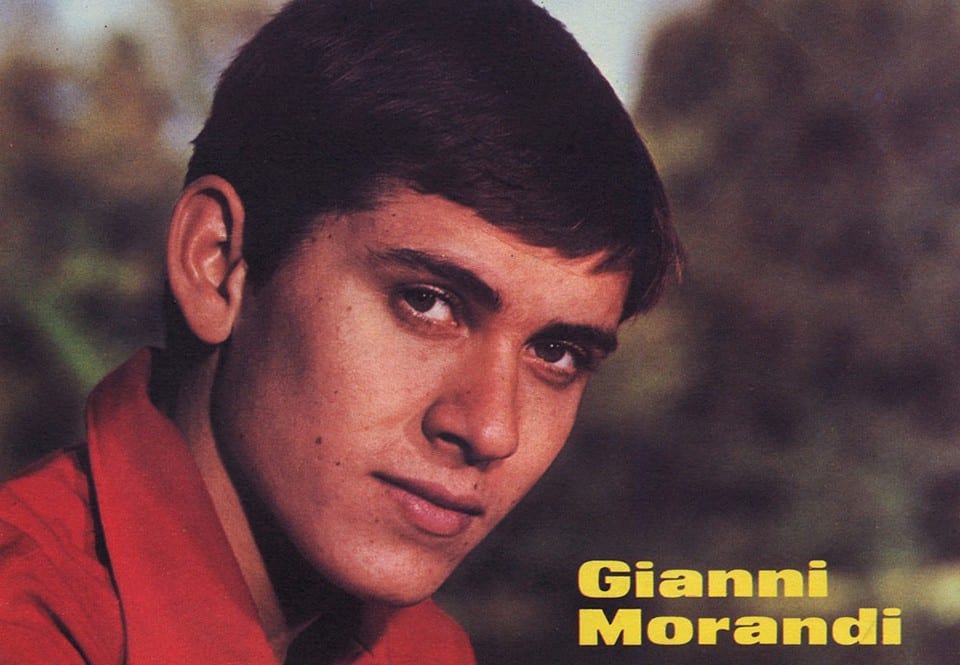
The family had limited financial means, and Gianni did his part to help. In his spare time, he shined shoes on the street and sold sweets outside the village cinema.
Hard Work from Childhood
From an early age, Gianni Morandi displayed natural vocal talent and a confident stage presence. His career as a singer began with performances for friends and family during local festivities. The entire Morandi family loved to sing, and one day young Gianni was invited to perform at a celebration—earning 1,000 lire (roughly 100 Russian rubles). “It was a miracle!” he later recalled. From that moment on, he sang constantly. At times, he even gave mini-concerts on the stage of the local cinema to entertain the audience before films.
In the early 1960s, after honing his skills at small events, he suddenly shot to fame. Starting in 1962, his name appeared in the lineups of many music contests and festivals—most of which he won. In his first year on the national stage, Morandi took a top prize on the TV show Canzonissima. This was a defining victory in the early phase of his career.
In 1963, Gianni released his debut album. His song Andavo a cento all’ora (I Was Driving 100 an Hour) became a hit for several months and brought him widespread acclaim. The track was written by Tony Dori and Camucia (a pseudonym for Franco Migliacci).
Financial Breakthrough
Morandi’s financial situation improved dramatically with the release of the song Fatti mandare dalla mamma a prendere il latte (Have Your Mom Send You for Milk). This tune became symbolic of Gianni’s coming-of-age as a pop star and resonated with an entire generation raised on his music. He signed a contract with major label RCA Italiana, which sponsored the song’s release.
By the mid-1960s, Morandi had released hits such as In ginocchio da te (which won 1st prize at the Cantagiro festival), Non son degno di te (featured at the Festival delle Rose), Se non avessi più te, Si fa sera, and La fisarmonica. All of them shot to the top of the charts and sold in the hundreds of thousands.
Several of these songs lent their titles and stories to quick-turnaround musical films. While the films themselves weren’t heavy in substance, they served to boost the popularity of the songs with a bit of cinematic spice.
In 1966, Morandi claimed his second win at Cantagiro with the song Notte di Ferragosto (August Nights). Around this time, his artistic direction began to shift. Young songwriter Mauro Lusini presented him with a politically charged song, C’era un ragazzo che come me amava i Beatles e i Rolling Stones (There Was a Boy Like Me Who Loved the Beatles and the Rolling Stones), written by Franco Migliacci. The lyrics condemned the Vietnam War.
Though Morandi had never performed a song with political themes before, he was deeply moved and insisted on singing it himself. Migliacci was hesitant, thinking the subject matter didn’t suit Morandi’s image. But Gianni went ahead anyway, performing the song with Lusini at the Festival delle Rose—where it was warmly received and deeply appreciated by the audience.
Forced Break
At the start of 1967, Gianni Morandi was drafted into the army for one year and three months of service. A long hiatus like this posed the risk of being forgotten by the public—especially at the height of his fame. For the first six months, he wasn’t granted any leave, as his superiors feared being accused of favoritism. Morandi served in the CAR unit of the Genio regiment.
Though absent from the stage, his voice still reached audiences through Italian television. Snippets of his recordings were used as musical interludes in shows like “I Giovani” (The Young), “I Separati” (The Separated), and “Sette Voci” (Seven Word Entries).
After his discharge, Gianni Morandi worked on a musical comedy film project about Aladdin. Unfortunately, the movie was a box-office flop.
Highs and Lows
Another appearance on Canzonissima offered the once-sidelined performer a chance to reclaim the spotlight. Morandi entered the competition with the song Piove and soared to the top, outshining all competitors. The following year, he returned with the song Non lo faccio più, which earned him first place once again.
In 1970, Morandi represented Italy at the Eurovision Song Contest with the song Occhi di ragazza (Eyes of a Girl), finishing in eighth place. Though his Eurovision ranking was modest, his popularity in Italy remained strong. In 1972, he made his first appearance at the Sanremo Music Festival, but soon after, his musical momentum began to wane.
During this time, Morandi wrote songs that didn’t resonate with the shifting cultural and political climate. A difficult period followed. Italy was facing growing economic and political instability, along with a surge in domestic terrorism. Morandi faced personal hardship as well: the death of his father at age 49, a divorce from his wife Laura, a creative slump, and career struggles—all of which he had to face alone while searching for new direction and inspiration.
Yet the artist remained resilient. In 1975, Italy launched a special national musicians’ soccer team, and Gianni took on the role of striker. He played in 337 matches and scored 54 goals. In 1977, he enrolled in a higher music conservatory in Rome, graduating as a certified double bass player.
Luck Returns
Fortune favors the persistent and hardworking, and soon destiny smiled again on Gianni Morandi. While studying at the conservatory, he had stopped singing, believing his musical career had come to an end. But a call from Mogol brought him back to the stage—offering a song that reignited his career.
By the late 1970s, songs like Io vado a lavorare, Sei forte papà, and La Befana Trullallà were followed by the track that marked his comeback—Canzoni stonate.
He went on to perform hits like Grazie perché, a cover of U.S.A. per oggi with Amii Stewart, Uno su mille, and 1950. In 1983, he released Il marinaio and Nemico caro. The latter became a fan favorite at the Sanremo public vote and remained one of his signature songs for years.
In 1984, Gianni starred in the full-length, three-part feature film Voglia di volare, taking on the leading role.
In 1987, at the age of 42, Morandi won the Sanremo Music Festival with the song Si può dare di più, performing as a trio with Umberto Tozzi and Enrico Ruggeri.
In 1988, he added another iconic release to his catalog with the historic album Dalla/Morandi, recorded with Lucio Dalla. The standout singles included Chiedi chi erano i Beatles (written by Curreri and Noris) and Che cosa resterà di me (by Franco Battiato).
New Heights
- In 1993, Morandi spent more than a year on tour throughout Italy, Europe, the U.S., and Canada, performing over 260 concerts. A full-sized tour bus featured on stage at each show, earning it the nickname “the bus tour.”
- In 1995, the singer returned to Sanremo, taking second place with the song In amore, performed as a duet with Barbara Cola.
- October 1996 marked the release of the album Morandi. Shortly afterward, the film Il voce del cuore premiered, starring Gianni alongside Mara Venier. Broadcast on the entertainment channel Rai Cinque, the show drew 10 million viewers. Singles from the album included La mia nemica amatissima, Regina di tango, and Fino alla fine del mondo. With Regina di tango, he also performed at Festivalbar that year. The album quickly became one of the top-selling records in Italy.
- Also in 1996, Morandi enjoyed a massive concert triumph at home. His live show in Rome aired on Channel 5, and the Teatro della Vittoria was packed. A third of the channel’s audience tuned in, reaching 8 million viewers nationwide.
- Two years later, he released a double album titled 30 volte Morandi, featuring three new tracks and 27 classics in new arrangements. The single Canzoni da buttare by Eros Ramazzotti preceded the album’s release.
Television Career
- In 1999, Gianni Morandi was invited to host the television show C’era un ragazzo, which earned high ratings with an audience of nine million viewers.
- In 2000, he made a surprise return to Sanremo, performing Eros Ramazzotti’s song Innamorato and taking third place.
- In 2002, Morandi returned to television as the host of Uno di noi, a program that also featured the Italian lottery. The show drew over 5 million viewers. That same year, he released the album L’amore ci cambia la vita, which sold over 200,000 copies. A fan club called “Morandimania” was also launched to celebrate his 40-year music career.
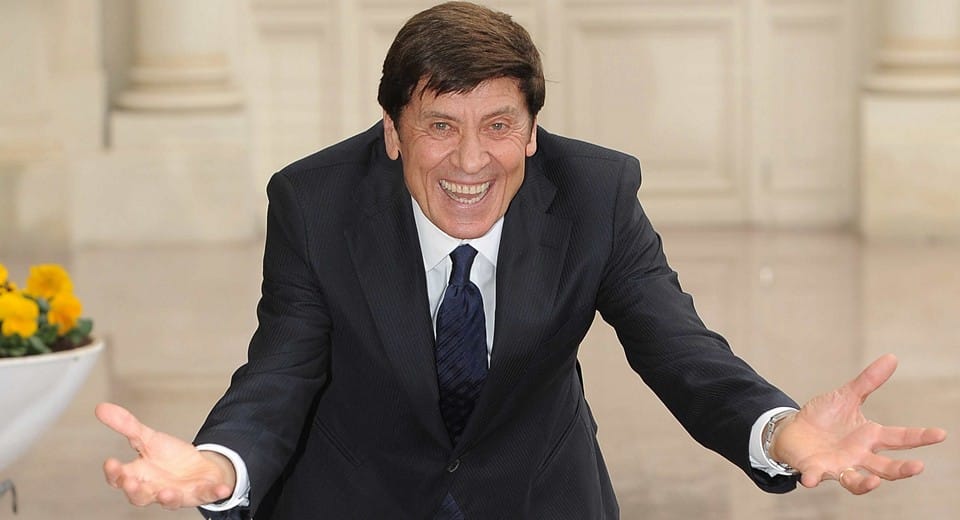
- In 2004, he recorded the song A chi si ama veramente and launched his own show on Channel 5 titled Serata con Gianni Morandi. Guests included Adriano Celentano and comedian Fiorello. Over 6 million viewers tuned in. He soon embarked on a nationwide tour, selling out venues across Italy.
- Starting September 28, 2006, Gianni hosted the music show Non facciamoci prendere dal panico on Italy’s Channel One. Though its audience was modest, critics praised the show’s creative concept and Morandi’s stunning virtual duets with Anna Magnani, Lucio Battisti, and Giorgio Gaber.
- In November 2006, he published his autobiography Diario di un ragazzo italiano, which traced Italy’s history over 60 years through his personal journey.
- In 2007, he released the album Grazie a tutti, featuring 50 of his greatest hits and a new song titled Stringimi le mani.
Today, Gianni Morandi continues to tour, perform, and release new music.
Top Songs
The song Fatti mandare dalla mamma a prendere il latte remained one of the most iconic Italian tracks for several years and was a staple on radio stations.
In the summer of 1964, the song In ginocchio da te secured Morandi first place at the traveling competition Cantagiro. The single sold over a million copies, making it the best-selling record of the year.
In 1968, during his military service, Morandi released the album Gianni5. The opening track, Giocattolo (Toy), became the most popular song from the album and remains a fan favorite.
In 2012, Adriano Celentano and Gianni Morandi performed the touching ballad Io penso a te e cambia il mondo live at the Arena di Verona. The concert was acclaimed as the year’s best, and the duet remains a cherished classic that fans continue to seek out online.
The Soviet Union and Russia
In the early 1980s, Italian music experienced a massive boom in the Soviet Union. Italian artists and composers were incredibly popular and warmly received by audiences. In 1983, the Sanremo Festival was broadcast on Soviet television, and afterward, Morandi toured several cities, including Leningrad, Tashkent, Riga, and Rostov-on-Don. These concerts were later featured in a film about his tour, aired on Soviet TV in July 1983.
His song Come posso ancora amarti was featured on the Blue Light (Goluboy Ogonyok) New Year’s Eve special on January 1, 1984. That same year, the Soviet record label Melodiya released his album Nemico caro.
In 1988, Morandi and Lucio Dalla performed at the “Italy 2000” expo.
In 2012, Gianni took part in the Russian music event Legends of Retro FM.
Fun Facts
Gianni Morandi’s song Andavo a cento all’ora became a hit a year after it was recorded. Initially, it was only included in jukebox playlists. A year later, he was invited to appear on television for the show Alta Pressione, and thanks to that exposure, both this track and Go-Kart Twist shot to the top of the charts. Later, the song Go-Kart served as the musical theme for the film Ragazzi al sole.
The song C’era un ragazzo…, performed by Morandi and Lusini at the Festival delle Rose, was banned from airing on television due to strict censorship. Authorities claimed the lyrics “stirred controversy over the foreign policy of a friendly nation.”
During an episode of Uno di noi, the show Morandi hosted, the Auditel company accused the program of manipulating ratings. In protest, Morandi appeared live on air in his underwear to demonstrate transparency.
In 1985, the Soviet film The Most Charming and Attractive featured its main characters attending a Gianni Morandi concert.
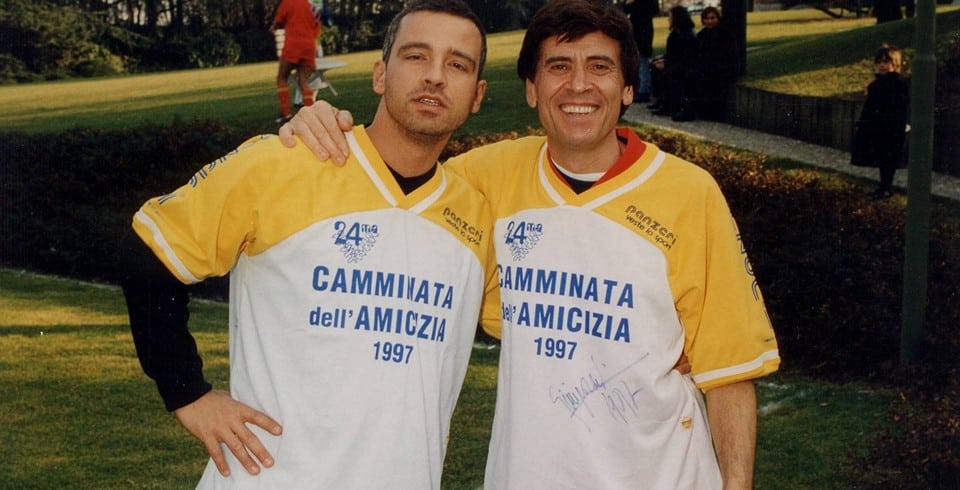
In 2011, Morandi served as honorary president of the Bologna football club for 28 days.
In the film Il cammino dell’amore, Morandi starred alongside his daughter Marianna.
Gianni Morandi is not only a singer, actor, and football enthusiast—he’s also a marathon runner. He has participated in more than 20 races.
Over the course of his career, he has released 34 albums, performed more than 400 songs, and sold over 50 million records.
In 2011–2012, Morandi hosted the Sanremo Music Festival.
Family
While filming his first movie based on the song In ginocchio da te, Gianni Morandi met and fell for popular actress Laura Efrikian. She was four years older than him, and her father was a well-known Armenian conductor. The couple secretly married on July 13, 1966. Laura soon became pregnant, and Morandi received a military deferment.
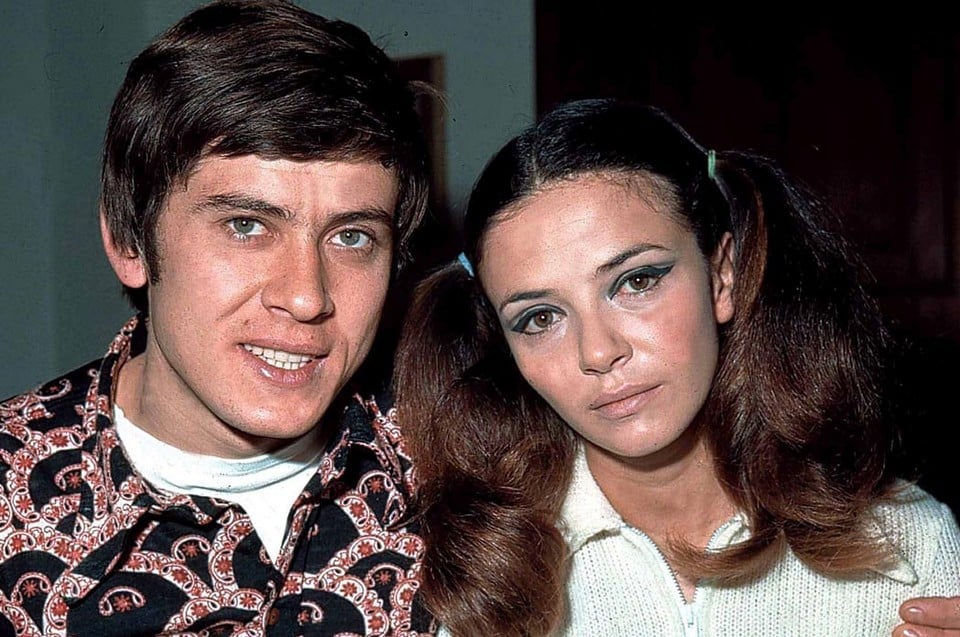
In early 1967, tragedy struck with the death of their newborn daughter Serena, who lived only a few hours. At the same time, Morandi was competing in the TV show Scala Reale against Claudio Villa, who went on to win. Gianni took second place.
In 1969, their daughter Marianna was born, and in 1974, their son Marco.
Creative struggles during the 1970s also took a toll on Morandi’s personal life. He was unable to write successful songs, faced constant conflict at home, and ultimately, the couple separated.
On August 19, 1994, during a soccer match in Bologna, Morandi met his future second wife, Anna Dan. She was attending the game with mutual friends and charmed the busy musician with her striking eyes and unique personality. They quickly fell in love and have been inseparable ever since. Anna gave birth to their son Pietro in 1997. After finalizing his divorce in 2004, Gianni married Anna officially.