 Italy for me From Italy with love


If Rome is called the heart of Italian history, Venice the city of canals and bridges, then the famous Verona can rightly be hailed as the city of love and romance. This is, of course, thanks in large part to Shakespeare, who made this city the home of Romeo and Juliet, but romantics come here not only to see with their own eyes the setting of that world-famous love story, but also to experience the city itself, with its breathtaking landscapes, stunning architecture, and unique atmosphere.
Page Contents
History of the City
Nestled on the banks of the Adige River, Verona has always been a prized jewel. Roman forces repeatedly sought to occupy it, finally succeeding in 89 BCE. Even today, you can find spots in Verona where the traces of that powerful civilization remain particularly vivid.
Some time later, Verona and its surroundings, like many cities across Europe, became arenas for territorial wars. Initially dominated by the Romano family, power then passed to the della Scala family, whose members made enormous contributions to the city’s development. From 1387, Verona fell under the influence of the Visconti, and later the Carrara family.
Verona then joined the small Republic of Venice, but not without its share of pitfalls and minor troubles. Control shifted from one ruler to another—Napoleon and Austrian authorities alike left their mark—until the city became one of the centers of the Kingdom of Italy in the mid-19th century.
So, what are the essential sights that every visitor to Verona should see?
Piazza delle Erbe
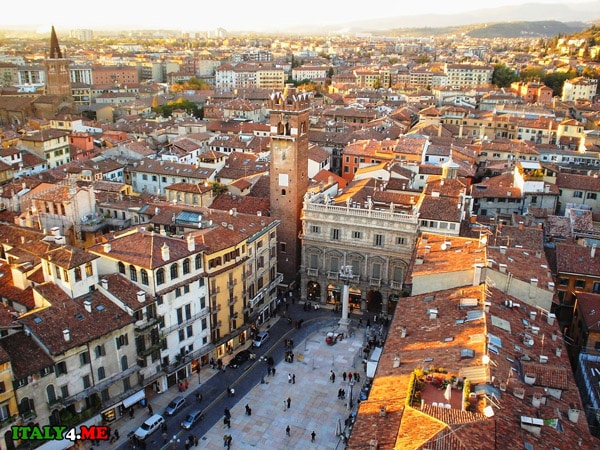
By day, Piazza delle Erbe resembles a marketplace, with souvenir vendors eagerly showcasing their wares to visitors; by evening, locals and tourists fill the square, enjoying Campari and other aperitifs at the nearby bars and cafés. Even if Piazza delle Erbe happens to lie along your itinerary, no matter how pressed you are for time, pause for a moment and look around. You’ll be pleasantly surprised to find yourself surrounded by Renaissance-era palaces and contemporary cozy cafés, from which the delightful aromas of freshly baked pizza waft out.
Arena di Verona
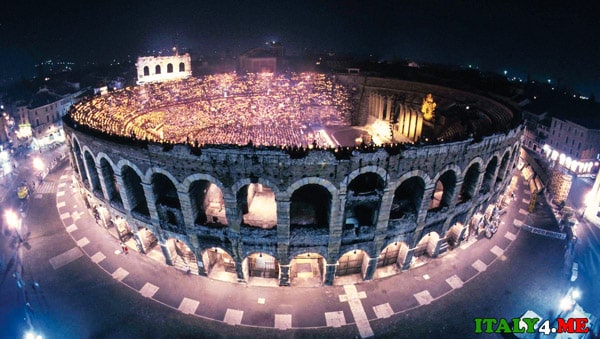
This vast amphitheater, erected in the first century AD, serves as a counterpart to Rome’s Colosseum, which is nearly 50 years younger. Remarkably, the Arena di Verona has survived the relentless passage of time almost untouched. Every summer, it hosts one of the world’s most renowned opera festivals. Address: Piazza Brà, 1
Lamberti Tower
From Lamberti Tower (Torre dei Lamberti), you get a breathtaking view of Verona. You can climb to the top on your own (though be prepared to ascend dozens of steps), or significantly ease your visit by taking the elevator. Construction of this medieval tower began in the 12th century, and it underwent several expansions until it reached a height of 276 feet (84 meters). Lamberti Tower, named after the Veronese family that sponsored its construction, sits just steps from Piazza delle Erbe, not far from Palazzo della Ragione.
- Address: Via della Costa, 1.
- Opening hours: Weekdays 10:00 AM–6:00 PM; weekends 11:00 AM–7:00 PM.
- Admission fee: €6 (includes entry to Palazzo della Ragione).
- Discounts: Available for students aged 14 to 30 and visitors over 60.
- Official tower website: torredeilamberti.it.
Palazzo della Ragione
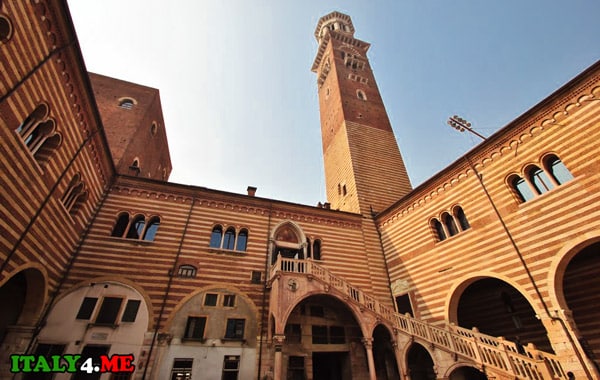
Palazzo della Ragione (literally “Palace of Reason”) is a splendid example of Romanesque civic architecture. This majestic building, whose hallmark is its unusual ship-shaped roof, was completed in the 13th century. This structure is considered the largest single covered space in the city from the medieval era. Its roof alone covers more than 21,500 square feet (2,000 square meters). It would be remiss not to mention the interior: once you step inside, you’ll find yourself surrounded by hundreds of stunning frescoes.
- Address: Piazza dei Signori.
- Opening hours: Winter (September through May) Tuesday–Friday 10:00 AM–6:00 PM; Saturday–Sunday 11:00 AM–7:00 PM; Summer months Tuesday–Friday 11:00 AM–7:00 PM.
- Admission fee: €8 (includes access to Palazzo della Ragione).
Juliet’s Balcony
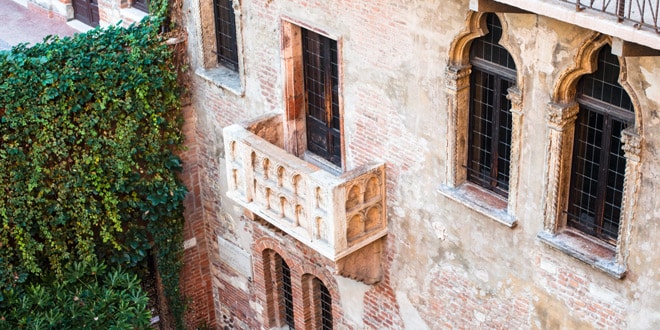
Juliet’s Balcony (Balcone nella casa di Giulietta) – perhaps the most romantic spot in Verona. And it’s easy to see why: it was beneath this balcony that the passionate Romeo declared his love. In the picturesque courtyard below—where Shakespeare’s ill-fated heroine is said to have lived—tourists flock to touch the statue of Juliet “for luck” and to leave love notes on the walls.
- Address: Via Capello, 23;
- Admission fee: free. A visit to the museum inside Juliet’s House costs €12;
- Official website: casadigiulietta.comune.verona.it
- Museum hours: Tuesday through Sunday 8:30 AM–7:30 PM, Monday 1:30 PM–7:30 PM.
Giusti Garden
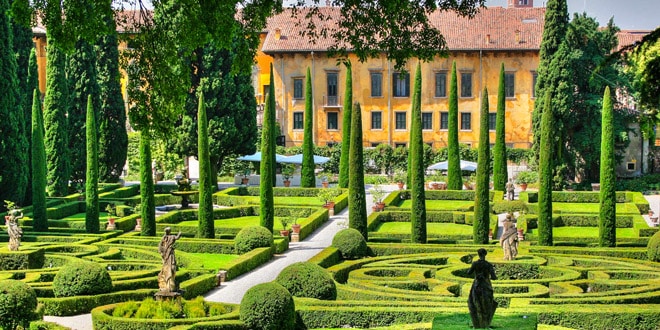
Giusti Garden (Giardino Giusti) is widely regarded as one of Italy’s most beautiful green spaces. It adjoins the grand palace of the influential Giusti family, who established their residence and park in the 16th century. Three centuries later, the Giardino was transformed into an English-style garden, a form it still retains today. In this enchanting Renaissance garden stand old yet mighty citrus trees that once inspired Goethe. The grounds are also decorated with numerous statues and sculptures that captivate the imagination.
- Address: Via Giardino Giusti, 2;
- Opening hours: April–September 9:30 AM–8:00 PM; October–March 9:00 AM–7:00 PM;
- Admission fee: €13
- Official website: giardinogiusti.com
Ponte Pietra
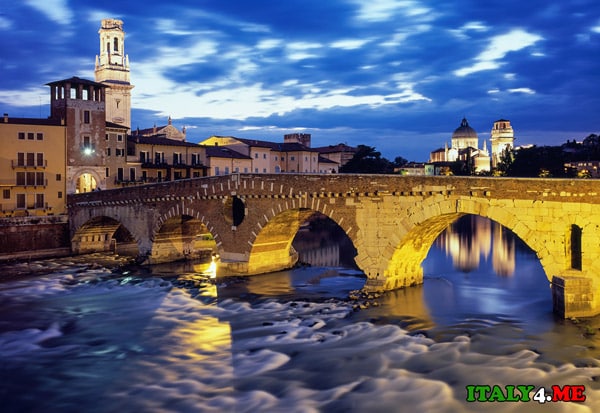
This stone bridge is situated in arguably one of the most picturesque parts of Verona. Despite the many changes and restorations it has undergone, Ponte Pietra remains a striking example of Roman construction in the city. Historians believe the bridge, which measures 394 feet (120 meters) in length, was first built before 89 BCE.
Originally a wooden structure, it collapsed repeatedly in 1007, 1153, 1232, and 1239. In 1503, it was rebuilt in stone, but that version failed as well, collapsing a few years later.
In 1508, local authorities enlisted the help of the renowned architect Fra Giocondo, who succeeded in creating a sturdy structure. In April 1945, the bridge was blown up, and it wasn’t until 1959 that restoration work returned Ponte Pietra to its former form.
Address: Ponte Pietra.
Domus Mercatorum
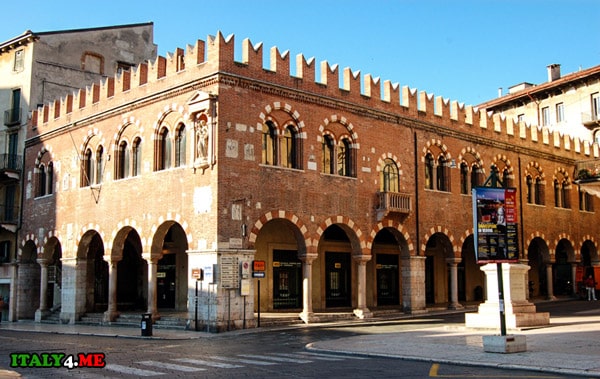
The Domus Mercatorum is a remarkable structure of great historical value, located on Piazza delle Erbe. Originally built of wood, it was reconstructed in stone in the 14th century. By order of the powerful local noble Alberto della Scala, arches were added that still stand today. Over the centuries, the Domus Mercatorum underwent several alterations, and the appearance you enjoy now dates only from the 19th century.
Address: Piazza Erbe, 17.
Palazzo Maffei
The Palazzo Maffei, dating back to the 15th century, is one of the main highlights of Verona’s Piazza delle Erbe. It is a vivid example of Baroque style, featuring multiple vaulted arches, original windows, columns, and mascarons. Throughout its history, the palazzo was repeatedly remodeled: in the 17th century, Cardinal Marcantonio Maffei ordered its expansion, resulting in the addition of a third floor and a Baroque façade. Inside, you will encounter an astonishing stone spiral staircase with no central support.
Palazzo Maffei is listed on the UNESCO World Heritage List. Today, anyone can touch history, as the palazzo houses apartments. Room rates start at €230 per night.
- Address: Piazza delle Erbe, 38.
- Admission fee: €15
- Official website: palazzomaffeiverona.com
Fontana di Madonna Verona
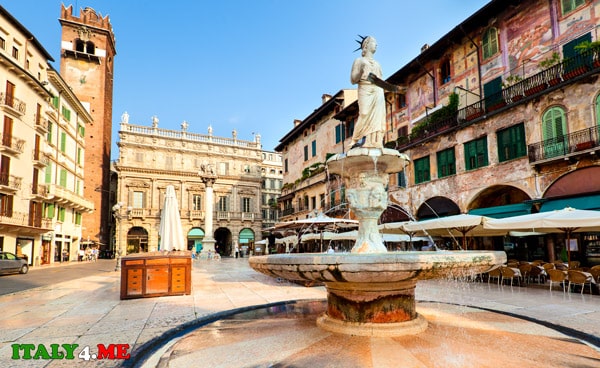
The Fontana di Madonna Verona is an outstanding 14th-century work of architecture. It was erected in 1368 during repairs to the city’s aqueducts under the directive of the influential della Scala family. Legend says merchants once struck their most profitable deals here, and to this day tourists toss coins into its waters, believing the tradition brings good fortune in business.
Address: Piazza delle Erbe.
Basilica di San Zeno Maggiore
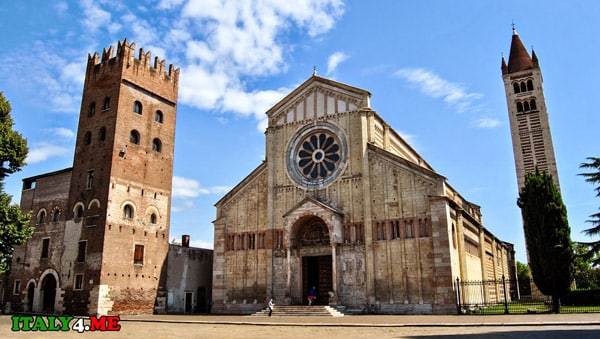
The Basilica di San Zeno Maggiore dates to the 4th century, although most of its structure was built between the 10th and 12th centuries. In other Veronese churches and cathedrals, you can see early Renaissance influences. Don’t miss the bronze doors of San Zeno Maggiore, which depict numerous biblical scenes.
- Address: Piazza San Zeno, 2;
- Opening hours: March–October 8:30 AM–6:00 PM (Sunday 12:30 PM–6:00 PM); November–February 10:30 AM–1:00 PM, 1:30 PM–5:00 PM (Sunday 12:30 PM–5:00 PM);
- Admission fee: €8.
Castelvecchio
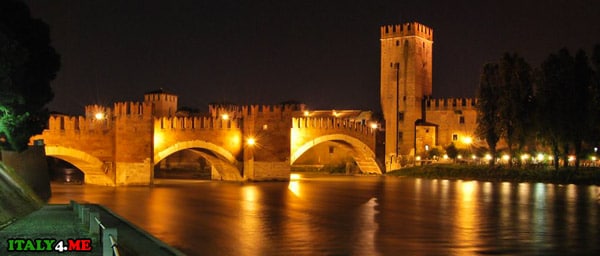
Castelvecchio, built in the 14th century, is perhaps the largest structure in Verona. Today, its four towers and buildings house museums of art, sculpture, coins, and other exhibits, including works by Italian masters Bellini and Pisanello.
- Address: Corso Castelvecchio, 2;
- Opening hours: 8:30 AM–7:30 PM (Monday 1:30 PM–7:30 PM);
- Admission fee: €9.
- Official website: museodicastelvecchio.comune.verona.it
Porta Borsari
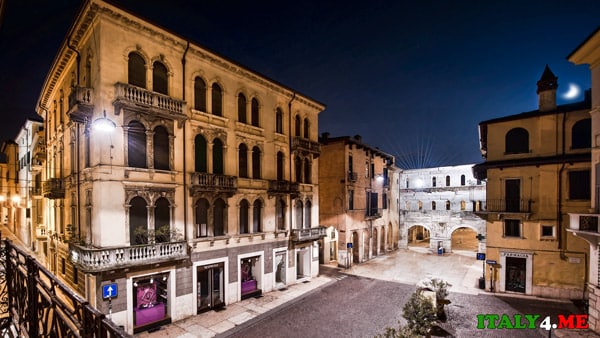
The ancient Porta Borsari, once Verona’s southern gate, is one of the city’s most striking landmarks. Its three tiers form a complex structure: the first contains two arched passages, while the upper two feature twelve openings framed by elegant half-columns topped with Corinthian capitals. Porta Borsari stands as a testament to the Romans’ architectural mastery.
Address: Corso Porta Borsari.
Duomo di Verona
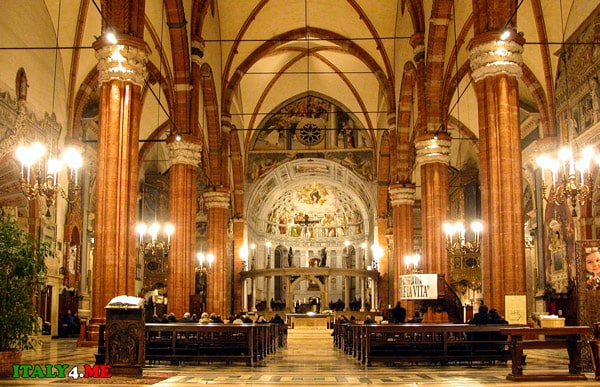
The main Duomo di Verona is astonishing. Don’t limit yourself to its façade—step inside to be amazed by the 12th-century interior, adorned with numerous paintings by the Italian master Tiziano Vecellio.
- Address: Piazza Vescovado;
- Opening hours: March–October Monday–Friday 10:00 AM–5:30 PM, weekends 1:30 PM–5:30 PM; November–February Monday–Friday 10:00 AM–4:00 PM, weekends 1:30 PM–4:00 PM;
- Admission fee: €8.
Arche Scaligeri
Arche Scaligeri—nothing else will prepare you for these awe-inspiring tombs! Located at the edge of Piazza delle Erbe, they are impossible to miss. The five monumental tombs of three members of the influential Scaliger family, which wielded power in Verona during the 13th and 14th centuries, are excellent examples of Gothic style. Don’t miss the charming little church of Santa Maria Antica situated just behind the arches.
- Address: Via S. Maria Antica, 4
- Opening hours: daily 10:00 AM–6:00 PM, closed on Mondays;
- Admission fee: €5.