 Italy for me From Italy with love


Who hasn’t dreamed of traveling back in time to witness how everything looked in the past? A small town in Sicily, perched high in the clouds, is ready to offer you that chance. When you visit Erice, you’ll feel like time has stood still.
It’s as if the town stopped moving forward in time, and its architecture remains stuck in the Middle Ages. This immersion in the past is exactly what draws tourists to Erice.
The town was built atop a high mountain overlooking the coastal plain. Its origins are lost in legendary antiquity. Despite that, the charm of the Middle Ages remains intact to this day. When the town is enveloped by passing clouds, its labyrinth of winding streets takes on a mystical quality.
Time seems to dissolve, and the boundaries between the real and the mythical blur. The present calmly reminds us that in the cloudy veil, ancient gods and classical heroes might still be hiding.
Page Contents
History and Legend of the Town’s Origin
Erice is rightly called legendary, as a famous myth tells us how it came to be:
Long ago, on a high mountain constantly bathed in soft, white clouds, the son of the goddess of love and fertility, Eryx, gazed upon the stunning panoramas. So enchanted was he by the beauty that he decided to build a town there, which was named in his honor. Daedalus, the creator of the first wings, sought refuge here after escaping Crete and found a permanent home in this ancient town. Even Hercules, the son of Zeus, would stop in Erice to regain his strength on his journeys.
But these are legends. What do historians say? They tell us that the first structure atop Mount San Giuliano was a Phoenician pagan temple dedicated to the goddess of fertility, Astarte (Astártē). Its exact date of construction remains unknown. Later, the Elymians, refugees from the fallen city of Troy, arrived on the island. They found the mountain suitable for their new settlement.
The earliest historical records of the Elymians in Sicily date back to the 5th century BCE (imagine how long ago that was!). They brought their culture with them, and Astarte’s temple was transformed into a sanctuary for Aphrodite, worshipped by the Greeks.
At the time, Mount Eryx was an excellent landmark for sailors. Soon, the goddess became a protector of seafarers. Erice was near a port, and sailors often visited the temple. Practically every ship passing by brought offerings for the goddess.
Temple priestesses received these gifts and bestowed their love in return. Some suggest that their actions may have motivated sailors to bring gifts to the sanctuary.
The town’s strategic location meant it became a battleground between the Greeks and Carthaginians for several centuries. During the First Punic War, around the 3rd century BCE, Erice was almost destroyed, and its inhabitants were relocated to the port town of Drepanon (now Trapani). Around that time, the
Carthaginian general Hamilcar Barca ordered the construction of a defensive structure around the city. The fortress walls were made from the stones of the mountain on which the town stood. These walls, now formidable, helped hold off enemy attacks during the great migrations.
In 241 BCE, the Romans arrived on the island. They preserved the temple of Aphrodite but dedicated it to Venus Erycina. This transformation turned the town into a pilgrimage site where important religious ceremonies took place. The fame of the temple was so great that the Romans built a second temple in Rome, spreading the cult of Venus across the Mediterranean.
After antiquity, the town fell into decline. In the Middle Ages, it was ruled by Arabs for a time. It wasn’t until the 12th century CE, when the Normans arrived that the town regained life. The settlement and the mountain it stood on were renamed Monte San Giuliano. The city’s fortifications were completely renewed, and a mighty castle was built.
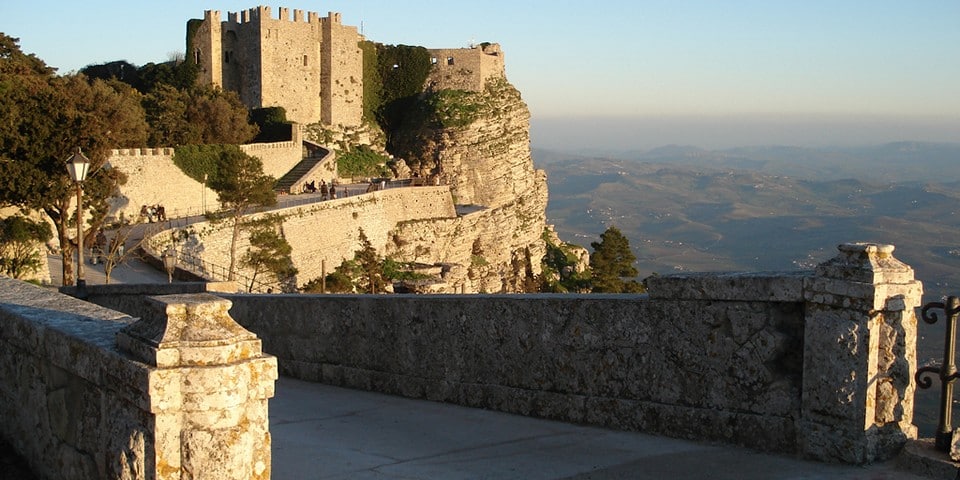
The temple of Venus was built in an exceptional spot. Despite many conquests over the centuries, it remained standing. The Normans, believing in its significance, rebuilt a castle there, naming it Castello di Venere (Venus Castle).
Eventually, after the Germans and French, the town came under Spanish rule. During this time, more Catholic monasteries and churches appeared in Erice. Today, it remains a small medieval town, taking us back to the days of guilds and crafts. Its cobblestone streets, gray stone houses, and clean mountain air maintain its unique charm.
Erice’s history reads like a theater play, with a constantly shifting cast of characters—Phoenicians, Greeks, Romans, Byzantines, Normans, Germans, French, and Spaniards. The town even served as a royal residence during the Sicilian Vespers uprising against the Angevin dynasty.
In 1934, during the Fascist occupation, the town’s name reverted from Monte San Giuliano to its historic name, Erice. After the war, it became a scientific, cultural, and tourist center.
Things to See
Despite its small size, there are plenty of sights in Erice worth exploring.
In addition, the narrow streets typical of Italy, small shops with quirky souvenirs, and cozy cafes give Erice its unique charm. One of the most famous traditions is the Good Friday procession.
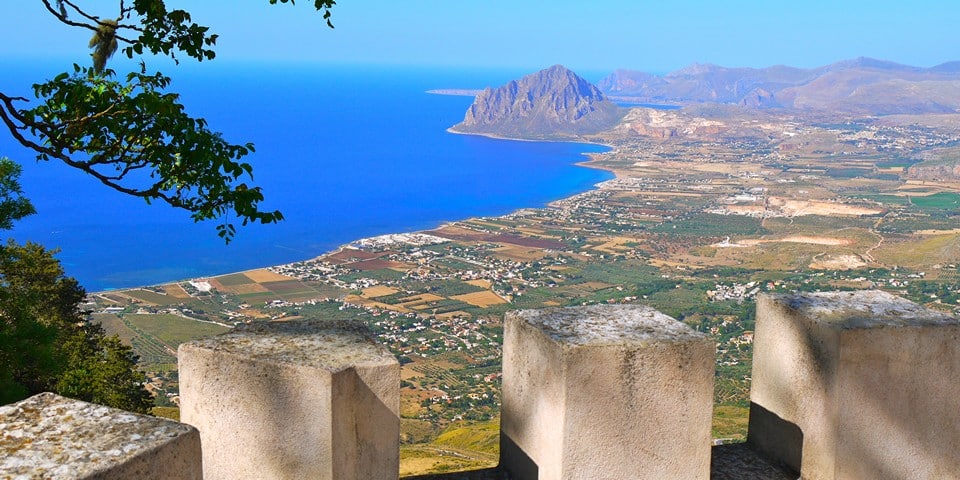
Be sure to visit the “One Knight Street,” broad enough for only a single knight in armor. Marvel at the views from Pepoli Castle, and don’t miss the town of Trapani spread along the curve of the blue bay. On clear days, you might even glimpse the Egadi Islands or, if you’re lucky, the coast of Tunisia.
From above, Erice resembles a triangle, with towers in two corners and a castle in the third. Long streets run along the mountain ridge, while steep alleys connect them. The town squares are small, and a few even have sloping stone pavements. The architecture, a blend of Romanesque, Norman, and Gothic styles, reflects the town’s rich history.
Landmarks
You can find a map of Erice’s landmarks in most tourist shops selling souvenirs.
Cathedral of the Assumption of the Virgin Mary
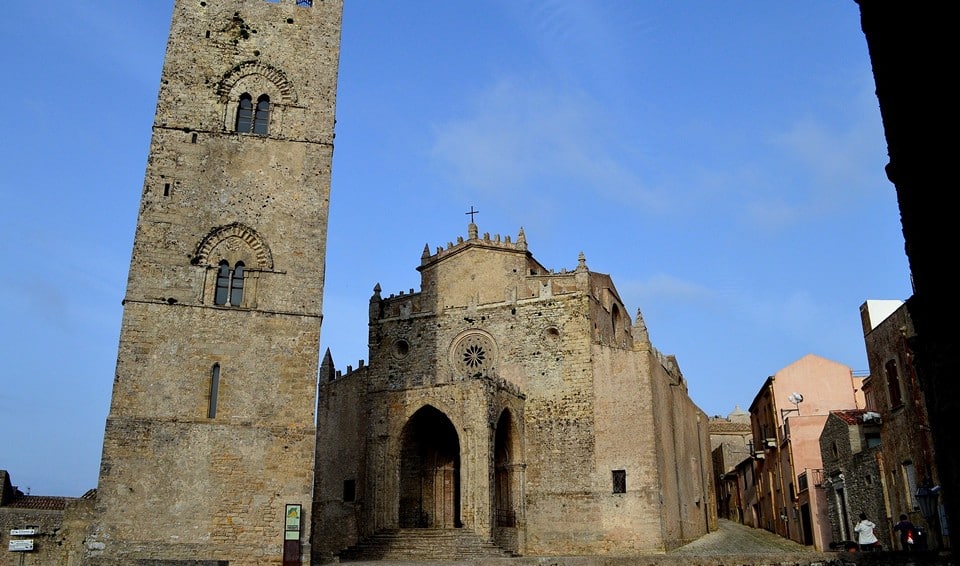
The Cathedral (Duomo dell’Assunta) is located on Piazza Duomo at Via Carvini. It was built under the reign of King Frederick III of Aragon as a token of gratitude to the town’s residents for supporting his family during the Aragonese War of Succession. Most of the construction took place in the first half of the 14th century, while the side chapels in the naves were added later.
Its modern appearance came after a ten-year restoration completed in 1862.
The 28-meter (92-foot) bell tower was built before the church and originally functioned as a watchtower. After the War of 1282-1314, bells were installed on the top floor, transforming it into a campanile. The structure consists of three levels, each with arched windows.
The Cathedral’s unique feature is its Gothic style. It is the only church in town originally built in this style, unlike the others, which have Romanesque roots. Later, the interior was renovated to feature a neo-Gothic design. The main altar is adorned with a figure of the Virgin Mary, surrounded by reliefs of the four Evangelists.
Venus Castle
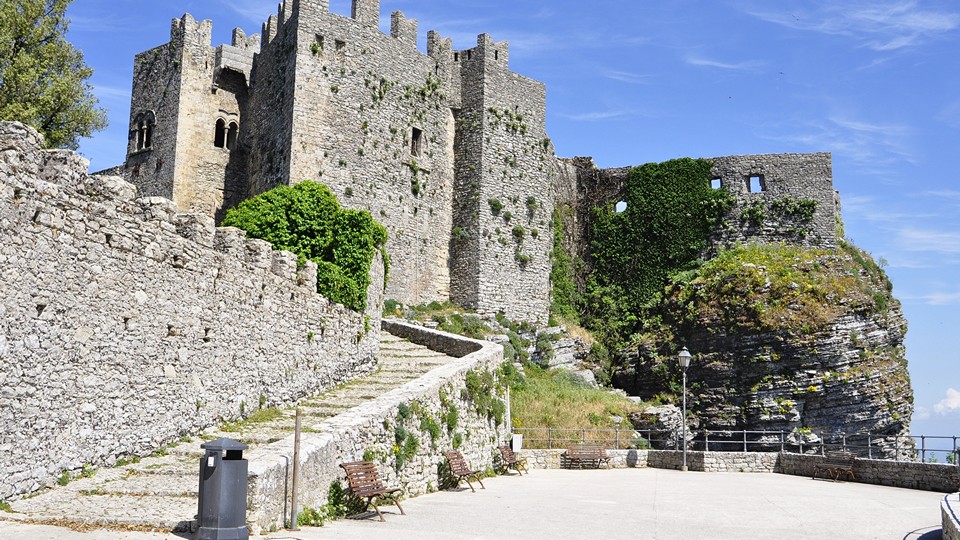
Venus Castle (Castello di Venere) is located on Viale Conte Pepoli, about 750 meters (2,460 feet) southeast of the Cathedral of the Assumption of the Virgin Mary. It was built in the 12th century by the Normans on the site of an ancient pagan temple dedicated to Venus. In the 16th century, the castle became royal property, housing barracks and a prison. In the 17th century, the Palma family bought it and carried out significant renovations.
In the early 19th century, the castle was returned to the town, and in 1872, Count Agostino Sieri-Pepoli oversaw its final restoration.
The castle, topped with swallowtail battlements (a Ghibelline feature), can be accessed by a staircase. The entrance features a pointed arch portal with the Habsburg coat of arms above it. To the right of the entrance are the former prison cells, leading to the open space containing the ruins of the ancient temple of Venus. To the left are the old barracks, and further along is a ruin resembling a small pool, possibly used as a cistern for water collection.
The castle is surrounded by a garden known as Giardino del Balio. On the opposite side from the entrance is an excellent viewpoint. From here, you can enjoy a view of patchwork fields, the coastline, Trapani, and, on apparent days, even the coast of Tunisia.
Pepoli Castle
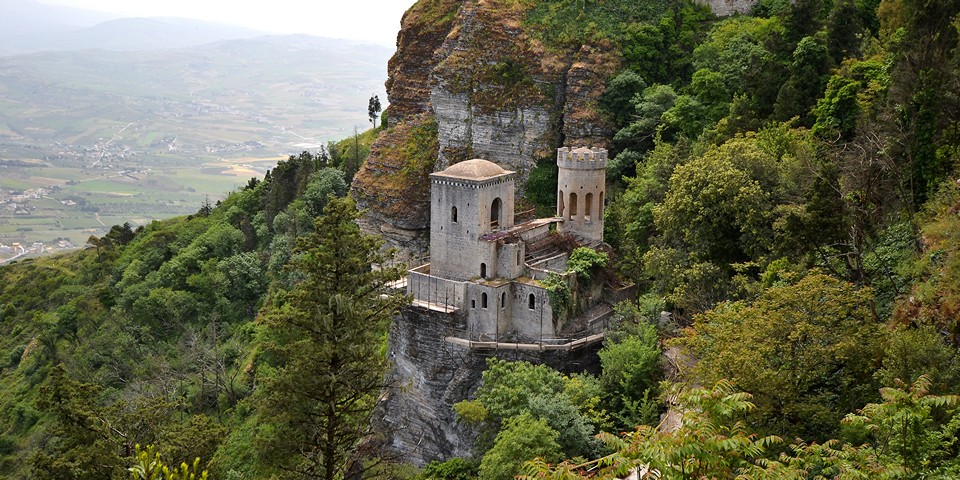
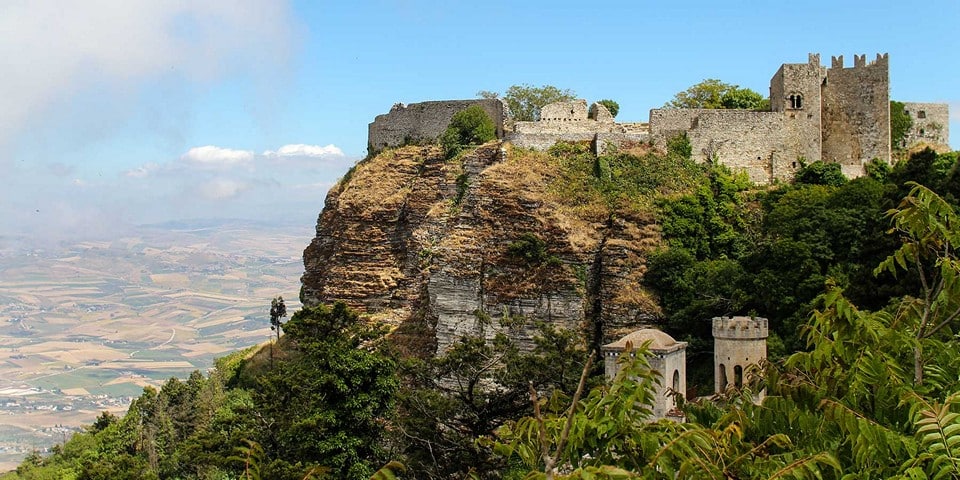
After restoring Venus Castle, Count Pepoli decided to build a small retreat for scientific study and personal meetings. Below Venus Castle, on a rocky plateau, he constructed a small rectangular house in a Moorish style. Nearby, a round tower with battlements was built. Today, much of Pepoli Castle (Castello Pepoli) and its tower are in serious need of restoration.
Church of Saint John the Baptist
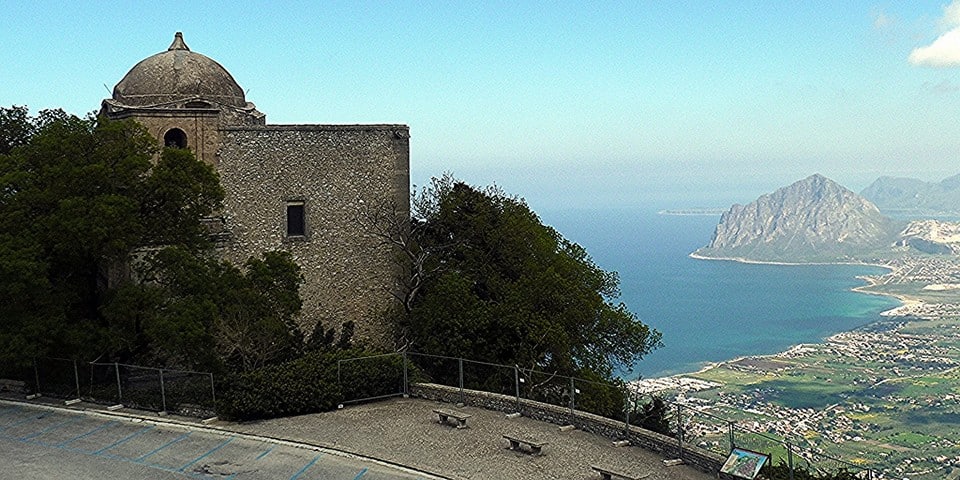
The oldest Catholic church in Erice is located on the square of the same name along Via San Giovanni. It was built in 1339 and underwent significant changes over time. In the 17th century, it was substantially expanded. As a result, only the portals, dating back to the 15th century, have retained their original appearance.
The church of San Giovanni Battista is decorated with sculptures by masters from the Gagini family (Gagini). These works depict Saints John the Baptist and John the Evangelist.
Church of Saint Peter
The Church of Saint Peter (Chiesa di San Pietro) is located east of the Cathedral along Via Guarnotti. It was founded in 1365 by order of Pope Urban V. The church underwent a major reconstruction in the mid-18th century. Statues of Saints Peter and Paul, dating back to the 16th century, have survived to this day.
Ettore Majorana Scientific Center
A walk through Erice not only takes you back in time but also shows how Sicily contributes to solving today’s problems. This is because Erice is home to the Ettore Majorana Scientific Center. The conferences held there and the discoveries made have a significant impact on the world.
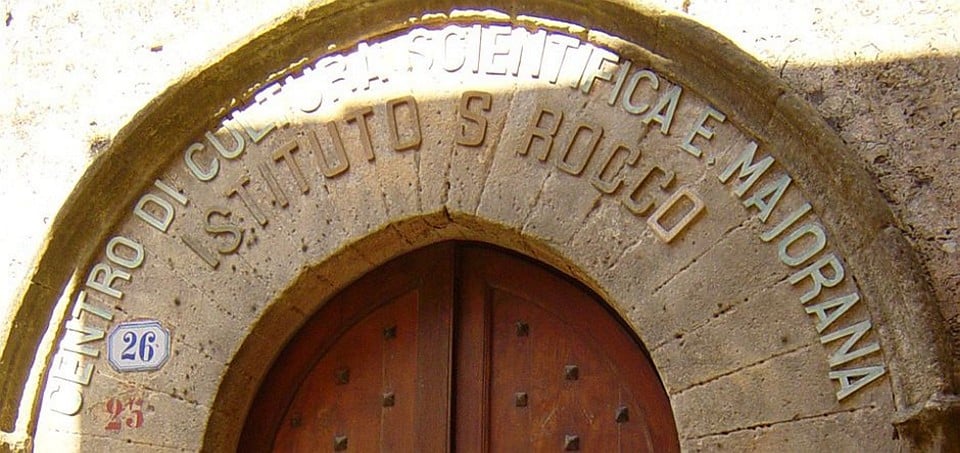
However, the building that houses the center was not always dedicated to science. It was once the Church of San Domenico. In the 1960s, it was decided to establish an international science center there, named after the Sicilian physicist Ettore Majorana from Catania.
Today, the former church hosts the Erice Prize ceremonies for significant scientific contributions. Russian scientists, including Sergei Kapitsa and Andrei Sakharov, have won this award. Even Pope John Paul II received it for his support of scientific endeavors. The Pope visited Erice in person to accept the prize, leaving an autograph that remains preserved in the building.
Antonio Cordici Civic Museum
You should also visit the Antonio Cordici Civic Museum located in the town hall. The museum houses collections of archaeological finds from the 5th century BCE, paintings, and sculptures. Of particular note is the marble “Annunciation” by Antonello Gagini (1525) and a small head from a statue of Venus.
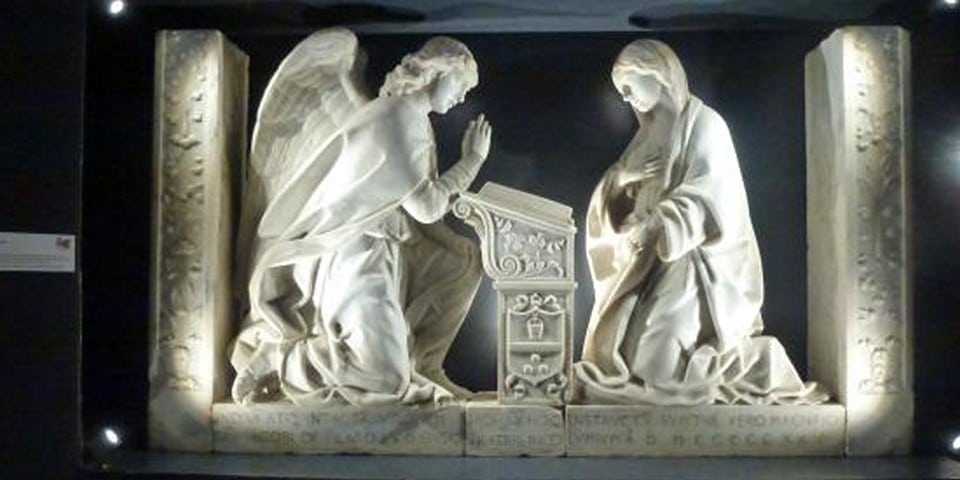
The town hall is located on Piazza della Loggia. The museum is open Monday to Thursday from 8:30 a.m. to 5:00 p.m. (with a lunch break from 1:30 to 2:30 p.m.) and on Fridays from 8:30 a.m. to 1:30 p.m. Admission is free.
City Walls
The city walls of Erice are well-preserved and are often called the Elymian-Phoenician or Punic walls. They were constructed between the 8th and 3rd centuries BCE.
At one time, they completely enclosed the city from the northeast—the only side vulnerable to attack. Today, you can still see Phoenician inscriptions carved into the walls. Later, during the Norman period, watchtowers and a walkway were added to the walls.
Steep stairs could climb the wall, and additional doorways allowed residents to pass through and supply the town with provisions. You can walk along the walls between two of the city’s three gates, Porta Spada and Porta Trapani. Near Porta Spada, after a popular uprising in the 13th century, the Angevin rulers of the town were executed.
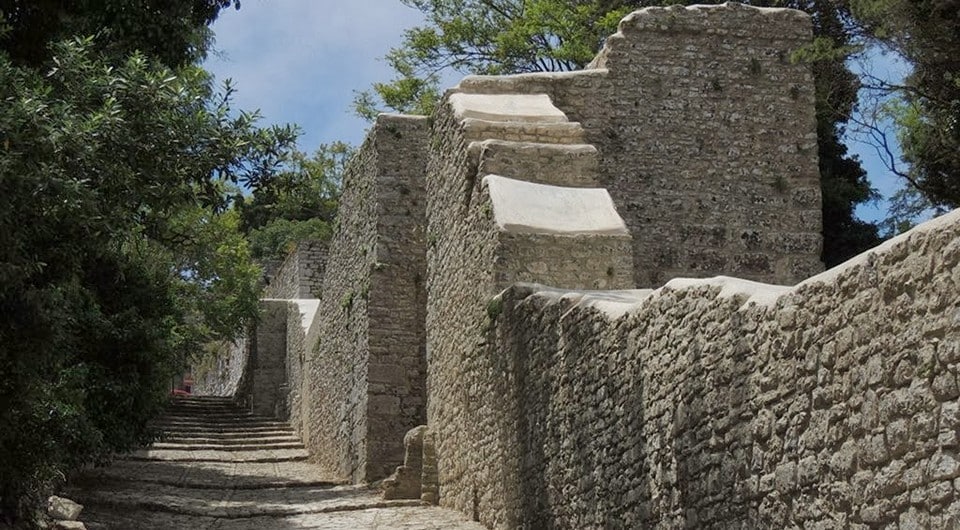
While places like Palermo or Catania have been touched by urbanization, Erice has preserved its medieval atmosphere. Factories and high-rise buildings don’t disturb its serenity. Today, this unique town is a singular attraction.
How to Get There
The closest town from which you can easily reach Erice is the port city of Trapani. The distance between the two is only about 15 kilometers (9 miles). But don’t forget about Sicily’s narrow mountain roads. If you have a strong stomach, the winding journey will provide you with stunning views of the coastline as you climb the steep slopes.
Read about our friends Mario and Antonella’s villa, where we stay several times a year, as well as our trips to the island of Favignana from Trapani.
If you don’t have a car, buses to Erice depart from the port area of Trapani (routes #21 and #23). You can find public transportation schedules here: www.trapaniwelcome.it.
If you prefer to avoid mountain roads, you can take the cable car instead. The only downside to this option is the weather—cable cars don’t run in bad weather. You can check the operating schedule in advance here: www.funiviaerice.it.
It’s hard to spend more than a day in Erice, but missing it during your trip to Sicily would be an irreparable loss.
The town is so different from the rest of the island, it feels like a fragment of the past, lost in time. It offers a perfect break from the hustle of everyday life, allowing you to savor the silence and the feeling that time has slowed down.
And the views from the lookout points are simply incredible. Standing above the clouds, you can enjoy the sight of the sea merging with the sky on the horizon while clouds swirl below your feet, justifying Erice’s name as the “town in the clouds.”