 Italy for me From Italy with love


The map of Palermo’s architectural and historical landmarks is truly rich; one might even say the city itself is a grand attraction. Expansive squares, ancient palaces, renowned theaters, and fascinating museums adorn the capital of Sicily.
Even a leisurely walk through the city center or along the seafront promises visitors encounters with a wide array of remarkable sights.
Page Contents
Squares
Marina Square
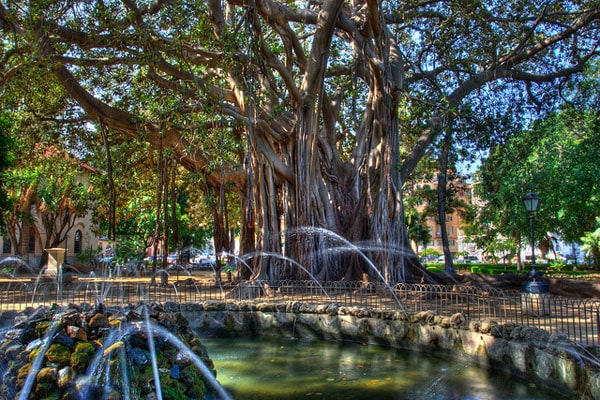
Marina Square (Piazza Marina) is one of the largest squares highlighted on the map of Sicily’s capital. In the Middle Ages, it was a celebrated gathering place. This square hosted royal weddings, various festivities, knightly tournaments, theatrical performances, and many other events. For one royal wedding, the square was lavishly decorated to enhance its festive spirit.
At the heart of the square lies Garibaldi Garden, where visitors can admire veteran trees that are over 300 years old.
The garden is enclosed by a wrought-iron fence, and at its center, you will find a fountain and monuments dedicated to Giuseppe Garibaldi and Benedetto De Lisi.
Marina Square is located near the Kalsa District (Quartiere della Kalsa), just south of the harbor. Here is the Google Maps location.
Pretoria Square
Piazza Pretoria is a perennial favorite among visitors. The grand fountain and the baroque-style architectural monuments lend the square a unique charm.
On two sides, it is embraced by 17th-century churches: Santa Caterina (Chiesa di Santa Caterina) and San Giuseppe dei Teatini (Chiesa di San Giuseppe dei Teatini). On the third side stands the Palazzo Pretorio, a palace built in the 15th century that received its splendid Baroque makeover two centuries later. Today, the city’s council operates from within its gilded walls.
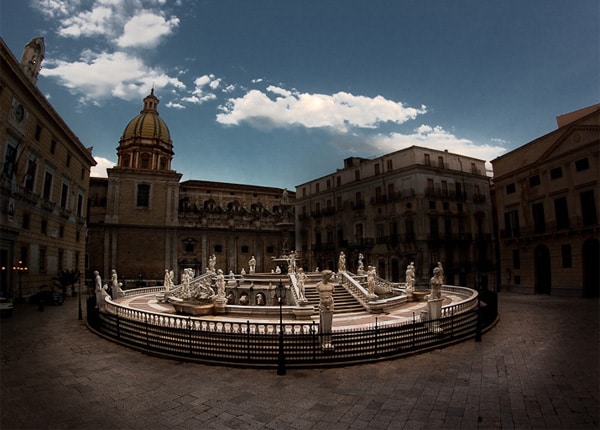
The highlight of the square is the so-called “Fountain of Shame,” as dubbed by Sicilians. This extraordinary water feature consists of several stone basins of varying diameters.
The fountain’s main attraction is its ensemble of mythical creatures, gargoyles, monsters, and nude human figures.
Interestingly, the fountain was originally crafted in Tuscany in 1555 by master sculptor Francesco Camilliani. Twenty years later, it was dismantled and transported to Sicily’s capital under the careful supervision of the architect’s son.
To reach Piazza Pretoria, head east along Via Maqueda from Quattro Canti.
Churches and Cathedrals
Cathedral of the Assumption of the Virgin Mary
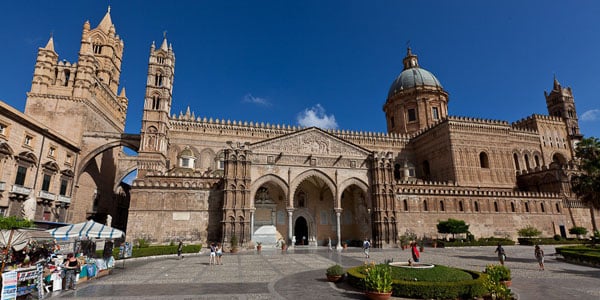
The Cathedral (Cattedrale di Santa Maria L’Assunta) is one of the city’s most renowned landmarks. Constructed at the end of the 12th century, it has undergone numerous changes over the centuries. The cathedral was almost entirely reconstructed in the 19th century.
The presbytery of the cathedral features three apses framed by two Norman-era towers, giving it the appearance of a fortress. On the left side of the church lies the crypt, where visitors can view sarcophagi and tombs preserved from Roman times. The crypt houses marble and porphyry tombs of Sicilian kings and members of their families.
Address: Corso Vittorio Emanuele.
Palatine Chapel
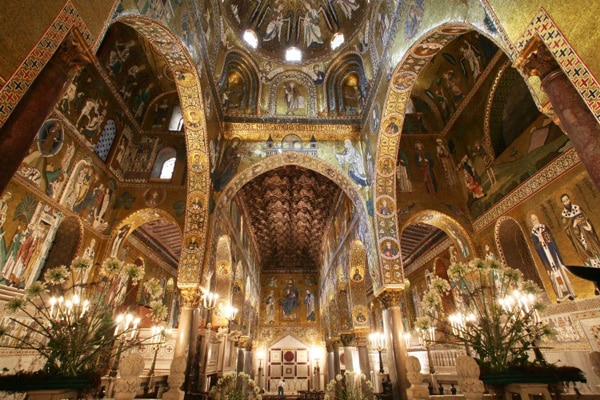
The Palatine Chapel (Cappella Palatina) is a unique structure that blends several architectural traditions. It was built in honor of the Apostle Peter at the command of King Roger II (Ruggero II di Sicilia). Reaching the chapel is easy—it is located within the Norman Palace (Palazzo dei Normanni). Only one of its walls currently faces outward, a mosaic loggia that stands as a 17th-century architectural monument. It also features a plaque commemorating the inauguration of a water clock by Roger II, which, unfortunately, has not survived to our time.
Today, the chapel functions as a museum, but Mass is held here on Sundays and religious holidays. The Sicilian Parliament often meets at the Norman Palace, so visiting hours for the chapel are not fixed. However, visiting in the morning offers the best chance of entry.
Address: Piazza del Parlamento, 1.
Church of La Martorana
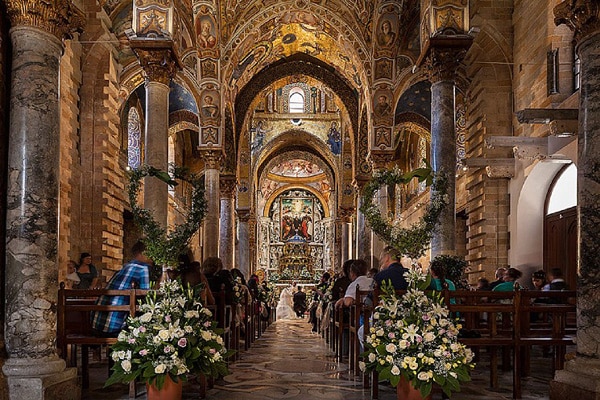
The Church of La Martorana (Chiesa della Martorana, Santa Maria dell’Ammiraglio) is a beloved spot where Sicilian newlyweds often gather, eagerly awaiting the moment their lives unite. Interestingly, this favorite of today’s youth was originally founded in the 12th century as an Orthodox church.
During the Norman expansion, it was converted into a Catholic church and later became part of the Byzantine Catholic Diocese.
The church’s appearance has been continuously transformed over time. Its most recent renovation took place at the end of the 20th century, during which some valuable Baroque frescoes were unfortunately lost. Nevertheless, within La Martorana’s walls, visitors can still admire Arab mosaics dating back to the 8th–9th centuries AD.
Address: Piazza Bellini, 3.
Museums
Puppet Museum
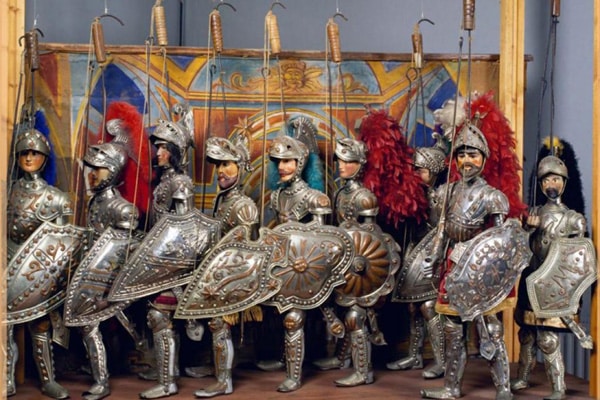
The Antonio Pasqualino International Puppet Museum (Museo internazionale delle marionette Antonio Pasqualino) is living proof that Sicily is celebrated not only for its cuisine but also for its puppet theater tradition, featuring original handmade dolls. Although new technologies have diminished the role of puppet theater, the craft of puppet-making endures as a cherished Sicilian art form.
The museum houses authentic antique puppets alongside modern creations by artisans from across the country and around the globe. Here, visitors can learn all about puppets, including their craftsmanship and techniques of operation.
Address: P.za Antonio Pasqualino, 5.
Archaeological Museum
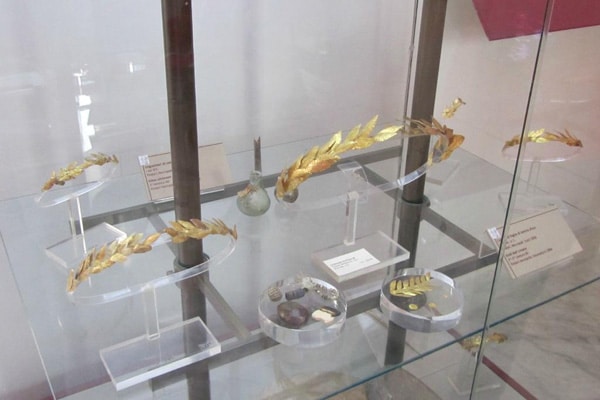
The Antonio Salinas Regional Archaeological Museum (Museo archeologico regionale Antonio Salinas) is housed in a building that once belonged to a religious order in the 17th and 18th centuries. Today, it offers a fascinating collection of archaeological finds from ancient times through the Middle Ages. The museum is named after Antonio Salinas, the collector who generously donated his extensive collection.
The museum is open to tourists from Tuesday to Friday until 5:30 PM, and on weekends and holidays only in the morning. Visits are limited to two hours.
Address: Piazza Olivella.
Interesting Places
Capuchin Catacombs
The Capuchin Catacombs (Catacombe dei Cappuccini) are truly unique. This burial site allows visitors to see the mummified remains and skeletons of Capuchin monks, along with wealthy and prominent Sicilians from the 18th and 19th centuries.
Address: Piazza Cappuccini, 1.
Teatro Massimo
Teatro Massimo (Teatro Massimo) is an outstanding theater, highly regarded by theater enthusiasts throughout Sicily and Italy. Covering nearly 86,000 square feet (8,000 square meters), it can accommodate up to 1,400 spectators.
Built in the 19th century, it remains a masterpiece of architectural art. Visitors are particularly impressed by the theater’s exceptional acoustics, natural ventilation ensuring a comfortable indoor climate, and world-class performances. Legend has it that the theater is even home to its own ghost.
Interestingly, the climactic final scene of the crime drama “The Godfather Part III” (1990), which chronicles the rise and fall of the Corleone mafia family, was filmed on the steps of Teatro Massimo. The tragedy played out against the backdrop of magnificent Italian opera leaves a powerful impression!
- Address: Piazza Verdi;
- Website: www.teatromassimo.it
Botanical Garden
The Botanical Garden (L’Orto Botanico di Palermo) was established in Palermo in the 18th century, supported by Sicily’s warm climate. Initially, the Royal Academy of Sciences was granted a small plot of land to cultivate medicinal herbs for the monarch and his court. Over time, the experimental plots were surrounded by exotic trees and plants.
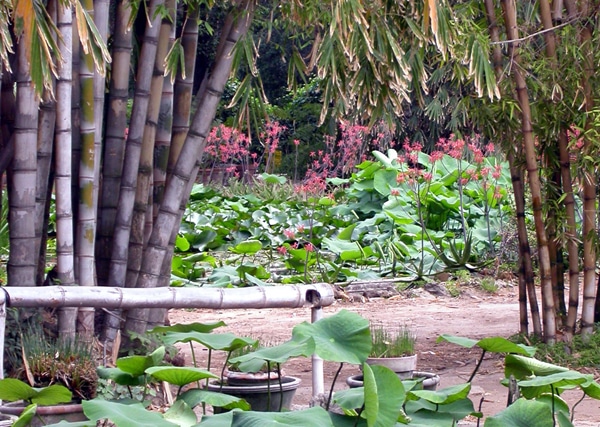
At the heart of the garden stands a neoclassical building (the Gymnasium), later joined by the Royal Greenhouse, an aquarium with aquatic plants, and the Tepidarium. Today, the Botanical Garden spans 25 acres (10 hectares). Throughout this vast area, visitors can admire plants typical of humid tropical forests, subtropical species, rare varieties of ferns, and cacti. The Gymnasium also houses an extensive herbarium.
Address: Via Lincoln 2. Opening hours: opens at 9:00 AM; closing time varies between 5:00 PM and 8:00 PM depending on the month.