 Italy for me From Italy with love


The Cathedral of Palermo, officially known as the Cathedral of the Assumption of the Virgin Mary (Cattedrale di Palermo or Cattedrale Metropolitana della Santa Vergine Maria Assunta), is a unique masterpiece of medieval architecture.
It stands out among other complexes for its beauty and the remarkable blend of styles from different eras and religions. Both the exterior and interior of the cathedral represent true works of art, shaped by Arab, Spanish, and German architects, sculptors, and artists.
Page Contents
History
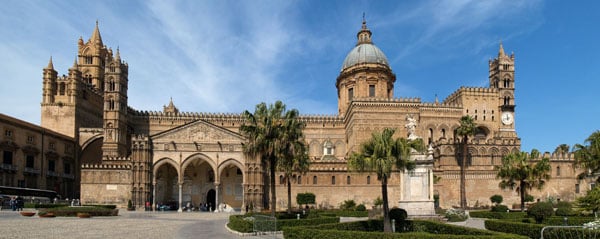
The cathedral’s rich history has bestowed upon it an extraordinary mix of styles. This multifaceted structure mirrors the complex history of Sicily, where rule passed from one power to another: Romans, Normans, Arabs, and Spaniards each left their mark. Eventually, in the 19th century, Sicily became part of the Kingdom of Italy.
The golden age of the independent Kingdom of Sicily spanned the 13th and 14th centuries. It was during this time that this magnificent cathedral was constructed in Palermo, used for grand state ceremonies. Resembling a palace in its splendor, the cathedral hosted royal coronations and served as the final resting place for kings and queens—and centuries later, for emperors.
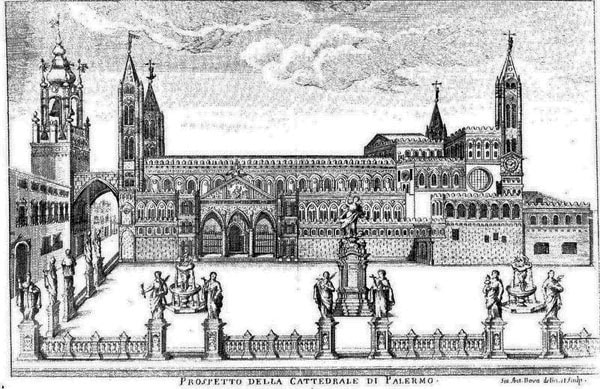
The building is a breathtaking architectural marvel, combining Gothic, Arab, and Classical styles. It houses royal treasures and medieval artworks. Today, it is Palermo’s leading tourist attraction—a place of worship for the faithful and a site of reverence for history enthusiasts.
Description
The Cathedral of Palermo was originally constructed in the Gothic style. The building was adapted from a former Muslim mosque. Before the mosque, there was a Byzantine church on the site (7th to 9th centuries), and even earlier, a Christian church from the 4th century. One of the columns on the southern side preserves the memory of the first Byzantine church. On this ancient column, words from the Muslim holy book—the Quran—are inscribed. This column offers a rare fusion of different historical eras: Islamic text carved on a Byzantine structure.
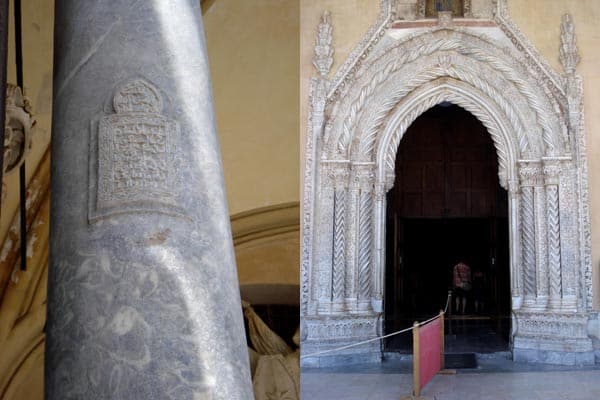
The main western entrance, constructed in 1352, is Gothic in style, complete with small 13th–14th-century bell towers adorned with Arabesque stucco. Gothic elements are also found in the southern portico (1430), the wooden choir stalls, and the bishop’s throne, which features 12th-century mosaic work.
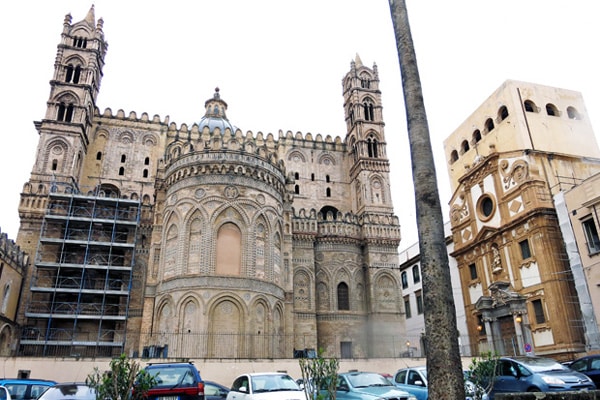
The eastern side of the building showcases distinctive Arab-Norman style elements, including blind arches, battlements, laurel stone inlays, and decorative patterns—features that evoke imagery of East Asia.
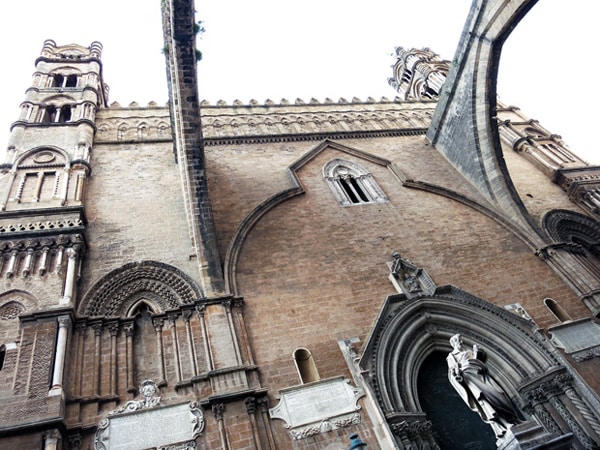
The northern portico exemplifies a blend of medieval architecture and classical elements. It was added in 1536, designed by the Sicilian Gagini family of architects. Classical features were incorporated later in the 18th century, with the addition of small domes and new walls.
The neoclassical dome over the relics of Saint Rosalia was built in the late 18th century under the direction of Florentine architect Ferdinando Fuga. This was the last major reconstruction of the complex, completed in the early 19th century, giving the cathedral its present appearance.
Crypts
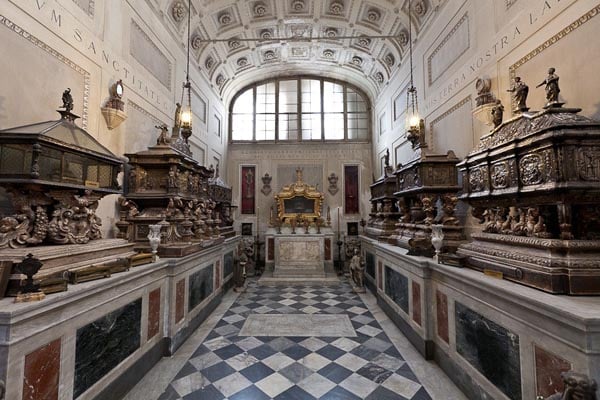
Starting with Roger II, who reclaimed the city from Arab control in the 11th century, all Sicilian rulers were crowned in Palermo. The greatest number of coronations occurred in the 12th and 13th centuries, when the cathedral held the status of the central ecclesiastical seat. The cathedral became not only a place of royal coronation but also the final resting place for Sicilian royalty.
Royal Sarcophagi
Roger II and other monarchs were honorably entombed within the cathedral. During Spanish rule, the cathedral’s ecclesiastical significance diminished. Coronations resumed only centuries later, in the 18th century, when the Kingdom of Sicily regained independence. 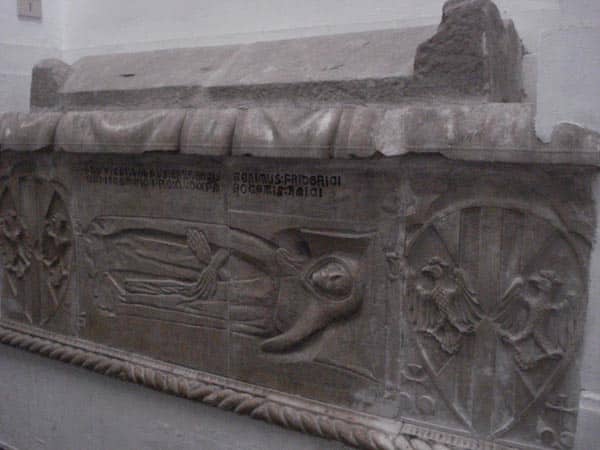
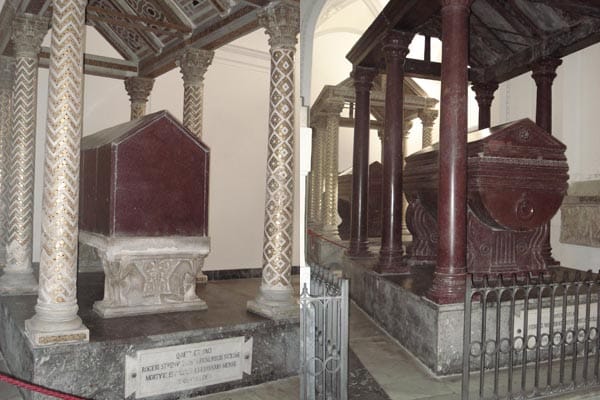
Palermo Cathedral serves as a unique royal necropolis. Sicilian rulers lie in porphyry and marble tombs adorned with precious inlays, pearls, gold, carvings, and mosaics. These tombs are true works of art, protected by law for their immense artistic and historical value.
The sarcophagus of King Roger I is supported by sculptures of kneeling youths. Emperor Frederick II’s sarcophagus rests on lions, while Constance of Aragon’s tomb features intricate sculptural reliefs. Each tomb is crafted from rare, precious materials and decorated with outstanding artistry.
Beyond coronations and royal tombs, the cathedral also became a center for scientific inquiry. In the late 18th century, it served as both a church and an astronomical observatory. In the 17th century, a heliometer with zodiac markers was installed, which still functions today. At noon, a ray of sunlight strikes the symbol of the zodiac constellation in which the sun is currently located.
Chapels and Bell Tower
Palermo Cathedral is a masterpiece of art and architecture, housing marble statues, paintings, and extraordinary architectural embellishments. The treasury showcases imperial jewelry, rare ecclesiastical garments, and noble chalices. 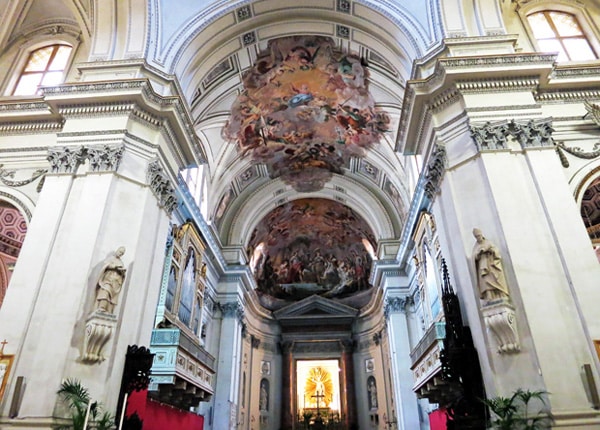
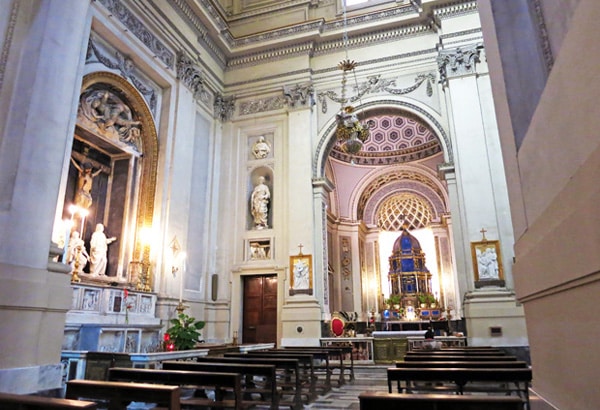
The side chapel to the right, known as the Chapel of Relics, holds the remains of Christian martyrs. Typically closed to the public, these relics are displayed only on Christian feast days. Another chapel enshrines the relics of Saint Rosalia. According to legend, Rosalia was a noblewoman who renounced worldly life in the 12th century to live as a hermit. Her relics are believed to have saved Palermo from the plague, and today she is honored as the city’s patron saint. The royal tombs are housed in two separate chapel spaces, located to the right of the western portico.
The bell tower, dating from the Norman period, was originally designed as a fortress. In the 12th century, it even served as a stronghold for royal chancellor Stephen du Perche. In the 19th century, the tower’s upper section was remodeled in the Gothic style, and pointed arches were added to connect it with the main building. In the 20th century, a statue of the Madonna was placed atop the bell tower.
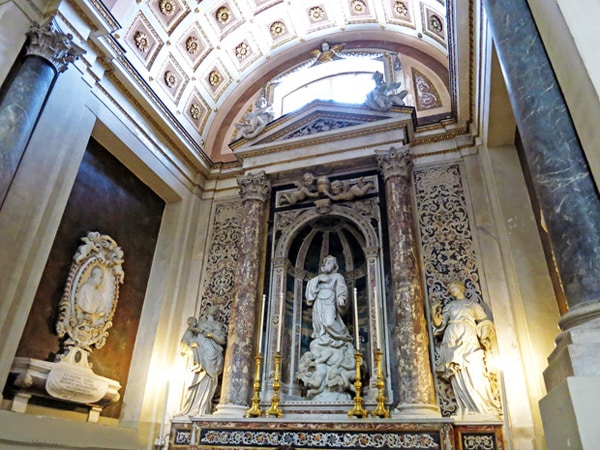
The dome above the relics of Saint Rosalia is one of the last major additions, dating to the late 18th century. Along with the dome, fourteen side chapels were also built. The valuable sarcophagi, once scattered throughout the cathedral, were gathered into two dedicated chapel spaces.
Statues
Since 1575, the Cathedral Square in Palermo has been enclosed by a marble balustrade adorned with statues crafted by the sculptor Gagini. A century after the balustrade was erected, a fountain was installed in the center of the square, and another century later, the fountain was topped with a statue of Saint Rosalia by Vincenzo Vitaliano (1744).
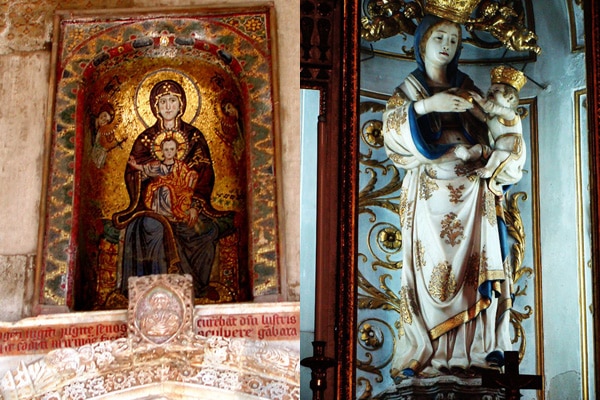
Statues by renowned artists decorate both the exterior and interior of the cathedral. The most famous among them is the statue of the Madonna and Child (Madonna Libera Inferni) from 1469. This masterpiece of medieval carving by Francesco Laurana is located in the northern nave.
The grandeur of Palermo Cathedral, its architecture, golden inlays, and sculptural decorations leave visitors speechless, inspiring awe with its unparalleled beauty. It is, without a doubt, one of the most beautiful places in Palermo.
Opening Hours
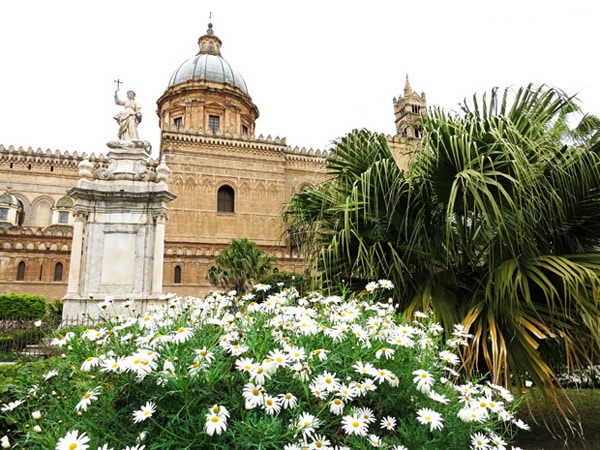
The cathedral doors are open to worshippers and tourists daily. On weekdays, it is open from 8:30 AM to 6:00 PM; on weekends, from 11:00 AM to 6:00 PM. Tourist entry is not allowed during Mass, which takes place at 7:30 AM and 6:00 PM on weekdays, and at 8:45 AM, 9:45 AM, 11:00 AM, and 6:00 PM on holidays.
Visiting the main cathedral is free of charge. However, access to the treasury, royal tombs, and crypts requires an entrance fee ranging from €0.50 to €3.00, depending on the visitor’s age category.
Official website of Palermo Cathedral: www.cattedrale.palermo.it
Dress Code
When visiting this religious complex, it is necessary to adhere to a dress code: shoulders and knees must be covered, even in the hottest weather. Inside the cathedral, the thick walls provide a cool and refreshing atmosphere, even during the peak heat of July. Visitors can spend time admiring the ornate decorations and absorbing the tranquil rhythm of religious life.
How to Get There
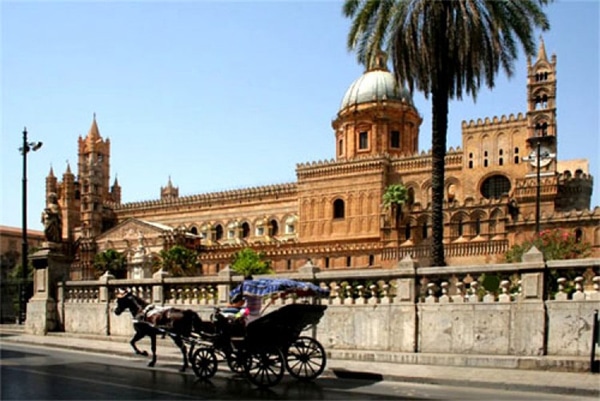
Finding the Cathedral of Palermo is easy, as it is located in the heart of the city. It’s about a 20-minute walk from the central train station. Simply follow Via Maqueda and then continue along Via Vittorio. Alternatively, you can take a taxi or opt for a charming ride in a horse-drawn carriage.