 Italy for me From Italy with love


At different times, Palermo fell under the rule of the Phoenicians and Greeks, Arab Muslims, Normans, Spaniards, and French. This vibrant blend of cultures laid the foundation for the city’s rich collections, which the Museums of Palermo proudly display. Highlights include the Capuchin Cemetery, the Archaeological Museum, the Astronomical Observatory, the Museum of Islamic Culture, the Puppet Museum, and the Maritime Museum.
Page Contents
Death Museum
Museum of the Dead (Catacombe dei Cappuccini) in Palermo offers an unforgettable experience for travelers with strong nerves.
The Capuchin Cemetery is home to 8,000 mummies, displayed publicly in various poses. These arrangements of mummified bodies are located beneath the Capuchin Monastery.
Capuchin Burial Rituals
The unique underground atmosphere fosters exceptional preservation of the remains—bodies decompose very slowly even without special treatment. Originally, the catacombs were intended solely for deceased Capuchin monks. Over time, with special permission from the Archbishop of Palermo, members of the city’s elite were also granted the opportunity for a form of “life after death.”
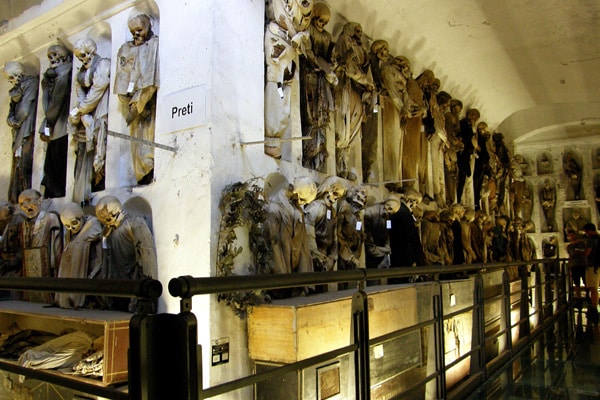
Preparing the deceased for entombment took about eight months. During this time, bodies were dried in special chambers and treated with vinegar or arsenic-based solutions. The dead were then dressed in burial clothing and positioned lying down, sitting, or standing within the catacomb corridors. Relatives often visited their deceased loved ones, bringing offerings and even dressing them in new clothes for holidays.
Description
The Capuchin Catacombs feature several corridors connected to form a rectangular layout. The oldest section is the monks’ corridor. The cemetery was organized to separate men and women (laypeople), children, and priests. A dedicated corridor was created for Palermo’s working elite—scholars, sculptors, artists, and doctors. According to legend, the remains of the great painter Diego Velázquez are preserved here. 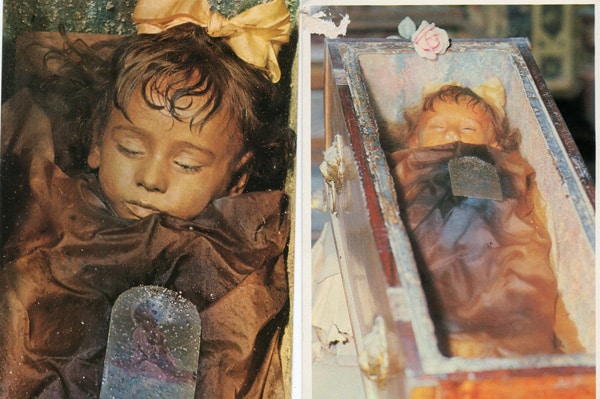
At the beginning of the 20th century, authorities officially prohibited further burials of this kind. The last “guest” of the Capuchin Monastery was a young girl named Rosalia Lombardo. This two-year-old child passed away with a remarkably serene and angelic expression. Her heartbroken father paid a fortune to Dr. Alfredo Salafia to preserve the tiny body in perfect condition.
The embalming result exceeded all expectations—more than a century later, Rosalia lies in a glass coffin, appearing not dead but merely asleep. Her preserved innocence deeply moved the people of Palermo, who renamed the monastery’s chapel, originally dedicated to Our Lady of Sorrows, in her honor.
- Address: Piazza Cappuccini, 1.
- Hours: Weekdays from 8:30 AM to 6:00 PM.
- Admission: €5 (approximately $5.35).
- Official Website: www.catacombepalermo.it
Archaeological Museum
The Archaeological Museum (Museo archeologico regionale Antonio Salinas) in Palermo was founded in the 19th century within a former monastery of the Congregation of Saint Philip Neri. The museum’s founding father, Antonio Salinas, a renowned numismatist, bequeathed 6,000 pieces from his personal collection to establish the institution.
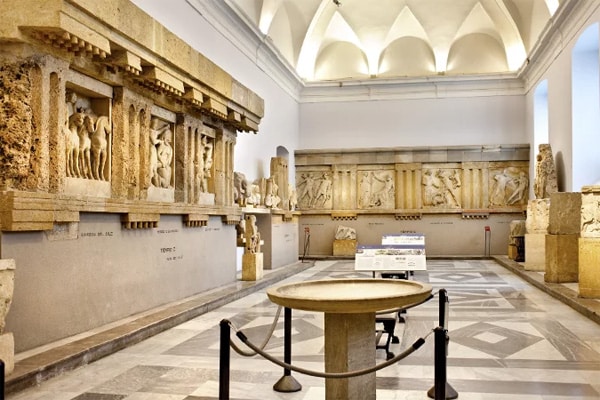
Visitors can immerse themselves in the history of Sicily, from prehistoric times through the late Middle Ages. The museum boasts an extensive collection focused on the Punic Wars and Greek colonization. Particularly impressive are the sarcophagi with mummies and the magnificent examples of Greek art depicting Olympian gods and various mythological scenes.
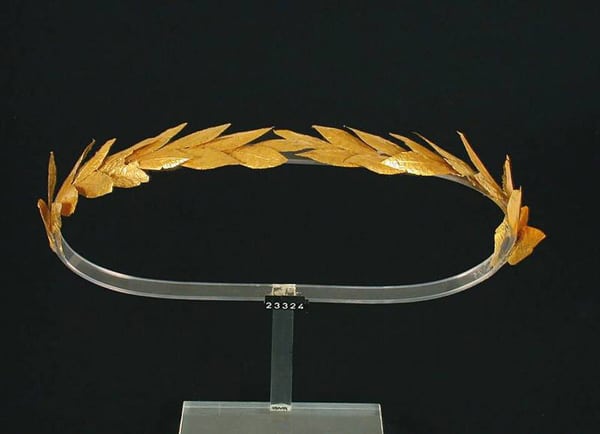
The museum also houses the “Etruscan Collection,” assembled by Pietro Bonci Casuccini and later purchased from his heirs by the Italian government. This remarkable collection features exquisite bronze artifacts, ceramic vessels adorned with ancient paintings, funerary urns from the era of Carthaginian conquest, statues and sculptures, and sarcophagi.
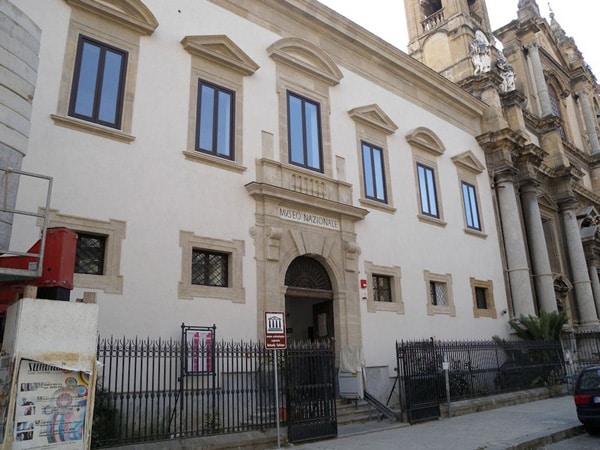
- Museum Address: Via Bara all’Olivella, 24.
- Opening Hours: Weekdays from 9:30 AM to 7:30 PM, with a break from 1:30 PM to 2:30 PM. Weekends and holidays: 9:30 AM to 1:00 PM.
- Admission: €4.50 (approximately $4.80); guided tours last about 1.5–2 hours.
- Official Website: turismo.comune.palermo.it/palermo-welcome-luogo-dettaglio.php
Puppet Museum
The International Puppet Museum (Museo internazionale delle marionette Antonio Pasqualino), located in Palermo, was founded in 1975 by surgeon and anthropologist Antonio Pasqualino.
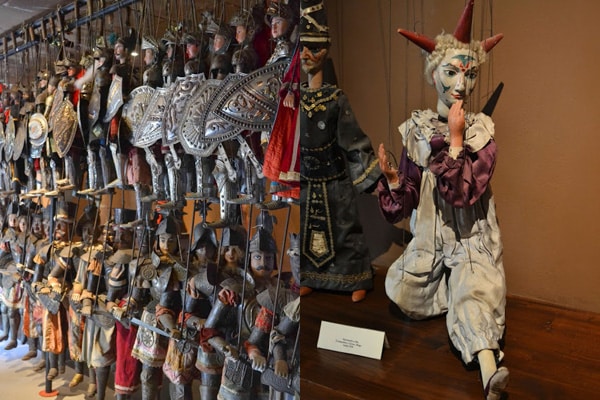
The museum’s collection features 3,500 puppets gathered from various corners of Italy, Greece, Turkey, Vietnam, China, Cambodia, and other countries. Each puppet vividly showcases the unique cultural traits of its place of origin.
Italians firmly believe that people stop playing only when they die. True to this spirit, Pasqualino established the Puppeteers’ Festival (Festival di Morgana), which has become a cherished cultural event in Palermo. Every November, the city’s streets transform into theatrical stages, as puppet masters from around the world gather to revive the ancient art form.
- Address: Piazzetta Antonio Pasqualino, 5.
- Opening Hours: Monday to Saturday from 9:00 AM to 6:30 PM; Sundays and holidays from 10:00 AM to 1:00 PM.
- Admission: €5 (approximately $5.35) for adults.
- Official Website: www.museodellemarionette.it/en/
Astronomical Observatory
The Palermo Astronomical Observatory (Osservatorio astronomico di Palermo) was founded in 1786 by Giuseppe Piazzi. It found its home within the majestic Norman Palace (Palazzo dei Normanni), once the royal residence for many rulers of Sicily.
In 1801, the observatory gained worldwide fame with the discovery of Ceres—the first asteroid identified within the Solar System. A prominent feature of the museum’s exhibit is the Ramsden equatorial circle, the very instrument used for the asteroid’s discovery. Of exceptional interest are two antique globes: a terrestrial globe by cartographer Rigobert Bonne and a celestial globe by Jérôme Lalande. Both are crafted from fine walnut wood and are renowned for their elegant appearance and precision.
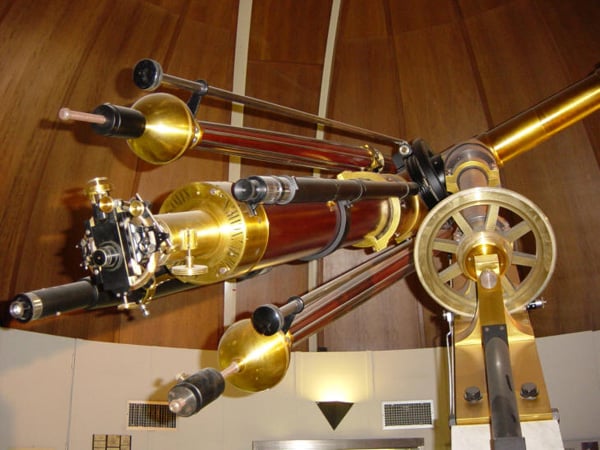
The collection comprises a variety of measuring instruments essential for the study of astronomy, meteorology, seismology, topography, and physics. Among the items on display are achromatic and equatorial telescopes, chronographs, marine chronometers, medieval barometers, and spectroscopes. These antique instruments, made from precious metals and rare woods, resemble true works of art.
Today, the observatory’s research focuses on studying the solar corona, the evolution of stars, observations of supernova remnants, modeling astrophysical processes, and developing equipment for X-ray telescopes.
- Address: Piazza del Parlamento, 1.
- Tours last one hour and are available in English, French, and Italian.
- Reservations can be made on the official website: www.astropa.inaf.it
Museum of Islamic Culture
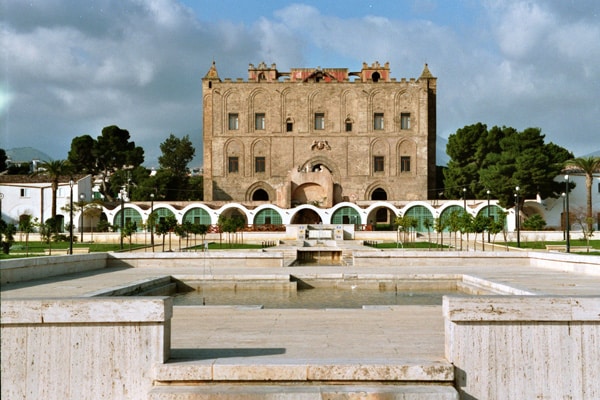
The Museum of Islamic Culture (Museo d’arte islamica), housed in the historic Zisa Castle (Castello della Zisa), preserves numerous artifacts that arrived in Sicily during the Arab colonization. In the 10th century, Palermo was under Arab Muslim rule and served as the center of the Sicilian Emirate, leaving a profound mark on the city’s history and culture.
Zisa Castle is one of the most beautiful architectural monuments of that era. Its design reflects the influence of three cultures: Norman fortitude, Arab austerity, and Sicilian exuberance. Arab influence is especially evident in the Fountain Hall, where under a cross-shaped vault, three niches adorned with gold and colorful decorative mosaics create a stunning visual effect.

The museum’s collection features exquisite items crafted by master artisans between the 9th and 11th centuries. Highlights include finely made gold and silver objects (such as jewelry and tableware), elegant wooden furniture, and antique weaponry.
- Address: Piazza Zisa.
- Opening Hours: Weekdays from 9:00 AM to 7:00 PM.
- Admission: €6 (approximately $6.40) for adults and €3 (approximately $3.20) for children aged 4 to 12.
Maritime Museum
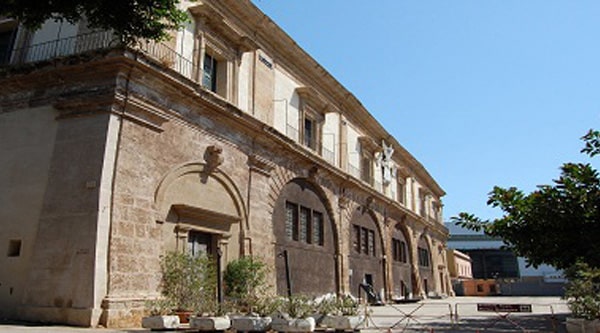
The Maritime Museum (Arsenale della Real Marina – Palermo) has been operating since 1997 within the historic building of the Palermo Arsenal (Arsenale di Palermo). This ancient shipyard, constructed during the Bourbon rule, showcases the Mannerist architectural style. The museum offers a fascinating experience for enthusiasts of Sicilian shipbuilding and military history.
Its rich collection is spread across five major sections, dedicated to the history of naval battles, the traditions of Sicilian sailors, and the development of maritime industries. Shipbuilding fans will be captivated by the wooden ship models (galleys, xebecs, and gunboats) dating from 1630 to 1848, along with engines from Italy’s early submarines, created in the early 20th century.
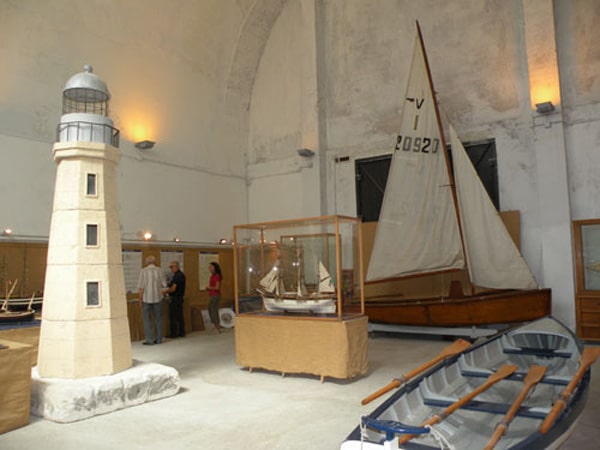
The exhibition also features a wide range of sailors’ weaponry, various navigation tools used at night and during storms, and fishing gear for sea angling. On the Arsenal grounds, two 18th-century fortress cannons stand guard, regarded as the protectors of the museum.
- Address: Via dell’Arsenale 134/142.
- Opening Hours: Weekdays from 9:30 AM to 12:30 PM.
- Admission: Free.