 Italy for me From Italy with love


In Italian cuisine, the preparation of sauces is an art. They aren’t merely an addition to pasta dishes—each sauce is a standalone dish that requires careful attention. People often think that an Italian sauce is just a mix of ingredients every home cook has on hand: fresh local ingredients in season or pantry staples in winter months.
And that’s true! However, the same recipe can be made differently in each family and restaurant, giving each dish its own unique touch.
Page Contents
Tomato Sauce
Traditionally, sauces are made with seasonal ingredients, which allows for a wonderful, natural flavor.
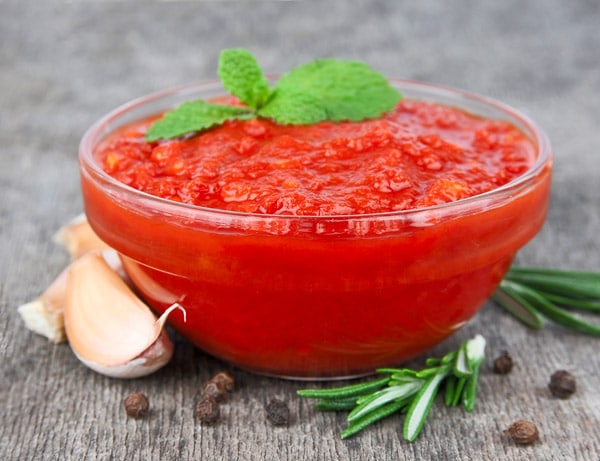
Simple ingredients like tomatoes, beans, herbs, garlic, and even nuts simmered in olive oil and blended can turn an ordinary pasta dish into a restaurant-quality meal.
The original pasta dressing was a mixture of olive oil, tomatoes, and basil. Chefs later experimented by adding cheese, to everyone’s delight. This is how the classic Italian dressing was born. Interestingly, the type of cheese varies by region, giving the sauce a distinct flavor each time.
In Sicily, they often use Pecorino; in Emilia-Romagna, it’s Parmigiano, and in Campania, the preferred choice is Mozzarella.
Pesto
Another famous sauce is Pesto, an Italian classic that originates from sunny Liguria.
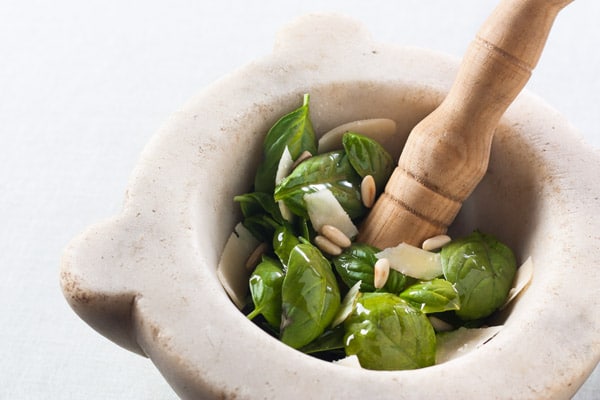
You won’t find a more delicate sauce than this one. Its rich green color comes from olive oil, basil, and crushed pine nuts.
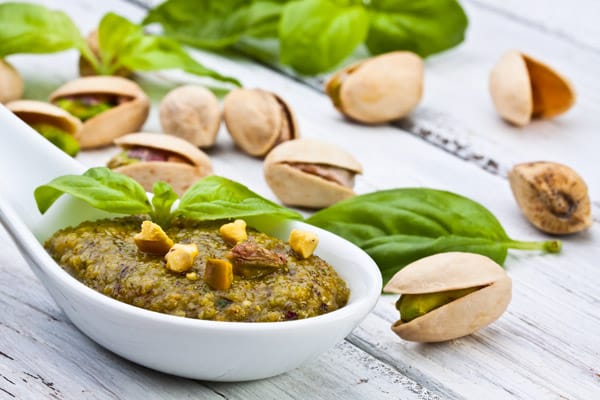
In some Sicilian versions, pine nuts are replaced with pistachios, and mint is added for freshness and a flavor twist. “Pesto” comes from the Italian verb *pestare*, meaning “to crush,” which is fitting since the ingredients are traditionally ground together in a stone mortar.
Sicilian pistachios used in “Pesto” must be freshly harvested—still slightly green, lightly dried but not roasted, essentially raw. This intensifies the green shade of the sauce. Pesto should contain at least two-thirds pistachios. The basil and mint must be fresh, and the olive oil should be of the Extra Virgin variety. This is not a recipe to experiment with; changing ingredient quantities will completely alter the flavor.
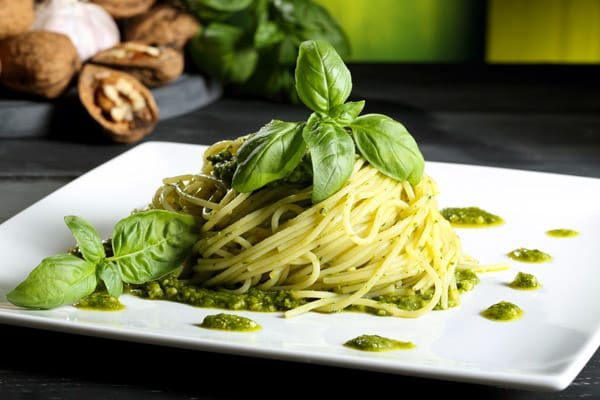
Today, high-quality “Pesto” is widely available in Italian stores. In Sicily, modern technologies have enabled the large-scale production of this product, making it unnecessary to make it from scratch.
However, a store-bought jar can never compare to the pleasure of making your own sauce and savoring it. Pesto pairs perfectly with traditional spaghetti, which should be of the highest quality, like spaghetti *alla Chitarra*. Additionally, the grated cheese used to top the Pesto should also be the best available.
Cuttlefish Ink
Another sauce that falls under the category of “exotic” is “Seppia” or “Nero di Sepia.”
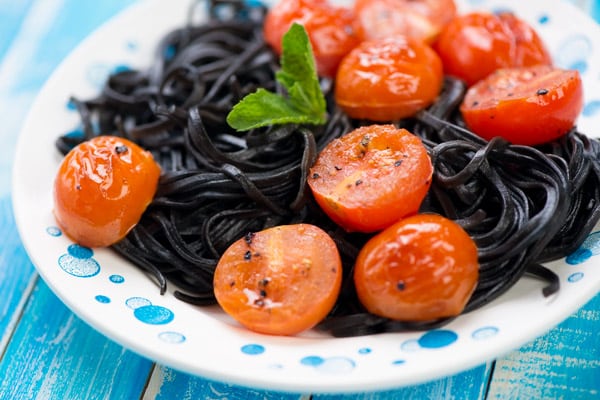
The main ingredient in this popular dish is cuttlefish ink, which gives it a deep, dark blue or even black color. Despite its striking hue, **Nero di Sepia** isn’t just about the ink. It also includes pieces of cuttlefish (Seppia) sautéed with garlic or onions in olive oil, tomato puree, white wine, parsley, and pepper. This exotic sauce pairs best with spaghetti. Remember, in Italy, seafood dishes are never accompanied by grated cheese.
Carbonara
We can’t forget the widely loved **Carbonara**—a creamy, rich, and slightly meaty sauce.
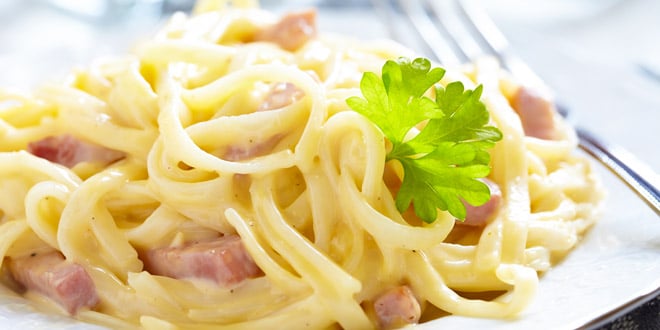
When added to pasta, the dish is called “Carbonara,” leading many to mistakenly believe that it’s the name of a type of pasta. Some core ingredients remain unchanged: eggs, cheese (Parmigiano), and pancetta. Pancetta is similar to ham but looks and is prepared a bit differently.
In addition to the cheese and pancetta, eggs and cream are used. Although **Carbonara** can be made separately, it’s best prepared alongside the pasta. The ingredients are mixed with the hot pasta, allowing them to blend without any additional heat. Cheese is then added, and everything is mixed thoroughly. The key is avoiding lumps, which requires some skill, but as they say, nothing is impossible.
Create, cook, and discover your own Italy, and I’ll gladly help you along the way!
What’s your favorite pasta sauce?