 Italy for me From Italy with love


Many have seen it in magazine photos or even on supermarket shelves, but few people from northern countries genuinely know what an artichoke is or how to eat it…
Without exaggeration, it can be called the “Winter King” of Italian cuisine. Italians love artichokes for three reasons: They have a bold, unique flavor, are versatile in preparation, and are rich in nutrients that benefit the body. In Italy, fresh artichokes are available for eight months of the year, from October to June. There are many varieties, some of which produce multiple harvests each year. Artichokes are grown worldwide, but Italy is the leading producer.
Artichokes are cultivated for their unopened flower buds. When fully grown, the plant resembles a thistle, and the edible part consists of the young, unopened flower heads.
Therefore, it’s important to choose a young artichoke without dry tips, as older buds are less edible. Incidentally, the stem of the artichoke is often cut along with the head, but before cooking, it is usually trimmed along with the outermost tough leaves.
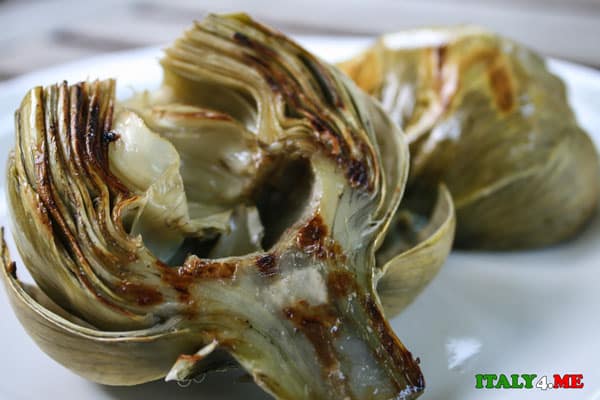
Various types of artichokes can be found on the market. They come in round or elongated shapes, in deep green or even with purple streaks. Some have spines on the outer leaves, while others do not. There are over 90 (or even 140) varieties of artichokes worldwide.
Page Contents
Health Benefits of Artichokes
According to recent scientific studies, eating artichokes provides great health benefits and helps prevent many diseases. These plants have tonic properties, soothe coughs, help cleanse the blood, dissolve kidney stones, and are powerful antioxidants.
Artichokes contain essential nutrients such as iron, sodium, potassium, calcium, phosphorus, vitamins A, B1, B2, C, PP, malic acid, citric acid, tannins, and sugars, which are safe even for diabetics.
How to Consume Them?
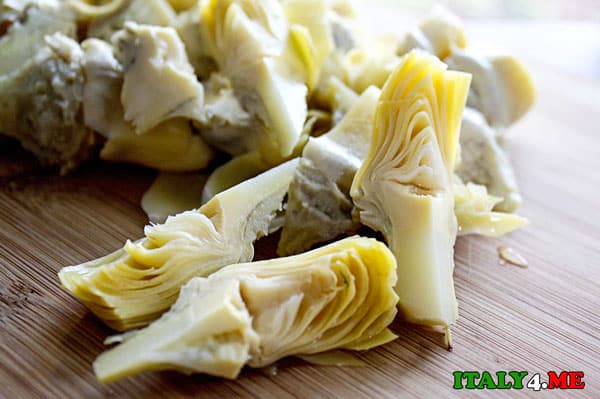
The most tender and prized part of the artichoke is the heart, hidden beneath a layer of tougher, more bitter leaves. At the very center of the heart is a cluster of inedible fuzz.
Young artichokes can be eaten raw, but most are boiled in water with vinegar or lemon juice (to prevent the leaves from darkening). Before boiling, the artichoke is peeled from several outer layers, and the inner layers are trimmed. Keep in mind that after boiling, artichokes don’t store well. The mineral-rich water from boiling can be saved to add flavor to soups or broths later.
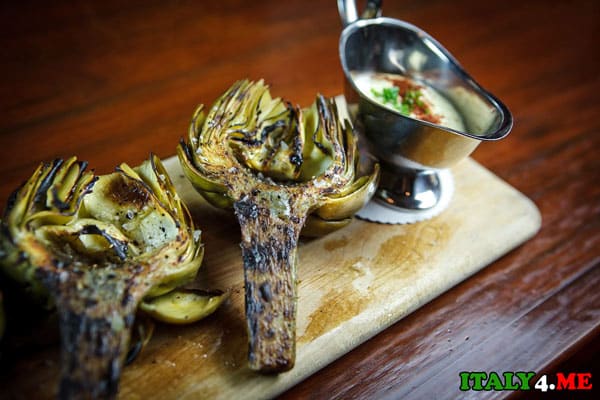
Italians prepare hundreds of dishes using artichokes. They fry, boil, and bake them, adding them to pizza, pasta, rice, soups, and salads. One of the most famous dishes is “Roman-style Artichokes” (Carciofi alla Romana).
Read about traditional Roman dishes.
Ingredients
- 4 artichokes (preferably the Roman variety “mammole”)
- 1 bunch of parsley
- Lemon juice
- A few lemon balm leaves
- Extra virgin olive oil
- 2 tablespoons of breadcrumbs
- 1 garlic clove
- Pepper
- Salt
Roman-Style Artichoke Recipe
Peel the artichoke of its outer dry leaves, leaving only the heart. Trim the heart and remove the inedible fuzz. Leave about 2 inches (5 cm) of the stem and clean it of any tough outer fibers. Place the cleaned artichokes in a bowl of cold water with lemon juice to prevent the leaves from browning.
Chop the garlic, lemon balm, and parsley together. Mix with breadcrumbs, pepper, salt, and a little olive oil.
Take the artichoke and, using your fingers, spread the leaves apart to drain out all the water. Stuff the artichoke with the breadcrumb and herb mixture, filling both the hollow center and the spaces between the leaves. Repeat with all the artichokes.
Place the stuffed artichokes in a deep baking dish or skillet (the sides should be as tall as the artichokes), with the heads down and the stems up. Make sure the artichokes stand firmly and won’t tip over during cooking. Pour a mixture of water and olive oil (50/50) over the artichokes. Cover and simmer on medium heat for 10 minutes, then cook on low heat for another 20 minutes, depending on the size of the artichokes.
Serve the artichokes covered with the sauce in which they were cooked.
A common variation of this dish is serving it with anchovies, either in oil (drained) or salt (rinsed). Finely chopped anchovies are simply placed between the leaves of the artichokes.
Roman-style artichokes are most often served hot but are also great as a cold appetizer.