 Italy for me From Italy with love

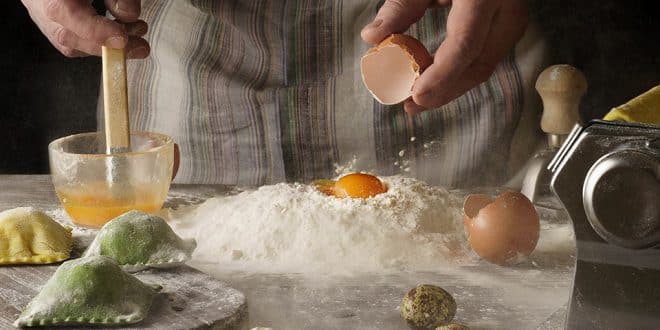
Ravioli – a true giant of Italian cuisine. And while many might think of them as just Italy’s take on dumplings, Italians proudly define ravioli as a type of stuffed pasta.
Either way, this dish enjoys global popularity. In different regions of Italy, ravioli have their own local “relatives.” For example, in Piedmont they’re called agnolotti, in Mantua they go by tortelli, and in Romagna they’re known as cappelletti.
Ravioli are most often square-shaped, but round and half-moon versions are also common. What makes this dish so unique is not just the variety of shapes, but also the endless filling combinations. Unlike traditional meat-filled dumplings familiar to many cultures, the classic Italian version is stuffed with ricotta cheese and spinach. Curious how Italians make their signature dough, or what other fillings are popular? You’ll find it all in this article.
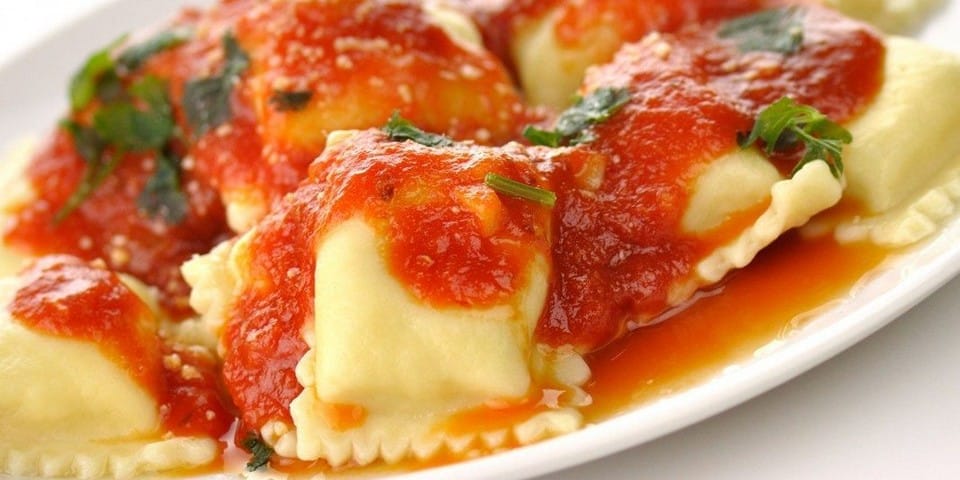
Page Contents
History
Stuffed pasta—Italy’s most iconic culinary invention—dates back to the early Middle Ages. Ravioli, tortellini, cappelletti, and other variations all share a common heritage.
The first known mention of this type of pasta appears in the 12th century. It’s believed that during Christmas festivities in Bologna, it was a highlight of the wealthiest tables.
According to a beautiful legend, during one of the battles between Bologna and Modena, the gods Bacchus, Mars, and Venus descended from Mount Olympus. After fierce fighting, the deities stopped to rest at the Corona di Castelfranco inn, situated between the two rival cities. The innkeeper, unable to resist temptation, peeked at the sleeping Venus. Captivated by her beauty, he was inspired to shape pasta dough in the form of her perfect navel.
The word “ravioli” likely comes from a blend of “robiola” (a soft cheese) and “rapa” (turnip). In ancient times, ravioli were typically filled with a mixture of soft cheese and turnip greens.
The delicious dish was even praised by Italian poet Giovanni Boccaccio. In one of the tales from *The Decameron*, the characters arrive in a land of abundance where people do nothing but make ravioli and cook them in capon broth.
It’s impossible to pinpoint exactly where and when stuffed pasta was first created, or who invented it. But one thing is certain: the birth of ravioli is a true culinary miracle.
Stuffed Pasta Varieties
Not every type of stuffed pasta in Italy is called “ravioli.” Across the country, different regions boast their own local versions, each with unique shapes, sizes, and fillings. Sometimes, identical dishes go by completely different names—even just a few miles apart. Here are some of the most common and beloved stuffed pasta formats:
- Anolini – crescent-shaped pasta typical of Parma and Piacenza. Traditionally stuffed with stewed beef or roasted pork, Parmesan cheese, eggs, nutmeg, salt, and pepper. Often served in rich broth.
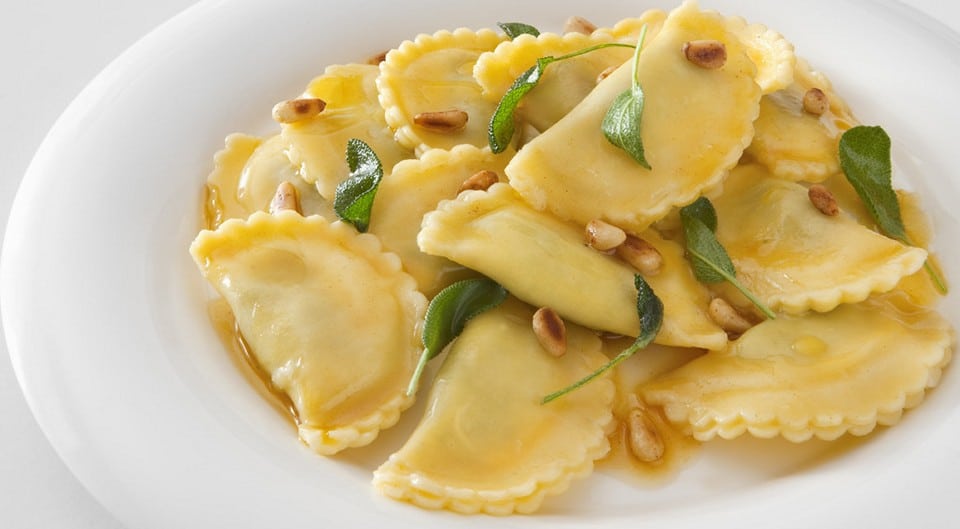
- Agnolotti – square-shaped pasta from Piedmont (Piemonte). Common fillings include braised beef, roasted chicken breast, rabbit, sausage, vegetables, Parmesan, and nutmeg.
- Casoncelli – a signature dish of Bergamo and Brescia. Crescent-shaped and typically filled with meat, Grana Padano cheese, and herbs. In Brescia, they’re more often stuffed with sausage, bread, egg, and cheese. Traditionally served with melted butter and grated cheese.
- Cappelletti – pasta shaped like little medieval hats, typical of Emilia-Romagna. Usually filled with cheese blends like Parmesan, Grana Padano, and Robiola. Served with seasoning or in chicken broth.
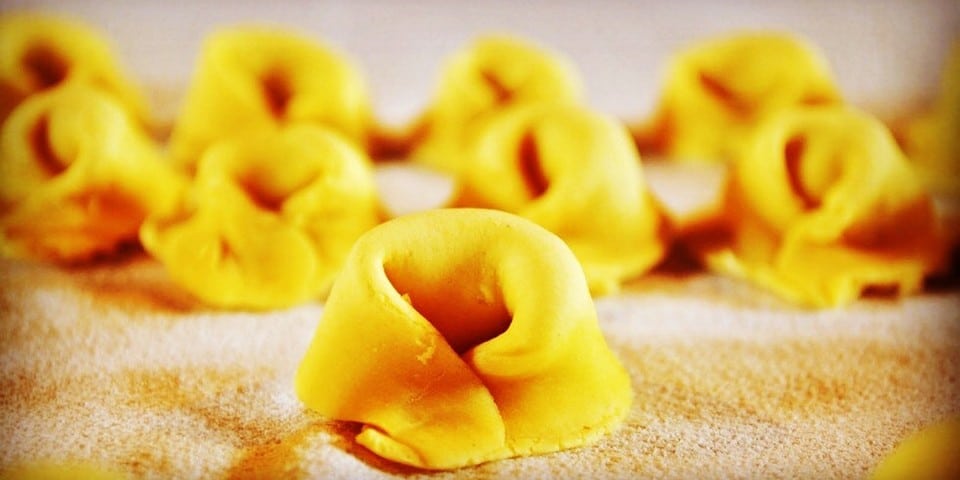
- Cararnelle – a specialty of Emilia-Romagna. These pasta pieces are filled with ricotta, egg, spinach, and grated Parmesan. Shaped like wrapped candies, they’re truly eye-catching.
- Mezzelune – half-moon shaped pasta from South Tyrol. Made from white or buckwheat flour, they’re typically filled with ricotta, spinach, or mushrooms. Variants include meat, beet, or cabbage fillings.
- Ravioli – the most versatile type of stuffed pasta. Found in square, rectangular, circular, triangular, or “bundle” shapes. Fillings vary: while ricotta with or without vegetables is widespread across Italy, Liguria leans toward meat-based versions.
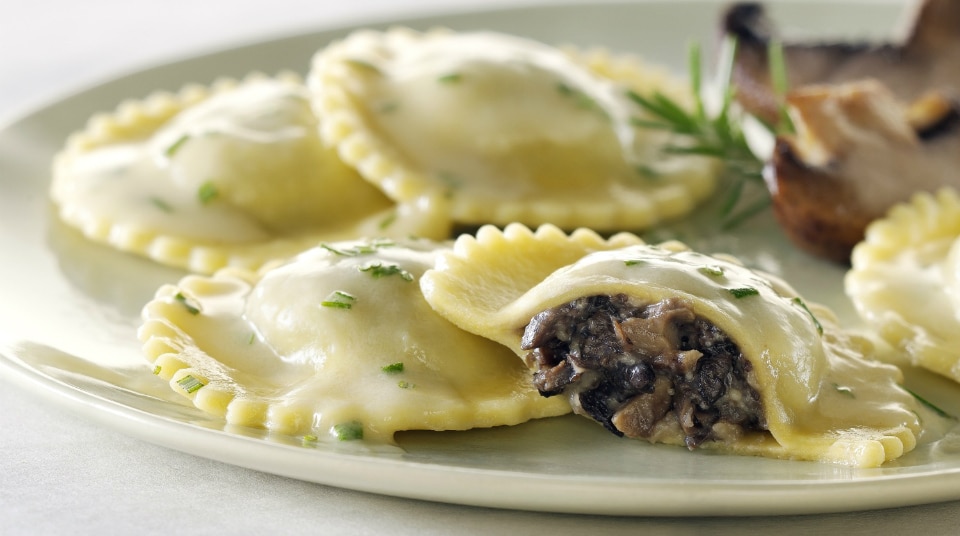
- Tortellini – a classic from Bologna and Modena. Resembling handmade dumplings, they’re known for their thin dough and generous fillings.
- Tortelli and Tortelloni – similar in shape to tortellini, but larger in size. Usually filled with ricotta and leafy greens, although variations include mushrooms or walnuts. A well-known version from Reggio Emilia features pumpkin and amaretto cookies. Traditionally served with melted butter and fresh sage.
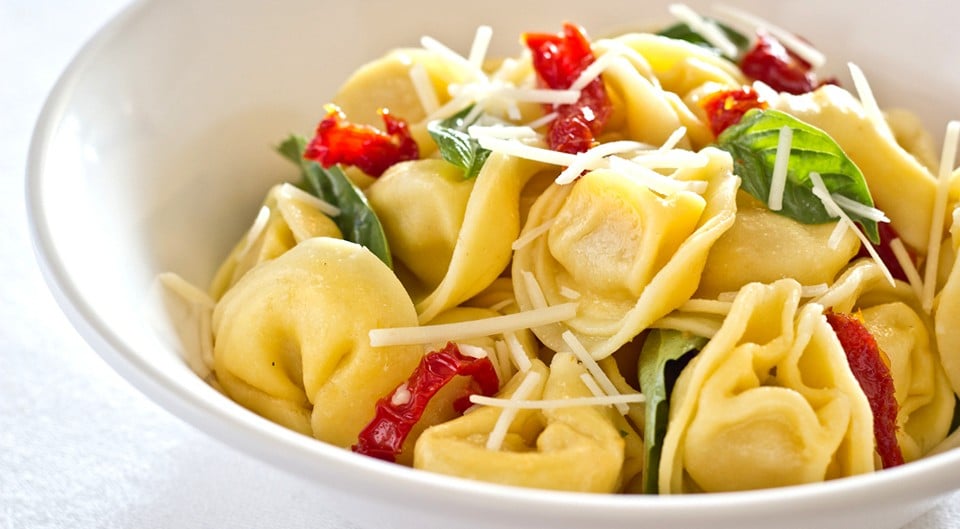
- Triangoli di pasta – triangular-shaped stuffed pasta with endless filling combinations.
- Fagottini – small “bundle” pasta filled with vegetables like stewed carrots, onions, and green beans, plus ricotta and olive oil.
As you can see, stuffed pasta is beloved across Italy, with each region offering its own twist on this time-honored culinary tradition.
Types of Dough and Fillings for Ravioli
The dough used for ravioli varies depending on the type of filling. For meat-based fillings, a classic pasta dough is used with a basic ratio of 1 egg per 100 grams (about 3.5 oz) of flour.
Softer fillings—such as ricotta, vegetables, or fish—require a more delicate dough. In these cases, fewer eggs are used (roughly 6 eggs per 1 kg or 2.2 lbs of flour), and warm water is added to achieve a soft, elastic texture.
Some unconventional ravioli doughs are made with chickpea flour, chestnut flour, or buckwheat flour. Dough can also be naturally colored using vegetable juices (like spinach, beets, or tomatoes) or spices (like saffron or cocoa). For a dramatic black hue, cuttlefish ink is mixed directly into the flour.
The variety of fillings—shaped by local traditions and culinary creativity—differs not only from region to region but often from one village to the next. There are no strict rules for ravioli fillings. The dish can be served in broth or on its own, although meat and fish ravioli are typically enjoyed without any liquid accompaniment.
Meat
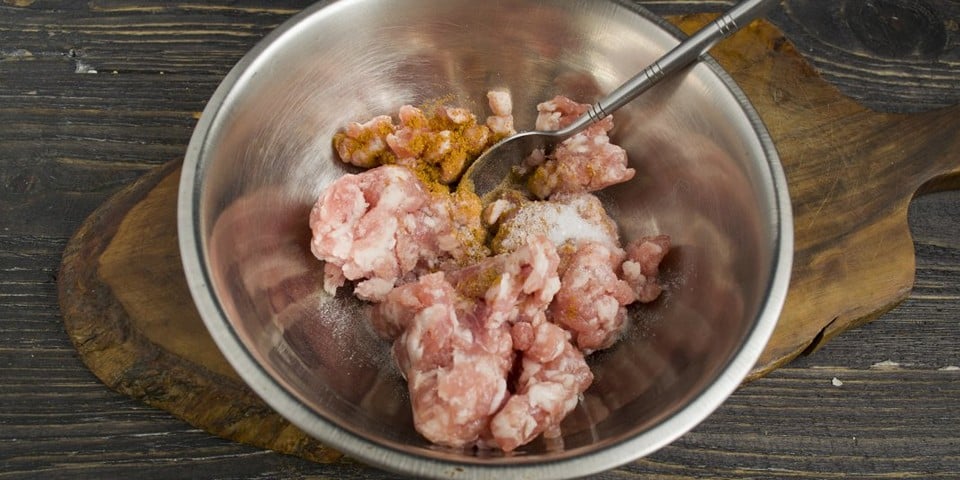
Meat-based fillings may include beef, pork, veal, rabbit, or poultry. The meat can be finely chopped and pan-seared, braised whole, made into ragù, or baked. Regardless of preparation method, the cooked meat is finely ground and combined with other ingredients like eggs, grated cheese, salt, nutmeg, and vegetables to form a uniform stuffing.
Vegetables
Vegetables are also pre-cooked—boiled, steamed, sautéed, or braised—and seasoned with herbs and spices. The softened mixture is then blended with eggs, cheese, black pepper, or ricotta to form a creamy filling.
Fish
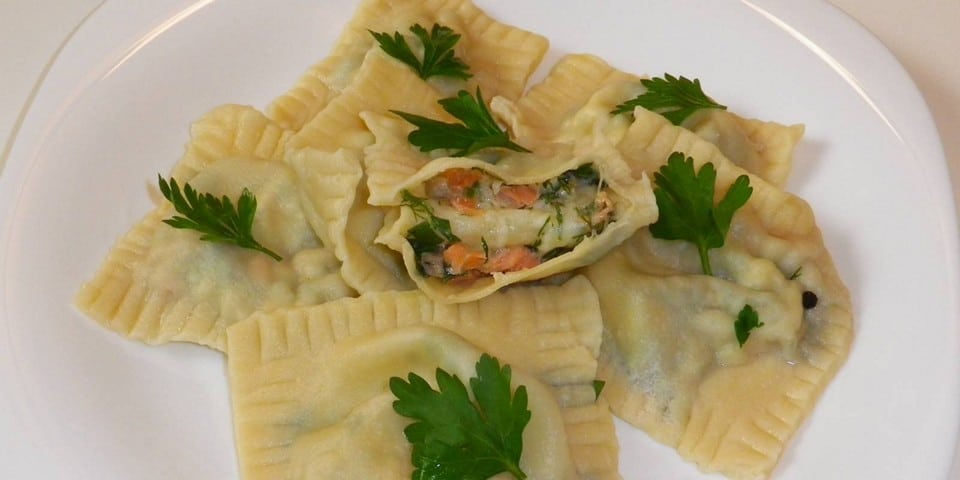
Seafood ravioli is one of the more modern variations. Fish fillets are usually finely chopped and gently stewed with oil, white wine, and herbs. Other ingredients—such as egg, pepper, vegetables, cheese, and fresh herbs—round out the filling.
Shellfish and seafood are often sautéed before being combined with onion, vegetables, or eggs for stuffing.
Other Fillings
In addition to traditional fillings, some ravioli showcase more creative ingredients: cheeses like Fontina and Gorgonzola, pumpkin purée, and blends of spinach, raisins, chocolate, and parsley—such as in the regional specialty cialzons friulani from Friuli.
Ravioli’s versatility and regional flair continue to make it a celebrated icon of Italian cuisine.
Classic Recipe
The most iconic and beloved ravioli recipe is the one filled with ricotta and spinach. Its fresh, delicate flavor captures the timeless essence of Italian cuisine.
Ingredients for the dough:
- All-purpose flour – 1¾ cups (250 g);
- Eggs – 2;
- Semolina flour for dusting;
Ingredients for the filling:
- Fresh spinach – 9 oz (250 g);
- Ricotta cheese – 4½ oz (125 g);
- Grated Parmesan or another hard cheese – 1¾ oz (50 g);
- Nutmeg – a pinch;
- Salt and black pepper to taste.
If you follow the recipe precisely, you’ll end up with 24 authentic Italian ravioli.
Start by preparing the dough. Whisk the eggs until smooth. Mix with 200 g (about 1½ cups) of flour, reserving the remaining 50 g (about ⅓ cup). Knead thoroughly by hand.
If the dough feels too stiff, add a bit of warm water. If it’s too sticky, slowly incorporate more of the reserved flour.
Form the dough into a ball, wrap it in plastic wrap, and let it rest for 30 minutes.
For the filling, steam the spinach under a lid for a few minutes until wilted. Drain thoroughly using a sieve to remove excess liquid.
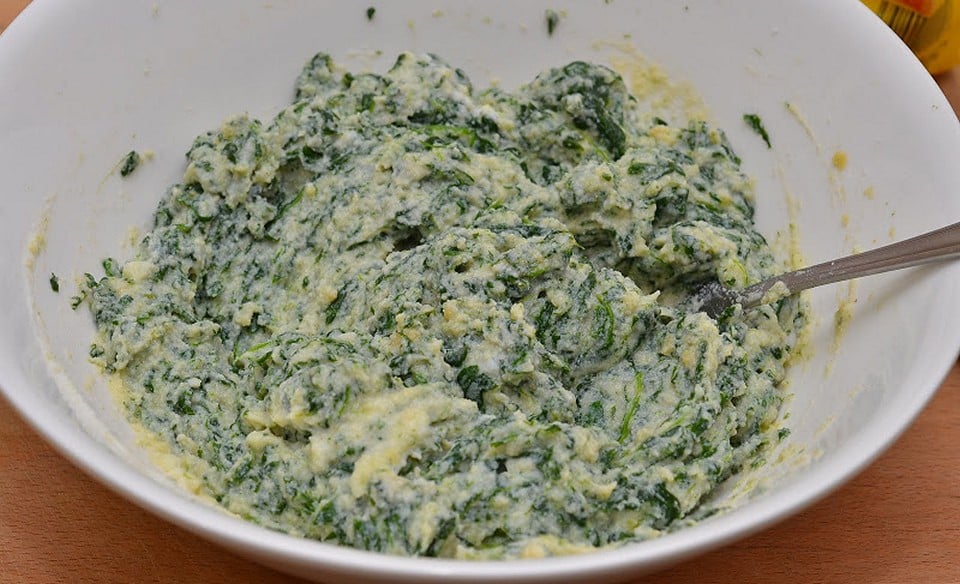
In a mixing bowl, combine ricotta with grated cheese, season with nutmeg, salt, and pepper. Blend in the spinach and mix until smooth. Transfer the mixture to a piping bag and set aside.
Roll out the dough using a pasta machine or by hand on a semolina-dusted surface until it’s no thicker than 1 mm. Pipe the filling in small mounds about 1 inch (3 cm) apart.
Brush the spaces between the mounds with a little water—this helps seal the top layer of pasta.
Lay a second sheet of dough on top and press down around the filling to remove air and seal the edges.
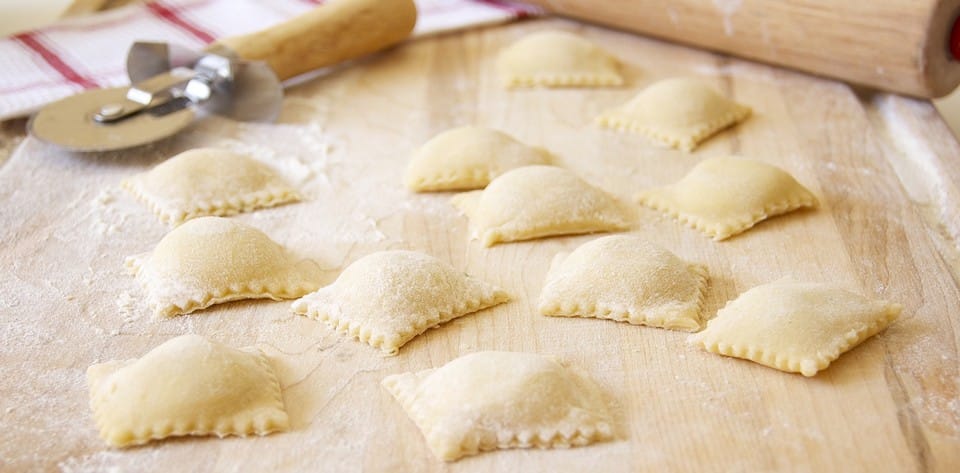
Use a fluted pastry wheel to cut the ravioli into 1½-inch (4 cm) squares. Cook in boiling water until al dente. Serve with butter and fresh sage, or your favorite sauce.
If you’re not cooking them immediately, freeze them. Ravioli keeps well for up to one month in the freezer.
Meat Ravioli Recipe
While ricotta and spinach are classic, many home cooks prefer hearty meat-filled versions. Here’s a flavorful recipe with a mixed meat filling.
Dough ingredients:
- All-purpose flour – 2½ cups (300 g);
- Eggs – 3;
- Semolina flour for dusting.
Filling ingredients:
- Cooked beef, sautéed – 5 oz (150 g);
- Boiled beef – 2½ oz (70 g);
- Ham – 1 oz (30 g);
- Cooked sausage – 1 oz (30 g);
- Egg – 1;
- Grated Parmesan – 1½ oz (40 g);
- Nutmeg – a pinch;
- Salt to taste.
For serving:
- Tomato sauce or ketchup – 1⅔ cups (400 g).
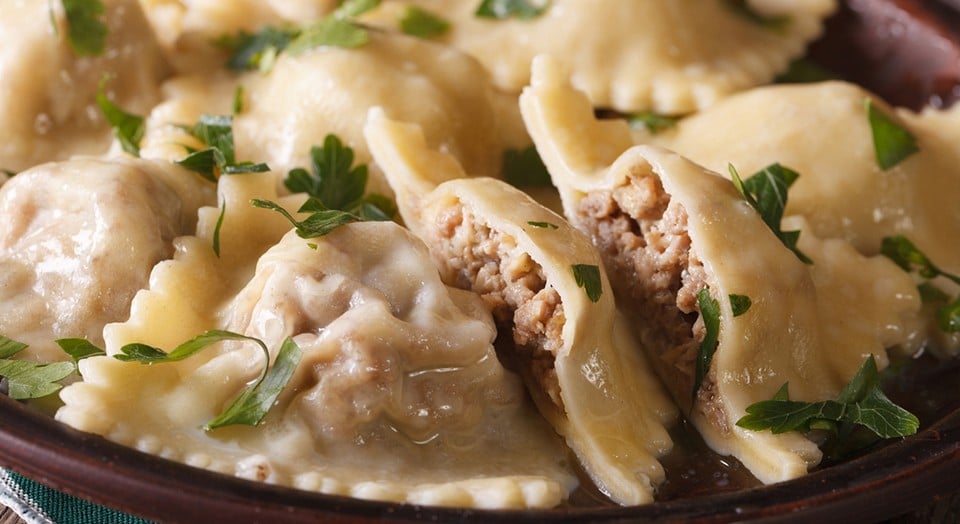
The dough-making process is the same as the classic recipe. For the filling, chop all the meat and blend with half the grated cheese, an egg, nutmeg, and salt.
Shape the ravioli as described above, but spoon in the filling.
Boil the ravioli in salted water for 10 minutes. Serve with tomato sauce and the remaining Parmesan.
Calories and Nutritional Value
The ricotta and spinach version is especially popular in Italy. It contains just 149 calories per 100 g (3.5 oz), with:
- Protein – 8.9 g
- Fat – 5.5 g
- Carbohydrates – 17.1 g
Ricotta is a great source of calcium, essential for healthy bones and teeth. Spinach is packed with fiber, which supports digestion.
However, ravioli contains cholesterol (about 58.2 mg per 100 g), so individuals with high cholesterol or weight concerns should consult a doctor before indulging.
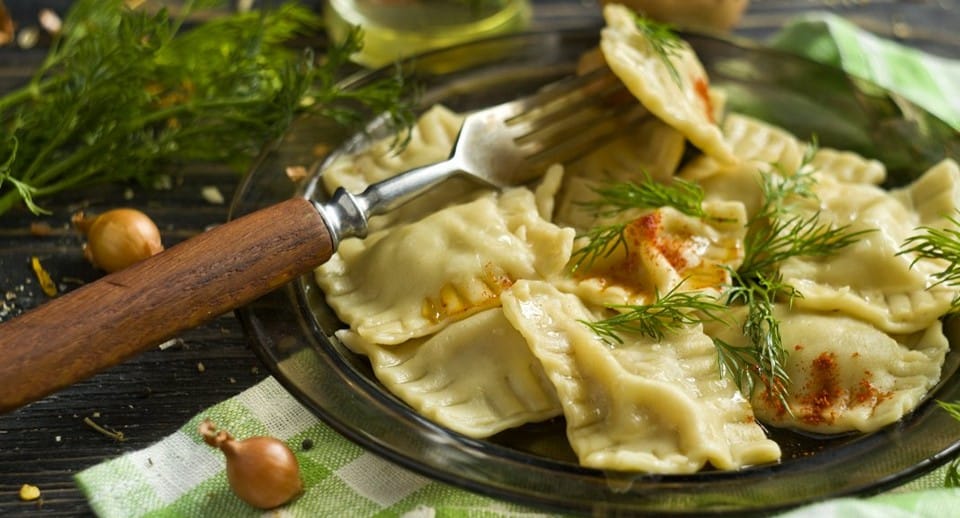
The calorie count of other ravioli types depends entirely on the filling. Meat-based varieties are higher in calories, while vegetable and seafood versions tend to be lighter.
This journey into the world of Italy’s “stuffed pasta wonders” comes to an end. We hope you feel inspired to bring a touch of Italy into your kitchen. Live boldly, love quietly, cook joyfully—and remember: “You can live off broth forever, as long as it’s simmering with ravioli.”