 Italy for me From Italy with love


On the edge of Lombardy, just an hour and a half drive from Milan lies one of Italy’s natural wonders – Lake Garda (Italian: Lago di Garda). The blue waters of this lake are surrounded by the lush greenery of Italian nature and the mighty slopes of the Alpine mountains.
Lake Garda is the largest lake in the country, with a length of 52 km, a width of 17 km, and a water surface area of 370 km². The lake and its surrounding areas are ideal for relaxation, both in summer and autumn, offering a mild and warm climate, luxurious views, and numerous leisure options.
Page Contents
Geographical Features
From a bird’s-eye view, the lake resembles a Neanderthal hatchet, with a distinctly long, narrow “handle” and a wide “head” at the end. Glaciers descending from the Alpine peaks gave this intriguing shape to the valley. Lake Garda is fed by the Aril River and powerful deep sources. The lake’s bottom is nearly 350 meters below the surface at its deepest point.
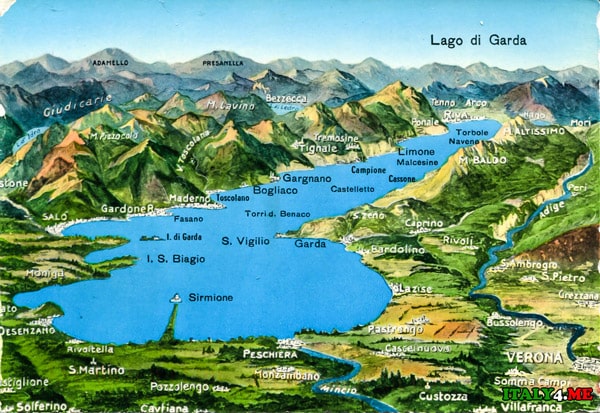
The unique microclimate is created by the jagged ridge of the Alps, resembling a warm scarf lovingly wrapped by Mother Nature around the picturesque lake. The impressive peaks, soaring into the sky for one to two kilometers, ensure excellent calm weather in the lake region.
Where to Stay
At Lake Garda, you can find accommodation options for every budget. A night’s stay in an inexpensive hotel or camping site costs 50 euros per day. The average cost of a 3 or 4-star hotel ranges from 100 to 120 euros per day.
Check out my collections of tips:
- Where to rent an apartment on Lake Garda
- Best 5-star hotels on the lake
- Good and affordable hotels on Garda
- Best campsites on Garda
- Best SPA hotels on Garda
The Name of the Lake
This beautiful corner of Italy was once beloved by the governors of the Roman Empire. They enjoyed spending time on the shore of Benaco (Latin: Benacus lacus) – a “blessed lake.” Later, it received the Italian name Garda. There are two versions of the name “Garda.” According to one, the word originated from a distortion of the German “Warda,” which meant “watch post.” According to another version, the lake was named after a nearby town in the Veneto region.
Nature and Landscapes
On the map of Italy, Lake Garda connects three neighboring regions: Veneto (Italian: Veneto), Lombardy (Italian: Lombardia), and Trentino-Alto Adige (Italian: Trentino-Alto Adige). The eastern shore of the lake, belonging to Verona, is also known as the Riviera of Olives. The gentle Mediterranean climate allows olive trees to be cultivated in the valley. The Lombard part of the lake is known as the Riviera of Lemons. Resourceful Italians have arranged lemon gardens as stepped terraces on the gentle mountain slope. The region is famous for winemaking, cuisine, and olive oil production. 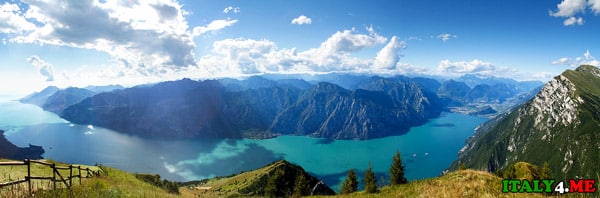
Around the entire perimeter, the lake is surrounded by dozens of small towns that are simply basking in the fragrance of nature and golden rays of the sun. The crystal-clear waters of Garda smoothly transition into the jagged line of the mountain landscape. Terracotta roofs of houses are immersed in the lush greenery of vineyards, fruit orchards, and natural groves. The lake valley fills with incredible colors during the flowering season of herbs and trees. The cocktail of pure mountain air and divine flower scents invigorates and slightly intoxicates!
Great European writers and artists were regulars at this amazing place. Such names as Johann Goethe, Charles Dickens, Oscar Wilde, and James Joyce were listed in the guest books of inns by Lake Garda. And David Herbert Lawrence mentioned in his memoirs that Lake Garda is beautiful, like the source of creation.
Attractions
Sirmione
The town of Sirmione (Italian: Sirmione), situated on the lake’s western shore, is a tourism hub. Originally a modest-sized town with a population of 6,000, it has grown as the region gained popularity among tourists. In Sirmione, you will find several interesting attractions and healing thermal springs.
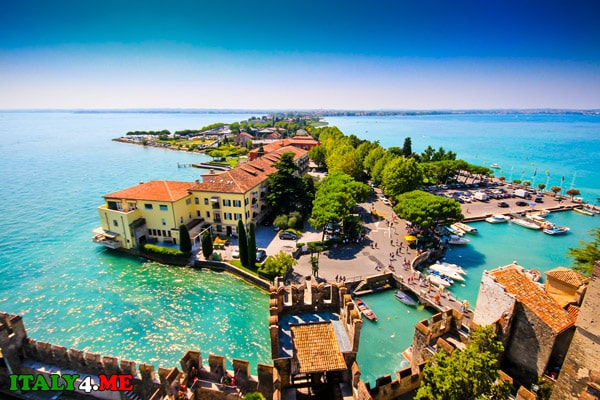
The huge fort guarding the town against the lakeside is the most imposing structure in Sirmione. Scaliger Castle’s name resonates with unyielding will and the thunder of firing cannons. The fort was built in the 13th century to guard the port. The crenelated walls protecting the castle are made of grey stone.
We recommend exploring:
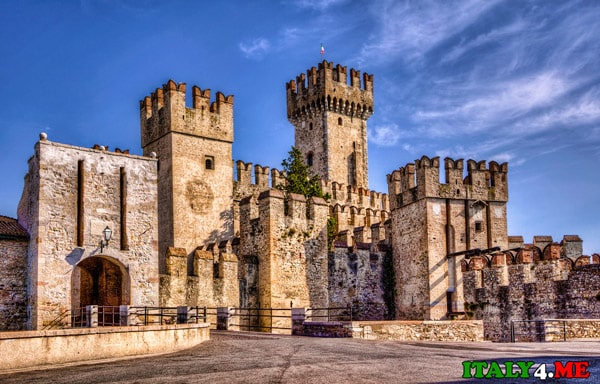
Previously, the only entrance inside was a drawbridge. Nowadays, the veteran bridge has handed over its duties to a stationary counterpart. The impregnable walls of the castle conceal a museum dedicated to the town’s history and the fort. No other city harbor in Italy is equipped with such dense protection. Incredibly captivating is the sight of Scaliger Castle at night, illuminated by lanterns.
Grotto of Catullus
The remains of the estate of the Roman Gaius Valerius Catullus (Latin: Gaius Valerius Catullus) are known to modern vacationers as the Grotto of Catullus (Grotte Catullo). The poet, who glorified the greatness of the Roman Empire, lived in the 1st century BC. The picturesque views of the mountains and the lake valley fueled his muse. Thanks to this, Catullus built his villa on the shore of what was then Lake Benacus. The ruins of the once luxurious house were rediscovered only in the 15th century. At that time, they were poorly cleared and resembled water grottos.
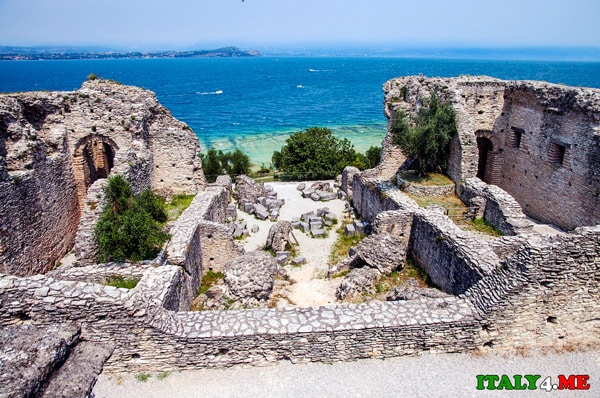
Adjacent to the estate is a large park filled with olive trees and time-darkened fragments of the large villa. Walking in such settings feels like a small journey into the past.
Boiola Healing Spring
The Boiola Healing Spring (Italian: Fonte Boiola) is famous for its waters that heal numerous ailments. Bubbling streams of water, enriched with iodine, sulfur, and bromine, burst from the depths of the earth at a temperature of 70 °C (158 °F)!
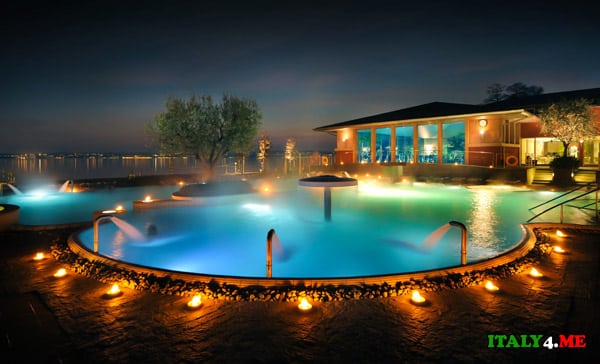
Procedures in the Boiola thermal springs help people eliminate skin diseases and alleviate rheumatism and chronic ear inflammations. However, the thermal spring located on the territory of Hotel Fonte Boiola also welcomes healthy and happy travelers. A complex range of spa procedures and highly beneficial beauty and health treatments will satisfy even the most demanding clients.
Salò
Another Lombardian town, Salò (Italian: Salò), is renowned for various water activities. As a historical attraction, it features a complex of villas that housed members of the government of the Italian Social Republic, as well as personal residences by Duce Mussolini (1942-43).
Malcesine
Located on the lake’s eastern shore is the town of Malcesine (Italian: Malcesine). Not only is it stunningly beautiful, but it is also closely associated with the life of the German poet Johann Goethe. Travelers can visit the city’s museums, ascend Mount Baldo using a cable car, and in the evenings, enjoy a splendid view of Scaliger Castle, a popular wedding venue.
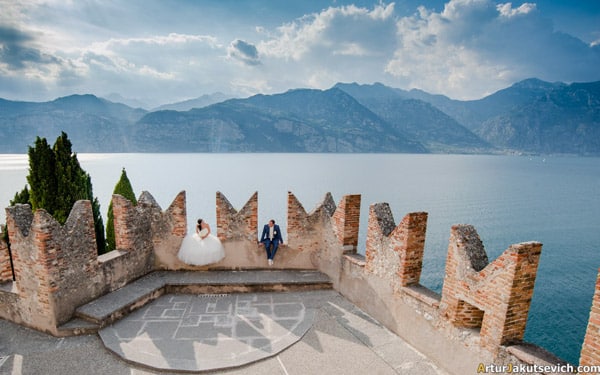
Interestingly, the air currents descending along the mountain slopes provide excellent conditions for windsurfing and paragliding enthusiasts.
Gardone Riviera
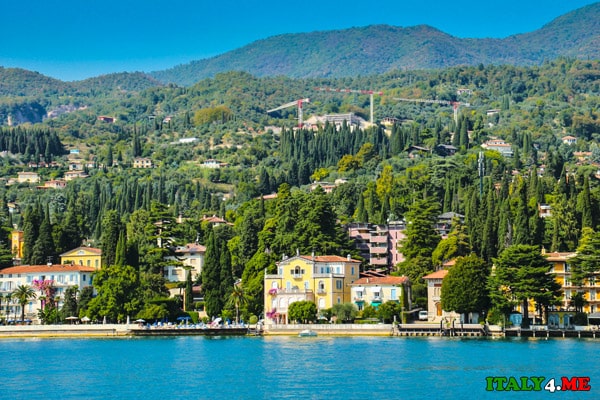
Gardone Riviera (Italian: Gardone Riviera) is an elite vacation spot in the valley of Lake Garda. Luxurious villas, fragrant nature, and the vast André Heller Botanical Garden create an indescribable atmosphere.
View hotels in Gardone Riviera
Bardolino
The town of Bardolino (Italian: Bardolino) is immersed in greenery. It’s located on fertile land, which has been preferred by the Italian nobility for centuries. The area boasts many villas and palaces. The church dedicated to the patron saint, Nicholas the Wonderworker, is worth visiting in the town itself. Another signature feature of Bardolino is its red wine, which has delighted visitors for centuries with its taste.
Arco Castle
Another historical marvel of Lake Garda is the Arco Castle (Italian: Castello di Arco). According to some sources, the castle was built around 1000 AD.
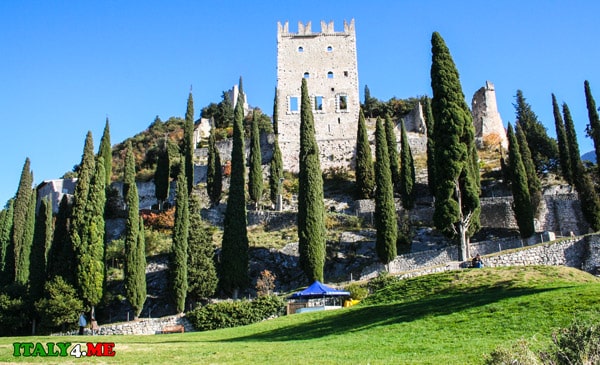
The high towers of the building, resembling candles, are perched on a steep mountain slope in the Trentino region. Built by the wealthy residents of the province, Arco Castle has been in the hands of many noble families, including the Scaligeri family. Careful restoration of this ancient fort has allowed for the restoration of numerous frescoes dating back to the Medieval period.
Riva del Garda
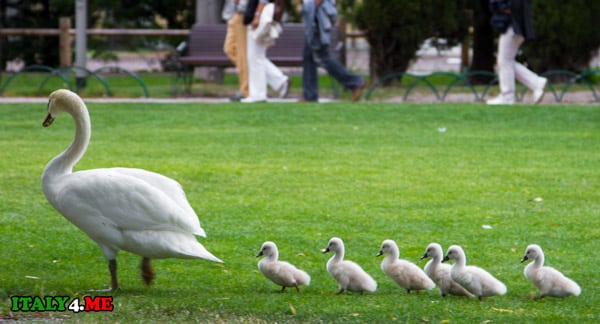
The main attraction of the town of Riva del Garda (Riva del Garda) is the ducks, which can rightfully be called the true owners of the local beaches. The beaches consist of a lawn with a very narrow strip of pebbles. This place is perfect for a relaxed, peaceful family vacation with children.
You might find this review of the best hotels in Riva del Garda useful
How to Get to Lake Garda
The nearest airports to Lake Garda are located in Milan – Malpensa and Bergamo, Venice – Marco Polo and Treviso, Verona – Valerio Catullo Villafranca.
Railway stations are available in the towns of Peschiera del Garda and Desenzano del Garda, located on the lake’s shore.
From Milan
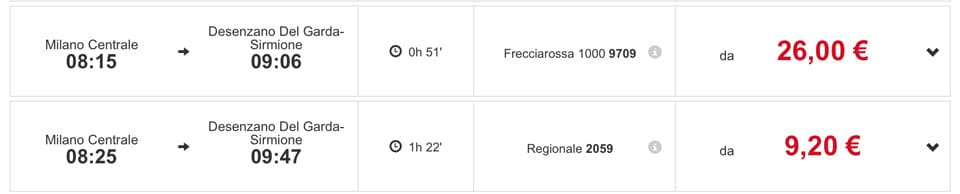
Several times an hour from Milan Central Station (Milano Centrale), regional and high-speed Trenitalia trains depart for Desenzano station. It takes only 51 minutes to reach by the Frecciarossa high-speed train, with tickets costing 26 euros. The regional train takes about one and a half hours and will cost you 9.20 euros.
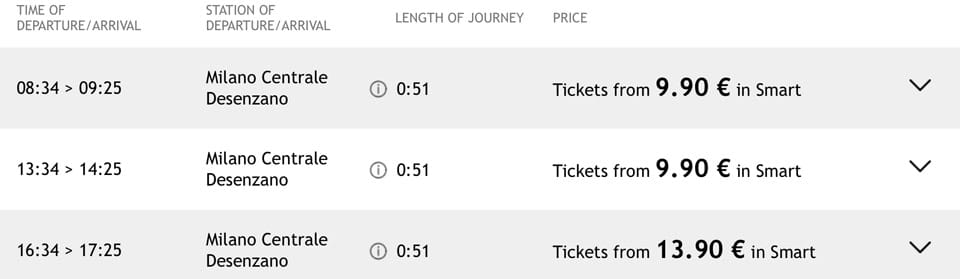
Also, three times a day, the best trains in Italy, Italotreno, run towards Desenzano from Milan. If you book your tickets in advance, you can travel for as little as 9.90 euros.
See the detailed guide: how to get to Garda from Milan
From Treviso or Trieste
Treviso is slightly closer to the lake. You can get to Garda in a couple of hours with a rented car. If traveling from Trieste, the journey will take about three hours.
From Verona
If you choose Verona as your starting point, you can comfortably travel by train to the southern shore of Garda and Desenzano del Garda. Passengers can board a regional train at Verona’s central railway station. The train journey will take 15-20 minutes, with tickets costing up to 4 euros.
See the guide: how to get from Verona to Sirmione
To the North of the Lake
To the north of the lake, for example, to Riva del Garda, you can travel from Rovereto by bus. Rovereto’s railway station is connected by high-speed trains with Rome, Verona, Florence, Bologna, and Milan.
Verona and the Garda coast are also connected by bus service. Routes No. 162 and 163 wind along the twisting roads for about 45-50 minutes. Passengers can enjoy the views and alight at one of the stations: Bardolino, Garda, Lazise, Malcesine, Riva del Garda. Our brief tour along the shores of Lake Garda ends here.
We assure you that this is not all the charms of the mountain valley. The beauty of the Italian Alps and the gentle embrace of the Garda coast cannot be conveyed in words. The joyfulness of this hospitable land must be experienced firsthand!