 Italy for me From Italy with love

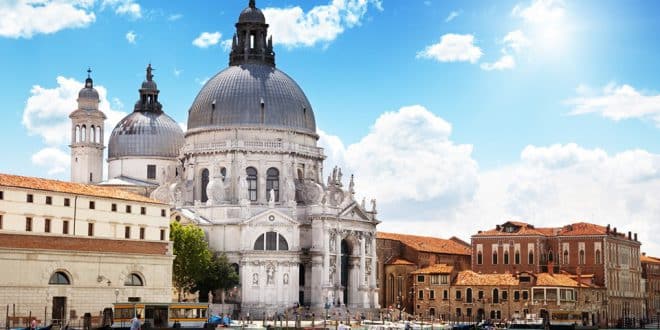
Santa Maria della Salute (Basilica di Santa Maria della Salute) is one of the most iconic and visually stunning churches in Venice (Venezia). Located in the southern part of the city, it stands proudly in the historic Dorsoduro district, directly across the Grand Canal (Canal Grande) from the majestic Doge’s Palace (Palazzo Ducale).
Page Contents
History of the Basilica
The basilica was built in the 17th century, during a devastating plague that claimed the lives of one-third of Venice’s population. According to legend, the city council vowed to construct a church dedicated to the Virgin Mary if she would put an end to the epidemic. Moved by the citizens’ fervent prayers, the plague eventually ceased—and the council honored its promise by launching a design competition.
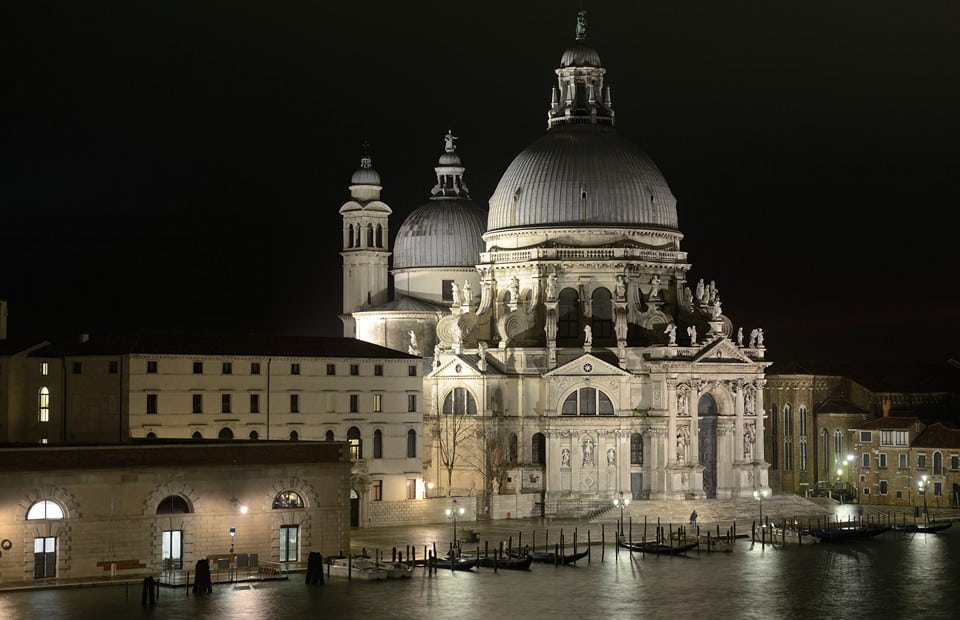
The competition was won by a young and relatively unknown architect, Baldassare Longhena. Construction began in 1630 and was funded entirely by public donations. The church took over 50 years to complete, and Longhena did not live to see its final form.
The grand opening took place in 1681, and the church was consecrated to the Virgin Mary, who was credited with delivering the city from the deadly disease. The word “Salute” in the church’s name translates to both “health” and “salvation.”
Architectural Features
The Santa Maria della Salute Basilica was built atop the Grand Canal using a massive wooden pile foundation. Engineers drove a staggering one million timber piles into the canal bed, tightly packed together to create a stable platform. This was an incredibly expensive, labor-intensive, and time-consuming process due to the soft, unstable soil, which made it difficult to achieve the necessary structural integrity for construction.
On this wooden foundation, a brick basilica was erected in the shape of an octagon, its exterior coated in crushed marble for a gleaming finish.
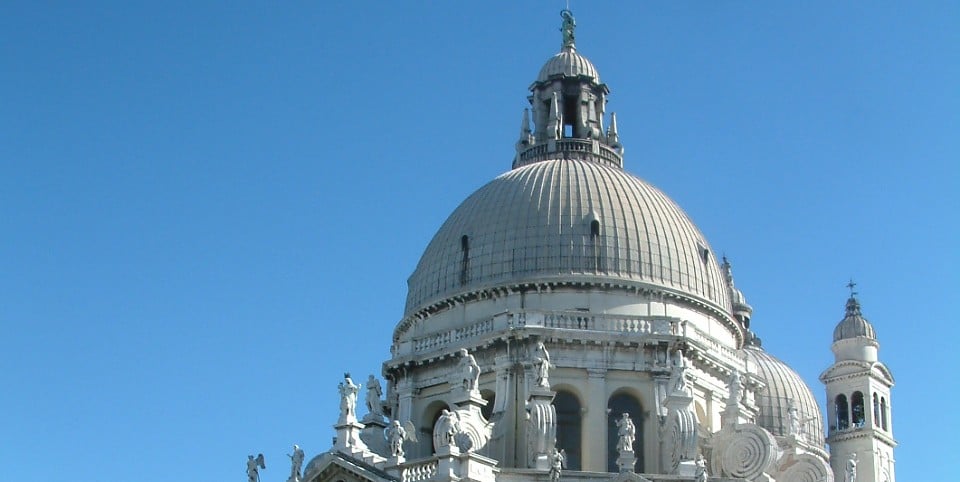
The church’s iconic white central dome, shaped as a perfect hemisphere, rises above a 15-sided drum lined with large arched windows. A second, smaller dome crowns the altar area.
Both the exterior and interior are masterfully executed in the Baroque style (barocco).
The richly decorated façade features:
- Columns,
- Bas-reliefs,
- Sculptural groups,
- Pilasters.
The unique shape of the central entrance evokes a triumphal arch, symbolizing Venice’s victory over the plague.
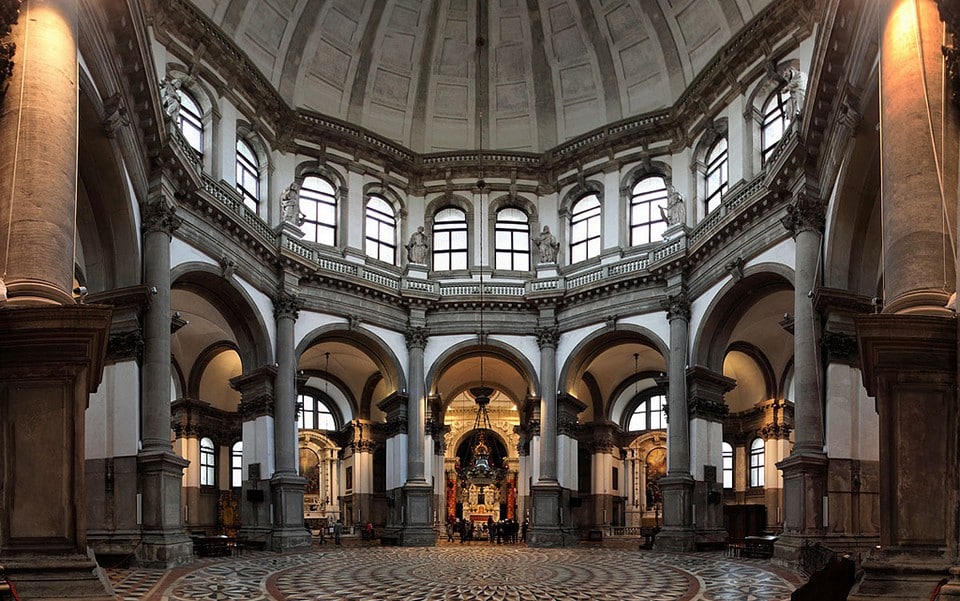
The basilica’s interior is equally lavish and refined:
- A spacious octagonal central hall features elegant arches and columns that rise upward and transition into soaring pilasters;
- Six side chapels filled with sculptures and paintings—five dedicated to the Virgin Mary and one to Saint Anthony of Padua;
- A stunning marble floor forms intricate geometric patterns;
- The majestic central dome towers 197 feet (60 meters) above worshippers.
The basilica’s interior is adorned with masterpieces by renowned artists:
- “The Assumption,” “The Nativity,” and “The Presentation of the Virgin Mary” by Luca Giordano;
- “The Marriage at Cana” by Tintoretto (Jacopo Robusti);
- “St. Mark Enthroned,” “Cain and Abel,” “The Descent of the Holy Spirit,” “The Sacrifice of Abraham,” and “David and Goliath” by Titian (Tiziano Vecellio).
Altar Area
In the main apse stands a sculpture by Baldassare Longhena depicting the Virgin Mary holding the Christ Child.
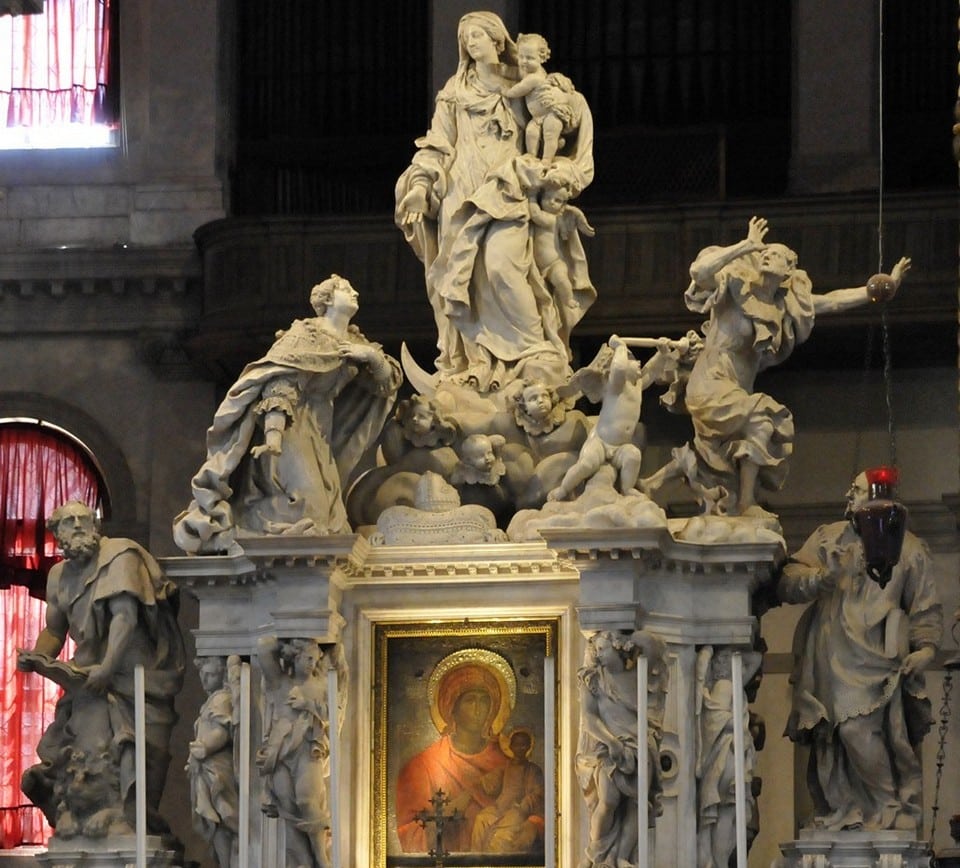
Above the altar is the revered icon “Madonna della Salute” (*Mother Healer*), brought from the Cathedral of Saint Titus on the island of Crete, created in traditional Greek-Byzantine style.
To the right of the altar stands a dramatic sculpture of the Virgin Mary casting out a monstrous hag representing the plague from Venice.
On the left is an allegorical statue symbolizing Venice itself.
Traditions
Each year on November 21, during the Catholic Feast of the Presentation of the Blessed Virgin Mary, the city commemorates the miraculous end of the plague with a solemn Mass and a festive celebration.
The highlight of this unique Venetian tradition is the creation of a symbolic bridge made of tightly grouped gondolas between the Doge’s Palace and the basilica. Pilgrims and locals alike walk across this floating passage to attend the special service at Santa Maria della Salute.
Opening Hours
The basilica is open daily from 9:00 AM to 12:00 PM and 3:00 PM to 5:00 PM. On November 21, it remains open continuously until 11:00 PM.
To reach the basilica, take vaporetto Line 1 from the Santa Lucia train station along the Grand Canal.
More info about Venice’s public water buses: vaporetto guide.