 Italy for me From Italy with love

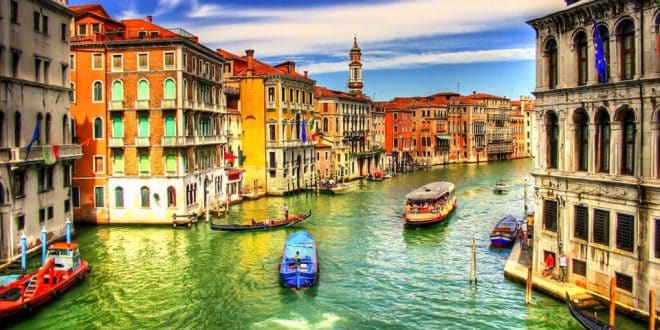
Today, tourism is the leading source of income for Venice. Every year, more than 15 million visitors come—even if only for a day—to admire the city’s famous landmarks. With countless buildings designated as architectural monuments, there’s no shortage of awe-inspiring sights. So, what are the must-see attractions every traveler should check off their list in Venice?
Page Contents
Canals and Water Transport
One of Venice’s most iconic features is its transportation system, which flows entirely through canals.
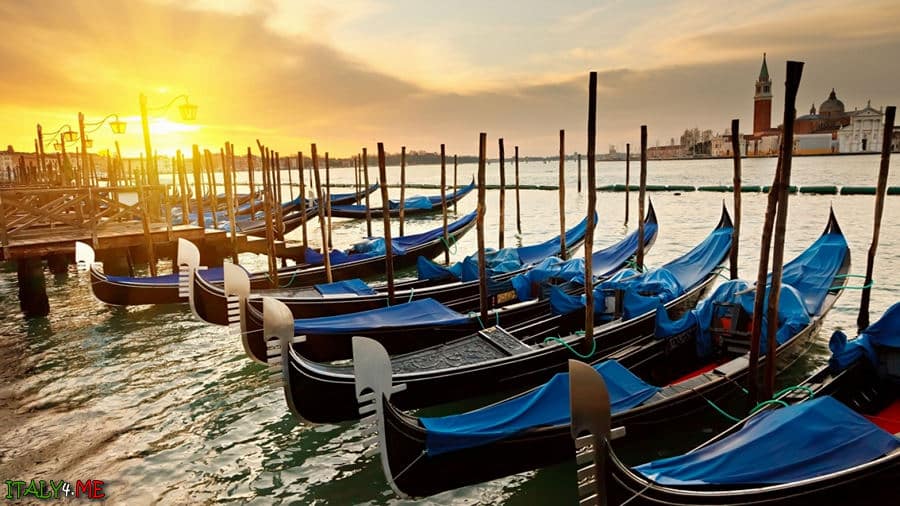
The city’s main transportation artery is the Grand Canal, which divides Venice into two halves.
The canal stretches 2.4 miles (3800 meters) in length, ranges from 98 to 230 feet wide (30–70 meters), and is about 16 feet (5 meters) deep. Known to Venetians as the “Canalazzo,” it is crossed by four bridges and connects to 45 smaller canals—some only 13 to 16 feet wide (4–5 meters)—which can only be navigated by gondola.
Gondola rides and trips on the public waterbus (vaporetto) are among the most popular ways to explore the city. That’s because most of the grand façades of Venice’s palaces face the water, especially along the Grand Canal.
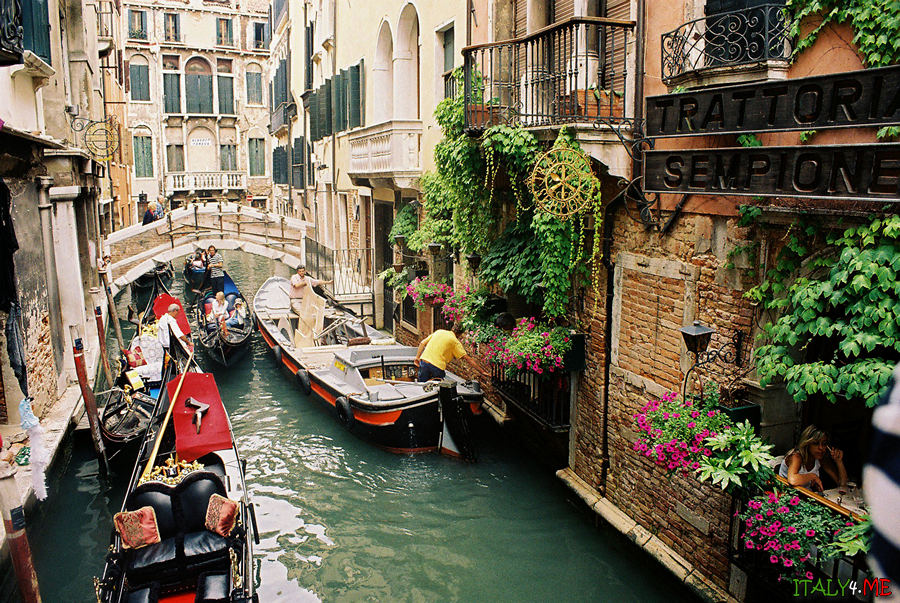
Located along the Grand Canal in the Cannaregio district is the Ca’ d’Oro, also known as the Palazzo Santa Sofia or the “Golden House.” The palace earned its name from the ornate façade, once richly decorated with gilded elements and precious materials. Built in the 15th century in the Venetian Gothic style, it now houses a collection of medieval sculpture and paintings.
Recommended reading: The history of Venice, the city on water
Площадь и собор святого Марка
A visit to St. Mark’s Square (Piazza San Marco) is an absolute must. The square is home to the magnificent St. Mark’s Basilica (Basilica di San Marco), where flocks of pigeons greet visitors—said to have been brought from Egypt as a gift for the Doge’s wife.
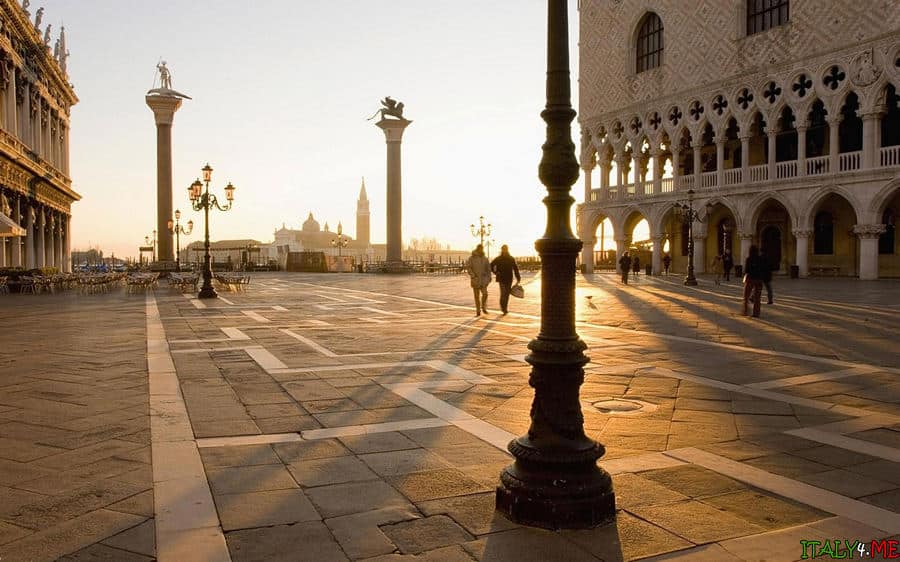
Also on the square is the Campanile, the tallest structure in Venice, offering panoramic views over the city.
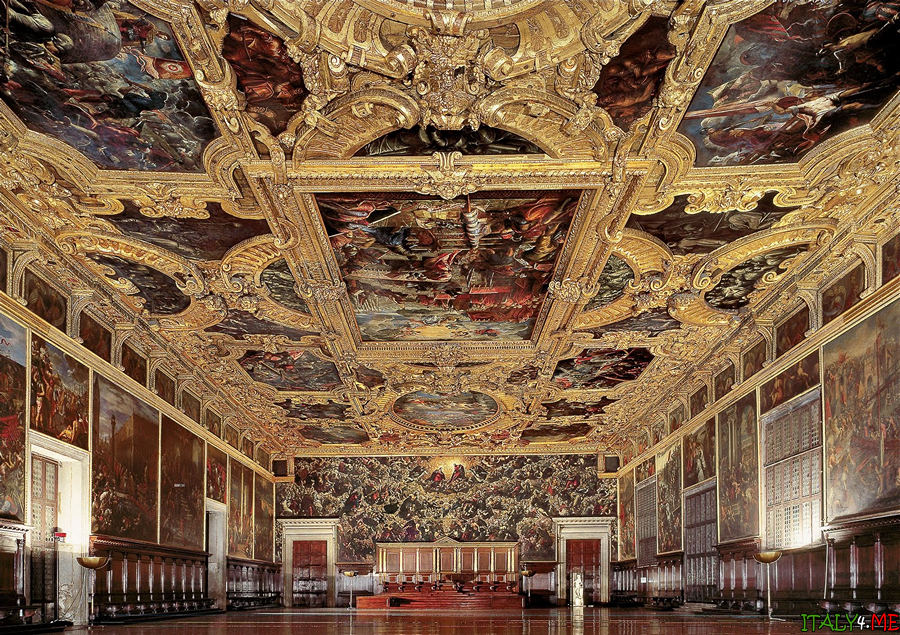
Doge’s Palace
St. Mark’s Square is also home to the grand Doge’s Palace (Palazzo Ducale), an enormous complex that once symbolized the glory and power of the Venetian Republic.
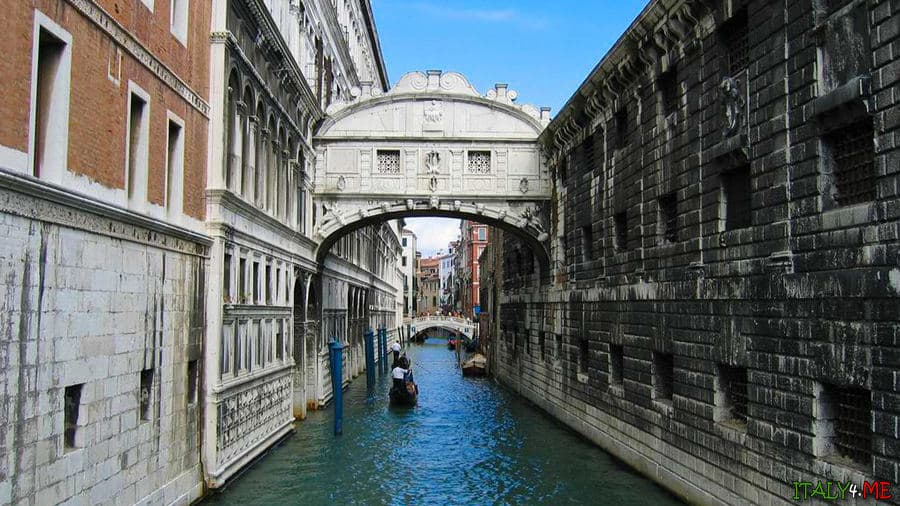
Bridge of Sighs
The Bridge of Sighs (Ponte dei Sospiri) connects the Doge’s Palace to the old prison across the Rio del Palazzo canal. Designed in Baroque style, it earned its name from the sighs of prisoners who crossed it on their way to face execution or imprisonment, glimpsing Venice for the last time through its small stone windows.
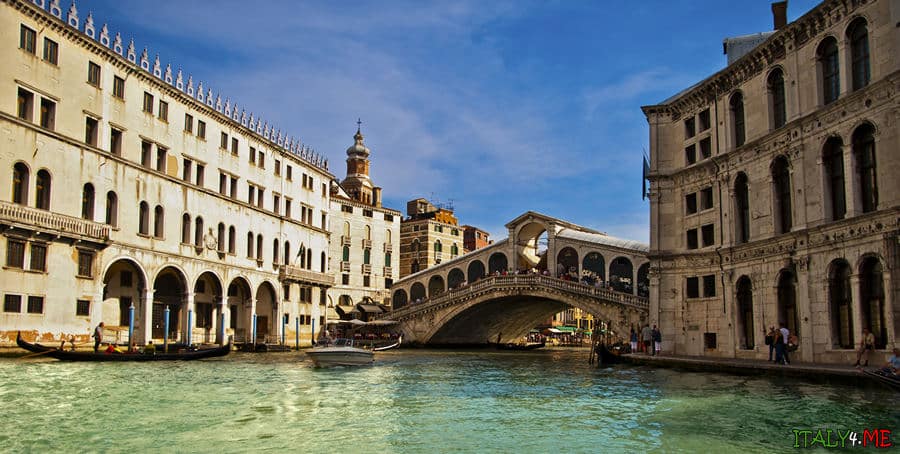
Rialto Bridge
Among Venice’s most recognizable landmarks is the Rialto Bridge (Ponte di Rialto), which spans the Grand Canal. Once the site of a series of wooden bridges prone to collapse or fire, the current stone bridge—an elegant marble arch 157 feet (48 meters) across—was completed in 1591 by architect Antonio da Ponte. Today, it’s one of the most photographed spots in Venice.
Gallerie dell’Accademia
On the southern bank of the Grand Canal stands the Gallerie dell’Accademia, home to the world’s largest collection of Venetian painting from the 14th to the 18th century. Visitors can admire masterpieces by many of Venice’s most celebrated artists.
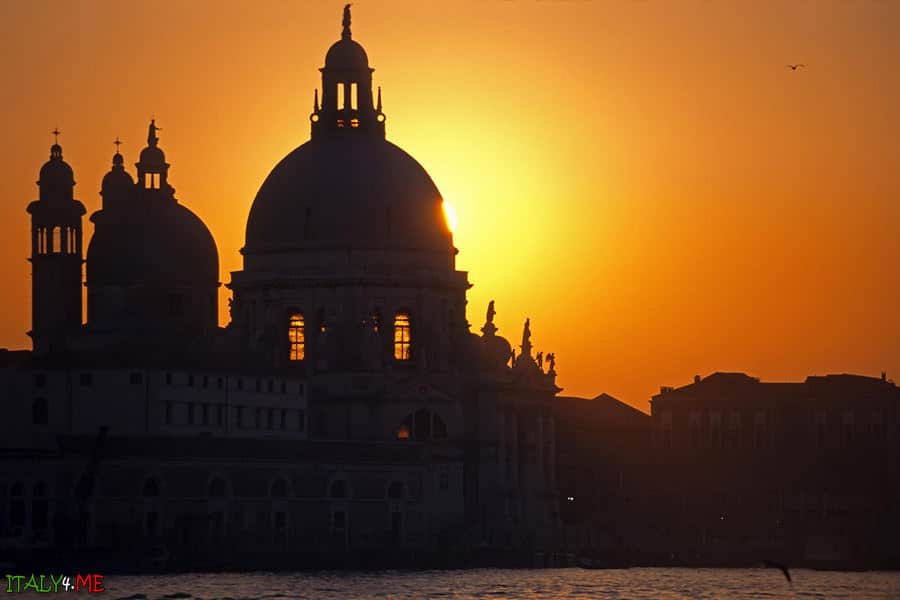
Basilica di Santa Maria della Salute
At the mouth of the Grand Canal sits one of Venice’s most stunning landmarks: the Basilica di Santa Maria della Salute. This church, crowned with Renaissance-style domes, was built in 1631 to honor the Virgin Mary for delivering the city from the plague. The word *salute* in Italian means both “health” and “salvation.”
If you’re looking to refresh your body and soul, visit Italy’s legendary cities—Venice, Florence, Verona, and of course, the Eternal City of Rome.