 Italy for me From Italy with love

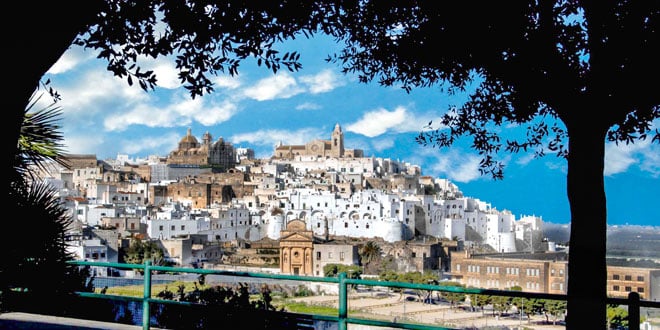
On Italy’s southern coast, along the rolling shores of the Adriatic Sea in the Puglia region, lies the fairytale-like White City. Ostuni’s unforgettable medieval atmosphere, pristine beaches, whitewashed houses, and azure sea will captivate everyone.
Ostuni (Ostuni) is as white as the snow and the sand of its beaches. The white color unites all of the town’s buildings into a cohesive whole, a chalky fortress glowing against the bright blue sky.
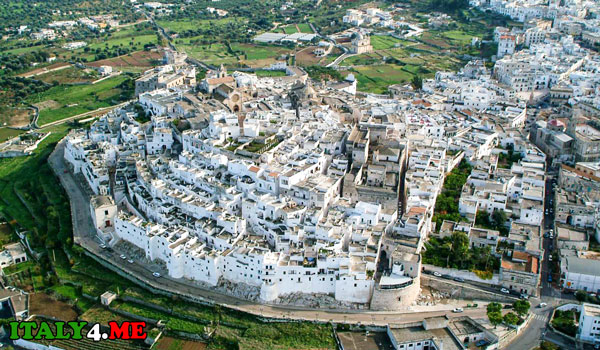
Nestled among ancient olive groves, Ostuni rises from the highest hill in the area, known as Mount Ostuni. This city is worth visiting at least once in a lifetime to experience its extraordinary ambiance, uncover its secrets, sample its cuisine, and breathe in the scent of earth and sea. The special charm of its white limestone houses and the enchanting Adriatic panoramas visible from every corner of the town will leave no one indifferent.
The historic center, whose medieval layout remains intact, is a true maze of streets, squares, narrow alleys, arches, and graceful staircases draped in flowers. The prevailing color of the houses is brilliant white, occasionally interrupted by warmer tones of noble estates and churches. Ostuni’s coastline extends for twenty kilometers.
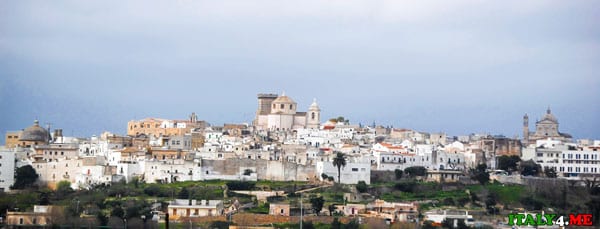
Delving into history, we discover that Ostuni’s territory was inhabited as early as the Paleolithic era, 50,000 years ago. Judging by numerous archaeological finds, people have lived here continuously to the present day. In the Ostuni area, archaeologists even uncovered the remains of a woman in her final month of pregnancy, dating to approximately 24,000 years ago. She was named Delia and has become a discovery of global significance.
You may find this article useful: Where to stay in Ostuni?
Page Contents
Attractions
Cathedral of the Assumption
Address: Largo Arcid Teodoro Trinchera, 29
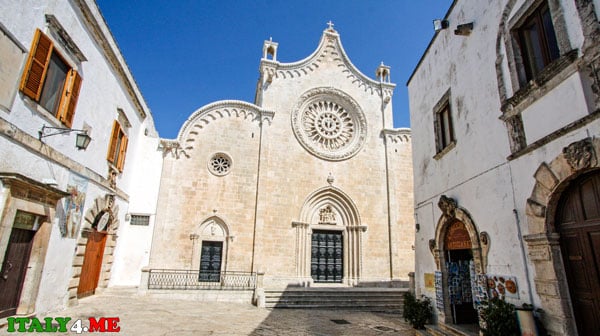
The Assumption Cathedral (La Cattedrale dell’Assunta) dates from the 15th century and is one of the most renowned landmarks in the Puglia region. In 1902, it was declared a national monument. The cathedral, with its stunning rose window, was built in the late Gothic style characteristic of the 15th century. Its interior houses significant works of art, including “Madonna and Saints” by Giacomo Palma the Younger.
Church of Saint Vito Martyr
Address: Via Cattedrale, 42
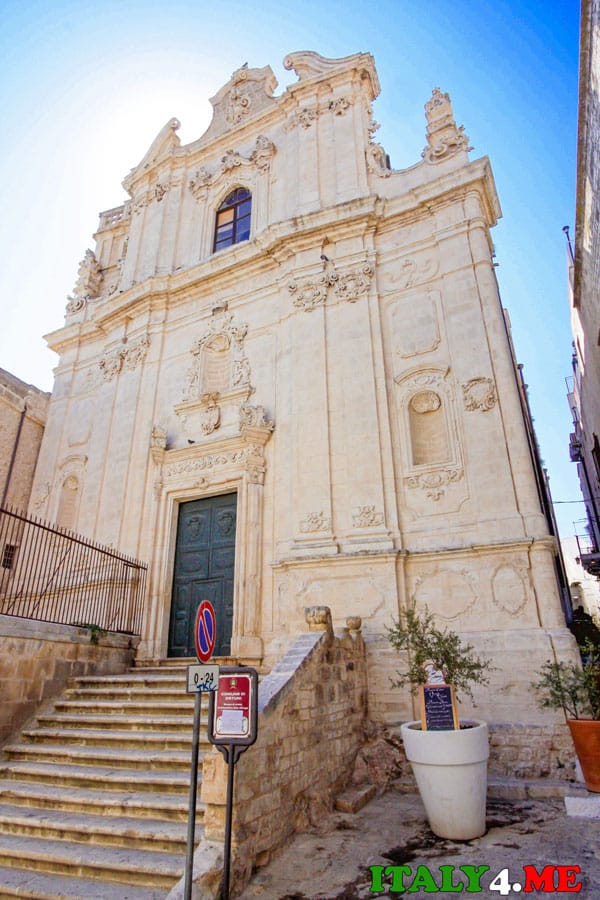
The Church of Saint Vito Martyr (Chiesa di S. Vito Martire), built in the 18th century in the Rococo style, adjoins the Carmelite monastery. Services are no longer held here, but the remains of Delia—a woman who lived around 24,000 years ago—are preserved inside. The monastery also houses the Museum of Prehistoric Civilizations of Southern Murgia (Museo delle civiltà preclassiche della Murgia Meridionale).
Piazza della Libertà
Address: Piazza della Libertà
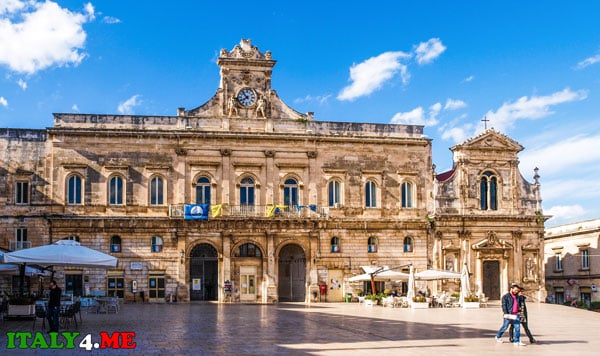
Piazza della Libertà is the town’s central square. It hosts the Palazzo del Comune, originally a Franciscan monastery. Since 1771, the Guglia di Sant’Oronzo (Saint Oronzo’s Obelisk) has stood here in honor of the city’s patron saint, who watches over and protects Ostuni. Every year on August 26, the statue is carried through the streets in the traditional Cavalcata di Sant’Oronzo procession, featuring a mounted parade and folkloric performances.
Also recommended are:
- Church of the Purification and Artistic Oratory (Chiesa del Purgatorio ed artistico oratorio), 18th century;
- Cloistered Benedictine Monastery (Monastero claustorale delle Benedettine), 16th century;
- Church of the Holy Spirit (Chiesa dello Spirito Santo), housing a striking portal depicting the Annunciation, the Death, and the Assumption of the Virgin Mary.
Attractions Near Ostuni
Marina di Ostuni
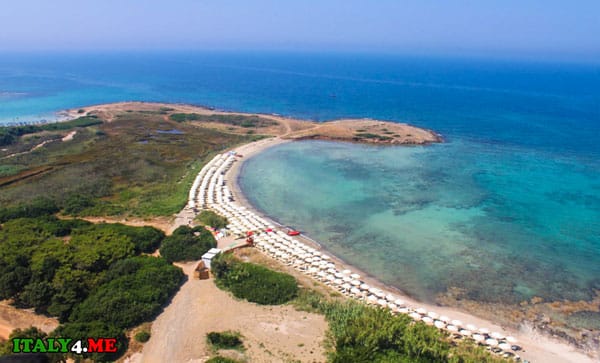
About 4.3 miles (7 km) north of the town, the welcoming seaside resorts of Marina di Ostuni await visitors. Despite its well-developed infrastructure, dedicated conservation efforts have preserved the coastline’s pristine beauty and cleanliness. During the rainy season, the Torre Guaceto wetland reserve—a broad strip of land along the shore—floods, creating ideal breeding grounds for numerous bird species. In summer, the area transforms into a vibrant green meadow.
Carovigno, about 4.8 miles (7.8 km) from Ostuni, boasts a 15th-century castle.
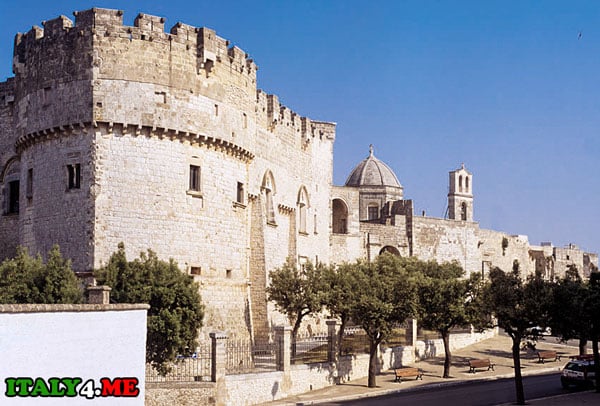
Ceglie Messapico (Ceglie Messapico), approximately 6.8 miles (11 km) from Ostuni, features a fortress built in 1525.
Montevicoli Caves
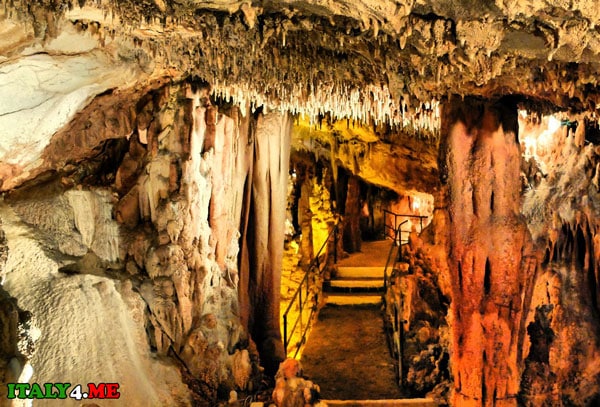
About 7.5 miles (12 kilometers) from Ostuni, visitors can explore the recently discovered Grotte di Montevicoli (Grotte di Montevicoli), renowned for their stunning stalactites and stalagmites.
How to Reach Ostuni
- By car: take the E55 (S.S. 16 and S.S. 379) Bari–Lecce route;
- By train: travel on the Milan–Lecce and Rome–Lecce lines. For example, the journey from Rome, with a connection in Bari, takes about five hours. A regional train from Bari to Ostuni departs hourly; tickets cost €5.50. You can check schedules and book tickets in advance on the official website: www.trenitalia.com.
- By plane: fly direct to Bari Airport from Rome, Milan, Venice, Barcelona, or Monaco; then rent a car to drive to Ostuni or take a train from Bari Central Station.
Romantic Getaways Near Ostuni
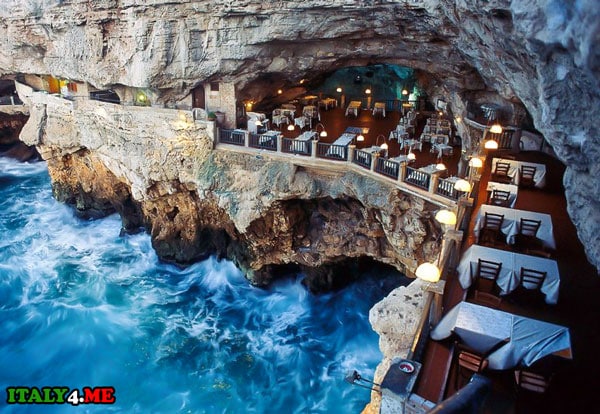
Ostuni makes an enchanting stop on a self-planned wedding or romantic itinerary through Italy. Just 31 miles (50 kilometers) and a 40-minute coastal drive away in Polignano a Mare, you’ll find the one-of-a-kind Grotta Palazzese hotel-restaurant, carved directly into the cliff. A train to Polignano a Mare departs from Ostuni every hour; tickets cost €3.10, and the journey takes about 30 minutes.
Check out this amazing video shot by Ostuni’s happy residents.