 Italy for me From Italy with love


Italy is renowned for its many Christian holy sites, and pilgrims especially love visiting the city of Bari—the capital of Apulia (Puglia).
Italy ranks first in Europe for the number of attractions and cultural monuments. For any devout person, this city holds great significance. Here stands the Basilica of Saint Nicholas the Wonderworker (Basilica di San Nicola)—a Russian church dedicated to the saint venerated by many believers, which houses his relics.
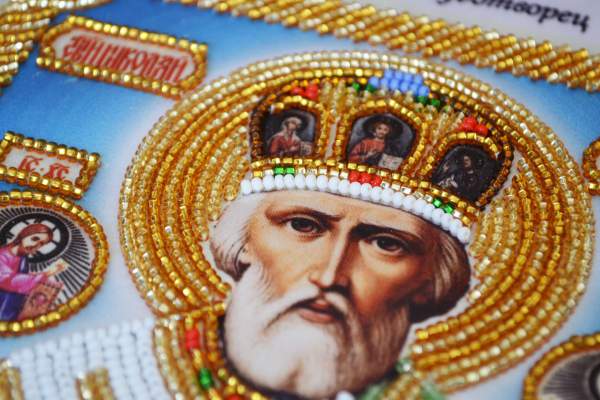
The Basilica of Bari is an extraordinary example of Russian ecclesiastical architecture, featuring a grand facade richly carved and crowned with arches. This splendid architectural ensemble stands out among the city’s New Town structures with its impressive proportions and striking forms.
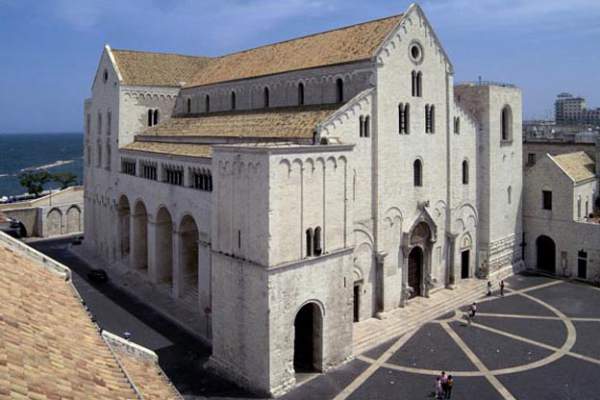
Many architectural monuments were erected outside Russia, but almost all were built in the Moscow or Yaroslavl styles. The city of Bari is famed for this monumental complex, which evokes an ancient Russian terem. The structure is designed in the 15th-century Novgorod–Pskov architectural style. This single-domed stone church accommodates 260 worshippers.
Page Contents
Church Compound
The church compound of Bar-grad comprises a beautiful church, cozy accommodations for pilgrims, and a delightful large garden. This complex serves as a spiritual haven for travelers from Russia visiting the city in hopes of seeing the Saint’s relics. 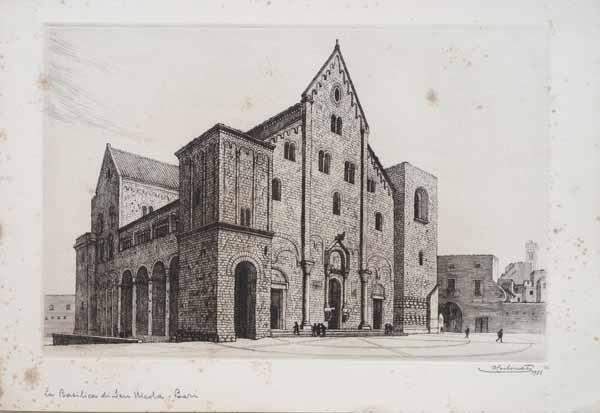
The church and its compound were built with funds collected across the Russian Empire. Since it had long been impossible to restore the Church of Saint Nicholas the Wonderworker in Myra of Lycia, in 1911 an imperial committee for Bar-grad was established under the patronage of the emperor himself. The organization’s mission was to erect in Bari both a lodging house for pilgrims flocking to the great wonderworker’s relics and a church that would fittingly reflect Orthodox artistry.
The feast days in honor of the Wonderworker were established on December 19 and May 22, and it was on these dates that the Bar-grad collection took place. The committee also received church donations of 3,000 rubles from Princess Elizabeth Feodorovna, 10,000 rubles from Emperor Nicholas II, and a substantial 246,000 rubles previously raised for the church in Myra of Lycia.
Construction Project
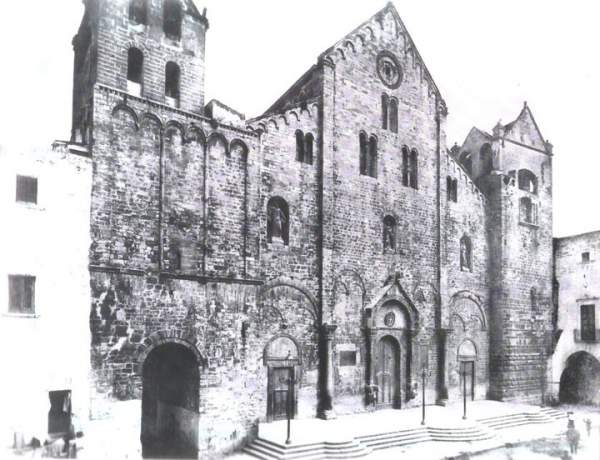
In spring 1912, Shchusev’s project was finalized. The architect’s personal archives preserved numerous working drawings, sketches, and variations for the interior decoration, all developed down to the smallest detail. However, the outbreak of revolution halted the work, and the architectural monument still lacks the intended rich interior.
Italy and Russia raised their national flags over the construction site at the ceremonial groundbreaking in 1913. By 1914, a pilgrims’ shelter was already in operation, later serving as temporary housing for refugees.
Russian émigrés became caretakers of the church property abroad, striving to preserve it for a reborn Russia. But in the 1930s, the church passed into the ownership of the municipal government, against the wishes of its founders. The lodging house and church in Bari were abandoned for a time, and pilgrimages to the holy relics ceased.
The basilica lost nearly all its church treasures; valuable items such as the library, antique vessels, and dozens of ancient icons vanished without a trace. A magnificent interior ensemble and historic icons had been prepared for the church, but the revolution made it impossible to ship them from the Russian Empire. Artist K. S. Petrov-Vodkin was slated to paint the new church, but he was unable to travel.
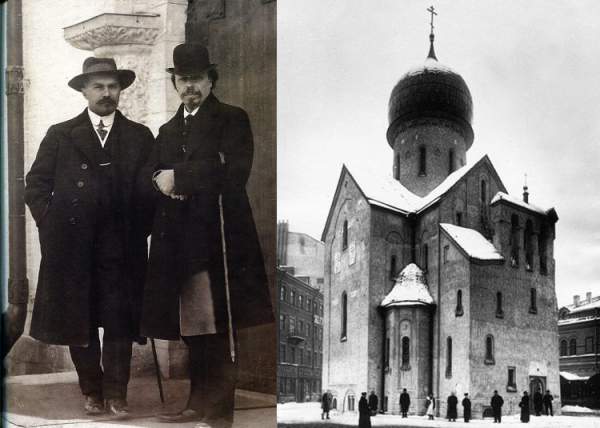
After the revolution, there were far fewer Russian believers in Italy, and only thanks to the large Greek Orthodox diaspora, which especially revered Saint Spyridon of Trimythous (of Salamis), was the lower church consecrated in his honor in 1921.
It was not until 2009 that Italy transferred the basilica to the Russian Church authority, and now the church has once again become a treasure and a pride of the Russian Orthodox Church. Simultaneously with the creation of the church complex in Bari, construction of a new ‘Bar-grad’ church in Saint Petersburg was also planned. Both the Italian and Russian Bar-grad churches even resemble each other—single-domed and square, with bell towers over their western walls, gable roofs, and helmet-like domes.
Church Compound Iconostasis
The iconostasis follows a canonical arrangement: the icon of the Savior and an icon of the Mother of God with the Christ Child stand to the right of the Royal Doors, and the icon of Saint Nicholas to their left. From left to right, it also includes icons of Saint Queen Alexandra; Saint Panteleimon the Healer and Great Martyr; Saint Demetrius of Thessaloniki; Saint George the Great Martyr and Victory-Bearer; Saint Sergius of Radonezh; Saint Alexander Nevsky; Saint Seraphim of Sarov; and Saint Spyridon of Trimythous. Beyond these, the basilica is adorned with icons of Saints Basil, Gregory, and John the Wonderworkers; the Holy Apostles Peter and Paul; and the Equal-to-the-Apostles Prince Vladimir and Princess Olga.
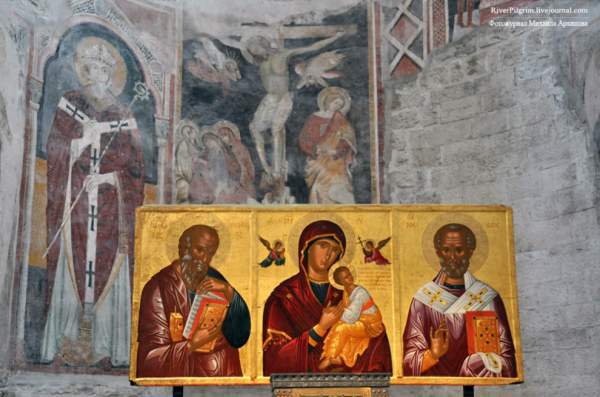
In Apulia, the icon of the Holy Unmercenaries Cosmas and Damian is highly venerated; it is placed on the north side above the church entrance. The Mother of God ‘Sign’ icon was painted by artist A. A. Benois-Konsky in collaboration with his wife. Below the icon of the Mother of God is an icon of the Savior on the Throne.
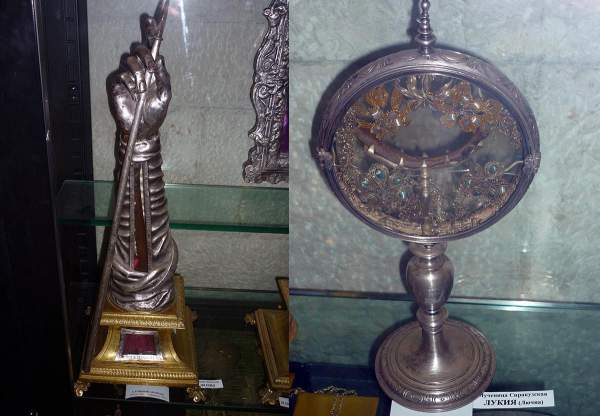
Among the shrines in the lower church is the icon of Saint Nicholas the Wonderworker, where his relics are preserved. Since 1087, the holy relics of Saint Nicholas have been carefully kept in the basilica’s chapel. To the right of the entrance to the upper church stands the grand sanctuary icon.
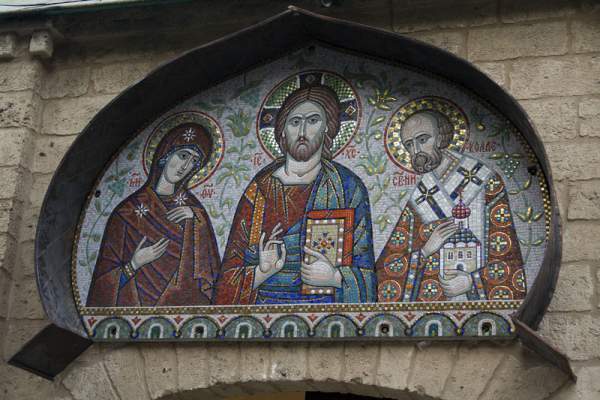
Above the basilica entrance is a mosaic icon depicting the Savior, the Mother of God, and Saint Nicholas holding a gospel; it was created in 1967 by Italian artist Niccolo Colonna.
Pilgrimage to the Relics
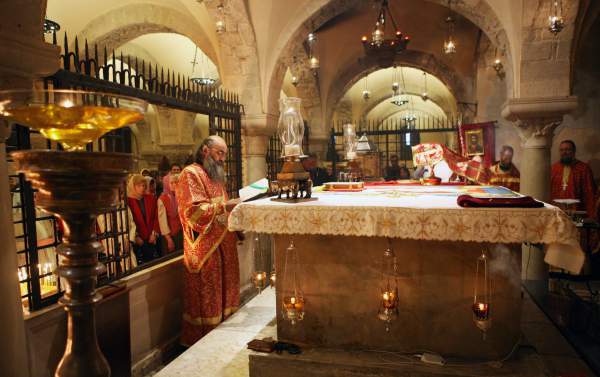
Even after his repose, Saint Nicholas continues to protect his spiritual children, heeding their prayers and aiding the sick and suffering. His intercessions are especially believed to help children, the elderly, the poor, merchants, sailors, and travelers. He is venerated across all faiths—Orthodox, Catholic, Muslim, and even by some pagans.
Every year, thousands of Russian pilgrims arrive in Bari. Orthodox visitors have the right to hold services and prayer vigils and to venerate the saint’s healing relics. Many travelers receive divine help and healing from this great servant of God. The city of Bari can take pride in its treasured icon of Saint Nicholas and his relics.
Useful Information
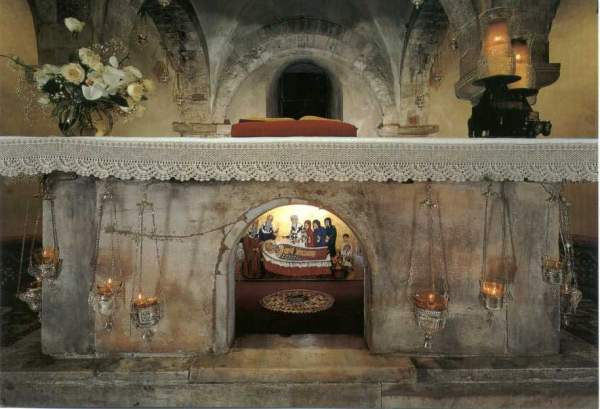
- Address: Bari, Basilica of Saint Nicholas (Basilica di San Nicola)
- The church is open daily from 7:30 AM–1:00 PM and 4:00 PM–7:30 PM. Free admission.
- Every Thursday at 10:30 AM the church begins a Divine Liturgy with the Eucharist (except during Great Lent).
- Prayer service with akathist: Thursdays – 4:00 PM; other days – 11:00 AM.
- How to reach: A ferry runs to the port of Bari, and the church is located near the seafront. From the port, you can walk to the church in 10 minutes; the train station is a 15-minute walk.
- Official website: bargrad.com
- Where to stay: see the reviews of the best hotels and budget apartments in Bari